


























The AI system (AI app) was used to create content that was part of bullying behavior, which caused harm to the victim. The bullying includes physical and psychological harm, with the AI-generated song being a component of the harassment. The court's decision confirms the harm and the appropriateness of disciplinary action. Therefore, this event qualifies as an AI Incident because the AI system's use directly led to harm to a person through bullying.[AI generated]

AIM: AI Incidents and Hazards Monitor
Automated media discourse monitor of AI incidents and hazards (Beta)
AI-related legislation is gaining traction, and effective policymaking needs evidence, foresight and international cooperation. The OECD AI Incidents and Hazards Monitor (AIM) documents AI incidents and hazards to help policymakers, AI practitioners, and all stakeholders worldwide gain valuable insights into the risks and harms of AI systems. Over time, AIM will help to show risk patterns and establish a collective understanding of AI incidents and hazards and their multifaceted nature, serving as an important tool for trustworthy AI. AI incidents seem to be getting more media attention lately, but they've actually gone down as a share of all AI news (see chart below!).
The information displayed in the AIM should not be reported as representing the official views of the OECD or of its member countries.
Advanced Search Options
As percentage of total AI events
Show summary statistics of AI incidents & hazards

South Korean Student Uses AI App for Bullying, Court Upholds Disciplinary Action
A South Korean middle school student used an AI app to create a mocking song targeting a classmate, as part of ongoing bullying that included physical violence. The court upheld the school's disciplinary measures, recognizing the AI-generated content as contributing to psychological harm and school violence.[AI generated]
AI principles:
Industries:
Affected stakeholders:
Harm types:
Autonomy level:
AI system task:
Why's our monitor labelling this an incident or hazard?

Autonomous Vehicle Testing Begins in Gwangju, South Korea
South Korea's Ministry of Land, Infrastructure and Transport, along with Hyundai, A2Z, and RideFlux, is launching the country's first city-wide autonomous vehicle testing in Gwangju. Up to 120 AI-driven vehicles will operate on public roads by year-end, with comprehensive safety protocols and real-time monitoring in place.[AI generated]
Industries:
Business function:
Autonomy level:
AI system task:
Why's our monitor labelling this an incident or hazard?
The event involves the use of AI systems (autonomous driving technology) in real urban traffic, which can plausibly lead to harm such as accidents or injury if the systems malfunction or fail. However, the article only reports on the planned deployment and preparations, with no actual harm or incident reported. The presence of accident response systems and coordination with emergency services indicates awareness of potential risks. Since no harm has occurred yet but plausible future harm exists, this fits the definition of an AI Hazard. It is not Complementary Information because the article is not updating or responding to a past incident, nor is it Beneficial Use since the AI system itself is the subject of potential risk, not solely a countermeasure to external harm. It is not Unrelated because AI systems are clearly involved.[AI generated]

US Treasury Secretary Demands Nvidia Leadership Overhaul Amid AI Chip Export Investigation
US Treasury Secretary Scott Besant has called for Nvidia to appoint an external CEO and undergo a leadership overhaul following allegations that the company facilitated illegal sales of advanced AI chips to China via shell companies. Besant demands explanations and a board investigation within 10 days. No confirmed harm has occurred yet.[AI generated]
AI principles:
Industries:
Business function:
Why's our monitor labelling this an incident or hazard?
The article details an ongoing investigation and demands for explanations from Nvidia regarding possible illegal sales of AI chips to China. While the AI system (chips) are central, no confirmed harm or violation has been established yet. The focus is on potential misuse and regulatory concerns, which could plausibly lead to violations of export laws and associated harms. Hence, this qualifies as an AI Hazard, not an AI Incident or Complementary Information, as the event is about potential future harm rather than a response or update to a past incident.[AI generated]

Japan-Led Investigation Uncovers 1,000 Servers Used for AI-Driven Cyberattacks
A Japan-led international investigation identified around 1,000 servers worldwide used to conduct AI-driven cyberattacks. The servers, tracked by JPCERT/CC and partners, hosted AI tools that searched for vulnerabilities and attempted unauthorized access, lowering the technical barrier for cybercriminals and leading to ongoing security breaches.[AI generated]
AI principles:
Industries:
Affected stakeholders:
Harm types:
Autonomy level:
AI system task:
Why's our monitor labelling this an incident or hazard?
The article explicitly mentions AI systems being used to conduct cyberattacks by searching for vulnerabilities and attempting unauthorized access, which directly leads to harm in terms of security breaches and potential violations of property and privacy rights. The AI system's use in hacking activities is a direct cause of these harms, fitting the definition of an AI Incident. The mention of ongoing attacks and the identification of AI tools in active servers confirms that harm is occurring, not just a potential risk.[AI generated]
HD Hyundai and Anduril Launch AI-Powered Unmanned Military Vessel
HD Hyundai and U.S. defense firm Anduril jointly launched a 600-ton autonomous surface vessel in Ulsan, South Korea. Equipped with AI-driven navigation and mission systems, the vessel is designed for military reconnaissance and surveillance, posing potential risks if misused or malfunctioning. Sea trials and U.S. testing are planned.[AI generated]
AI principles:
Industries:
Affected stakeholders:
Harm types:
Autonomy level:
AI system task:
Why's our monitor labelling this an incident or hazard?
The article explicitly mentions AI systems controlling navigation, malfunction response, and mission execution, including armaments, indicating the presence of an AI system. No actual harm or incident is reported; the vessel is newly launched and undergoing trials. However, the autonomous military vessel's capabilities and intended use in defense contexts imply a credible risk of future harm, such as accidents, misuse, or escalation in conflict scenarios. This fits the definition of an AI Hazard, as the AI system's development and deployment could plausibly lead to an AI Incident. The event is not an AI Incident because no harm has occurred yet, nor is it Complementary Information or Beneficial Use, as the AI system is not described as a countermeasure to external harm but as a potentially harmful autonomous weapon system.[AI generated]

AI Bot Malfunction Exposes Political Manipulation on Italian Social Media
A malfunction in AI-powered bot networks led to identical, AI-generated comments appearing under posts by Italian politicians, including Matteo Salvini, Carlo Fidanza, and Dario Nardella. The incident exposed coordinated use of AI bots to manipulate political discourse, raising concerns about interference and harm to democratic debate in Italy.[AI generated]
AI principles:
Industries:
Affected stakeholders:
Harm types:
Autonomy level:
AI system task:
Why's our monitor labelling this an incident or hazard?
The event involves AI systems explicitly: generative language models connected via APIs to bot networks managing fake social media accounts. The malfunction (upgrade of AI models with stricter safety guardrails) caused the bots to post refusal messages instead of intended propaganda, revealing the coordinated manipulation. This use of AI bots to manipulate political discourse harms communities by undermining democratic processes and violates rights to fair political participation. The harm is realized and directly linked to the AI system's malfunction and use. Hence, it meets the criteria for an AI Incident rather than a hazard or complementary information.[AI generated]

AI-Generated Voice Used in Attempted Fraud Against Elderly Couple in Kastoria
In Kastoria, Greece, scammers used AI-generated voice technology to mimic an elderly couple's daughter, attempting to deceive them into handing over money and valuables. The plot was foiled when the mother recognized inconsistencies and locked the perpetrator in a room, preventing the theft. No financial loss occurred.[AI generated]
AI principles:
Industries:
Affected stakeholders:
Harm types:
Autonomy level:
AI system task:
Why's our monitor labelling this an incident or hazard?
The event involves the use of an AI system to generate a synthetic voice that impersonates a family member, which is a clear AI system involvement. The AI's use in the scam attempt directly led to an attempt to defraud and harm the elderly couple, constituting a violation of rights and potential financial harm. Even if the scam was not completed, the AI-enabled impersonation was pivotal in the harm attempt, qualifying this as an AI Incident under the framework because harm or attempted harm to persons is involved and the AI system's role is direct and central.[AI generated]

AI Smart Glasses Misused for Exam Cheating and Privacy Invasion in South Korea
AI-powered smart glasses from companies like Meta and Samsung are being misused in South Korea for exam cheating and covert recording, raising concerns about fairness and privacy. Despite protective features like recording indicators, these measures are insufficient to prevent abuse, prompting calls for stricter regulations and technical safeguards.[AI generated]
AI principles:
Industries:
Affected stakeholders:
Harm types:
Autonomy level:
AI system task:
Why's our monitor labelling this an incident or hazard?
The event involves AI systems embedded in smart glasses that perform complex tasks such as image recognition, language translation, and AI-generated answers, fitting the definition of AI systems. The misuse of these glasses for exam cheating has directly caused harm by compromising exam integrity, a harm to communities and institutions. Additionally, the potential for privacy invasion constitutes a violation of rights. Protective measures exist but are insufficient to fully prevent misuse, indicating ongoing risk. Since actual harm (exam cheating) has occurred and privacy concerns are significant, the classification is AI Incident rather than AI Hazard or Complementary Information.[AI generated]

Meta Fined €805 Million in Italy for AI-Driven Photo Recommendation Without User Consent
Italy fined Meta €805 million after Facebook's Android app used an AI-driven feature to access and recommend users' private photos and videos without explicit consent or adequate disclosure. The violation affected about 20 million users, breaching privacy and data protection laws. Meta must now obtain clear, separate user consent.[AI generated]
AI principles:
Industries:
Affected stakeholders:
Harm types:
Business function:
Autonomy level:
AI system task:
Why's our monitor labelling this an incident or hazard?
The event involves an AI system component (the content suggestion function) that accessed and processed personal data without proper consent, directly violating users' privacy rights, which are protected under applicable law. This constitutes a breach of fundamental rights and legal obligations, fulfilling the criteria for an AI Incident. The harm is realized (privacy violation), and the AI system's use is central to the incident. Therefore, this is classified as an AI Incident.[AI generated]
China's AI Projects Face Risks Due to Heavy Reliance on Nvidia Chips Amid US Export Controls
Reuters reports that over 23 billion yuan (approx. $4.6 billion) worth of Chinese AI projects depend on Nvidia chips restricted by US export controls. This reliance exposes universities, local governments, and tech firms to potential supply chain disruptions and operational risks if regulations tighten further. No direct harm has occurred yet.[AI generated]
AI principles:
Industries:
Affected stakeholders:
Harm types:
Why's our monitor labelling this an incident or hazard?
The event involves AI systems indirectly through the use of Nvidia AI chips in Chinese AI projects. The main issue is the potential for supply chain disruption due to export controls, which could plausibly lead to harm such as project delays or operational disruptions. Since no actual harm or incident has occurred yet, and the article focuses on the risk and dependency rather than a realized incident, this fits the definition of an AI Hazard. There is no indication of complementary information about a past incident, nor is this a beneficial use or unrelated news. Therefore, the classification is AI Hazard.[AI generated]
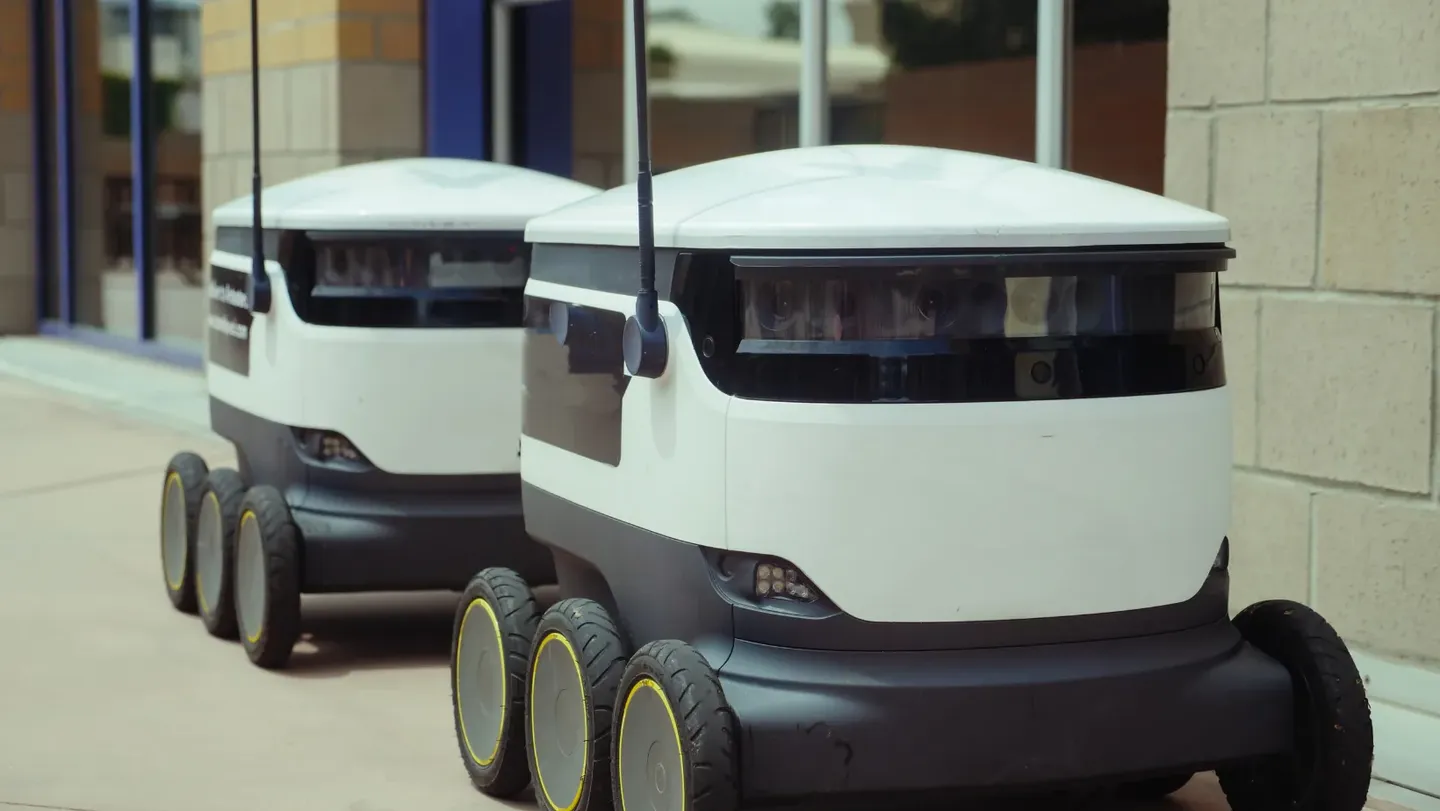
UN Talks in Geneva Address Risks of Autonomous Killer Robots
Representatives from 128 countries met in Geneva to discuss regulating autonomous lethal weapons, or "killer robots," which use AI to make kill decisions without human intervention. While most countries support restrictions, the US, Russia, and Israel oppose binding regulations. Concerns center on unpredictable harm, civilian casualties, and violations of humanitarian law.[AI generated]
AI principles:
Industries:
Affected stakeholders:
Harm types:
Autonomy level:
AI system task:
Why's our monitor labelling this an incident or hazard?
The article centers on AI systems in the form of autonomous weapons capable of lethal action without human oversight. While it does not report a specific realized harm event, it emphasizes the credible and significant risk that such systems could cause harm to human life and violate human rights and laws of war. The discussion of international efforts to regulate or ban these systems is framed around preventing these plausible harms. Therefore, the event qualifies as an AI Hazard because it involves AI systems whose use could plausibly lead to serious harm, including loss of life and violations of fundamental rights, but no concrete incident of harm is reported yet.[AI generated]

AI Military Robot Startup Faces Financial Crisis and Governance Issues
Foundation Future Industries, a San Francisco-based startup developing AI-powered humanoid military robots, failed to pay employees after its CEO borrowed $4.6 million from company funds to buy a home. The incident raises concerns about financial mismanagement and the responsible development of potentially dangerous autonomous weapons systems.[AI generated]
AI principles:
Industries:
Business function:
Autonomy level:
AI system task:
Why's our monitor labelling this an incident or hazard?
The startup is developing AI-enabled humanoid military robots, which qualifies as AI systems. The failure to pay employees is a harm but is financial and managerial rather than a direct AI system malfunction or misuse causing physical or rights-based harm. However, the company's unstable financial situation, questionable governance, and plans to deploy weapons-ready AI robots create a credible risk of future harm, such as misuse of autonomous weapons or failure in critical military infrastructure. Since no direct AI-caused harm has occurred yet, but plausible future harm exists, the event fits the definition of an AI Hazard rather than an AI Incident. It is not Complementary Information because the article focuses on the financial and governance issues posing risks, not on responses or updates to past incidents. It is not Beneficial Use or Unrelated.[AI generated]

Meta Faces Legal Actions Over AI-Driven Election Interference in Brazil
Meta, owner of Facebook, Instagram, and WhatsApp, faces at least 11 legal actions in Brazil's Superior Electoral Court (TSE) over alleged AI-driven algorithmic interference, misinformation, and deepfake content during the presidential election. The company was fined R$7.5 million for failing to comply with court orders related to content distribution and electoral fairness.[AI generated]
AI principles:
Industries:
Affected stakeholders:
Harm types:
Business function:
Autonomy level:
AI system task:
Why's our monitor labelling this an incident or hazard?
Meta's AI systems for content distribution and moderation are central to the described harms, including selective algorithmic reach, misinformation spread, and deepfake content affecting the election. The legal actions and fines demonstrate that these harms have materialized and are linked to the AI systems' operation or malfunction. The involvement of AI in content curation and generation, and the resulting impact on election fairness and information integrity, meet the criteria for an AI Incident under violations of rights and harm to communities.[AI generated]
AI-Assisted Cheating Scandal in South Korea's National Exams
A South Korean tax accountant exam top scorer admitted to using generative AI, micro-cameras, and smartphones to cheat, triggering police investigation and government response. The incident undermined exam integrity, prompting stricter anti-AI cheating measures for upcoming national tests and widespread concern over exam fairness.[AI generated]
AI principles:
Industries:
Affected stakeholders:
Harm types:
Autonomy level:
AI system task:
Why's our monitor labelling this an incident or hazard?
The event involves the use of a generative AI system to cheat on official exams, which directly caused harm by violating examination integrity and potentially harming other candidates and the professional sector's trust. The AI system's use was central to the cheating method, fulfilling the criteria for an AI Incident. The harm is realized and significant, involving violations of legal and ethical obligations related to professional qualifications. The societal and regulatory responses further confirm the incident's impact.[AI generated]
Nvidia Scandal: AI Chip Links to Huawei Spark Security Concerns
Alice Huang, linked to Nvidia's former CEO Jensen Huang, is under scrutiny for business ties with companies supplying AI computing power to Huawei, Nvidia's major Chinese competitor. The incident raises concerns over potential illegal transfer of AI technology and national security risks, leading to Jensen Huang's resignation and a congressional investigation.[AI generated]
AI principles:
Industries:
Affected stakeholders:
Harm types:
Why's our monitor labelling this an incident or hazard?
The article explicitly links Nvidia's AI chips and computational power to Huawei, a competitor with close ties to the Chinese government, through business networks connected to Alice Huang. The use of AI chips and infrastructure is central to the event, and the potential illegal transfer of controlled AI technology constitutes a breach of legal obligations and national security, which is a form of harm under the framework. The involvement of AI systems is clear, and the harm is realized or ongoing, not merely potential. Hence, this is classified as an AI Incident.[AI generated]
Backdoored Claude Code Extension Distributed via Cursor Marketplace After Credential Leak
A leaked Fireworks AI access key enabled attackers to steal coding agent records and credentials, leading to the distribution of backdoored Anthropic Claude Code extensions in Cursor's VS Code marketplace. The malicious versions exposed user data and enabled unauthorized access, affecting up to 5,000 developers before remediation. Most users were unaffected; affected customers were notified.[AI generated]
AI principles:
Industries:
Affected stakeholders:
Harm types:
Business function:
Autonomy level:
AI system task:
Why's our monitor labelling this an incident or hazard?
The event involves an AI system (Anthropic's Claude Code extensions) that was maliciously copied and distributed, leading to unauthorized access to software tools and data. This unauthorized access and data exposure represent harm to property and user data, fulfilling the criteria for an AI Incident. The incident is not merely a potential risk but a realized harm, as affected customers were notified and the company took remediation actions. Hence, it is not a hazard or complementary information but an AI Incident.[AI generated]

AI Chatbot Detects Planned Violent Crime in Budapest, Leading to Arrest
A 22-year-old foreign student in Budapest discussed plans to commit murder with an AI chatbot. The chatbot's operating company alerted the FBI, who notified Hungarian authorities. The woman was arrested before any harm occurred, demonstrating the AI system's pivotal role in threat detection and law enforcement intervention.[AI generated]
Industries:
AI system task:
Why's our monitor labelling this an incident or hazard?
The AI chatbot was explicitly involved as the medium through which the individual planned a serious violent crime. The event describes a direct link between the AI system's use and a potential harm to persons (murder planning). The AI system's role was not merely incidental but pivotal in the chain of events leading to law enforcement action. The harm is related to human rights and safety, fulfilling the criteria for an AI Incident. The fact that the crime was planned via the AI system and led to police action confirms the direct or indirect harm connection. Therefore, the event is classified as an AI Incident.[AI generated]

Taiwanese Tea Brand Uses AI-Generated Image of Kimura Takuya Without Consent, Faces Backlash
Taiwanese beverage brand MINCHA used AI to generate an image of Japanese celebrity Kimura Takuya holding its product without authorization, violating his portrait rights. The incident sparked public backlash and legal concerns, prompting the brand and its marketing agency to apologize and remove the content. The event highlights risks of unauthorized AI-generated commercial content.[AI generated]
AI principles:
Industries:
Affected stakeholders:
Harm types:
Business function:
Autonomy level:
AI system task:
Why's our monitor labelling this an incident or hazard?
The use of AI to generate unauthorized images of a public figure for commercial purposes directly led to a violation of the celebrity's portrait rights, a breach of intellectual property and personal rights protections. This harm has materialized as public backlash and legal concerns. The AI system's use in this context is central to the harm, fulfilling the criteria for an AI Incident. The brand's response and apology are complementary information but do not negate the incident classification.[AI generated]
AI-Generated Misinformation Campaign Targets BYD, Triggers Legal Crackdown
BYD faced a coordinated defamation campaign where MCN organizations used AI tools to mass-produce misleading, similar content, damaging the company's reputation and misleading the public. Legal actions led to detentions and court-ordered apologies, while BYD offered substantial rewards for information on organized smear campaigns. The incident occurred in China.[AI generated]
AI principles:
Industries:
Affected stakeholders:
Harm types:
Business function:
AI system task:
Why's our monitor labelling this an incident or hazard?
The article explicitly mentions AI tools being used by MCN accounts to generate highly similar misleading content that harms BYD's brand reputation. This constitutes harm to communities (reputational harm and misinformation). The AI system's use in generating false or misleading content directly contributed to this harm. The company's legal and public relations response is a reaction to this AI-driven harm, not the primary event. Hence, the event is an AI Incident because the AI system's use has directly led to harm (reputational and informational harm).[AI generated]

DUI Case Dismissed Due to AI-Generated Police Report in Arizona
An Arizona judge released DUI suspect Anthony Edward Rene Quidera after determining that the police report, generated with assistance from Truleo AI, lacked clarity on which parts were authored by the officer versus AI. This prevented the court from establishing probable cause, disrupting the legal process.[AI generated]
AI principles:
Industries:
Affected stakeholders:
Harm types:
Business function:
Autonomy level:
AI system task:
Why's our monitor labelling this an incident or hazard?
The AI system was used in the development of the police report, and its involvement led to a legal decision that disrupted the normal judicial process (release of a suspect due to uncertain probable cause). This meets the criteria for an AI Incident as it caused a disruption in the management and operation of critical infrastructure (the justice system). The event is not merely a potential risk (hazard) or a beneficial use; it is a realized impact stemming from AI use. It is also not complementary information since the main focus is on the AI's role in the incident, not a response or update to a prior event.[AI generated]