

























The event involves AI systems generating harmful content (deepfake sexual abuse images of minors), which directly leads to significant harm to children and communities, fulfilling the criteria for an AI Incident. The article describes realized harm (millions of reports of such content) and the direct role of AI in producing and spreading this content. Therefore, it is classified as an AI Incident rather than a hazard or complementary information.[AI generated]

AIM: AI Incidents and Hazards Monitor
Automated media discourse monitor of AI incidents and hazards (Beta)
AI-related legislation is gaining traction, and effective policymaking needs evidence, foresight and international cooperation. The OECD AI Incidents and Hazards Monitor (AIM) documents AI incidents and hazards to help policymakers, AI practitioners, and all stakeholders worldwide gain valuable insights into the risks and harms of AI systems. Over time, AIM will help to show risk patterns and establish a collective understanding of AI incidents and hazards and their multifaceted nature, serving as an important tool for trustworthy AI. AI incidents seem to be getting more media attention lately, but they've actually gone down as a share of all AI news (see chart below!).
The information displayed in the AIM should not be reported as representing the official views of the OECD or of its member countries.
Advanced Search Options
As percentage of total AI events
Show summary statistics of AI incidents & hazards

UNICEF Warns of Global Surge in AI-Generated Child Sexual Abuse Material
UNICEF, supported by INTERPOL and ECPAT, reports a rapid global increase in AI-generated deepfake images sexually exploiting children, with at least 1.2 million victims across 11 countries. The agency urges criminalization, stronger safeguards by AI developers, and enhanced content moderation to address the widespread harm caused by these technologies.[AI generated]
AI principles:
Industries:
Affected stakeholders:
Harm types:
Autonomy level:
AI system task:
Why's our monitor labelling this an incident or hazard?

Hanwha Unveils AI-Enabled Autonomous Weapons at Saudi Defense Expo
Hanwha Aerospace, Hanwha Systems, and Hanwha Ocean showcased advanced AI-powered weapon systems, including the autonomous L-PGW loitering munition, at the World Defense Show 2026 in Riyadh. These systems autonomously identify and strike targets, raising concerns about potential future risks from AI-enabled military technologies.[AI generated]
AI principles:
Industries:
Affected stakeholders:
Harm types:
Autonomy level:
AI system task:
Why's our monitor labelling this an incident or hazard?
The event involves AI systems explicitly described as autonomous weapon systems capable of target identification and attack, which fits the definition of an AI system. The article focuses on the development and first public unveiling of these AI-enabled weapons, without reporting any actual harm or incidents caused by their use. Given the nature of autonomous weapons and their potential for causing injury, violations of rights, or other harms, the event plausibly could lead to an AI Incident in the future. Hence, it is classified as an AI Hazard, reflecting the credible risk posed by the development and introduction of such AI weapon systems into the global market.[AI generated]

Australian Tribunal Partially Overturns Privacy Ruling on Bunnings' AI Facial Recognition
Australian retailer Bunnings used AI facial recognition to combat retail crime, scanning customers' faces without explicit consent. The Privacy Commissioner found this breached privacy laws, but the Administrative Review Tribunal later ruled Bunnings could use the technology if it improved privacy policies and customer notifications, highlighting ongoing legal and ethical concerns.[AI generated]
AI principles:
Industries:
Affected stakeholders:
Harm types:
Business function:
Autonomy level:
AI system task:
Why's our monitor labelling this an incident or hazard?
The event explicitly involves an AI system (facial recognition technology) used in a real-world setting. The use of this AI system has directly led to a breach of privacy rights by scanning and checking customers' faces without proper notification, which is a violation of applicable privacy laws protecting fundamental rights. Although the tribunal ruled in favor of Bunnings' use of the technology for safety reasons, the privacy breach and the scanning of hundreds of thousands of customers' faces without adequate notice constitute a realized harm. This fits the definition of an AI Incident as it involves a violation of human rights (privacy) caused by the use of an AI system. The event is not merely a potential risk or a complementary update but a concrete case of harm linked to AI use.[AI generated]

Vivek Oberoi Sues Over AI-Generated Deepfakes and Identity Misuse
Actor Vivek Oberoi filed a lawsuit in the Delhi High Court alleging large-scale misuse of his identity, including AI-generated deepfakes, fake social media accounts, and unauthorized merchandise. He seeks a permanent injunction to protect his personality and publicity rights from reputational and commercial harm caused by AI-driven content.[AI generated]
AI principles:
Industries:
Affected stakeholders:
Harm types:
Autonomy level:
AI system task:
Why's our monitor labelling this an incident or hazard?
The article explicitly mentions AI-generated content and deepfake technology being used to create harmful and unauthorized representations of the actor, which is a direct misuse of AI systems leading to harm (defamation, identity exploitation). This fits the definition of an AI Incident as the AI system's use has directly led to violations of rights and harm to the individual. The court's involvement to protect personality rights further confirms the recognition of harm caused by AI misuse.[AI generated]

Tech Giants Criticized for AI Failures in Detecting Online Child Abuse
Australia's eSafety Commissioner criticized major tech companies—including Apple, Google, Meta, Microsoft, and X—for failing to effectively deploy AI systems to detect and prevent child sexual abuse and exploitation online. Reports highlight inadequate AI-based detection tools, leading to ongoing harm, including the spread of abuse material and sexual extortion.[AI generated]
AI principles:
Industries:
Affected stakeholders:
Harm types:
Business function:
AI system task:
Why's our monitor labelling this an incident or hazard?
The AI system (Grok chatbot) is explicitly mentioned as producing sexualised deepfake images, including child sexual abuse material, which is a direct violation of rights and causes significant harm to individuals and communities. The harms are realized and ongoing, as evidenced by multiple countries investigating the platform and regulatory actions being taken. The AI system's use is central to the harm, fulfilling the criteria for an AI Incident rather than a hazard or complementary information. The article focuses on the harm caused and regulatory responses, not just on updates or general AI news.[AI generated]

AI-Generated Images Spread False Links Between US Politicians and Epstein
AI-generated and manipulated images falsely linking US politicians, including New York Mayor Zohran Mamdani, to Jeffrey Epstein have circulated widely on social media, amassing over 21 million views. This disinformation, identified by watchdog NewsGuard, has caused reputational harm and spread misinformation, highlighting the risks of AI-enabled fake content.[AI generated]
AI principles:
Industries:
Affected stakeholders:
Harm types:
Autonomy level:
AI system task:
Why's our monitor labelling this an incident or hazard?
The article explicitly mentions AI-generated fake images and AI tools used to detect them, indicating AI system involvement. The use of these AI-generated images has directly led to misinformation and reputational harm to public figures, fulfilling the criteria for an AI Incident due to harm to communities and violation of rights. The harm is realized, not just potential, as millions have viewed and shared the false content. Therefore, this event qualifies as an AI Incident.[AI generated]

US Academic Targeted by AI-Generated Deepfake Videos
John Mearsheimer, a US academic, faced widespread impersonation through AI-generated deepfake videos on YouTube and TikTok, which falsely depicted him making controversial statements. Despite months of effort to remove hundreds of these videos, the incident highlights the persistent challenges of combating AI-driven disinformation and identity theft.[AI generated]
AI principles:
Industries:
Affected stakeholders:
Harm types:
Autonomy level:
AI system task:
Why's our monitor labelling this an incident or hazard?
The event involves AI systems generating deepfake videos that impersonate a real person, causing reputational harm and spreading misinformation, which qualifies as harm to communities and a violation of rights. The harm is realized and ongoing, as the videos have gained traction and continue to appear despite takedown efforts. The AI system's role is pivotal in creating and scaling these fabrications. Therefore, this event meets the criteria for an AI Incident due to the direct harm caused by the AI-generated content and the challenges in addressing it.[AI generated]

AI Agents Hire Humans for Real-World Tasks and Financial Arbitrage
AI platforms like RentAHuman.ai and Clawdbot are enabling AI agents to autonomously hire humans for physical tasks and execute financial arbitrage strategies. Thousands have registered to work for AI, with some users earning significant profits. This marks a shift in AI-human labor dynamics and raises concerns about future societal impacts.[AI generated]
AI principles:
Industries:
Affected stakeholders:
Harm types:
Business function:
Autonomy level:
AI system task:
Why's our monitor labelling this an incident or hazard?
The event involves AI systems (AI agents) explicitly using a platform to hire humans to perform physical tasks, which is a direct use of AI in task delegation and economic interaction. Although no actual harm has been reported yet, the nature of the platform and its operation could plausibly lead to harms such as labor exploitation, loss of human autonomy, or other social harms. The AI system's development and use are central to the event, and the potential for harm is credible and foreseeable. Hence, it fits the definition of an AI Hazard rather than an Incident or Complementary Information.[AI generated]

Seoul Launches AI-Powered Center to Prevent Online Child Sexual Exploitation
Seoul has opened the 'Online Sexual Exploitation Ansim ON Center,' the first in South Korea to use AI for real-time detection of online grooming and sexual exploitation targeting children and adolescents. The AI system monitors chats and social media, enabling rapid intervention, emergency rescue, and victim support, significantly enhancing harm prevention.[AI generated]
AI principles:
Industries:
Business function:
Autonomy level:
AI system task:
Why's our monitor labelling this an incident or hazard?
The AI system is explicitly described as analyzing online communications to detect sexual exploitation risks and triggering immediate protective responses. This use of AI directly relates to preventing harm to children and adolescents, which falls under harm to persons. Since the AI system's deployment is actively involved in preventing and responding to ongoing or imminent harm, this qualifies as an AI Incident rather than a hazard or complementary information. The system's role is pivotal in detecting and interrupting harmful activities, fulfilling the criteria for an AI Incident under the framework.[AI generated]

Facial Recognition Failures Lead to Wrongful Arrests in São Paulo's Smart Sampa System
A research report found that São Paulo's Smart Sampa AI surveillance system, using facial recognition, caused false positives, wrongful arrests, and privacy risks. The system, operating since 2023 with up to 40,000 cameras, also exacerbated racial and geographic inequalities, raising concerns about transparency and effectiveness.[AI generated]
AI principles:
Industries:
Affected stakeholders:
Harm types:
Business function:
Autonomy level:
AI system task:
Why's our monitor labelling this an incident or hazard?
The Smart Sampa system is an AI system using facial recognition technology. Its use has directly led to wrongful detentions and arrests, which are harms to individuals (injury or harm to persons and violations of rights). The report documents these harms with specific numbers and details, confirming realized harm rather than potential risk. Therefore, this qualifies as an AI Incident because the AI system's malfunction and use have directly caused harm to people and breaches of fundamental rights.[AI generated]

Google's Gemini AI to Autonomously Operate Android Phones, Raising Privacy and Safety Concerns
Google is developing Gemini, an AI system that will autonomously control Android phones by opening apps, scrolling, and performing tasks for users. While not yet deployed, this capability raises concerns about potential privacy breaches, erroneous actions, and user data exposure due to the AI's deep access and automation features.[AI generated]
AI principles:
Industries:
Affected stakeholders:
Harm types:
Autonomy level:
AI system task:
Why's our monitor labelling this an incident or hazard?
The event involves an AI system (Gemini) designed to autonomously operate smartphone applications, which fits the definition of an AI system. The article does not report any realized harm or incidents caused by the AI's use or malfunction, but it highlights plausible risks related to privacy breaches, errors in task execution, and user data exposure. These concerns indicate a credible potential for future harm, such as privacy violations or erroneous actions leading to harm. Therefore, this event qualifies as an AI Hazard rather than an AI Incident or Complementary Information, as no harm has yet occurred and the main focus is on the plausible risks associated with the AI's capabilities and deployment.[AI generated]
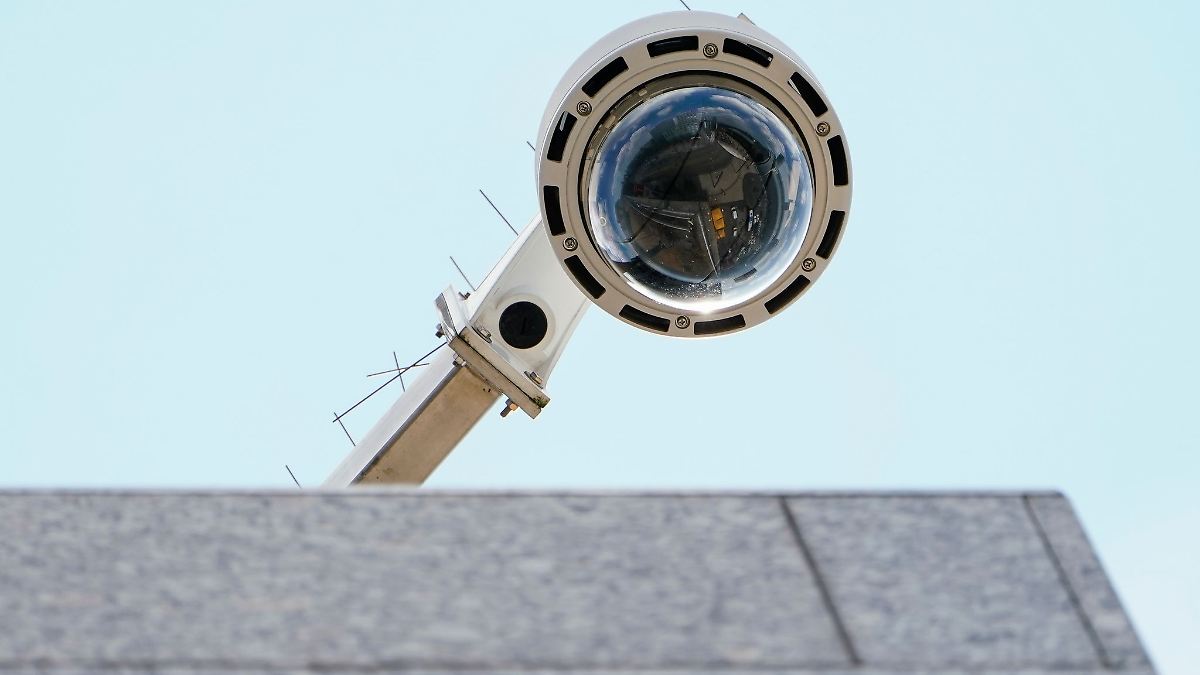
Baden-Württemberg Expands AI-Powered Public Video Surveillance
Baden-Württemberg has amended its data protection law to allow municipalities broader use of AI-enabled video surveillance in public spaces. The new framework removes previous restrictions, enabling surveillance for general public tasks and extending data retention. While no harm has occurred, the expanded AI surveillance poses credible privacy and misuse risks.[AI generated]
AI principles:
Industries:
Affected stakeholders:
Harm types:
AI system task:
Why's our monitor labelling this an incident or hazard?
The article explicitly mentions the use of AI in video surveillance, which qualifies as an AI system under the definition. The legislative change enables broader deployment of AI-powered surveillance, which could plausibly lead to harms such as privacy infringement or misuse of surveillance data. However, since no actual harm or incident has occurred or is described, and the article mainly reports on a policy change and its potential implications, this event fits the definition of an AI Hazard rather than an AI Incident or Complementary Information. It is not unrelated because AI systems are explicitly involved and the potential for harm is credible.[AI generated]

Super Bowl Implements AI-Focused Cybersecurity Measures
Ahead of Super Bowl LX in Santa Clara, the NFL and San Francisco 49ers enhanced cybersecurity at Levi's Stadium, establishing a cyber command center to monitor for potential AI-powered cyberattacks. While no AI incident occurred, preparations reflect heightened concern over AI-driven threats targeting major events.[AI generated]
Industries:
Business function:
Autonomy level:
AI system task:
Why's our monitor labelling this an incident or hazard?
The article explicitly mentions AI-powered cyber threats as a concern and the defensive measures taken to prevent them, indicating a plausible risk of AI-related harm in the future. Since no actual harm or incident has occurred yet, and the focus is on preparedness and potential threats, this fits the definition of an AI Hazard. There is no evidence of an AI Incident or Complementary Information about a past incident, nor is the article unrelated to AI. Therefore, the classification is AI Hazard.[AI generated]

AI Smoke Detection System Prevents Major Fire Damage at Beigang Wude Temple
A fire broke out at Beigang Wude Temple in Yunlin, Taiwan, due to a lithium battery explosion. The temple's AI smoke detection system provided early warnings, enabling staff and firefighters to quickly control the fire, minimizing property damage and preventing injuries. The AI system's timely alerts were pivotal in harm mitigation.[AI generated]
Industries:
Business function:
Autonomy level:
AI system task:
Why's our monitor labelling this an incident or hazard?
An AI system was explicitly involved in detecting smoke and fire early, triggering timely alerts to staff who then took immediate action to extinguish the fire and call firefighters. This direct involvement of the AI system in preventing greater harm to property and potentially people qualifies this as an AI Incident under the definition, as the AI system's use directly led to harm mitigation and protection of property.[AI generated]
ChatGPT Amplifies Regional and Racial Stereotypes in Brazil, Study Finds
A University of Oxford study found that ChatGPT, based on 20.3 million queries, reproduces and amplifies harmful regional, racial, and cultural stereotypes in Brazil. The AI system labeled wealthier regions as more intelligent and productive, while associating poorer regions, especially in the North and Northeast, with negative traits, perpetuating discrimination.[AI generated]
AI principles:
Industries:
Affected stakeholders:
Harm types:
Autonomy level:
AI system task:
Why's our monitor labelling this an incident or hazard?
The ChatGPT system, an AI language model, is explicitly involved as the source of biased and prejudiced outputs. These outputs have directly led to harm by perpetuating stereotypes and racial discrimination, which constitute harm to communities and violations of human rights. The study documents these harms as occurring through the AI's responses, thus qualifying this as an AI Incident rather than a hazard or complementary information. The harm is realized and documented, not merely potential or speculative.[AI generated]

AI Desktop Agents Raise Privacy and Security Concerns in China
Major AI companies including Anthropic, Alibaba, and MiniMax are rapidly deploying desktop AI agents capable of autonomously managing local files and applications. While these tools promise increased productivity, experts and industry observers warn of significant data privacy and system security risks as AI agents gain deeper access to user environments.[AI generated]
AI principles:
Industries:
Affected stakeholders:
Harm types:
Autonomy level:
AI system task:
Why's our monitor labelling this an incident or hazard?
The article explicitly describes AI systems (desktop AI agents) that autonomously operate on local computer environments, which fits the definition of AI systems. It discusses their development and use, including their ability to execute commands, manipulate files, and perform complex tasks. Although no direct harm has been reported, the article raises expert concerns about potential risks including data privacy violations and system security breaches, which are plausible harms that could arise from these AI systems. The article also mentions mitigation strategies and governance considerations but does not report any realized harm. Hence, the event is best classified as an AI Hazard rather than an AI Incident or Complementary Information. It is not unrelated because the AI systems and their potential risks are central to the article.[AI generated]

AI-Driven Automation Disproportionately Threatens Women's Jobs in UK Tech and Finance
Reports by the City of London Corporation reveal that AI-driven automation and automated CV screening are putting women, especially mid-career professionals in UK tech and finance sectors, at higher risk of job loss and discrimination. Automated systems often overlook career breaks and narrowly assess experience, exacerbating gender disparities.[AI generated]
AI principles:
Industries:
Affected stakeholders:
Harm types:
Business function:
Autonomy level:
AI system task:
Why's our monitor labelling this an incident or hazard?
The article involves AI systems in the form of automated and biased screening software and automation technologies that could lead to job losses and career disadvantages for women. The harms described are potential and systemic, focusing on plausible future impacts rather than a specific realized incident. Therefore, this qualifies as an AI Hazard because it plausibly leads to harms such as employment loss and discrimination due to AI use, but no concrete incident of harm is reported. It is not Complementary Information because the article is not updating or responding to a previously reported incident but rather presenting new risk analysis. It is not Unrelated because AI systems are central to the discussion and their impact on employment is the main focus.[AI generated]

AI-Driven WiFi Surveillance Raises Privacy Concerns in Germany
Researchers at the Karlsruhe Institute of Technology in Germany have demonstrated that AI can analyze WiFi signals to identify individuals, even without their devices. This technology, which uses machine learning to interpret radio wave patterns, poses significant risks for mass surveillance and privacy violations, prompting calls for stricter protections.[AI generated]
AI principles:
Industries:
Affected stakeholders:
Harm types:
AI system task:
Why's our monitor labelling this an incident or hazard?
The event involves an AI system that analyzes WiFi radio signals using machine learning to identify individuals without their consent or awareness, which directly leads to harm in the form of privacy violations and potential human rights breaches. The article explicitly states the technology's capability to identify people with near 100% accuracy and warns about its use for surveillance by authorities or malicious actors. This meets the criteria for an AI Incident because the AI system's use has directly led to harm (violation of privacy and fundamental rights).[AI generated]

Microsoft Develops Tools to Detect Backdoors in AI Language Models
Microsoft researchers have identified significant risks from 'sleeper agent' backdoors embedded in large language models, which can be triggered to produce malicious outputs. To address this AI hazard, Microsoft has developed new scanning tools and detection methods to identify poisoned models before deployment, aiming to prevent potential harm.[AI generated]
AI principles:
Industries:
Business function:
Autonomy level:
AI system task:
Why's our monitor labelling this an incident or hazard?
The article clearly involves AI systems, specifically AI language models, and discusses the development and use of AI models that can be poisoned. However, it does not describe any actual harm or incident resulting from such poisoning. Instead, it presents research findings about the risks and detection of model poisoning, which could plausibly lead to AI incidents if exploited maliciously. Therefore, the event is best classified as an AI Hazard, as it concerns a credible risk of harm from AI model poisoning and efforts to detect and mitigate this risk before harm occurs.[AI generated]

AI-Generated Sexual Abuse Images on X Spark Political and Regulatory Outcry in Ireland
Irish politicians and regulators are investigating reports that X's Grok AI tool was used to generate and disseminate child sexual abuse and non-consensual intimate images, including deepfakes. The incident has led to political clashes and prompted European Commission involvement, highlighting significant harm caused by AI misuse.[AI generated]
AI principles:
Industries:
Affected stakeholders:
Harm types:
Autonomy level:
AI system task:
Why's our monitor labelling this an incident or hazard?
The article explicitly references AI systems (Grok AI chatbot) generating sexual abuse material, which is a direct violation of human rights and legal frameworks protecting against child sexual abuse content. The dissemination of such material causes harm to individuals and communities, fulfilling the criteria for an AI Incident. The involvement of law enforcement and regulatory investigations further supports that harm has occurred or is ongoing. Therefore, this event qualifies as an AI Incident due to the direct link between AI-generated harmful content and violations of rights and laws.[AI generated]