These tools and metrics are designed to help AI actors develop and use trustworthy AI systems and applications that respect human rights and are fair, transparent, explainable, robust, secure and safe.
RAID (Robust evaluation of AI-generated image Detectors)
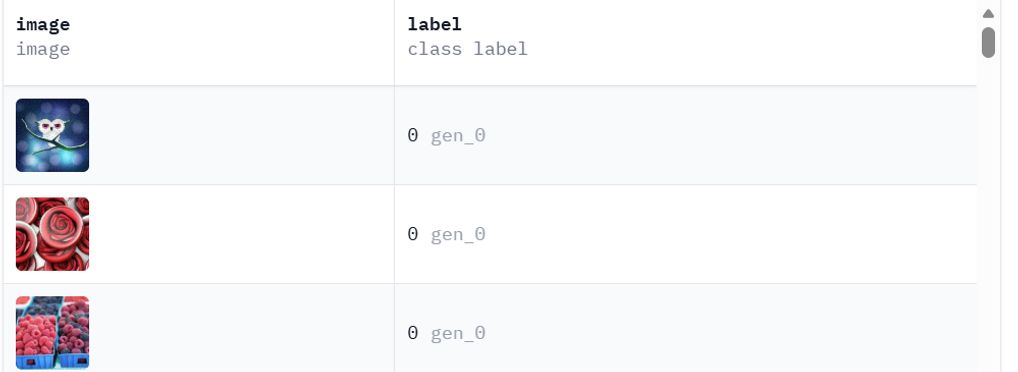
RAID (Robust evaluation of AI-generated image Detectors) is an open dataset for assessing the adversarial robustness of AI-generated image detectors. These detectors are increasingly relied upon to counter fraud and disinformation, as synthetic images become indistinguishable from real ones to the human eye. However, they are usually evaluated under idealised conditions, and their resilience to deliberate evasion attacks is often overlooked. RAID provides a standardised and accessible means of closing this evaluation gap.
The dataset contains 72 000 adversarial examples built from images generated by four text-to-image models: Stable Diffusion v1.4, v2.1 and XL, and DeepFloyd IF. The adversarial perturbations are created by attacking an ensemble of seven state-of-the-art detectors with different architectures at the same time. This approach produces diverse examples that transfer effectively to detectors not included in the ensemble.
Developers and researchers test a detector on RAID without having to design or run attacks themselves. The detector's performance on the adversarial examples provides a quick, approximate yet reliable estimate of its robustness. The authors' experiments show that current state-of-the-art detectors are easily deceived, underlining the need for more robust detection methods. The dataset is openly available on Hugging Face, and the evaluation code is available on GitHub under an MIT licence.
Auto-discovered on 2026-02-11 by OECD Catalogue Automation
About the tool
You can click on the links to see the associated tools
Objective(s):
Lifecycle stage(s):
Type of approach:
Maturity:
Usage rights:
Target users:
Risk management stage(s):
Technology platforms:
Programming languages:
Use Cases
Would you like to submit a use case for this tool?
If you have used this tool, we would love to know more about your experience.
Add use case



 Partnership on AI