Yangju City Deploys AI-Based Traffic Safety System to Prevent Accidents

Thumbnail Image

The information displayed in the AIM should not be reported as representing the official views of the OECD or of its member countries.

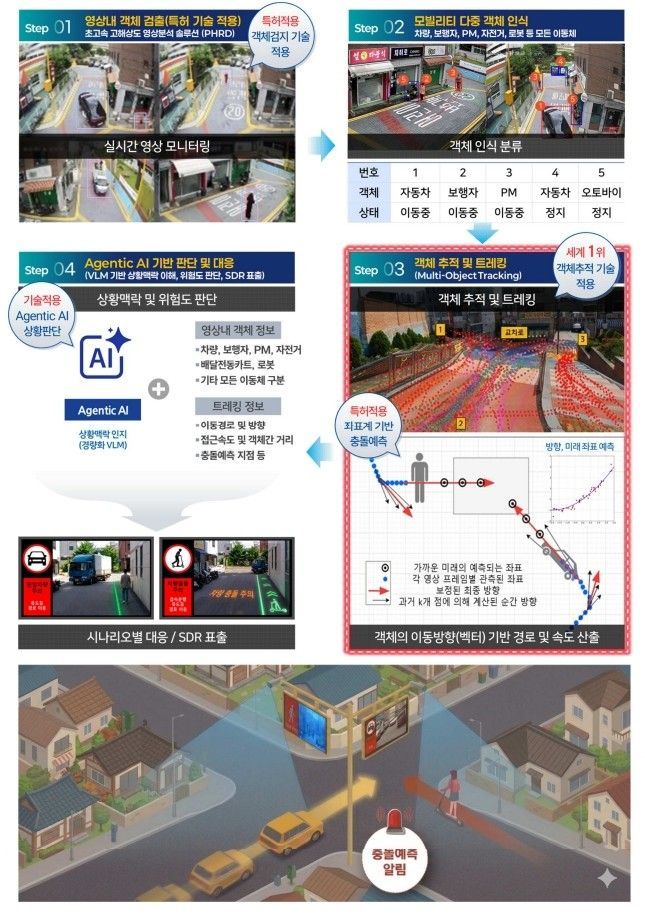
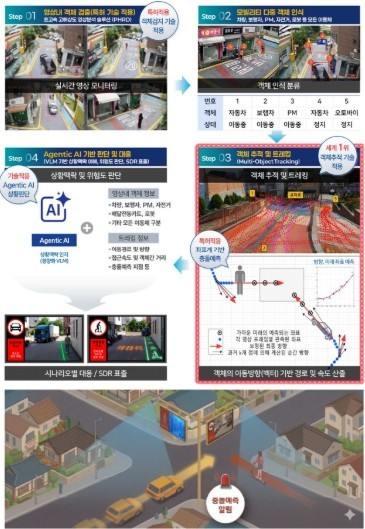
Yangju City, South Korea, has been selected for the Ministry of Land, Infrastructure and Transport's 2026 AI City Innovation Project. The city will implement an agentic AI system to predict and warn of collision risks in real time on local roads, aiming to prevent traffic accidents and enhance public safety.[AI generated]

Why's our monitor labelling this an incident or hazard?

The event involves the development and planned use of an AI system for traffic safety, which could plausibly lead to harm prevention but does not describe any realized harm or malfunction. Therefore, it qualifies as an AI Hazard because the AI system's deployment could plausibly lead to preventing or causing incidents in the future, but no incident has occurred yet. It is not Complementary Information because it is not an update or response to a past incident, nor is it unrelated as it clearly involves AI technology with potential safety implications.[AI generated]
Industries
Mobility and autonomous vehicles

Severity
AI hazard

AI system task:
Forecasting/prediction


Articles about this incident or hazard

Thumbnail Image

양주시, 국토부 '2026 AI 시티 혁신기술 발굴사업' 최종 선정

2026-05-21
문화일보
Why's our monitor labelling this an incident or hazard?
The event involves the development and intended use of an AI system for traffic safety, which could plausibly lead to harm prevention but does not describe any actual harm or incident caused by the AI system. Therefore, it represents a potential future benefit rather than an incident or hazard. The article is primarily about the selection and planned implementation of the AI system, which fits the category of Complementary Information as it provides context and updates on AI innovation and governance without reporting any realized or imminent harm.
Thumbnail Image

양주시, 첨단 교통안전 인프라 구축한다... 국토부 '2026 AI 시티 혁신기술 발굴사업' 최종 선정 - 내외일보

2026-05-21
내외일보
Why's our monitor labelling this an incident or hazard?
The event involves the development and planned use of an AI system for traffic safety, which could plausibly lead to harm prevention but does not describe any realized harm or malfunction. Therefore, it qualifies as an AI Hazard because the AI system's deployment could plausibly lead to preventing or causing incidents in the future, but no incident has occurred yet. It is not Complementary Information because it is not an update or response to a past incident, nor is it unrelated as it clearly involves AI technology with potential safety implications.
Thumbnail Image

양주시, 국토부 AI 시티 공모 선정..."골목길 사고까지 AI가 예측

2026-05-21
아시아경제
Why's our monitor labelling this an incident or hazard?
The article explicitly mentions the use of an AI system (agentic AI) that perceives, judges, and responds to traffic situations to predict and prevent collisions. The system's deployment aims to reduce traffic accidents and improve safety, which directly relates to preventing injury or harm to people. Therefore, this qualifies as an AI Incident because the AI system's use is directly linked to preventing harm, addressing a safety issue, and its deployment impacts public safety.
Thumbnail Image

양주시, AI로 교통안전 혁신: 사고 예방 앞장선다

2026-05-22
브릿지경제
Why's our monitor labelling this an incident or hazard?
The event involves the use of an AI system designed to predict and prevent traffic accidents, which could plausibly lead to harm reduction. Since the system is not yet deployed and no harm has occurred, this constitutes a potential future risk mitigation rather than an incident. Therefore, it qualifies as an AI Hazard because the AI system's use could plausibly lead to preventing harm, and the article focuses on the planned implementation and expected benefits rather than any realized harm or malfunction.
Thumbnail Image

양주시, AI 기반 생활도로 안전망 구축... 국토부 혁신사업 선정

2026-05-22
일요서울i
Why's our monitor labelling this an incident or hazard?
The event involves the use of an AI system for real-time risk prediction and warning in traffic safety, which is intended to prevent harm to people by reducing accidents. However, the article does not report any actual harm or incidents caused by the AI system; rather, it describes the planned deployment and expected benefits. Therefore, this is not an AI Incident (no realized harm) but a plausible future risk mitigation effort. Since the AI system's use is intended to prevent harm and no harm or malfunction is reported, it does not qualify as an AI Hazard either. The article is primarily about the deployment and innovation of AI technology in traffic safety, which is a development update and context for AI ecosystem progress, fitting the definition of Complementary Information.