AI Data Centers Drive Global Freshwater Depletion

Thumbnail Image

The information displayed in the AIM should not be reported as representing the official views of the OECD or of its member countries.

AI data centers, essential for processing queries like ChatGPT, are consuming vast amounts of freshwater for cooling and electricity, with annual usage projected to reach up to 6.6 billion cubic meters by 2027. This has led to significant environmental harm, exacerbating water scarcity in drought-prone regions worldwide.[AI generated]

Why's our monitor labelling this an incident or hazard?

The article explicitly involves AI systems (data centres processing AI queries) and details their direct role in consuming vast amounts of freshwater, contributing to water scarcity in affected regions. This depletion of water resources harms communities and the environment, fulfilling the harm criteria (d). The harm is ongoing and documented with concrete examples (e.g., project cancellations due to water scarcity, aquifer deficits). Thus, the event is not merely a potential hazard or complementary information but an AI Incident where AI system use has directly led to environmental harm.[AI generated]

AI principles
SustainabilityAccountability

Industries
IT infrastructure and hosting

Affected stakeholders
General public

Harm types
Environmental

Severity
AI incident

AI system task:
Content generationInteraction support/chatbots


Articles about this incident or hazard

Thumbnail Image

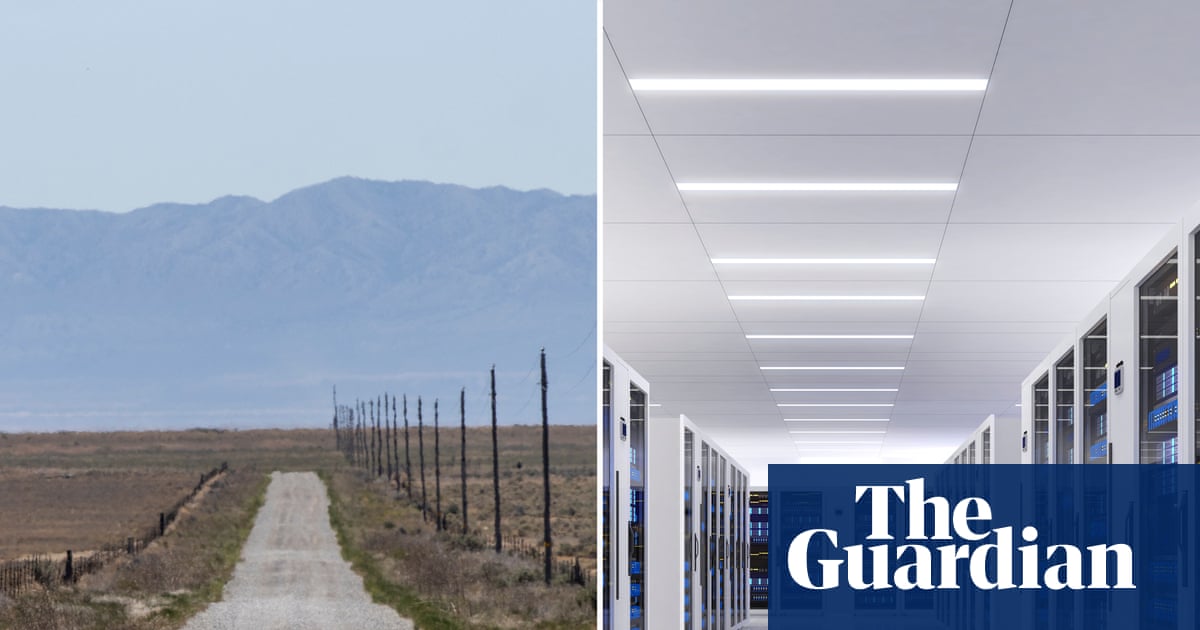
Majority of US's new AI datacenters to be built on drought-hit land

2026-06-08
The Guardian
Why's our monitor labelling this an incident or hazard?
The article clearly involves AI systems, specifically AI datacenters, which are integral to AI operations. The harm discussed is environmental and community-related, centering on water scarcity exacerbated by the datacenters' water and energy demands. However, the harms are not yet realized but are plausible and credible given the drought conditions and projected water use. There is no report of actual injury, disruption, or rights violations caused by AI systems currently. The article also does not focus on responses or updates to past incidents, so it is not Complementary Information. Hence, the event fits the definition of an AI Hazard, as it plausibly could lead to an AI Incident in the future if water shortages and environmental harms materialize due to AI datacenter expansion in drought-hit areas.
Thumbnail Image

AI's secret water crisis: How data centres are draining freshwater reserves across the world

2026-06-08
The Times of India
Why's our monitor labelling this an incident or hazard?
The article explicitly involves AI systems (data centres processing AI queries) and details their direct role in consuming vast amounts of freshwater, contributing to water scarcity in affected regions. This depletion of water resources harms communities and the environment, fulfilling the harm criteria (d). The harm is ongoing and documented with concrete examples (e.g., project cancellations due to water scarcity, aquifer deficits). Thus, the event is not merely a potential hazard or complementary information but an AI Incident where AI system use has directly led to environmental harm.
Thumbnail Image

Blue Economy Meets AI: 4 Water ETFs in Spotlight This World Oceans Day

2026-06-08
NASDAQ Stock Market
Why's our monitor labelling this an incident or hazard?
The article involves AI systems indirectly through their water usage in data centers and mentions AI-optimized water management software, but it does not report any harm, malfunction, or misuse of AI systems leading to injury, rights violations, environmental damage, or other harms. It also does not describe a plausible future harm scenario or credible risk from AI development or use. Instead, it focuses on the intersection of AI infrastructure demands and water resource management, investment funds, and environmental considerations. This fits the definition of Complementary Information, as it provides supporting context and updates on AI's broader ecosystem and its environmental and financial implications without describing a specific AI Incident or AI Hazard.
Thumbnail Image

Majority of US's new AI datacenters to be built on drought-hit land

2026-06-08
Yahoo
Why's our monitor labelling this an incident or hazard?
The event involves AI systems in the form of datacenters supporting AI workloads, which require large amounts of water for cooling. The article does not report any realized harm such as injury or rights violations but clearly outlines the plausible future harm from increased water demand in drought-affected areas, which could lead to environmental harm and community conflicts. Therefore, this situation fits the definition of an AI Hazard, as the AI systems' use could plausibly lead to significant harm, but such harm has not yet materialized according to the article.
Thumbnail Image

AI's Secret Water Crisis: How Data Centers Are Depleting Freshwater Reserves Around the World - THE LOCAL REPORT ARTICLES

2026-06-08
THE LOCAL REPORT ARTICLES
Why's our monitor labelling this an incident or hazard?
The event involves AI systems (AI data centers supporting AI workloads like ChatGPT and GPT-4) whose operation directly leads to significant water consumption and depletion of freshwater resources, causing environmental harm and community-level impacts such as drought exacerbation and project cancellations. This fits the definition of an AI Incident because the AI systems' use has directly led to harm to communities and the environment (harm category d). The article documents realized harm rather than just potential risk, so it is not an AI Hazard. It is not merely complementary information because the main focus is on the harm caused by AI infrastructure water use, not on responses or governance. Therefore, the classification is AI Incident.