The information displayed in the AIM should not be reported as representing the official views of the OECD or of its member countries.
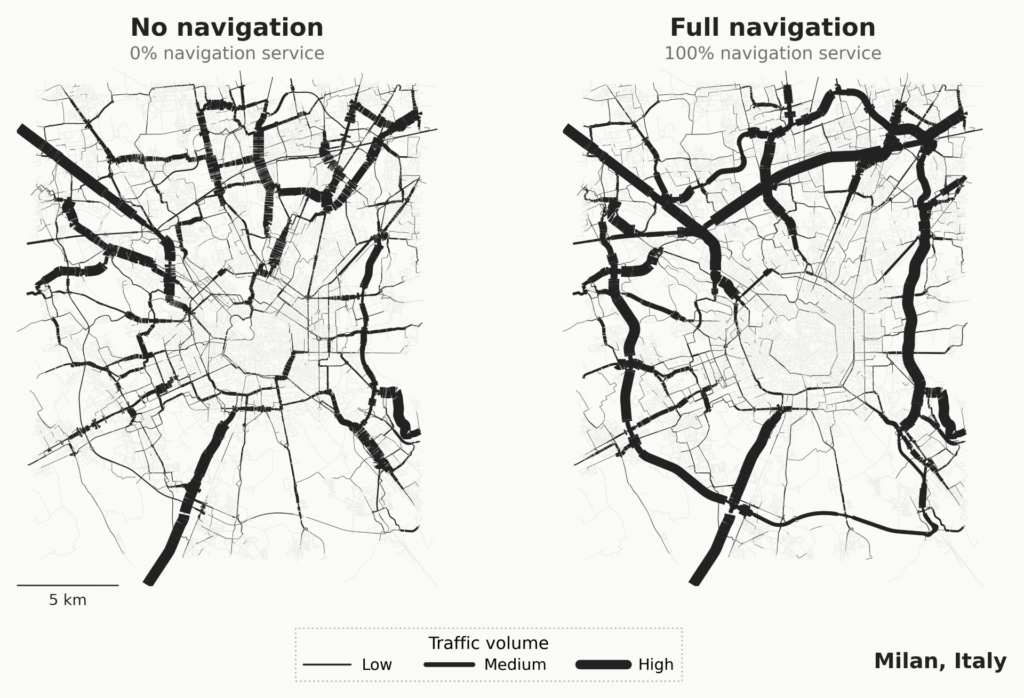
A study by CNR-ISTI, University of Pisa, and Scuola Normale Superiore found that widespread use of AI-powered navigation apps like Google Maps and TomTom can concentrate traffic on fewer urban roads. Simulations in Italian cities show that high adoption rates may negate or reverse environmental benefits, increasing congestion and CO2 emissions.[AI generated]
Why's our monitor labelling this an incident or hazard?
The event involves AI systems explicitly (navigation apps using AI algorithms for route optimization). The research simulates scenarios showing that high adoption rates of these AI systems could plausibly lead to increased environmental harm (CO2 emissions) and negative effects on urban traffic patterns. Since the harm is potential and based on simulation rather than an actual incident causing realized harm, it fits the definition of an AI Hazard. There is no indication of a direct or indirect AI Incident (no actual injury, violation, or realized harm reported). The article is not merely complementary information or unrelated, as it focuses on the plausible risks posed by AI navigation systems. It is also not a beneficial use event, as the AI system's use could lead to harm rather than solely preventing external harm.[AI generated]


