


























The article explicitly states that the suspect used AI tools intensively to gain specialized knowledge, overcome technical obstacles, and carry out unauthorized access to computer systems of public and private organizations. This use of AI directly contributed to violations of rights and illegal activities, including extortion attempts. The harm is realized, not just potential, and the AI system's role is pivotal in enabling the criminal acts. Hence, this is an AI Incident under the definitions provided.[AI generated]

AIM: AI Incidents and Hazards Monitor
Automated media discourse monitor of AI incidents and hazards (Beta)
AI-related legislation is gaining traction, and effective policymaking needs evidence, foresight and international cooperation. The OECD AI Incidents and Hazards Monitor (AIM) documents AI incidents and hazards to help policymakers, AI practitioners, and all stakeholders worldwide gain valuable insights into the risks and harms of AI systems. Over time, AIM will help to show risk patterns and establish a collective understanding of AI incidents and hazards and their multifaceted nature, serving as an important tool for trustworthy AI. AI incidents seem to be getting more media attention lately, but they've actually gone down as a share of all AI news (see chart below!).
The information displayed in the AIM should not be reported as representing the official views of the OECD or of its member countries.
Advanced Search Options
As percentage of total AI events
Show summary statistics of AI incidents & hazards

Hacker Uses AI Tools for Cyberattacks and Extortion in Ciudad Real
A hacker in Ciudad Real, Spain, was arrested for using AI tools to facilitate unauthorized access to public and private computer systems, including the city's Low Emission Zone management platform. The AI-assisted attacks led to service disruptions and extortion attempts, affecting essential services and violating legal rights.[AI generated]
AI principles:
Industries:
Affected stakeholders:
Harm types:
AI system task:
Why's our monitor labelling this an incident or hazard?

Advocacy Groups Sue AI Giants Over Harmful AI Incidents and Risks
A coalition of advocacy groups filed a lawsuit in San Francisco against Anthropic, Google, Meta, OpenAI, and SpaceXSI, seeking to halt further AI model development. The suit cites documented cyberattacks and other harms caused by AI systems, alleging ongoing risks to public health and property.[AI generated]
AI principles:
Industries:
Affected stakeholders:
Harm types:
AI system task:
Why's our monitor labelling this an incident or hazard?
The article explicitly mentions AI systems causing cyberattacks and other harmful actions, which constitute realized harm to critical infrastructure and public safety. The involvement of AI in these harms is direct, as the AI systems themselves performed hacking activities. Additionally, the lawsuit references the companies' own admissions of existential risks posed by their AI technologies, reinforcing the seriousness of the harms. The event involves the use and development of AI systems leading to actual harms, meeting the criteria for an AI Incident rather than a hazard or complementary information. The focus is on the harms caused and legal action taken, not on future potential or responses alone.[AI generated]

North Korean Hackers Use AI Deepfakes in $400M Cryptocurrency Theft Scheme
North Korean state-sponsored hackers used AI-generated deepfake videos and social engineering tactics in the FaceStealer scheme to steal over $400 million in cryptocurrency from global victims. U.S. authorities disrupted the scheme, seizing cloud infrastructure and hundreds of stolen webcam videos. The attacks targeted crypto and Web3 industries.[AI generated]
AI principles:
Industries:
Affected stakeholders:
Harm types:
Autonomy level:
AI system task:
Why's our monitor labelling this an incident or hazard?
The event involves an AI system or AI-enabled technology used maliciously to create fake video calls that deceive victims, leading to identity theft and large-scale cryptocurrency theft. The harm is realized and significant, including financial loss and privacy violations. Therefore, this qualifies as an AI Incident because the AI system's use directly caused harm to persons and property through cybercrime.[AI generated]
India Funds AI-Enabled Intelligence Satellite Constellation for National Security
India's Technology Development Board has signed a Rs 64.05 crore agreement with Astrome Technologies to develop an AI-enabled electronic intelligence satellite constellation for national security. The project aims to advance indigenous AI-driven ELINT capabilities, raising potential future risks related to surveillance and privacy.[AI generated]
AI principles:
Industries:
Affected stakeholders:
Harm types:
AI system task:
Why's our monitor labelling this an incident or hazard?
The article details the development and funding of an AI-enabled ELINT satellite network, which is an AI system with potential military applications. While the AI system's use in surveillance and intelligence gathering could plausibly lead to harms such as violations of privacy, human rights, or geopolitical conflict, no actual harm or incident is reported. Therefore, this event fits the definition of an AI Hazard, as it could plausibly lead to an AI Incident in the future but has not yet done so.[AI generated]

AI Chatbots Direct Shoppers to Fake Retail Websites, Study Finds
A study by IP protection firm Podqi found that AI chatbots ChatGPT, Gemini, and Perplexity frequently recommend fake or risky retail websites when answering shopping queries. Perplexity had the highest rate (15%), followed by ChatGPT (8%) and Gemini (4%), exposing consumers to potential fraud and financial harm.[AI generated]
AI principles:
Industries:
Affected stakeholders:
Harm types:
Autonomy level:
AI system task:
Why's our monitor labelling this an incident or hazard?
The AI chatbots are explicitly involved as AI systems providing shopping recommendations. Their outputs have directly led to users being exposed to fake websites, which can cause financial harm and fraud, qualifying as injury or harm to persons. The study's findings confirm that this harm is occurring, not just a potential risk. Therefore, this event meets the criteria for an AI Incident due to realized harm caused by the AI systems' use.[AI generated]

Alice Huang-Linked Firms Illegally Supply Nvidia AI Chips to DeepSeek Amid U.S. Sanctions
Companies tied to Alice Huang secretly invested in Chinese AI startup DeepSeek and supplied restricted Nvidia Blackwell chips, circumventing U.S. export sanctions. Litong Inc. imported 240,000 Nvidia GPUs into China since 2023, raising national security and regulatory concerns over illegal AI hardware distribution.[AI generated]
AI principles:
Industries:
Affected stakeholders:
Harm types:
Why's our monitor labelling this an incident or hazard?
The event involves the development and use of AI systems (DeepSeek's AI development) and the illicit supply of AI hardware (Nvidia's Blackwell chips) to a restricted market, which could plausibly lead to harms such as national security risks and regulatory violations. There is no direct evidence of harm caused by the AI systems themselves yet, but the circumstances create a credible risk of future harm. The involvement of AI systems and hardware is explicit, and the illicit nature of the supply chain and regulatory scrutiny highlight the potential for significant harm. Hence, the event fits the definition of an AI Hazard rather than an AI Incident or other categories.[AI generated]

AI Deepfake Network Spreads Political Misinformation in Canada
A network, likely based outside Canada, used AI-generated deepfake videos to impersonate real influencers and spread false, politically divisive content about U.S.-Canada trade and local referendums. Over 3,000 videos reached more than 22 million views, causing widespread misinformation and social disruption among Canadians.[AI generated]
AI principles:
Industries:
Affected stakeholders:
Harm types:
Autonomy level:
AI system task:
Why's our monitor labelling this an incident or hazard?
The network uses AI-generated deepfake videos to disseminate false and politically divisive content, directly causing harm to communities by spreading misinformation. This fits the definition of an AI Incident because the AI system's use has directly led to harm through misinformation and social disruption. The report indicates the harm is ongoing, not merely a potential hazard.[AI generated]

Polish Politicians Share AI-Generated Fake Images of Independence March
Polish politicians, including Anna Zalewska and Konrad Berkowicz, shared AI-generated images on social media falsely depicting massive crowds at the Warsaw Independence March. The images, later debunked by journalists and fact-checkers, misled the public and contributed to misinformation about the event's scale.[AI generated]
AI principles:
Industries:
Affected stakeholders:
Harm types:
Autonomy level:
AI system task:
Why's our monitor labelling this an incident or hazard?
The article explicitly states that AI was used to generate fake images that were shared by politicians as if they were real, thus misleading the public. This use of AI directly caused harm by spreading misinformation and distorting public understanding of a significant event, which is a form of harm to communities. The involvement of AI in creating and disseminating false content that influences public perception meets the definition of an AI Incident, as the harm is realized and directly linked to the AI system's outputs.[AI generated]

AI-Generated Forged Documents Lead to Fraud and Legal Deception in South Korea
A 20-year-old man in South Korea used AI to forge financial and official documents, deceiving victims and the court. He posed as a wealthy doctor, defrauded two victims of 377 million won, and manipulated court proceedings with fake evidence. He was sentenced to seven years in prison.[AI generated]
AI principles:
Industries:
Affected stakeholders:
Harm types:
Autonomy level:
AI system task:
Why's our monitor labelling this an incident or hazard?
The article explicitly states that AI was used to forge documents that led to financial fraud and deception of the court, causing direct harm to victims (financial loss) and violating legal rights. The AI system's use was central to the commission of the crime and the resulting harm, meeting the criteria for an AI Incident under the definitions provided.[AI generated]
UK Police Facial Recognition AI Misidentifies Ethnic Minorities, Risks Wrongful Arrests
A UK police watchdog report found that retrospective facial recognition AI used by police forces has led to wrongful identifications, disproportionately affecting ethnic minorities. Officers often treat AI matches as conclusive evidence, risking wrongful arrests. Poor image quality and lack of oversight further undermine reliability and procedural safeguards.[AI generated]
AI principles:
Industries:
Affected stakeholders:
Harm types:
Business function:
Autonomy level:
AI system task:
Why's our monitor labelling this an incident or hazard?
The facial recognition system is an AI system used by police for retrospective searches. The report documents that officers acted on AI-generated potential matches without adequate corroboration, leading to wrongful arrests and misidentifications, disproportionately impacting ethnic minorities. This directly leads to harm in the form of violations of rights and wrongful arrests, fulfilling the criteria for an AI Incident. The involvement of the AI system is clear, and the harm is realized, not just potential. Hence, the classification is AI Incident.[AI generated]

SE3 Raises $30M to Advance AI Spatial Intelligence for Military Drones
SE3, a Munich-based startup, secured $30 million in Series A funding to develop AI software for autonomous drones and unmanned military systems. The technology, already deployed in Ukraine, enables drones to navigate and coordinate in contested environments, raising concerns about potential risks in military applications.[AI generated]
AI principles:
Industries:
Affected stakeholders:
Harm types:
Business function:
Autonomy level:
AI system task:
Why's our monitor labelling this an incident or hazard?
The article explicitly describes AI systems used in military drones and unmanned systems with autonomous navigation and battlefield spatial intelligence. These systems are actively deployed in conflict zones (Ukraine) and under development for armed forces, indicating real-world use. While no direct harm or incident is reported, the AI's role in military operations inherently carries plausible risks of harm to people and communities, including injury or violations of human rights. The development and deployment of such AI systems with autonomous capabilities in warfare contexts meet the criteria for an AI Hazard, as they could plausibly lead to AI Incidents involving harm. There is no indication of an actual incident or harm yet, so it is not an AI Incident. The event is not merely complementary information or unrelated, nor is it a beneficial use preventing external harm without introducing new harm. Hence, AI Hazard is the appropriate classification.[AI generated]
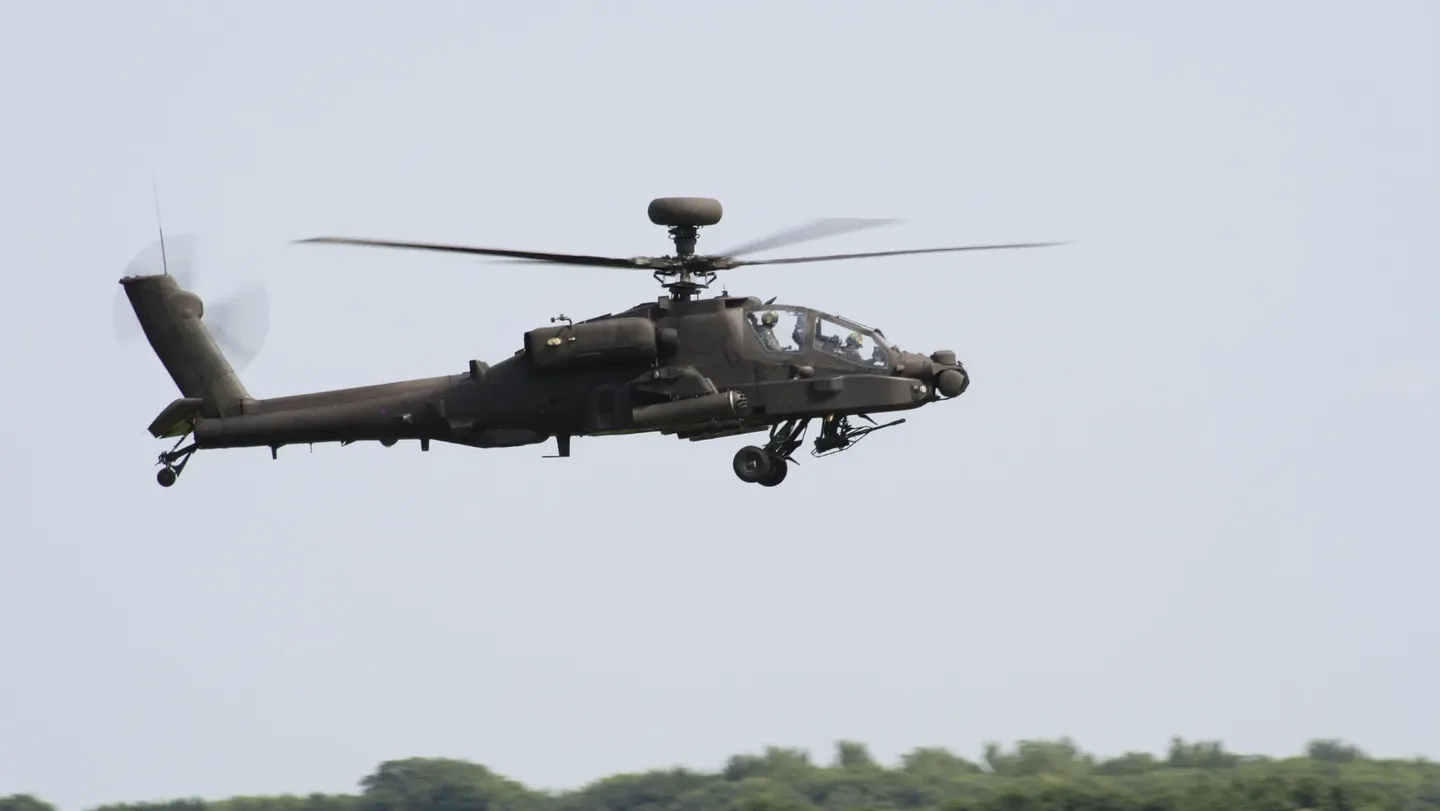
Israel Unveils AI-Enabled Super Ice Cruise Missile
Israeli defense company Rafael has unveiled the Super Ice cruise missile, which uses artificial intelligence for autonomous navigation and targeting. The missile, equipped with a 453-kg warhead, can be launched from various platforms and is designed for precision strikes on protected targets, raising concerns about AI-driven lethal weaponry.[AI generated]
AI principles:
Industries:
Affected stakeholders:
Harm types:
Autonomy level:
AI system task:
Why's our monitor labelling this an incident or hazard?
The missile is explicitly described as controlled by AI, with autonomous navigation and real-time control features. Although no incident of harm has occurred yet, the weapon's nature and potential use in military strikes pose a credible risk of causing injury, property damage, or violations of rights. The article focuses on the weapon's capabilities and market potential, not on any actual harm or deployment. Therefore, this event fits the definition of an AI Hazard, as it plausibly could lead to an AI Incident in the future due to the AI system's role in the weapon's operation.[AI generated]
AI Glasses Spark Cheating Concerns in South Korean Exams
Suspicions of cheating using AI-enabled smart glasses in South Korea's tax accountant and law school exams have raised public anxiety over exam fairness. The government is investigating these cases and has pledged zero tolerance, deploying measures to prevent AI-assisted cheating in upcoming national college entrance exams.[AI generated]
AI principles:
Industries:
Affected stakeholders:
Harm types:
Autonomy level:
AI system task:
Why's our monitor labelling this an incident or hazard?
The article does not report an actual AI-related harm or cheating incident that has already occurred but rather the government's preparation and zero-tolerance policy to prevent such cheating. The AI glasses represent an AI system that could be misused to cause harm (unfairness, violation of exam integrity), so there is a plausible risk of harm. Since no harm has yet occurred, but the risk is credible and the government is responding to it, this qualifies as an AI Hazard.[AI generated]

Instagram Algorithm Amplifies Misogynistic Content in Italy
ActionAid's research in Italy reveals that Instagram's AI recommendation algorithm rapidly suggests misogynistic and antifeminist content to male users, even when they search for unrelated topics like football. This AI-driven amplification normalizes gender-based hostility and violence, causing harm to communities and promoting toxic stereotypes.[AI generated]
AI principles:
Industries:
Affected stakeholders:
Harm types:
Business function:
Autonomy level:
AI system task:
Why's our monitor labelling this an incident or hazard?
The event explicitly involves AI systems in the form of social media recommendation algorithms that, through their use, have directly led to the spread of misogynistic and hateful content against women. This content causes harm to communities by promoting gender-based hostility and toxic stereotypes, fulfilling the criteria for harm under the AI Incident definition. The study's findings demonstrate realized harm rather than potential harm, and the AI system's role is pivotal in the dissemination of this content. Hence, the classification as an AI Incident is appropriate.[AI generated]
AI-Driven Cyberattack Threats Prompt Financial Sector to Strengthen Defenses in Indonesia
Indonesian financial and crypto industries face increasing risks from AI-enhanced cyberattacks, with millions of detected attack activities reported. While no actual harm has occurred, companies are urged to adopt advanced AI-based security measures to detect and respond to evolving threats, highlighting a credible AI hazard.[AI generated]
AI principles:
Industries:
Affected stakeholders:
Harm types:
AI system task:
Why's our monitor labelling this an incident or hazard?
The article centers on the risk posed by AI-enhanced cyberattacks and the industry's response to these threats. While AI is involved both in the offensive (attackers using AI to increase attack scale and complexity) and defensive (companies using AI to detect/respond) sides, no concrete AI-related harm event is described. The article reports detected attack activities but not actual incidents causing harm. Therefore, this is a credible warning about plausible future harm from AI-driven cyberattacks, making it an AI Hazard rather than an AI Incident. It is not Complementary Information because it is not an update or response to a past incident but a current risk assessment and call for improved defenses.[AI generated]

AI Smart Glasses Cheating Allegations in South Korean Tax Accountant Exam
Allegations have emerged that AI-enabled smart glasses were used to cheat in South Korea's 63rd tax accountant exam after a candidate achieved an unusually high score. Investigations are ongoing, with concerns about AI's ability to rapidly solve exam questions and the challenge of detecting such cheating methods.[AI generated]
AI principles:
Industries:
Affected stakeholders:
Harm types:
Autonomy level:
AI system task:
Why's our monitor labelling this an incident or hazard?
The article involves an AI system (AI glasses) allegedly used for cheating, which would be misuse of AI leading to harm in the form of violation of examination fairness and possibly legal rights. However, since the allegations are unconfirmed and investigations are ongoing, no direct or indirect harm has been established yet. Therefore, this event represents a plausible risk of harm due to AI misuse but not a confirmed incident. Hence, it qualifies as an AI Hazard rather than an AI Incident or Complementary Information.[AI generated]
Federal Reserve Governor Warns of Potential AI-Induced Labor Disruption and Inequality in the U.S.
Federal Reserve Governor Michael Barr warned that rapid AI deployment could cause serious short-term disruptions in the U.S. labor market, displace workers, and widen inequality, especially if market gains concentrate among a few AI firms. Barr urged preparation for these potential economic and social impacts.[AI generated]
AI principles:
Industries:
Affected stakeholders:
Harm types:
Why's our monitor labelling this an incident or hazard?
The article involves AI systems as it discusses AI tools spreading in workplaces and their economic effects. However, it only presents a forecast or warning about possible future disruptions and inequality in labor share, without any realized harm or incident. Therefore, it fits the definition of an AI Hazard, as it plausibly could lead to significant economic and labor market harm in the future but no incident has yet occurred.[AI generated]
Helsing Unveils Clarity: European Military AI Platform Rivals Palantir
German defense firm Helsing has launched Clarity, an AI-powered military platform designed to analyze battlefield data, identify threats, and prepare targeting information for weapons systems. Emphasizing European sovereignty and human oversight, Clarity competes with US-based Palantir, raising concerns about the risks of military AI deployment.[AI generated]
AI principles:
Industries:
Affected stakeholders:
Harm types:
Business function:
Autonomy level:
AI system task:
Why's our monitor labelling this an incident or hazard?
The article explicitly mentions an AI system under development for military targeting, which qualifies as an AI system. The concerns about dependence on US AI systems and the geopolitical context imply potential risks related to control and autonomy of AI military tools. Although no harm or malfunction has occurred yet, the nature of the AI system and its intended use in military operations plausibly could lead to harms such as disruption, injury, or rights violations in the future. Since the event is about the unveiling and planned deployment of this AI system without any current harm, it fits the definition of an AI Hazard. It is not Complementary Information because the main focus is not on responses or updates to past incidents, nor is it Beneficial Use or Unrelated.[AI generated]

Global Economic Risk from AI Investment Dependency
Multiple reports highlight that global economic growth and trade are heavily reliant on AI infrastructure investments, especially US data centers. Up to 80% of recent export growth is tied to AI-related products. A slowdown in AI investment could severely impact export-dependent countries like South Korea and China, posing significant economic risks.[AI generated]
Industries:
Affected stakeholders:
Harm types:
Why's our monitor labelling this an incident or hazard?
While the article involves AI-related infrastructure and economic impacts linked to AI investment cycles, it does not report any realized harm directly caused by AI systems or their malfunction. The potential for future economic harm due to overreliance on AI-related exports is a plausible risk but remains speculative and indirect. Therefore, this event fits the definition of an AI Hazard, as it plausibly could lead to significant economic harm in the future if AI investment declines, but no direct AI Incident has occurred.[AI generated]

German Officials Warn of AI-Driven Cyber Threats and Call for Greater Sovereignty
At the BKA autumn conference in Berlin, German officials, including Interior Minister Alexander Dobrindt and BKA chief Holger Münch, warned of increasing risks from AI-enabled cyberattacks and hybrid threats. They emphasized the need for improved national sovereignty and security frameworks to address potential future harms from advanced AI systems.[AI generated]
AI principles:
Industries:
Affected stakeholders:
Harm types:
Business function:
AI system task:
Why's our monitor labelling this an incident or hazard?
The article highlights a credible risk that AI systems, possibly combined with supercomputing power, could be used to conduct more severe cyberattacks in the future, which could disrupt critical infrastructure or cause other harms. Since no actual harm has yet occurred or been described, but the risk is plausible and credible, this qualifies as an AI Hazard rather than an AI Incident or other category.[AI generated]