Name in original language
iDOST
Initiative overview
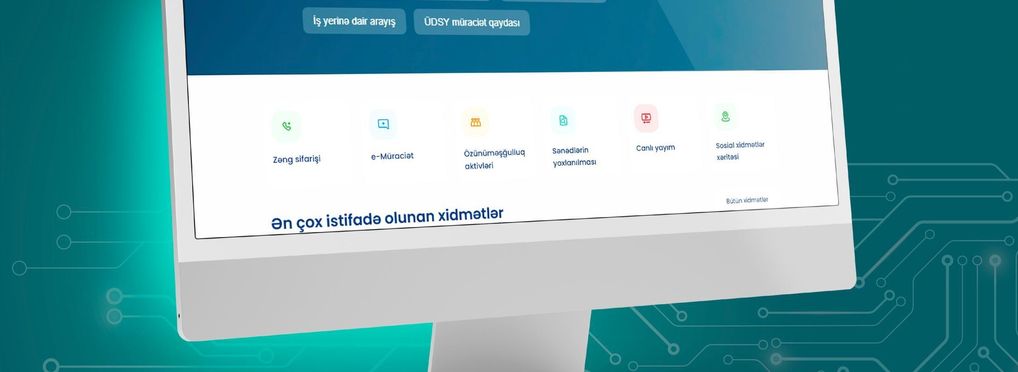
The “iDOST” initiative is an AI-enabled digital assistant integrated into the “e-Social” portal, a unified platform for social services developed by the Ministry of Labor and Social Protection of Population of the Republic of Azerbaijan. It facilitates access to public services related to labour, social protection, employment and all other related issues while addressing challenges such as fragmented information, complex administrative procedures, and limited accessibility for citizens, especially those facing time, mobility, or information barriers. It benefits a wide range of users, including jobseekers, pensioners, persons with disabilities, employers, and residents of remote areas.
Through the “iDOST” section located on the platform’s main page, citizens can directly access relevant electronic services or obtain detailed information about them simply by typing their requests, without searching through the site menu. For example, based on queries such as “I want to check my pension” or “I need to obtain an e-reference”, the AI directs users to the appropriate service within seconds. “iDOST” is capable of promptly answering citizens’ questions related to pension provision, social payments, disability, references, and other social services. Users can freely type their questions and receive the necessary information and service links.
One of the key advantages of the system is its interactive communication mechanism with citizens. To enhance the quality of responses generated by the AI, a dedicated evaluation function has been introduced, allowing users to rate answers using a star-based system and provide feedback or suggestions. This participatory approach enables continuous learning and improvement of the system. Moreover, the initiative is being further developed to deliver tailored, context-aware responses through citizens’ personal cabinets, accessed via Digital Login, which serves as a nationwide single sign-on point for social services.
Results, outcomes and impacts
Since its launch, iDOST has processed 41,168 requests from 25,477 conversations, averaging 5.87 seconds per response, with 2,283 requests daily and 1,414 active conversations. The tool has improved access to social and labour services, expanded 24/7 availability, and lowered administrative work. Impact is measured through usage metrics and a 1–5-star satisfaction rating. Expected future impacts include further efficiency gains, higher user satisfaction, and continued reduction in service delivery time and operational costs.