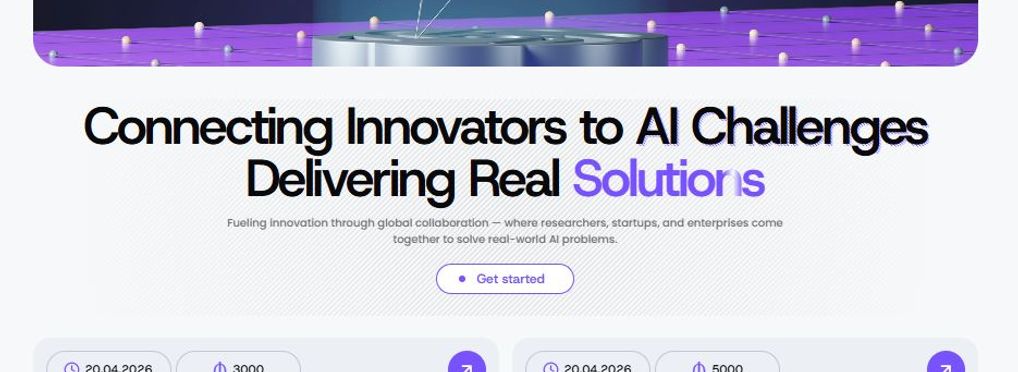
The ASAN AI Hub is a public-sector platform that supports the development and adoption of artificial intelligence solutions in Azerbaijan. It connects government institutions, start-ups, researchers, academia, and global partners to foster applied AI innovation. Through challenge-based collaboration, research support, and training programmes, the Hub promotes practical AI integration and strengthens national AI readiness and digital transformation.
Initiative overview
The ASAN AI Hub was established by the Innovation Centre of the State Agency for Public Service and Social Innovations under the President of the Republic of Azerbaijan to serve as a national platform for advancing artificial intelligence development and collaboration. Within a short period since its launch, ASAN AI Hub has built a growing ecosystem for applied and responsible AI. The initiative responds to the growing need for co-ordinated AI ecosystem building, innovation support, and skills development in Azerbaijan. It brings together public institutions, private-sector actors, researchers, start-ups, and individual innovators within a unified digital platform.
The Hub operates across four main activity areas: open innovation, research and talent development, business solutions, and AI literacy and skills development. Through open innovation mechanisms, it connects government bodies with technology providers and start-ups to facilitate AI-driven solution development. It supports applied research and international collaboration, fostering knowledge exchange and strengthening institutional AI capabilities. In addition, the platform promotes AI-ready business solutions and integration opportunities while enhancing co-operation with international partners.
A strong emphasis is placed on AI education and capacity-building, offering training programmes and learning opportunities to improve AI literacy among public servants, professionals, and the broader community. The ASAN AI Hub is designed to institutionalise AI ecosystem co-ordination within the public sector while maintaining alignment with responsible AI principles. By combining collaboration, experimentation, and skills development, the initiative contributes to strengthening national AI readiness and fostering sustainable AI innovation in public service delivery.
Other relevant details
Results, outcomes and impacts: The platform has onboarded over 80 local and international start-ups and established nine formal partnerships with global organisations, including GENAI.WORKS, Apolitical, and Elements of AI. To strengthen AI literacy, 23 self-paced training programmes are available, reaching around 150 active users monthly. The Hub also engages 19 researchers and collaborates with eight universities to support applied research. Four public- and private-sector challenge calls have been launched to promote open innovation. Results are monitored through participation, partnerships, and outputs. In the future, the Hub is expected to scale training, research, and international co-operation, strengthening innovation capacity and evidence-based public services. Challenges and lessons learned: The development of ASAN AI Hub has faced several practical challenges. First, limited AI awareness and varying levels of digital and data maturity across public institutions and stakeholders created initial barriers to engagement and adoption. Second, ensuring sustainable co-operation between public, private, and academic actors required time to build trust, clarify expectations, and align incentives. Third, attracting high-quality AI solutions and start-ups, while ensuring responsible and ethical standards, required continuous outreach and ecosystem development. To address these challenges, the initiative focused on awareness-raising, capacity-building, and partnership-driven implementation. Flexible training formats, open innovation challenges, and international collaborations helped strengthen participation and improve solution quality. For success, initiatives like this require political support, clear governance, sustainable funding, data readiness, and continuous skills development.