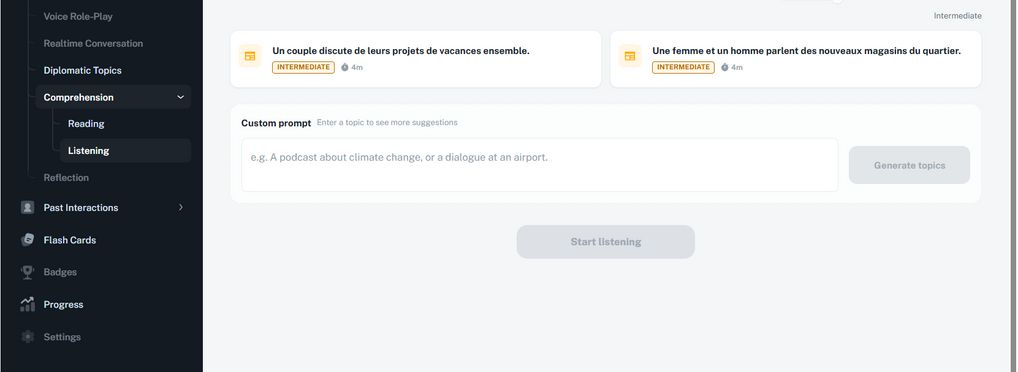
SOPHOS is an AI‑enabled language learning tool designed for use across the Government of Canada. It was first developed to support Canadian diplomats by providing adaptive training in more than 15 foreign languages aligned with the Interagency Language Roundtable (ILR) scale. The application is now being expanded to offer English and French training that meets federal official languages requirements, helping public servants across all regions access consistent, affordable learning.
Initiative overview
The Problem and Opportunity
The federal public service faces a critical gap in bilingual service delivery due to the high cost and limited availability of official language training. Traditional classroom models cost upwards of $70,000 per employee annually, resulting in long wait times and supply constraints. Simultaneously, the Government of Canada requires high language proficiency to deploy agile diplomats abroad. The SOPHOS initiative addresses these pressures by introducing a secure, agentic AI-enabled platform. It provides personalised, consistent learning for both official and foreign languages, ensuring linguistic capacity is no longer a barrier to operational readiness or career advancement.
Objectives of the Initiative
SOPHOS modernises training via a 24/7 AI-driven platform aligned with Public Service Commission (PSC) and Interagency Language Roundtable (ILR) standards. Key objectives include:
- Accessibility & Personalisation: Providing real-time feedback, oral practice, and learner-driven maintenance tailored to individual needs.
- Cost Reduction: Complementing traditional instruction with AI-supported modules to allow for more targeted, affordable language acquisition.
- Security: Operating within a secure environment to ensure data sovereignty.
- Diplomatic Capacity: Strengthening international engagement by calibrating foreign language training to ILR proficiency levels.
Other relevant details
Beyond its technical foundations, SOPHOS is distinguished by several strategic elements that speak to its broader public‑service value and human impact.
A Supportive Environment for Learning. One of the persistent challenges in language acquisition is the hesitation many learners feel when practising in front of colleagues or supervisors. SOPHOS provides a discreet, low‑pressure environment where employees may practise and refine their skills at their own pace, helping build the confidence needed to use a second or foreign language effectively in professional settings.
The Essential Role of Human Expertise. A guiding principle of SOPHOS is that technology should reinforce, not replace, the human dimensions of learning. Instructors remain essential for providing guidance, cultural context, and nuanced feedback. The platform simply extends their reach by supporting continuous practice between sessions, allowing specialists to focus on higher‑value pedagogical work and ensuring a balanced, human‑centred approach to innovation.
Alignment With Government Priorities. SOPHOS directly supports broader government objectives by renewing bilingual capacity under the Official Languages Act, expanding equitable access to high‑quality learning, and demonstrating how emerging technologies can be introduced responsibly and in the public interest. It serves as a practical example of how modernisation can strengthen service delivery while supporting an inclusive and diverse public service.
An Adaptable and Forward‑Looking Platform. Developed as a flexible ecosystem rather than a single tool, SOPHOS can incorporate new features (such as interactive vocabulary tools or immersive practice scenarios) as needs evolve. This modular design ensures the platform remains current, avoids dependence on any one solution, and supports gradual, sustainable improvements.
Sustainable and Practical Benefits. By enabling learning to occur alongside day‑to‑day duties, SOPHOS reduces disruptions associated with extended training leave and lessens administrative coordination burdens. Over time, this contributes to greater operational continuity and prudent stewardship of public resources.
Results, outcomes and impacts:
Early testing has demonstrated that SOPHOS can securely support reading, writing, and oral practice while providing high‑quality, real‑time feedback aligned with federal language standards. These outcomes were assessed through prototype evaluations and structured user trials. As the initiative progresses, it is expected to broaden equitable access to both official and foreign language training, strengthen bilingual service delivery, and reduce persistent barriers faced by employees seeking to meet language requirements.