US Air Force Deploys AI Robot Dogs for Military Base Security Patrols

Thumbnail Image

The information displayed in the AIM should not be reported as representing the official views of the OECD or of its member countries.

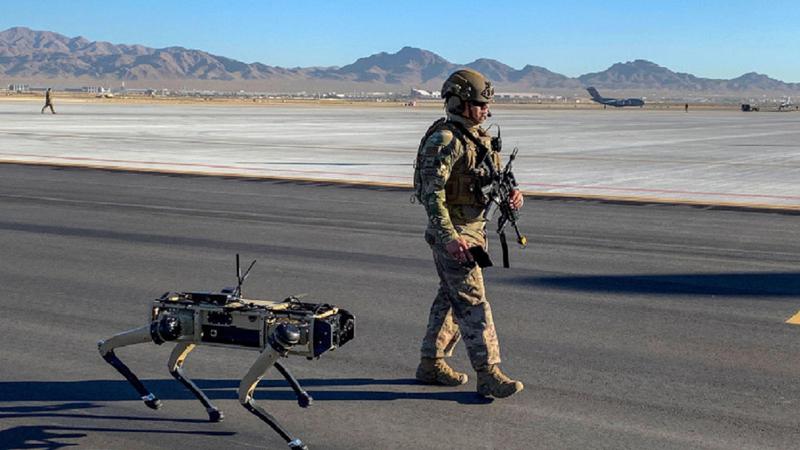
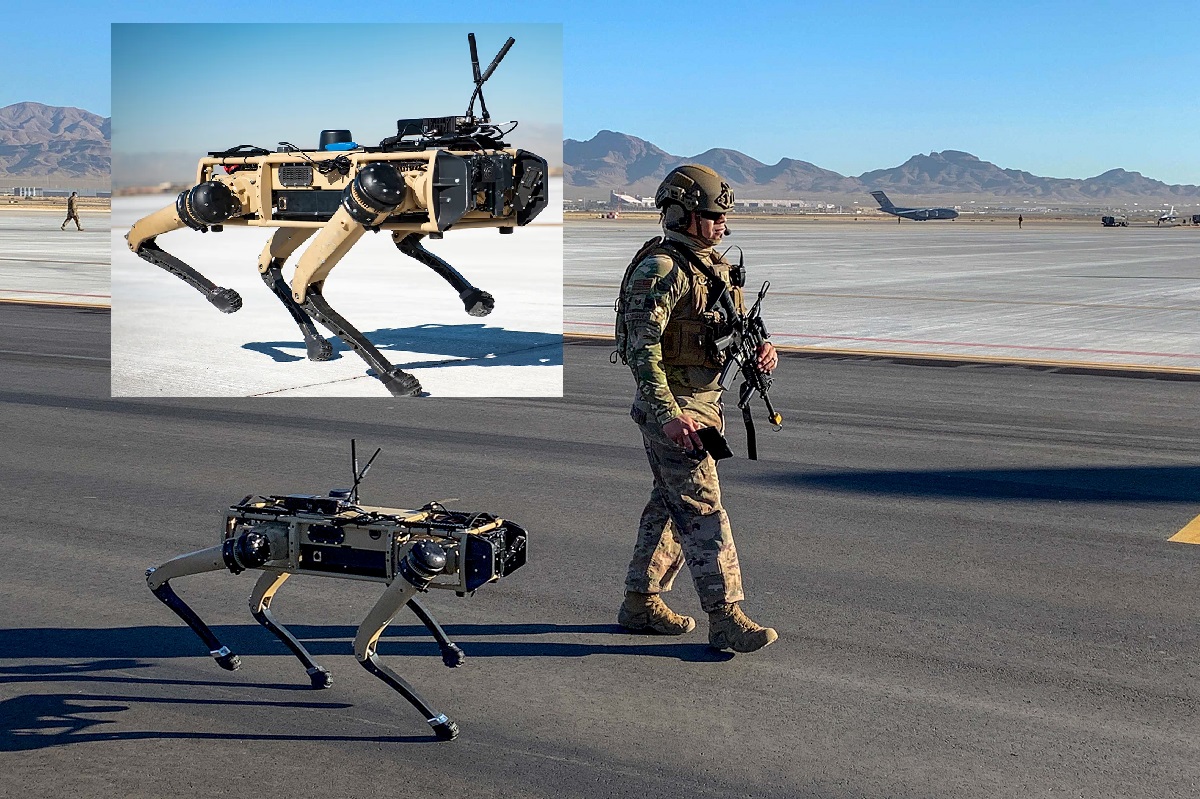
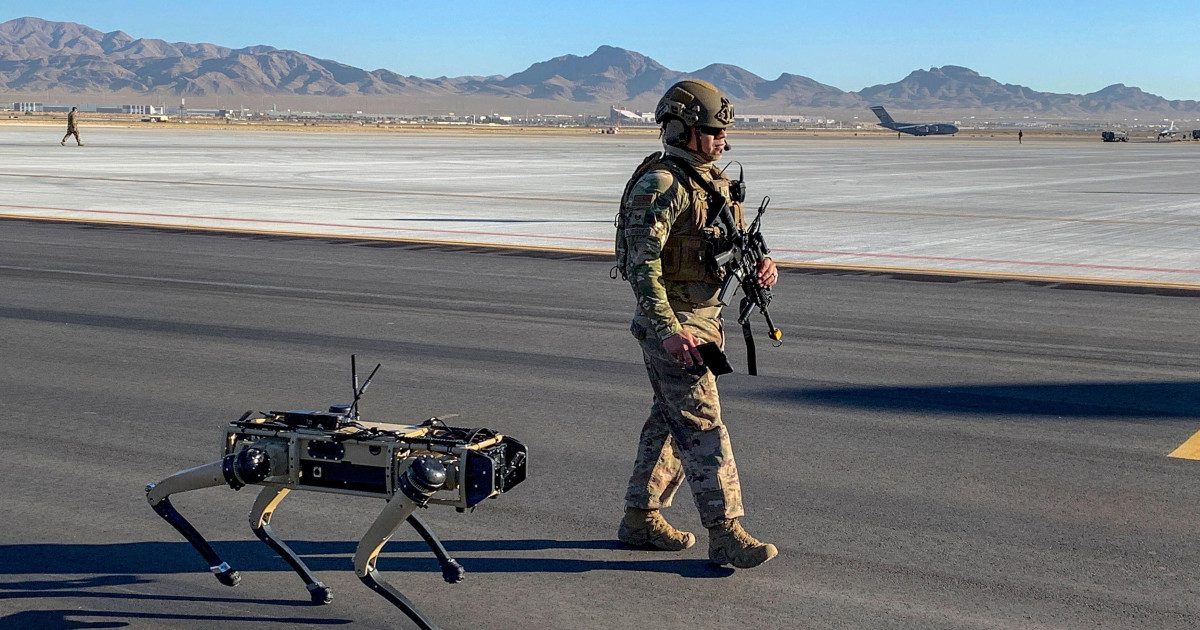
The US Air Force's Tyndall base in Florida is the first to deploy semi-autonomous AI-powered quadruped robots (Q-UGV) for security patrols. These robot dogs, equipped with cameras and sensors, will autonomously patrol challenging areas under human supervision, raising potential future risks if malfunctions or misuse occur.[AI generated]

Why's our monitor labelling this an incident or hazard?

The robot dogs are AI systems with autonomous patrol capabilities and sensor-based monitoring, indicating AI involvement. The article does not report any actual harm or incidents caused by these systems yet, but their deployment in military security roles implies a credible risk of future harm, such as accidents, misuse, or operational failures. Hence, the event fits the definition of an AI Hazard rather than an AI Incident or Complementary Information.[AI generated]
AI principles
AccountabilitySafetyRobustness & digital securityPrivacy & data governanceRespect of human rightsTransparency & explainabilityDemocracy & human autonomy

Industries
Government, security, and defence

Affected stakeholders
Workers

Harm types
Physical (injury)PsychologicalHuman or fundamental rights

Severity
AI hazard

AI system task:
Recognition/object detectionEvent/anomaly detectionReasoning with knowledge structures/planning


Articles about this incident or hazard

Thumbnail Image

Bazele militare ale SUA vor fi păzite de câini-roboţi

2020-12-20
Digi24
Why's our monitor labelling this an incident or hazard?
The event involves AI systems (semi-autonomous robot dogs with sensors and data processing capabilities) being used operationally in a military context. However, the article does not report any harm or incident resulting from their use, nor does it indicate any malfunction or misuse. The deployment is described as a new operational capability, with human monitoring and control, and no harm or risk is explicitly stated. While the use of autonomous military robots could plausibly lead to future harms, the article focuses on the initial deployment and testing phase without any indication of harm or credible risk at this stage. Therefore, this is best classified as Complementary Information, providing context on AI system adoption in military security without reporting an incident or hazard.
Thumbnail Image

VIDEO | Bazele militare americane vor fi păzite de câini-roboți

2020-12-21
Libertatea
Why's our monitor labelling this an incident or hazard?
The robot dogs are AI systems with autonomous patrol capabilities and sensor-based monitoring, indicating AI involvement. The article does not report any actual harm or incidents caused by these systems yet, but their deployment in military security roles implies a credible risk of future harm, such as accidents, misuse, or operational failures. Hence, the event fits the definition of an AI Hazard rather than an AI Incident or Complementary Information.
Thumbnail Image

Divizia câinilor roboți, arsenalul secret al Air Force. Capacitățile u

2020-12-20
Evenimentul Zilei
Why's our monitor labelling this an incident or hazard?
The article explicitly mentions the use of semi-autonomous AI robotic dogs (Q-UGV) for patrol missions at a US Air Force base, confirming AI system involvement. The robots are used operationally under human supervision, processing data and patrolling challenging environments. No harm or incident is reported; the robots are intended to enhance security and monitoring. However, given their deployment in critical military infrastructure and autonomous capabilities, there is a credible risk that malfunctions or misuse could lead to harm in the future. Thus, the event is best classified as an AI Hazard rather than an Incident or Complementary Information.
Thumbnail Image

VIDEO. Câinii-roboți, paznici la bazele militare ale SUA

2020-12-20
DCnews
Why's our monitor labelling this an incident or hazard?
The event involves AI systems (semi-autonomous quadruped robots) used in military base security, which is a clear AI system involvement. There is no indication of any realized harm or incident caused by these robots so far, so it is not an AI Incident. However, the deployment of such AI-enabled autonomous robots in sensitive military environments plausibly could lead to harms in the future, such as operational failures, privacy breaches, or misuse. Hence, it fits the definition of an AI Hazard rather than an Incident or Complementary Information. It is not unrelated because the AI system is central to the event.
Thumbnail Image

(video) Bazele militare ale SUA vor fi păzite de câini-roboţi

2020-12-20
UNIMEDIA
Why's our monitor labelling this an incident or hazard?
The event involves AI systems (semi-autonomous robot dogs) used in military security operations, which fits the definition of an AI system. Since the robots are beginning autonomous patrols, there is a plausible risk of future harm (e.g., accidents, security failures), but no harm has yet occurred or been reported. Therefore, this qualifies as an AI Hazard due to the plausible future risk associated with deploying autonomous military robots, but not an AI Incident or Complementary Information. It is not unrelated because AI systems are clearly involved.
Thumbnail Image

VIDEO Câini roboți vor păzi bazele americane, ca în Star Wars. Au o autonomie de 10 km | Newsweek Romania

2020-12-20
newsweek.ro
Why's our monitor labelling this an incident or hazard?
The event involves AI systems (semi-autonomous robot dogs) being deployed for military patrols, which could plausibly lead to harm if malfunction or misuse occurs, such as security breaches or accidents. However, since no harm or incident has occurred or been reported, and the article focuses on the deployment and capabilities rather than any negative outcomes, this qualifies as an AI Hazard rather than an AI Incident. The potential for future harm is credible given the military context and autonomous operation, but no direct or indirect harm has materialized yet.
Thumbnail Image

Bazele SUA, păzite de câini-roboţi

2020-12-20
Viaţa Liberă
Why's our monitor labelling this an incident or hazard?
The described 'semi-autonomous quadruped' robots clearly involve AI systems for autonomous patrolling and sensing. While the article does not report any harm or incidents caused by these AI systems, the deployment of autonomous robotic security systems in military bases plausibly could lead to harms such as injury, disruption, or violations of rights if malfunctions or misuse occur. Therefore, this event represents an AI Hazard due to the credible potential for harm from the use of AI-enabled autonomous military robots.
Thumbnail Image

Bazele militare SUA vor fi păzite de câini-roboți - CursDeGuvernare.ro

2020-12-20
CursDeGuvernare
Why's our monitor labelling this an incident or hazard?
The event involves AI systems explicitly described as autonomous quadrupedal robots used for military base security patrols. Although no harm has yet occurred, the deployment of such AI systems in military contexts plausibly could lead to injury, operational disruption, or other harms. The article focuses on the introduction and capabilities of these AI robots, not on any realized harm or incident. Hence, it fits the definition of an AI Hazard rather than an AI Incident or Complementary Information.