UK Plans AI-Powered Surveillance Drones for Public Safety Raise Privacy Concerns

Thumbnail Image

The information displayed in the AIM should not be reported as representing the official views of the OECD or of its member countries.

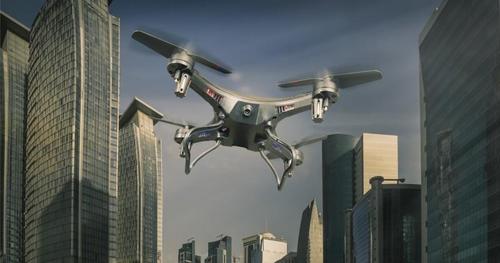
The UK government is considering deploying AI-enabled drones equipped with spotlights and thermal cameras to protect women walking alone at night. Summoned via a phone app, these drones will be trialed at Nottingham University, raising concerns about potential privacy violations and misuse despite their intended public safety benefits.[AI generated]

Why's our monitor labelling this an incident or hazard?

The event involves the development and intended use of AI systems (drones with AI for tracking and surveillance) aimed at public safety. However, no actual harm or incident has occurred yet; the drones are planned and proposed for trial. The article discusses potential benefits and operational plans but does not report any realized harm or malfunction. Therefore, this constitutes a plausible future risk scenario where the AI system could lead to harm or benefits, fitting the definition of an AI Hazard rather than an Incident or Complementary Information.[AI generated]
AI principles
Privacy & data governanceRespect of human rightsTransparency & explainabilityAccountabilityDemocracy & human autonomyRobustness & digital securitySafety

Industries
Government, security, and defenceEducation and trainingMobility and autonomous vehiclesRobots, sensors, and IT hardware

Affected stakeholders
WomenGeneral public

Harm types
Human or fundamental rightsPsychologicalPublic interestReputational

Severity
AI hazard

Business function:
Monitoring and quality controlICT management and information security

AI system task:
Recognition/object detectionEvent/anomaly detection


Articles about this incident or hazard

Thumbnail Image

Plan for DRONES with lights and camera to protect women at night

2022-01-02
Daily Mail Online
Why's our monitor labelling this an incident or hazard?
The event involves the development and intended use of AI systems (drones with AI for tracking and surveillance) aimed at public safety. However, no actual harm or incident has occurred yet; the drones are planned and proposed for trial. The article discusses potential benefits and operational plans but does not report any realized harm or malfunction. Therefore, this constitutes a plausible future risk scenario where the AI system could lead to harm or benefits, fitting the definition of an AI Hazard rather than an Incident or Complementary Information.
Thumbnail Image

UK Government Greases Skids For Fleets of Surveillance Drones Over Cities

2022-01-03
Infowars Europe
Why's our monitor labelling this an incident or hazard?
The event involves the development and intended use of AI-enabled surveillance drones for public safety and law enforcement. While no harm has yet occurred, the article highlights plausible risks of misuse, abuse, and mass surveillance leading to violations of privacy and potential human rights concerns. Therefore, this situation represents a credible potential for harm stemming from the AI system's deployment and use, fitting the definition of an AI Hazard rather than an AI Incident or Complementary Information. The article does not describe realized harm or responses to past incidents, nor is it unrelated to AI systems.
Thumbnail Image

Drones using AI could be deployed to protect women from predators at night

2022-01-03
Daily Star
Why's our monitor labelling this an incident or hazard?
The article focuses on the planned use of AI-equipped drones to respond rapidly to attacks on women, aiming to reduce harm. The AI system's involvement is in its development and intended use. No actual incident or harm has occurred yet, but the deployment could plausibly lead to preventing harm or, conversely, could raise concerns about privacy or misuse. Since the article discusses a credible future application of AI with potential safety impact but no realized harm, it fits the definition of an AI Hazard rather than an Incident or Complementary Information.
Thumbnail Image

Women 'to be protected from sex attackers by drones' summoned using phone app

2022-01-01
The Scottish Sun
Why's our monitor labelling this an incident or hazard?
The article explicitly mentions an AI-powered drone system designed for surveillance and protection, involving AI for tracking and monitoring. Although no harm has yet occurred, the system's deployment could plausibly lead to harms such as privacy violations or misuse leading to harm to individuals or communities. Since the event concerns the planned use and testing of this AI system with potential risks but no realized harm, it fits the definition of an AI Hazard rather than an Incident. It is not merely complementary information because the focus is on the planned AI system and its potential impact, not on responses or ecosystem context. It is not unrelated because the AI system is central to the event.
Thumbnail Image

UK Government Greases Skids For Fleets Of Surveillance Drones Over Cities - Conservative Angle

2022-01-04
Brigitte Gabriel
Why's our monitor labelling this an incident or hazard?
The event involves AI systems (surveillance drones with advanced sensors and capabilities) whose deployment is planned but not yet causing realized harm. The article highlights plausible future harms such as misuse, abuse, harassment, and mass surveillance leading to violations of privacy and potential human rights concerns. Since no actual harm has yet occurred but there is a credible risk of harm from the use of these AI systems, this qualifies as an AI Hazard rather than an AI Incident. The article's focus is on the potential risks and societal implications of deploying these AI-enabled drones, not on a realized incident.
Thumbnail Image

UK Government Greases Skids For Fleets Of Surveillance Drones Over Cities

2022-01-05
freedomsphoenix.com
Why's our monitor labelling this an incident or hazard?
The event involves AI systems in the form of surveillance drones with advanced sensing and operational capabilities that likely rely on AI for autonomous or semi-autonomous functions. The article does not report any realized harm but discusses trials and plans for deployment, indicating potential future risks. The plausible harms include privacy violations and misuse of surveillance technology, which align with violations of human rights or harm to communities. Since no direct harm has yet occurred, but the risk is credible and foreseeable, the event fits the definition of an AI Hazard rather than an AI Incident or Complementary Information.
Thumbnail Image

Women walking alone at night will be protected by DRONES equipped with a spotlight and a thermal camera. | Nokia News

2022-01-02
Nokia News |
Why's our monitor labelling this an incident or hazard?
The drones described are AI systems as they use AI technology for autonomous emergency response, surveillance, and deterrence. The event concerns the development and planned deployment of these drones, which could plausibly lead to harms such as privacy violations, misuse, or unintended consequences, even though no harm has yet occurred. Since the article focuses on plans and potential use rather than an actual incident or realized harm, it fits the definition of an AI Hazard rather than an AI Incident or Complementary Information. The event is not unrelated because it clearly involves AI systems and their potential societal impact.