US Army Funds AI-Enabled Radar for Autonomous Military Vehicles

Thumbnail Image

The information displayed in the AIM should not be reported as representing the official views of the OECD or of its member countries.

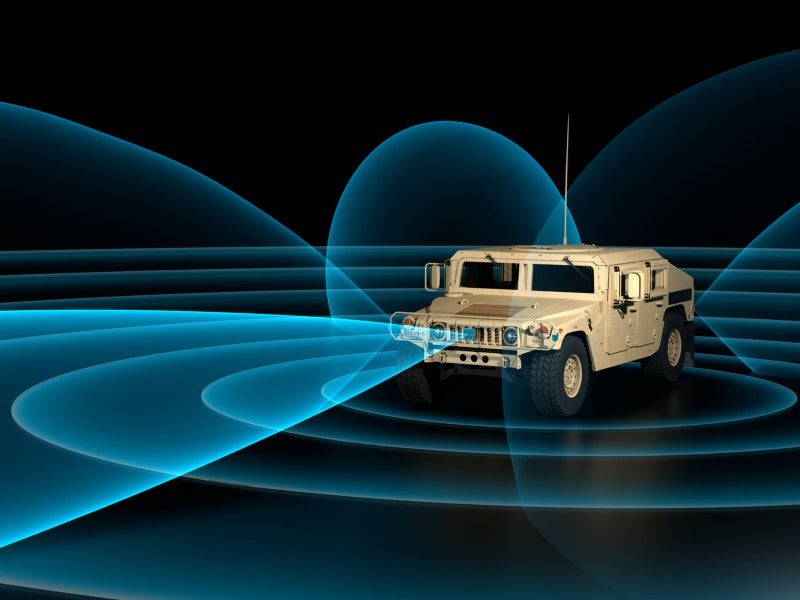
The US Army awarded Metawave Corporation a $1.7 million contract to develop AI-powered radar and machine learning systems for autonomous ground vehicles. The technology aims to enhance off-road perception and navigation in adverse conditions, presenting potential future risks if malfunction or misuse occurs, but no harm has yet been reported.[AI generated]

Why's our monitor labelling this an incident or hazard?

The event involves the development and use of AI systems, specifically Recursive Neural Network Machine Learning software integrated with radar and sensor fusion technologies, to enable autonomous vehicle perception and navigation. This AI system is intended for military autonomous ground vehicles, which are mission-critical and could directly impact safety and operational effectiveness. However, the article describes a development contract and planned capabilities without reporting any realized harm or incident. Therefore, it represents a plausible future risk scenario where AI-enabled autonomous military vehicles could lead to harm if malfunction or misuse occurs, qualifying it as an AI Hazard rather than an Incident or Complementary Information.[AI generated]

AI principles
SafetyRobustness & digital securityAccountabilityTransparency & explainabilityRespect of human rightsDemocracy & human autonomyPrivacy & data governance

Industries
Government, security, and defenceRobots, sensors, and IT hardwareMobility and autonomous vehiclesDigital security

Harm types
Physical (death)Physical (injury)Public interestHuman or fundamental rightsReputationalEconomic/Property

Severity
AI hazard

Business function:
Research and development

AI system task:
Recognition/object detectionReasoning with knowledge structures/planningGoal-driven organisationForecasting/predictionEvent/anomaly detection


Articles about this incident or hazard

Thumbnail Image

U.S. Army Funds Advancement in Perception Sensing for Autonomous Ground Systems

2023-01-04
StreetInsider.com
Why's our monitor labelling this an incident or hazard?
The article details the development and enhancement of AI-powered radar and perception systems for autonomous military ground vehicles. While these technologies have potential future risks, the article does not report any actual incidents of harm, malfunction, or misuse. The event is about research and development funding and technological advancement, without any direct or indirect harm caused or plausible immediate harm described. Therefore, it does not meet the criteria for an AI Incident or AI Hazard. It is best classified as Complementary Information, as it provides context on AI system development and its potential applications in defense.
Thumbnail Image

US Army Funds Advancement in Perception Sensing

2023-01-06
Geospatial World
Why's our monitor labelling this an incident or hazard?
The article details the development and enhancement of AI-enabled perception sensing technologies for military autonomous vehicles, involving AI systems such as neural networks and AI computing GPUs. However, it does not report any actual harm, malfunction, or misuse of these AI systems. There is no indication that these technologies have caused injury, rights violations, or other harms. The event is about the funding and development phase, which could plausibly lead to future AI hazards but does not describe any immediate or realized harm. Therefore, it is best classified as Complementary Information, providing context on AI system development and defense applications without reporting an incident or hazard.
Thumbnail Image

Metawave receives $1.7m Direct-to-Phase II SBIR grant from US Army

2023-01-05
Army Technology
Why's our monitor labelling this an incident or hazard?
The event involves the development and use of AI systems, specifically Recursive Neural Network Machine Learning software integrated with radar and sensor fusion technologies, to enable autonomous vehicle perception and navigation. This AI system is intended for military autonomous ground vehicles, which are mission-critical and could directly impact safety and operational effectiveness. However, the article describes a development contract and planned capabilities without reporting any realized harm or incident. Therefore, it represents a plausible future risk scenario where AI-enabled autonomous military vehicles could lead to harm if malfunction or misuse occurs, qualifying it as an AI Hazard rather than an Incident or Complementary Information.
Thumbnail Image

US Army Invests $1.7M in Off-Road Perception Sensing for UGVs

2023-01-06
The Defense Post
Why's our monitor labelling this an incident or hazard?
The article focuses on the development and enhancement of AI-powered perception systems for military autonomous vehicles, which could plausibly lead to future harms if misused or malfunctioning, especially in mission-critical defense contexts. However, there is no indication that any harm, injury, rights violation, or disruption has occurred yet. Therefore, this event represents a plausible future risk scenario (AI Hazard) rather than an incident or complementary information about a past event.
Thumbnail Image

Autonomous vehicle sensing technology for U.S. Army to be developed by Metawave - Military Embedded Systems

2023-01-05
militaryembedded.com
Why's our monitor labelling this an incident or hazard?
The article details the development of an AI-enabled radar and machine learning system for autonomous military vehicles, which qualifies as an AI system. Since the system is under development and no harm or malfunction is reported, this constitutes a potential future risk rather than an actual harm event. Therefore, it fits the definition of an AI Hazard, as the technology could plausibly lead to harm in military operations if issues arise, but no incident has yet occurred.