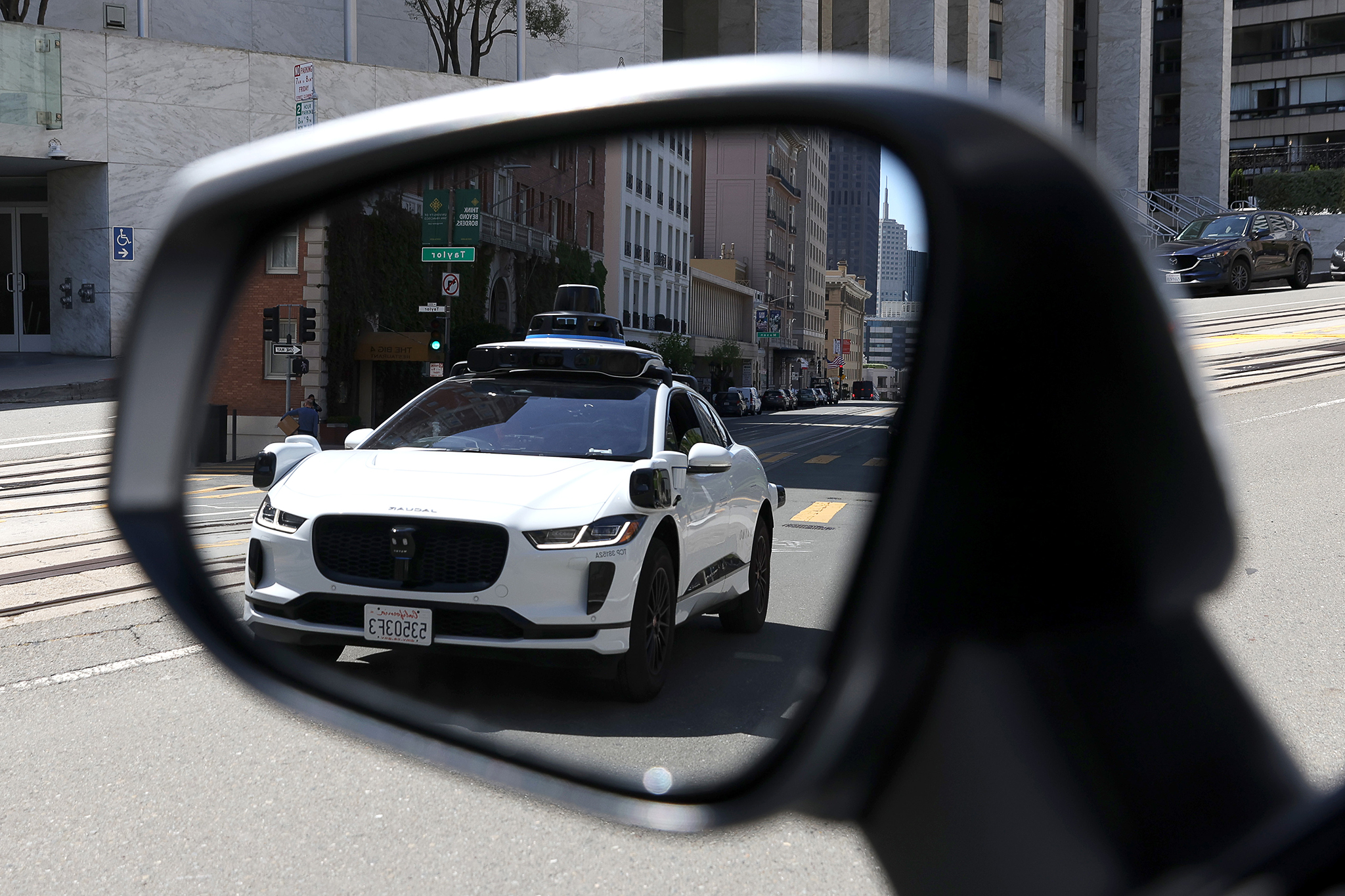
Waymo Driverless Car Causes San Francisco Traffic Disruption

Thumbnail Image

The information displayed in the AIM should not be reported as representing the official views of the OECD or of its member countries.

A Waymo autonomous vehicle stopped in the middle of a busy San Francisco intersection during rush hour due to unexpected road closures, causing significant traffic congestion. The incident highlights the challenges and risks of AI-driven vehicles in complex urban environments, as the AI system failed to adapt to dynamic road conditions.[AI generated]

Why's our monitor labelling this an incident or hazard?

The event involves an AI system explicitly (Waymo's autonomous vehicle) whose use directly led to a disruption of critical infrastructure (traffic flow) by stopping in the middle of a busy intersection and causing a traffic jam. The incident stems from the AI system's use and its failure to appropriately navigate or respond to unexpected road closures, leading to harm in the form of traffic disruption. This fits the definition of an AI Incident as the AI system's malfunction or operational decision directly caused harm (disruption of critical infrastructure).[AI generated]
AI principles
SafetyRobustness & digital securityAccountabilityTransparency & explainabilityHuman wellbeing

Industries
Mobility and autonomous vehicles

Affected stakeholders
General public

Harm types
Economic/PropertyReputational

Severity
AI incident

Business function:
Other

AI system task:
Recognition/object detectionGoal-driven organisationReasoning with knowledge structures/planningEvent/anomaly detection


Articles about this incident or hazard

Thumbnail Image

Waymo Autonomous Vehicle: Waymo driverless car brings San Francisco traffic to a halt during Tuesday rush hour, Auto News, ET Auto

2023-01-25
ETAuto.com
Why's our monitor labelling this an incident or hazard?
The event involves an AI system explicitly (Waymo's autonomous vehicle) whose use directly led to a disruption of critical infrastructure (traffic flow) by stopping in the middle of a busy intersection and causing a traffic jam. The incident stems from the AI system's use and its failure to appropriately navigate or respond to unexpected road closures, leading to harm in the form of traffic disruption. This fits the definition of an AI Incident as the AI system's malfunction or operational decision directly caused harm (disruption of critical infrastructure).
Thumbnail Image

Driverless Waymo brings SF traffic to a halt during rush hour

2023-01-24
San Francisco Gate
Why's our monitor labelling this an incident or hazard?
The event involves a driverless car, which is an AI system performing autonomous navigation. The vehicle's stopping in the middle of a busy intersection due to unexpected road closures caused a traffic jam, which constitutes disruption of critical infrastructure management. This disruption is a direct harm caused by the AI system's malfunction or inability to adapt to the situation. Therefore, this qualifies as an AI Incident under the framework, as the AI system's use directly led to harm (traffic disruption).
Thumbnail Image

Super Bowl goes driverless as Waymo offers fully autonomous rides in Arizona

2023-01-24
The US Sun
Why's our monitor labelling this an incident or hazard?
The article explicitly involves an AI system (Waymo's autonomous driving system) and describes its use and a malfunction. However, the malfunction only caused a traffic hold-up without reported injury or damage. Since no harm has occurred, this does not qualify as an AI Incident. The malfunction indicates a plausible risk of future harm, making it an AI Hazard. The event is not merely complementary information because the malfunction is a concrete event involving AI system malfunction with potential safety implications. Therefore, the classification is AI Hazard.