Nightshade Tool Poisons AI Image Generators to Protect Artists' Work

Thumbnail Image

The information displayed in the AIM should not be reported as representing the official views of the OECD or of its member countries.

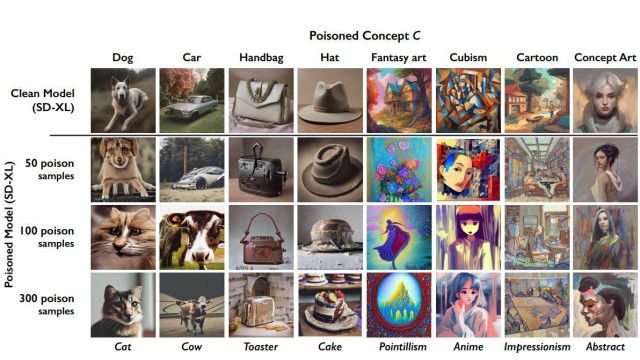
Researchers at the University of Chicago developed Nightshade, a tool that allows artists to poison AI image generators by embedding misleading data in images. This causes AI models trained on these images to malfunction, producing distorted outputs and undermining the reliability of generative AI systems that scrape art without permission.[AI generated]

Why's our monitor labelling this an incident or hazard?

The event involves the development and potential use of an AI-related tool that could plausibly lead to harm by disrupting AI training processes and protecting artists' rights. Since no actual harm or incident has occurred yet, and the focus is on the potential impact of this tool, this qualifies as an AI Hazard rather than an AI Incident or Complementary Information.[AI generated]

AI principles
Robustness & digital securityTransparency & explainabilityAccountability

Industries
Media, social platforms, and marketingArts, entertainment, and recreationDigital security

Affected stakeholders
Business

Harm types
Economic/PropertyReputational

Severity
AI hazard

Business function:
Research and development

AI system task:
Content generation


Articles about this incident or hazard

Thumbnail Image

New data poisoning tool would punish AI for scraping art without permission By Cointelegraph

2023-10-23
Investing.com
Why's our monitor labelling this an incident or hazard?
The event involves the development and potential use of an AI-related tool that could plausibly lead to harm by disrupting AI training processes and protecting artists' rights. Since no actual harm or incident has occurred yet, and the focus is on the potential impact of this tool, this qualifies as an AI Hazard rather than an AI Incident or Complementary Information.
Thumbnail Image

New Tool 'Poisons' AI Data To Shield Artists From Having Their Work Stolen

2023-10-26
Forbes
Why's our monitor labelling this an incident or hazard?
Nightshade is an AI-related tool designed to interfere with AI training processes by poisoning data. While it is intended as a protective measure for artists, its use could plausibly lead to AI training corruption or reduced model accuracy, which constitutes a plausible future harm. Since the tool is not yet released and no harm has occurred, this is an AI Hazard. The article also discusses the broader context of AI training on scraped images and the ethical concerns involved, but the main focus is on the potential impact of Nightshade as a protective AI tool that could cause plausible future harm to AI systems if widely adopted or misused.
Thumbnail Image

A new tool could protect artists by sabotaging AI image generators

2023-10-24
Mashable
Why's our monitor labelling this an incident or hazard?
The article explicitly involves AI systems, specifically AI image generators that train on large datasets scraped from the internet. The tool Nightshade is intended to alter images so that AI systems misclassify them, thereby poisoning the training data. While no actual harm has yet occurred, the use of Nightshade could plausibly lead to disruption of AI systems' operation, which fits the definition of an AI Hazard. There is no indication that harm has already occurred, so it is not an AI Incident. The article focuses on the potential impact and development of this tool rather than reporting on a realized harm or a governance response, so it is not Complementary Information. Therefore, the event is best classified as an AI Hazard due to the plausible future harm to AI system operation through data poisoning.
Thumbnail Image

Poison pill tool could break AI systems stealing unauthorized data, allowing artists to safeguard their works

2023-10-26
Fox News
Why's our monitor labelling this an incident or hazard?
The article involves AI systems (image generators like Midjourney and Stable Diffusion) and their use of unauthorized data, which relates to intellectual property rights violations. However, the article primarily discusses a new defensive tool (Nightshade) designed to prevent unauthorized training and the legal actions taken by artists. There is no indication that the AI systems have malfunctioned causing harm, nor that Nightshade's deployment has caused harm. The potential for harm from unauthorized training is ongoing but not newly realized here. The article mainly provides context on responses to AI-related copyright issues and the development of protective measures, fitting the definition of Complementary Information rather than an Incident or Hazard.
Thumbnail Image

Artists Can Now Sabotage AI Image Generators to Fight Art Theft

2023-10-24
Yahoo Sports Canada
Why's our monitor labelling this an incident or hazard?
The article involves an AI system (the poisoning tool) designed to interfere with AI image generators by manipulating training data. Although no direct harm has been reported yet, the tool's use could plausibly lead to AI incidents such as the generation of misleading or harmful images, reputational damage, or other harms if weaponized. This fits the definition of an AI Hazard, as it describes a credible risk of harm stemming from the development and use of an AI-related tool. The article does not report an actual incident or realized harm, nor is it primarily about governance or complementary information, so AI Hazard is the most appropriate classification.
Thumbnail Image

New tool lets artists fight AI image bots by hiding corrupt data in plain sight

2023-10-24
Yahoo!
Why's our monitor labelling this an incident or hazard?
Nightshade is an AI-related tool that manipulates data to interfere with AI training and outputs. Although it aims to protect artists, the article acknowledges potential misuse risks and the need for large-scale poisoning to cause real damage. No actual harm or incident is reported yet, but the technology's existence and potential misuse represent a credible risk of harm to AI systems and their outputs. Hence, it fits the definition of an AI Hazard rather than an AI Incident or Complementary Information.
Thumbnail Image

Nightshade protects artists from AI | Inquirer Technology

2023-10-25
Inquirer
Why's our monitor labelling this an incident or hazard?
The event involves the use of an AI system (AI image generators) and a tool (Nightshade) designed to interfere with their training data to protect intellectual property rights. While the tool's use could plausibly lead to harm if misused (e.g., malicious data poisoning), the article primarily presents it as a defensive measure to prevent unauthorized use of artists' works. There is no report of realized harm or incidents caused by the tool or AI systems malfunctioning due to it. The article also discusses broader implications and similar projects, providing context and updates on AI governance and protection strategies. Therefore, this is best classified as Complementary Information, as it provides supporting information about AI system impacts and responses without describing a new AI Incident or AI Hazard.
Thumbnail Image

New anti-AI tool 'poisons' generative models to protect artwork from unauthorized robo-Rembrandts

2023-10-27
pcgamer
Why's our monitor labelling this an incident or hazard?
The event involves the development and potential use of an AI system (data poisoning tool) that could plausibly lead to harm by destabilizing generative AI models. However, no actual harm or incident has been reported yet. The article focuses on the potential effects and implications of this technology rather than describing a realized harm or incident. Therefore, this qualifies as an AI Hazard because it plausibly could lead to AI incidents (e.g., disruption of AI model functionality), but no direct or indirect harm has occurred as described.
Thumbnail Image

Humans Strike Back: Artists Use Tools to 'Poison' AI Copycats

2023-10-24
Breitbart
Why's our monitor labelling this an incident or hazard?
The article explicitly involves AI systems (generative AI models trained on scraped images) and the development and use of tools that interfere with AI training data. The tools' use could plausibly lead to harm by damaging AI models, which is a direct consequence of AI system use and development. However, there is no indication that any actual harm (such as malfunctioning AI causing injury, rights violations, or property damage) has occurred yet. The event focuses on the potential for harm and deterrence effects, fitting the definition of an AI Hazard. It is not Complementary Information because it is not an update or response to a past incident, nor is it unrelated since it directly concerns AI systems and their training data.
Thumbnail Image

With Nightshade, artists might have a chance to fight against AI

2023-10-26
The Indian Express
Why's our monitor labelling this an incident or hazard?
Nightshade is an AI-related tool that manipulates training data to cause AI models to learn incorrect information, which could degrade AI performance or cause harmful outputs. Although the current use is defensive and no direct harm is reported, the poisoning technique could plausibly lead to AI incidents by undermining AI system reliability and trustworthiness. The event focuses on the potential for harm through AI data poisoning rather than an actual realized harm, fitting the definition of an AI Hazard rather than an Incident or Complementary Information.
Thumbnail Image

New Tool Could Poison DALL-E and Other AI to Help Artists

2023-10-27
PCMag Australia
Why's our monitor labelling this an incident or hazard?
The event involves AI systems explicitly (image-generating AI like DALL-E and Stable Diffusion) and their training datasets. The use of the Nightshade tool to poison datasets is a deliberate manipulation of AI system development data, which could plausibly lead to degraded AI outputs and thus harm users or the AI ecosystem. No direct or realized harm to persons, rights, or property is reported, only potential future harm to AI system performance and reliability. The article focuses on the introduction of a new tool and its potential impact, not on a realized incident or a governance response. Hence, the classification as an AI Hazard is appropriate.
Thumbnail Image

The AI backlash begins: artists could protect against plagiarism with this powerful tool

2023-10-26
TechRadar
Why's our monitor labelling this an incident or hazard?
Nightshade is an AI-related tool developed to interfere with the training of generative AI models by corrupting their input data. While it addresses a significant concern about AI systems using copyrighted art without permission (a violation of intellectual property rights), the article does not describe any realized harm or incident caused by AI systems or Nightshade. Instead, it presents a preventive technology that could mitigate future harms related to AI plagiarism. Therefore, this event is best classified as Complementary Information because it provides context and a response to ongoing AI-related challenges without reporting a new AI Incident or AI Hazard.
Thumbnail Image

Artists Can Now Sabotage AI Image Generators to Fight Back

2023-10-24
The Daily Beast
Why's our monitor labelling this an incident or hazard?
The event involves an AI system (text-to-image generative models) and a deliberate intervention (data poisoning) that could plausibly lead to harms such as misinformation, manipulation, or reputational damage. Although no actual harm has been reported yet, the potential for misuse and disruption of AI-generated content is credible and significant. The article focuses on the potential future harms and risks associated with this poisoning technique rather than reporting an actual incident of harm. Hence, it fits the definition of an AI Hazard rather than an AI Incident or Complementary Information.
Thumbnail Image

Artists Can Fight Back Against AI by Killing Art Generators From the Inside

2023-10-23
Gizmodo
Why's our monitor labelling this an incident or hazard?
The article explicitly involves AI systems (AI art generators) and discusses the use of a tool to poison training data to prevent unauthorized use of artists' work, which relates to intellectual property rights. However, no specific AI Incident (realized harm) is reported; the poisoning is a preventive measure, and lawsuits are ongoing but not detailed as new incidents here. The article also covers broader societal and technical responses to AI's impact on artists, fitting the definition of Complementary Information. It does not describe an AI Hazard either, as the potential harm is not speculative but rather a response to existing concerns. Thus, the classification as Complementary Information is appropriate.
Thumbnail Image

New data poisoning tool would punish AI for scraping art without permission

2023-10-23
Cointelegraph
Why's our monitor labelling this an incident or hazard?
The event involves the development and intended use of an AI-related tool that manipulates data to interfere with AI training. However, there is no indication that any harm has yet occurred or that the tool has caused injury, rights violations, or other harms. The tool is still in research and not reported to have caused any direct or indirect harm. The event primarily concerns a potential future impact on AI systems and their outputs, but this is framed as a protective measure rather than a hazard or incident causing harm. Therefore, it does not meet the criteria for an AI Incident or AI Hazard. Instead, it provides complementary information about ongoing research and societal responses to AI's impact on artists' rights.
Thumbnail Image

Data poisoning tool 'Nightshade' might punish AI

2023-10-25
The Financial Express
Why's our monitor labelling this an incident or hazard?
The event involves an AI system's development phase (training data poisoning) and the use of a tool designed to interfere with AI training. While the tool could plausibly lead to AI incidents by causing AI systems to misclassify or malfunction, no actual harm or incident has been reported. Therefore, this qualifies as an AI Hazard because it represents a credible risk of future harm to AI systems and their outputs, but no realized harm has occurred yet.
Thumbnail Image

Data poisoning tool lets artists fight back against AI scraping. Here's how

2023-10-24
ZDNet
Why's our monitor labelling this an incident or hazard?
Nightshade is an AI-related tool designed to interfere with AI model training by poisoning data, which is a novel approach to addressing the issue of unauthorized AI scraping of artists' works. The article focuses on the potential of this tool to prevent misuse of artists' data and to encourage caution in AI model training. Since no actual harm or incident has occurred, and the tool is intended as a defensive measure against plausible future harms, this event fits the definition of Complementary Information. It provides important context and a response to ongoing concerns about AI training data ethics and intellectual property rights but does not describe an AI Incident or AI Hazard itself.
Thumbnail Image

Nightshade tool "poisons" images to thwart generative AIs and help protect artists

2023-10-25
TechSpot
Why's our monitor labelling this an incident or hazard?
The event involves AI systems (generative image models) and a tool designed to interfere with their training data. However, the article does not report any direct or indirect harm caused by the AI systems or the poisoning tool. The tool is a defensive measure aimed at protecting artists' rights and preventing unauthorized AI training, which relates to AI governance and societal responses. There is no indication of realized injury, rights violations, or other harms. The potential for malicious use is noted but not realized. Thus, the article fits the definition of Complementary Information rather than an AI Incident or AI Hazard.
Thumbnail Image

"Poison pill" could sabotage AI trained with unlicensed images

2023-10-27
Axios
Why's our monitor labelling this an incident or hazard?
The event involves the development of a technical tool that could plausibly lead to AI incidents by sabotaging AI training if deployed, but no actual harm or incident has occurred yet. The article focuses on the potential and ongoing research rather than a realized harm or malfunction. Therefore, it fits the definition of an AI Hazard, as it describes a circumstance where AI system development or use could plausibly lead to harm (e.g., degraded AI model performance or legal conflicts) but does not report an actual incident. It is not Complementary Information because it is not an update or response to a past incident, nor is it unrelated since it directly concerns AI system training and potential impacts.
Thumbnail Image

Meet Nightshade, the new tool allowing artists to 'poison' AI models with corrupted training data

2023-10-23
VentureBeat
Why's our monitor labelling this an incident or hazard?
The article explicitly involves AI systems (generative AI models like Stable Diffusion) and their training processes. Nightshade's data poisoning technique could plausibly lead to AI incidents by causing AI models to malfunction or produce harmful outputs if poisoned data is ingested. However, since no actual harm or incident has occurred yet, and the focus is on the potential impact and development of this tool, the event fits the definition of an AI Hazard rather than an AI Incident. It is not merely complementary information because the main subject is the potential for harm through data poisoning, not a response or update to a past incident.
Thumbnail Image

The genAI backlash: Should creative types poison the well?

2023-10-24
Computerworld
Why's our monitor labelling this an incident or hazard?
The article centers on the potential misuse of generative AI systems trained on copyrighted creative content without authorization, which could harm creators economically and morally. Nightshade is presented as a defensive technology to prevent such exploitation by poisoning AI training data. Since no actual harm or incident is described as having occurred, but rather a plausible threat and a mitigation approach, this qualifies as an AI Hazard. It is not Complementary Information because the main focus is not on a response to a past incident but on a tool designed to prevent future harm. It is not an AI Incident because no direct or indirect harm has yet materialized. The involvement of AI systems is clear, as the tool targets generative AI training processes.
Thumbnail Image

Data "poisoning" tool lets artists damage AI image generators that try to train on their works

2023-10-24
MyBroadband
Why's our monitor labelling this an incident or hazard?
The article explicitly involves AI systems (image generators like Dall-E, Midjourney, Stable Diffusion) and describes a tool designed to interfere with their training, which is a use of AI-related technology. The harm described is to the AI models' outputs and training integrity, which could disrupt AI services or degrade their quality. However, there is no report of injury, rights violations, or other direct harms to people or communities. The potential for malicious abuse is acknowledged but remains hypothetical and not realized. Thus, the event is best classified as an AI Hazard, reflecting a credible risk of future harm stemming from the use of this poisoning tool, rather than an AI Incident or Complementary Information.
Thumbnail Image

This new data poisoning tool lets artists fight back against generative AI

2023-10-23
MIT Technology Review
Why's our monitor labelling this an incident or hazard?
The article explicitly involves AI systems (generative image models like DALL-E, Midjourney, Stable Diffusion) and describes a tool that manipulates training data to affect these AI systems' outputs. The tool's use is intended to prevent unauthorized use of copyrighted material, which relates to intellectual property rights. However, no actual harm or incident has occurred yet; the tool is newly developed and intended for future use. The potential harm is plausible because widespread use of data poisoning could degrade AI model quality, but this remains a risk rather than a realized incident. Thus, the event fits the definition of an AI Hazard rather than an AI Incident or Complementary Information.
Thumbnail Image

The Download: poisoning generative AI, and heat-storing batteries

2023-10-24
MIT Technology Review
Why's our monitor labelling this an incident or hazard?
The article explicitly mentions a tool designed to poison AI training data, exploiting vulnerabilities in generative AI models. This poisoning could cause future AI models to malfunction, which is a plausible risk of harm. There is no indication that such harm has already occurred, so it is not an AI Incident. The event involves the use and potential misuse of AI systems, fitting the definition of an AI Hazard. The part about heat-storing batteries is unrelated to AI and does not affect the classification.
Thumbnail Image

This new tool could give artists an edge over AI

2023-10-24
MIT Technology Review
Why's our monitor labelling this an incident or hazard?
The event involves an AI system (Nightshade) that manipulates images to disrupt AI training models, which is a use of AI technology. However, the article does not describe any realized harm such as injury, rights violations, or disruption caused by the AI system. Instead, it focuses on the potential to prevent misuse of artists' works and the broader societal and legal implications. Therefore, this is best classified as Complementary Information, as it provides context and updates on responses to AI-related challenges without reporting a specific AI Incident or AI Hazard.
Thumbnail Image

New Tool Lets Artists "Poison" Their Work to Mess Up AI Trained on It

2023-10-25
Futurism
Why's our monitor labelling this an incident or hazard?
The event involves AI systems explicitly (image-generating AI models like Stable Diffusion) and the use of a new AI-related tool (Nightshade) designed to interfere with these AI systems' training and outputs. Although no direct harm has yet occurred, the article clearly states that poisoning attacks could destabilize AI models and disrupt their ability to generate meaningful images, which is a plausible future harm. Therefore, this event fits the definition of an AI Hazard rather than an Incident, as the harm is potential and not yet realized. It is not Complementary Information because the article focuses on the new tool and its potential impact rather than updates or responses to past incidents. It is not Unrelated because the event is directly about AI systems and their interaction with human-created content.
Thumbnail Image

Artists Could Use a Poison Pill to Combat AI Exploitation - Decrypt

2023-10-25
Decrypt
Why's our monitor labelling this an incident or hazard?
The event involves the use of AI systems (generative AI models) and a technique (data poisoning) that could plausibly lead to harm by degrading or disabling AI models if the poisoned data is included in their training sets. However, the article describes this as a proof of concept and a defensive measure rather than an incident where harm has already occurred. The potential harm is to the AI models' functionality, which could be considered harm to property (the AI models themselves) or disruption of AI services. Since no actual harm has yet occurred and the focus is on the potential for harm through the use of this technique, this qualifies as an AI Hazard rather than an AI Incident. It is not Complementary Information because the article is not about responses to a past incident but about a new method that could cause future harm to AI systems. It is not Unrelated because it clearly involves AI systems and their training processes.
Thumbnail Image

Nightshade "Data Poisoning" Tool Helps Creatives Protect Art From AI

2023-10-24
PetaPixel
Why's our monitor labelling this an incident or hazard?
The article explicitly involves AI systems (image-generating AI models like Stable Diffusion, DALL-E, Midjourney) and discusses a tool that manipulates data used to train these AI systems. The tool's development and use could plausibly lead to harm by corrupting AI training datasets, which could disrupt AI model performance or be misused maliciously. However, no actual harm or incident is reported; the tool is still under peer review and testing. The focus is on potential future impacts rather than realized harm. Thus, it fits the definition of an AI Hazard rather than an AI Incident or Complementary Information.
Thumbnail Image

Hats are cakes, and handbags are toasters

2023-10-23
Metafilter
Why's our monitor labelling this an incident or hazard?
The article explicitly mentions an AI system (image recognition models) being manipulated through poisoned training data introduced by the Nightshade tool. The manipulation causes the AI to misclassify objects in unpredictable ways, which could disrupt AI applications and harm artists by undermining their rights and the integrity of AI models. Although no actual harm is reported as having occurred yet, the potential for harm is credible and directly linked to the AI system's development and use. Hence, this qualifies as an AI Hazard rather than an AI Incident or Complementary Information.
Thumbnail Image

Artists May Have a New Weapon in the Fight Against A.I. Generators -- a Data 'Poisoning' Tool | Artnet News

2023-10-26
artnet News
Why's our monitor labelling this an incident or hazard?
The event involves an AI system (text-to-image generative models like Stable Diffusion) and a new tool (Nightshade) designed to interfere with the training of such AI systems by poisoning their training data. The article does not report any realized harm to people, property, or rights but discusses the potential for destabilizing AI models, which could lead to significant disruption. This fits the definition of an AI Hazard, as the development and use of Nightshade could plausibly lead to an AI Incident in the future. It is not an AI Incident because no harm has yet occurred, nor is it Complementary Information since it is not an update or response to a past incident but a new development. It is not unrelated because it directly concerns AI systems and their impact.
Thumbnail Image

Shinning a light on Nightshade -- a tool coming from the shadows

2023-10-24
ReadWrite
Why's our monitor labelling this an incident or hazard?
Nightshade is an AI system designed to manipulate data to protect artists' rights by causing AI models to misinterpret images. While it aims to deter unauthorized use, the technique involves data poisoning, which could be exploited maliciously. No actual harm has been reported yet, but experts acknowledge that attacks on machine learning models are likely in the future. Therefore, this event represents a plausible future risk of harm stemming from AI system use, qualifying it as an AI Hazard rather than an Incident or Complementary Information.
Thumbnail Image

Sabotage tool takes on AI image scrapers

2023-10-25
Tech Xplore
Why's our monitor labelling this an incident or hazard?
The article focuses on a newly developed tool that aims to counteract the unauthorized use of artists' works in AI training datasets by poisoning images to disrupt AI model training. While it involves AI systems and addresses significant concerns about copyright infringement and misuse of data, it does not describe an AI Incident where harm has already occurred due to AI system malfunction or misuse. Instead, it details a technical and societal response to ongoing issues with AI training practices, including legal actions and advocacy. Thus, it is best classified as Complementary Information, as it enhances understanding of the AI ecosystem and responses to AI-related harms without reporting a new AI Incident or AI Hazard.
Thumbnail Image

Artists Are Using Nightshade Data Poisoning Tool In Escalating War With Generative AI

2023-10-24
HotHardware
Why's our monitor labelling this an incident or hazard?
Nightshade is an AI-based data poisoning tool that modifies images to disrupt AI training models without the artists' consent. The article focuses on the tool's intended use to prevent unauthorized AI training and the potential consequences for AI models if such poisoning is widespread. There is no report of actual harm to people, property, or rights, nor any incident where the AI malfunction caused damage. The event involves AI system use and development with a credible risk of future harm to AI model integrity and possibly to AI companies' operations, fitting the definition of an AI Hazard rather than an Incident or Complementary Information. It is not unrelated because it directly involves AI systems and their impact.
Thumbnail Image

New Data 'Poisoning' Tool Enables Artists To Fight Back Against Image Generating AI

2023-10-25
ARTnews.com
Why's our monitor labelling this an incident or hazard?
The event involves AI systems (image-generating models like Stable Diffusion) and a new AI-related tool (Nightshade) designed to interfere with AI training datasets. However, the article primarily discusses a protective measure and legal actions rather than an actual AI Incident or AI Hazard. There is no direct or indirect harm caused by AI systems reported here; rather, the tool aims to prevent potential harm to artists' intellectual property rights. Therefore, this is best classified as Complementary Information, as it provides context on societal and technical responses to AI-related challenges and ongoing governance issues.
Thumbnail Image

New Tool Nightshade Protects Artists' Rights In Digital Age

2023-10-25
Technology Times
Why's our monitor labelling this an incident or hazard?
Nightshade involves AI systems indirectly by targeting the training data of generative AI models, which are AI systems. The tool's use manipulates AI model training, which could lead to distorted outputs, but this is a deliberate protective measure by artists against unauthorized use. The article does not report any actual harm to persons, communities, or property caused by Nightshade, nor does it describe a credible imminent risk of harm from its use. Instead, it discusses a novel method to protect artists' rights and the broader implications for AI model training and intellectual property. This fits the definition of Complementary Information, as it informs about a new development affecting AI systems and societal responses without constituting an AI Incident or AI Hazard.
Thumbnail Image

How Nightshade Empowers Artists in the Battle Against Generative AI - Techiexpert.com

2023-10-24
Techiexpert.com
Why's our monitor labelling this an incident or hazard?
Nightshade and Glaze are AI-related tools that manipulate AI training data to disrupt generative AI models, which qualifies as AI system involvement. However, the article does not describe any actual harm resulting from their use, only potential disruption and empowerment of artists against unauthorized AI use. The potential for misuse is noted but not realized. Thus, the event fits the definition of an AI Hazard, as it plausibly could lead to harm (disruption of AI models and their outputs) but no incident has occurred yet. It is not Complementary Information because the article focuses on the tools themselves and their potential impact, not on responses or updates to prior incidents. It is not Unrelated because it clearly involves AI systems and their interaction with artists' rights.
Thumbnail Image

Meet Nightshade, the new tool allowing artists to 'poison' AI models with corrupted training data - RocketNews

2023-10-24
RocketNews | Top News Stories From Around the Globe
Why's our monitor labelling this an incident or hazard?
Nightshade is an AI-related tool designed to interfere with AI model training by corrupting data inputs. However, the article does not report any realized harm or incidents caused by this tool. It discusses a potential protective measure against AI misuse but does not describe an event where the AI system's development, use, or malfunction has directly or indirectly led to harm. Therefore, this is best classified as Complementary Information, as it provides context and updates on responses to AI-related challenges without reporting a new AI Incident or AI Hazard.
Thumbnail Image

Artists create a tool to sabotage AI-generated images of their works

2023-10-26
USANews Press Release Network
Why's our monitor labelling this an incident or hazard?
The article focuses on a newly developed tool designed to interfere with AI image generation models to protect artists' rights. While it involves AI systems (generative image models), the event does not describe an AI Incident causing harm or an AI Hazard with plausible future harm. Instead, it details a societal and technical response to existing concerns about AI misuse of copyrighted material. The tool's purpose is to deter unauthorized AI use, which is a governance and advocacy action. Hence, it fits the definition of Complementary Information, providing context and updates on responses to AI-related challenges without reporting a direct or potential harm incident.
Thumbnail Image

Nightshade 'poisons' AI models to fight copyright theft

2023-10-24
AI News
Why's our monitor labelling this an incident or hazard?
Nightshade is an AI-related tool that manipulates data to disrupt AI model training, which fits the definition of an AI system's development or use that could plausibly lead to harm (e.g., degradation of AI model accuracy, disruption of AI services). Since no actual harm or incident has occurred yet, and the article discusses the potential implications and challenges, this qualifies as an AI Hazard. It is not an AI Incident because no direct or indirect harm has materialized, nor is it Complementary Information or Unrelated, as it focuses on a specific AI-related development with plausible future harm.
Thumbnail Image

Meet Nightshade, the new tool allowing artists to 'poison' AI models with corrupted training data

2023-10-26
OSNews: Exploring the Future of Computing
Why's our monitor labelling this an incident or hazard?
Nightshade is an AI-related tool designed to interfere with AI model training by corrupting training data. While it involves AI systems (AI models that train on images), the event focuses on a defensive technology to prevent unauthorized use of creative works. There is no direct or indirect harm reported from the use of Nightshade itself; rather, it is a potential countermeasure to protect rights. Therefore, this event does not describe an AI Incident or AI Hazard but provides complementary information about a new technological development and societal response related to AI and intellectual property rights.
Thumbnail Image

Artists are poisoning AI image generators with Nightshade

2023-10-27
Document Journal
Why's our monitor labelling this an incident or hazard?
Nightshade exploits vulnerabilities in AI image generators, causing them to malfunction and produce distorted outputs. This is a direct consequence of the AI system's malfunction due to poisoned training data. The harm is to the AI systems' functionality and reliability, which can be considered harm to communities relying on these systems and a disruption of the AI ecosystem. The article clearly states that the poisoning causes AI models to break in unprecedented ways, which is a realized harm. Therefore, this event meets the criteria for an AI Incident rather than a hazard or complementary information.
Thumbnail Image

Poison pill tool could break AI systems stealing unauthorized data, allowing artists to safeguard their works - WFIN Local News

2023-10-27
WFIN
Why's our monitor labelling this an incident or hazard?
The event involves an AI system (image generators) and a new tool (Nightshade) that interacts with these AI systems to prevent unauthorized data use. However, the article does not report any realized harm caused by AI malfunction or misuse; instead, it focuses on a protective technology and ongoing legal and societal responses. The tool's purpose is to prevent harm rather than cause it, and no direct or indirect harm from AI systems is described. Thus, it does not meet the criteria for an AI Incident or AI Hazard but fits the definition of Complementary Information as it informs about responses and developments in the AI ecosystem related to harm prevention and legal challenges.
Thumbnail Image

This tool could save artists from AI: poisoning artificial intelligence - Softonic

2023-10-24
Softonic
Why's our monitor labelling this an incident or hazard?
The event involves an AI-related tool designed to interfere with AI training data, which is an AI system development context. The tool's purpose is to prevent unauthorized use of artists' works in AI training, addressing intellectual property rights concerns. Since no actual harm or incident has occurred yet, but the tool could plausibly lead to impacts on AI systems and their training, this qualifies as an AI Hazard. It is not an AI Incident because no realized harm or violation has been reported. It is not Complementary Information because the article focuses on the tool's potential to cause future effects rather than updates or responses to past incidents.
Thumbnail Image

Nightshade: A New Tool to Protect Artists' Work from Generative AI Models

2023-10-25
Binance Blog
Why's our monitor labelling this an incident or hazard?
The article discusses a new tool that uses data poisoning to disrupt generative AI models' ability to produce certain images, aiming to protect artists' intellectual property. While it involves AI systems and their development/use, there is no indication that this tool has caused any harm or incident yet. The focus is on a potential method to prevent misuse of AI, which is a governance or technical response to AI-related challenges. Therefore, this is best classified as Complementary Information, as it provides context and developments related to AI without describing an AI Incident or AI Hazard.
Thumbnail Image

University of Chicago Researchers Develop Nightshade Tool to Protect Artists' Digital Work from AI

2023-10-23
Binance Blog
Why's our monitor labelling this an incident or hazard?
The event involves an AI system (AI training models) and a tool designed to interfere with AI training data. However, the article focuses on the development of a defensive tool and the potential vulnerabilities of AI systems rather than any actual harm caused by AI or the tool. There is no direct or indirect harm reported, nor a plausible immediate risk of harm from the tool's use as described. Therefore, this is best classified as Complementary Information, providing context on AI ecosystem developments and responses to AI-related challenges.
Thumbnail Image

New data poisoning tool would punish AI for scraping art without permission

2023-10-23
TradingView
Why's our monitor labelling this an incident or hazard?
The article discusses a new tool that modifies images to disrupt AI training, which is a development in AI system use and defense. However, there is no indication that this tool has caused any direct or indirect harm yet, nor that any AI incident has occurred. The tool's purpose is to prevent potential misuse of AI training data, which could lead to harm, but the article does not describe any realized harm or incident. Therefore, this is best classified as Complementary Information, as it provides context and updates on AI-related developments and responses concerning intellectual property protection in AI training.
Thumbnail Image

The advancement of AI is positive for many... but there are also those who want to fight it - Next Iphone News

2023-10-24
Next Iphone News
Why's our monitor labelling this an incident or hazard?
Nightshade is an AI system designed to interfere with AI training data to protect artists' rights. The article highlights its potential to cause harm if misused but does not describe any realized harm or incidents resulting from its use. Therefore, it represents a plausible risk (hazard) rather than an incident. However, since no actual harm or incident is reported, and the main focus is on the development and potential implications of the tool, this fits best as Complementary Information, providing context on AI's impact on copyright and artistic content protection.
Thumbnail Image

University of Chicago researchers seek to "poison" AI art generators with Nightshade

2023-10-25
Ars Technica
Why's our monitor labelling this an incident or hazard?
The article discusses a research development involving an AI-related technique that could plausibly lead to harm by corrupting AI training data, potentially degrading AI model quality or causing failures. This fits the definition of an AI Hazard because it involves the use of AI systems (image synthesis models) and a method that could plausibly lead to harm (disruption of AI training and model reliability). There is no indication that any injury, rights violation, or other harm has yet occurred, so it is not an AI Incident. The article is not merely complementary information about AI governance or responses, but rather focuses on a new technique with potential future impact. Therefore, the classification is AI Hazard.
Thumbnail Image

A Poisonous New Tool Is Helping Artists Fight Back Against Generative AI

2023-10-24
The Mary Sue
Why's our monitor labelling this an incident or hazard?
The article involves AI systems (generative AI art models) that have caused harm by using artists' works without consent, which is a violation of intellectual property rights (an AI Incident type of harm). However, the article does not report a new or specific AI Incident itself but rather discusses tools developed to counteract this harm and protect artists. This fits the definition of Complementary Information, as it provides updates on societal and technical responses to AI harms rather than describing a new incident or hazard. There is no direct or indirect harm newly caused by the AI systems in this article, nor is there a plausible future harm described beyond the existing context. Hence, the classification is Complimentary Info.
Thumbnail Image

Artistas crean una herramienta especial para envenenar la IA

2023-10-27
infobae
Why's our monitor labelling this an incident or hazard?
The event involves the use of an AI system (AI models like Stable Diffusion) and the development of a tool (Nightshade) that manipulates data to affect AI training outcomes. The poisoning technique directly impacts AI model behavior, causing them to produce faulty outputs when trained on poisoned data. This manipulation is a use of AI system development and training processes. However, the article does not report any actual harm occurring to people, infrastructure, rights, property, or communities. Instead, it discusses a method to prevent unauthorized use and protect intellectual property, which is a proactive measure. The potential for misuse is noted but not realized. Therefore, this event represents a plausible risk scenario related to AI systems but does not describe an incident with realized harm. It is best classified as Complementary Information because it provides important context about AI ecosystem developments, responses to AI-related challenges, and tools affecting AI training, without reporting an AI Incident or AI Hazard.
Thumbnail Image

Nightshade: la nueva herramienta para envenenar la IA que servirá a los artistas

2023-10-25
LaVanguardia
Why's our monitor labelling this an incident or hazard?
Nightshade is an AI-related software tool that manipulates training data to confuse AI systems, specifically generative image models. The article details how it causes AI to misclassify and generate incorrect outputs, effectively 'poisoning' the AI. Although no actual harm has yet occurred, the tool's purpose and demonstrated effects indicate a credible risk of future harm to AI systems' operation and reliability. This fits the definition of an AI Hazard, as it plausibly could lead to AI incidents if deployed widely. There is no indication of realized harm or legal violations yet, so it is not an AI Incident. The article is not merely complementary information or unrelated, as it focuses on a specific AI-related risk tool.
Thumbnail Image

Artistas crean una herramienta para sabotear las imágenes generadas por IA a partir de sus obras

2023-10-26
LaVanguardia
Why's our monitor labelling this an incident or hazard?
Nightshade is an AI system designed to interfere with the training and output of other AI generative models by injecting corrupted data. Its use is intended to prevent unauthorized exploitation of artists' copyrighted works, addressing violations of intellectual property rights. Since the tool's deployment directly affects AI systems' outputs and is a response to ongoing harm (unauthorized use of copyrighted material), this constitutes an AI Incident involving violations of intellectual property rights. The harm is realized in that AI-generated images based on poisoned data produce flawed results, thereby protecting artists' rights and challenging the misuse of their works.
Thumbnail Image

Nightshade, la herramienta que permite a los artistas envenenar los modelos generativos de IA

2023-10-24
Mundo Deportivo
Why's our monitor labelling this an incident or hazard?
Nightshade is an AI-related tool that manipulates training data to cause generative AI models to produce incorrect outputs. This involves AI system use and intentional interference with AI development. While no direct harm such as injury, rights violations, or property damage is reported, the method could plausibly lead to significant harm by corrupting AI models and their outputs, affecting users and stakeholders relying on these systems. The article focuses on the potential impact and the strategic use of this tool rather than reporting an incident with realized harm. Hence, it fits the definition of an AI Hazard rather than an AI Incident or Complementary Information.
Thumbnail Image

Nightshade, "veneno" para las IAs generativas de imágenes

2023-10-25
MuyComputer
Why's our monitor labelling this an incident or hazard?
The article describes Nightshade as a tool that modifies images to 'poison' AI training data, causing AI generative models to misinterpret or fail when generating new images. This involves AI systems (generative image models) and their training process. Although the technology is still in development and no direct harm has been reported, the described mechanism could plausibly lead to AI incidents by degrading AI model performance or causing unexpected outputs, which could be considered harm to the AI system's reliability and indirectly to users relying on these models. Hence, it fits the definition of an AI Hazard rather than an Incident or Complementary Information.
Thumbnail Image

Los artistas están hartos de que las IAs generativas roben sus obras. Así que las están envenenando

2023-10-25
Xataka
Why's our monitor labelling this an incident or hazard?
The article explicitly involves AI systems (generative AI models like Stable Diffusion) and their training processes. The use of poisoning tools directly affects the AI systems' behavior, causing them to malfunction or produce incorrect outputs. This manipulation is a use of AI system development and training processes that could plausibly lead to harm, such as degraded AI performance or malicious exploitation of these poisoning methods. However, the article does not report any actual harm occurring yet, only the potential for harm and ongoing disputes about intellectual property rights and AI training data. Thus, it fits the definition of an AI Hazard rather than an AI Incident or Complementary Information. It is not unrelated because it clearly concerns AI systems and their impacts.
Thumbnail Image

Este software "envenena" las imágenes creadas por artistas para que no sirvan para entrenar a la IA: así funciona Nightshade

2023-10-24
Genbeta
Why's our monitor labelling this an incident or hazard?
The article focuses on a newly developed software tool that modifies images to prevent their use in AI training, addressing ethical concerns about unauthorized use of artists' work. It involves AI systems (generative AI models) and their training processes, but no direct or indirect harm has occurred. The tool aims to protect intellectual property rights, which is a governance and ethical response to AI challenges. The article does not describe any realized harm or plausible future harm caused by the AI system or the tool itself. Hence, it does not meet the criteria for AI Incident or AI Hazard. Instead, it provides complementary information about AI ecosystem developments and responses to AI-related ethical issues.
Thumbnail Image

Artistas se rebelan contra la IA: 'envenenan' datos para sabotear su entrenamiento

2023-10-26
Forbes México
Why's our monitor labelling this an incident or hazard?
The article explicitly involves AI systems (generative image models) and their training process. The use of data poisoning is a deliberate intervention to cause AI model malfunction, which is a malfunction of AI systems. However, the article does not describe any actual injury, rights violation, or harm to people or communities resulting from this. The harm is potential and indirect, aiming to protect artists' rights by sabotaging AI training. This fits the definition of an AI Hazard, as the event plausibly could lead to AI incidents if the poisoning causes significant failures or misuse. It is not Complementary Information because it is not an update or response to a prior incident but a new development. It is not Unrelated because AI systems and their malfunction are central to the event.
Thumbnail Image

¿Eres artista? Esta herramienta te protege del robo de las IA

2023-10-24
Unocero
Why's our monitor labelling this an incident or hazard?
The event involves the use of an AI-related tool designed to prevent potential harm (copyright infringement and unauthorized use of artists' works) by disrupting AI training data. No actual harm or incident has occurred yet; rather, the tool is a preventive measure to reduce the risk of AI systems causing intellectual property rights violations. Therefore, this qualifies as an AI Hazard because it plausibly could lead to an AI Incident (copyright infringement) if such protections were not in place. It is not Complementary Information because the main focus is on the tool as a preventive measure, not on updates or responses to a past incident. It is not an AI Incident because no realized harm is reported.
Thumbnail Image

Esta nueva herramienta "envenena" los modelos de IA para que los artistas puedan defenderse del algoritmo

2023-10-24
Business Insider
Why's our monitor labelling this an incident or hazard?
The article explicitly involves AI systems (generative AI models like DALL·E, Stable Diffusion) and describes a tool designed to interfere with their training by introducing adversarial modifications to training data. Although no actual harm to people or property is reported, the tool's use could plausibly lead to AI incidents by causing AI models to malfunction or produce erroneous outputs. This fits the definition of an AI Hazard, as the event involves the development and potential use of an AI-related tool that could plausibly lead to harm through AI system malfunction or degradation. There is no indication that harm has already occurred, so it is not an AI Incident. The article is not merely complementary information or unrelated news, as it focuses on a specific AI-related event with plausible future harm.
Thumbnail Image

La inteligencia artificial se "envenena" con los artistas web

2023-10-26
Qué!
Why's our monitor labelling this an incident or hazard?
The article explicitly involves AI systems (image generation models like DALL-E and Bard) and describes how the use of AI tools to poison training data directly leads to malfunction and degradation of these AI systems' outputs. This results in harm to the AI systems' integrity and indirectly harms the communities relying on these AI outputs. The harm is realized, not just potential, as the corrupted training data causes incorrect image generation (e.g., dogs turning into cats). The event also involves violation of intellectual property rights concerns, as artists seek to protect their work from unauthorized AI training use. Therefore, this qualifies as an AI Incident rather than a hazard or complementary information.
Thumbnail Image

Los investigadores han creado "imágenes envenenadas" que los artistas pueden utilizar para combatir las redes neuronales. - Notiulti

2023-10-25
Notiulti
Why's our monitor labelling this an incident or hazard?
The article focuses on a newly developed AI-related tool designed to prevent AI systems from effectively training on certain images, thereby protecting artists' rights. There is no description of actual harm caused by AI systems or their malfunction. The event is about a technological development that could influence future AI training practices and intellectual property protection, representing a plausible future impact rather than a current incident or hazard. Therefore, it fits best as Complementary Information, providing context and updates on AI ecosystem responses to concerns about AI training and copyright.
Thumbnail Image

Nueva herramienta permite a los artistas "envenenar" sus obras de arte para disuadir a las empresas de inteligencia artificial - Notiulti

2023-10-27
Notiulti
Why's our monitor labelling this an incident or hazard?
The event involves an AI system (image generation models like Stable Diffusion) and a new technique designed to interfere with their training by poisoning data. The tool's use could plausibly lead to AI systems producing inaccurate or misleading outputs, which is a form of harm to the AI system's reliability and potentially to users relying on it. However, no direct or indirect harm to people, property, rights, or communities has been reported as having occurred yet. The article focuses on the potential impact of this data poisoning on AI models, making it an AI Hazard rather than an Incident or Complementary Information.
Thumbnail Image

Vous êtes graphiste ou photographe ? Cet outil magique va protéger votre travail des IA génératives d'images...

2023-10-24
Clubic.com
Why's our monitor labelling this an incident or hazard?
The event involves the development and use of an AI-related tool that manipulates data to interfere with AI generative models. However, there is no direct or indirect harm reported as having occurred yet. The article discusses a plausible future impact on AI systems' performance due to this data poisoning technique, which could lead to AI malfunction or degradation. Since the harm is potential and not realized, and the event concerns the plausible risk of AI malfunction due to this protective method, it fits the definition of an AI Hazard rather than an Incident or Complementary Information.
Thumbnail Image

Attaques d'empoisonnement spécifiques aux invites sur les modèles génératifs texte-image : Nightshade altère les données d'entraînement et permet aux artistes de lutter contre l'IA générative

2023-10-25
Developpez.com
Why's our monitor labelling this an incident or hazard?
The event involves the use of AI systems (generative text-to-image models like Stable Diffusion) and the development and deployment of a tool (Nightshade) that manipulates training data to cause malfunction in these AI systems. The harm involved is indirect: the tool causes AI models to malfunction, which could disrupt their operation and reliability. This is a form of harm to AI systems and potentially to the AI ecosystem, but it does not directly harm people, infrastructure, or violate rights in a traditional sense. However, it is a deliberate intervention to cause malfunction in AI systems, which is a significant harm to the AI systems themselves and their users. Since the harm is realized (models are or could be broken unpredictably), this qualifies as an AI Incident rather than a mere hazard or complementary information. The event is not unrelated because it clearly involves AI systems and their development/use. It is not complementary information because the main focus is on the tool's use and its direct impact on AI models, not on responses or governance measures.
Thumbnail Image

Scraping par IA : un outil pour empoisonner vos données et empêcher leur utilisation

2023-10-26
ZDNet
Why's our monitor labelling this an incident or hazard?
The article centers on the use of AI systems for scraping data without permission, which can lead to violations of intellectual property rights (a form of harm). However, the article does not describe a specific incident where harm has already occurred due to AI misuse or malfunction. Instead, it presents Nightshade as a preventative tool to mitigate potential harm by poisoning data to disrupt AI training. This positions the event as complementary information about societal and technical responses to AI-related challenges, rather than a direct AI Incident or an AI Hazard. The discussion of existing harms is contextual, and the main focus is on the development and implications of a mitigation tool and industry responses, fitting the definition of Complementary Information.
Thumbnail Image

Un nouvel outil permet aux artistes d'

2023-10-27
News 24
Why's our monitor labelling this an incident or hazard?
The event involves the development and use of an AI-related tool designed to interfere with AI training processes. While it does not describe any realized harm or incident, it highlights a plausible future risk to AI systems' performance if such 'poisoned' images become widespread in training datasets. Therefore, it fits the definition of an AI Hazard, as it could plausibly lead to harm in AI system functionality and indirectly affect users relying on these models. There is no indication of actual harm to people, property, or rights at this stage, nor is the article primarily about responses or governance measures, so it is not an Incident or Complementary Information.
Thumbnail Image

Nightshade, un outil pour piéger les IA génératives d'images

2023-10-25
Next INpact.com
Why's our monitor labelling this an incident or hazard?
The article describes Nightshade as a tool that interferes with the training data of generative image AI models by introducing misleading data to prevent AI from learning certain artistic styles. This involves the use of AI systems (generative image models) and their development process (training data). However, the event does not describe any realized harm or incident caused by the tool, nor does it describe a direct or indirect harm resulting from the AI system's use or malfunction. Instead, it is about a tool designed to influence AI training, potentially as a protective measure. Therefore, it does not qualify as an AI Incident or AI Hazard. It is best classified as Complementary Information because it provides context on AI system development and responses to AI's impact on artists' rights.
Thumbnail Image

Un nouvel outil " empoisonne " les images pour qu'elles soient inutilisables par l'IA générative

2023-10-24
Trust My Science
Why's our monitor labelling this an incident or hazard?
The article explicitly involves AI systems—specifically generative AI models trained on image data. The tool Nightshade modifies images to cause AI training failures, which is a direct interaction with AI system development and use. Although no actual harm has been reported yet, the technology could plausibly lead to AI incidents by degrading AI model performance or enabling malicious actors to disrupt AI outputs. The researchers themselves acknowledge the risk of malicious use. Since harm is potential and not realized, this fits the definition of an AI Hazard rather than an AI Incident. The article does not focus on responses or updates to past incidents, so it is not Complementary Information. It is clearly related to AI systems and their impact, so it is not Unrelated.
Thumbnail Image

Un nouvel outil permet aux artistes de lutter contre les robots IA en dissimulant des données corrompues

2023-10-25
Begeek.fr
Why's our monitor labelling this an incident or hazard?
The article involves an AI system (machine learning models for image generation) and a tool (Nightshade) that interacts with these AI systems by corrupting training data. However, the article does not report any realized harm or incident caused by the AI system or the tool. Instead, it discusses the potential for harm if the tool is misused and the broader context of AI systems infringing on artists' rights. Therefore, this event is best classified as Complementary Information, as it provides context and updates on responses to AI-related challenges without describing a specific AI Incident or AI Hazard.
Thumbnail Image

Ce nouvel outil peut aider les artistes à protéger leurs œuvres de l'IA générative

2023-10-25
L'Éclaireur Fnac
Why's our monitor labelling this an incident or hazard?
The article focuses on a newly developed AI tool intended to interfere with AI training data to protect artists' rights. While it involves AI systems (generative image models) and their training process, no actual harm has been reported as a result of this tool's use. The potential for misuse is acknowledged but remains hypothetical. Therefore, this event represents a plausible future risk scenario related to AI systems rather than a realized harm. It fits the definition of an AI Hazard because the development and use of Nightshade could plausibly lead to AI incidents if misused, but no incident has occurred yet.
Thumbnail Image

Mit

2023-10-27
Frankfurter Allgemeine
Why's our monitor labelling this an incident or hazard?
The program 'Nightshade' is designed to interfere with the training data of AI image generation systems, which could plausibly lead to AI systems producing harmful or misleading outputs. However, no actual harm has yet occurred; the event concerns a potential future impact on AI systems' outputs. Therefore, this constitutes an AI Hazard, as it plausibly could lead to harm by degrading AI system performance or causing misinformation through distorted images generated by AI.
Thumbnail Image

Gift für Trainingsdaten: Neues Tool soll Bilder vor KI-Bildgeneratoren schützen

2023-10-25
heise online
Why's our monitor labelling this an incident or hazard?
The event involves AI systems (image-generating models like Stable Diffusion) and a new tool designed to interfere with their training by poisoning training data. The use of Nightshade could plausibly lead to AI incidents by causing AI models to malfunction or produce harmful outputs, but no actual harm or incident has been reported yet. The article discusses the potential for future harm and the tool's role in protecting artists, which fits the definition of an AI Hazard. It is not Complementary Information because it is not an update or response to a past incident, nor is it unrelated as it directly concerns AI systems and their training data.
Thumbnail Image

"Vergiftete" Daten: Sabotage-Tool macht direkte Angriffe auf KI möglich

2023-10-26
WinFuture.de
Why's our monitor labelling this an incident or hazard?
The event involves an AI system (generative text-to-image models) and a tool designed to sabotage these systems during training by poisoning their data. The sabotage could plausibly lead to AI Incidents by causing AI models to malfunction or produce harmful outputs. Since no actual harm or incident is reported as having occurred, but the risk is credible and demonstrated experimentally, the classification as an AI Hazard is appropriate. The article focuses on the potential for harm through AI model poisoning rather than describing a realized AI Incident or a governance response, so it is not Complementary Information or Unrelated.
Thumbnail Image

"Data Poisoning" ist der Sand im Getriebe der künstlichen Intelligenz

2023-10-28
DER STANDARD
Why's our monitor labelling this an incident or hazard?
The article involves AI systems (image generation models like Midjourney, Dall-E, Stable Diffusion) and discusses their use and misuse, including intellectual property concerns and harmful content generation. However, it does not report a specific AI Incident where harm has directly or indirectly occurred due to AI system use or malfunction. Instead, it describes potential harms, ongoing legal challenges, and a technical mitigation tool ('Nightshade') designed to prevent misuse. This fits the definition of Complementary Information, as it provides context, updates, and responses related to AI systems and their societal impact without focusing on a new AI Incident or AI Hazard.
Thumbnail Image

Mit "Nightshade" kämpfen Künstler gegen KI-Kunstdiebstahl

2023-10-27
بوابتك العربية
Why's our monitor labelling this an incident or hazard?
The event involves the use of AI systems (image generators like Midjourney, Lensa, Stable Diffusion, Dall-E) and addresses the issue of unauthorized use of artists' works as training data, which is a violation of intellectual property rights. However, the article focuses on the development and deployment of a defensive tool to prevent such misuse in the future, rather than describing an actual incident of harm occurring. Therefore, it represents a plausible future risk mitigation effort rather than a realized harm. This fits the definition of Complementary Information, as it provides context and a response to ongoing AI-related challenges but does not report a new AI Incident or AI Hazard itself.
Thumbnail Image

Maskieren statt klagen: Nightshade hilft Künstlern gegen Generative KI

2023-10-26
Computerwoche
Why's our monitor labelling this an incident or hazard?
The event involves AI systems explicitly (generative AI models like Stable Diffusion, DALL-E, Midjourney) and AI-based tools (Nightshade, Glaze) designed to interfere with these models' training and outputs. The use of data poisoning techniques to corrupt AI models could plausibly lead to harm by degrading AI system performance and reliability, which fits the definition of an AI Hazard. There is no indication that actual harm has yet occurred (e.g., widespread malfunction or damage caused by corrupted AI outputs), so it is not an AI Incident. The article focuses on the potential and intended use of these tools to protect artists, not on a realized incident or a governance response, so it is not Complementary Information. Hence, the classification is AI Hazard.
Thumbnail Image

Nightshade: Neues Tool soll Künstler vor KI schützen

2023-10-25
connect-living
Why's our monitor labelling this an incident or hazard?
The event involves AI systems explicitly, specifically AI models trained on image data. The use of Nightshade manipulates training data to mislead AI, which is a use of AI system development and training processes. No direct harm has occurred yet, but the article clearly states the plausible future risk of AI model poisoning attacks causing harm to AI system reliability and performance. This fits the definition of an AI Hazard, as it plausibly could lead to an AI Incident involving harm to AI system functionality and potentially broader impacts. The article also discusses the potential for malicious misuse, reinforcing the hazard classification. Since no realized harm or incident is reported, and the focus is on potential future harm, the classification is AI Hazard.
Thumbnail Image

New corruption tool spells trouble for AI text-to-image tech | Digital Trends

2023-10-30
Digital Trends
Why's our monitor labelling this an incident or hazard?
The article explicitly involves AI systems—generative AI image models like DALL-E, Midjourney, and Stable Diffusion—and a new tool (Nightshade) designed to interfere with their training data. The tool's use could plausibly lead to harm by degrading the quality and reliability of AI-generated images, which is a significant harm to the AI system's operation and its users. However, no actual harm or incident has yet occurred; the tool is planned for release and intended as a defensive measure. Thus, it fits the definition of an AI Hazard rather than an AI Incident. It is not Complementary Information because it introduces a new tool and potential risk, nor is it Unrelated as it directly concerns AI systems and their training.
Thumbnail Image

New tool 'Nightshade' helps artists protect their work and corrupt AI data sets: Report

2023-10-31
The Hindu
Why's our monitor labelling this an incident or hazard?
Nightshade is an AI-related tool intended to prevent unauthorized use of copyrighted works in AI training, which addresses a significant concern about AI development and copyright law. The article does not describe any realized harm or incident caused by AI systems or the tool itself, nor does it describe a plausible future harm event caused by AI. Instead, it reports on a new technological development and ongoing legal and ethical debates, which fits the definition of Complementary Information as it provides context and response to AI ecosystem challenges without reporting a new AI Incident or Hazard.
Thumbnail Image

Here Are the Top AI Stories You Missed This Week

2023-10-29
Gizmodo
Why's our monitor labelling this an incident or hazard?
The event involves AI systems (large language models) and addresses concerns about their training on copyrighted content, which relates to intellectual property rights. However, the article does not report any actual harm or incident caused by AI, nor does it describe a plausible immediate harm event. Instead, it focuses on a tool and the broader need for regulation, which is a governance and societal response to AI-related issues. Therefore, this is Complementary Information rather than an AI Incident or Hazard.
Thumbnail Image

This tool can trick image-generating AI

2023-10-31
The Star
Why's our monitor labelling this an incident or hazard?
The article discusses a tool that manipulates images to 'fool' AI image generation models, preventing unauthorized use of artists' works in AI training. While it involves AI systems and addresses potential intellectual property rights violations, no direct or indirect harm has occurred yet. The tool aims to prevent future harm, so the event is about a potential risk and mitigation rather than an incident or hazard. It is primarily a development in the AI ecosystem providing context and response to concerns about AI misuse, fitting the definition of Complementary Information.
Thumbnail Image

'Data poisoning' anti-AI theft tools emerge -- but are they ethical?

2023-10-30
Computerworld
Why's our monitor labelling this an incident or hazard?
The article explicitly involves AI systems—generative AI models trained on large datasets—and describes the use of AI-based data poisoning techniques to manipulate these models' training data. Although no direct harm has yet occurred, the potential for these tools to cause AI systems to malfunction (e.g., generating incorrect or misleading outputs) is clear, which could disrupt AI applications and infringe on intellectual property rights. The ethical concerns and legal disputes highlight the significance of these risks. Since the harms are plausible but not yet realized, the event fits the definition of an AI Hazard rather than an AI Incident. It is not merely complementary information because the main focus is on the emergence and implications of these data poisoning tools, not on responses or updates to past incidents.
Thumbnail Image

New Tool Defends Artists by "Poisoning" AI Image Generators

2023-10-27
My Modern Met
Why's our monitor labelling this an incident or hazard?
The event involves AI systems (AI image generators) and their training process, and the tool Nightshade is designed to interfere with AI model training to prevent copyright infringement. However, the article does not describe any realized harm or incident caused by AI systems malfunctioning or misusing data. Instead, it focuses on a defensive tool to prevent potential future harm related to copyright violations. Therefore, this is best classified as Complementary Information, as it provides context and developments related to AI and copyright protection without describing an AI Incident or AI Hazard.
Thumbnail Image

Now you can "poison" your images so they wreak havoc on AI generators

2023-10-28
digitalcameraworld
Why's our monitor labelling this an incident or hazard?
The article clearly involves AI systems, specifically generative AI image models, and discusses a new tool that manipulates data to disrupt these AI systems. The event concerns the development and potential use of this tool, which could plausibly lead to harm by causing AI models to malfunction or produce unreliable outputs. However, the article does not report any realized harm or incident resulting from the use of Nightshade so far. Therefore, this qualifies as an AI Hazard because it plausibly could lead to AI incidents in the future, but no direct or indirect harm has yet occurred. It is not Complementary Information because the main focus is on the potential disruptive impact of the tool, not on responses or updates to past incidents.
Thumbnail Image

This tool can trick image-generating AI

2023-10-31
Malay Mail
Why's our monitor labelling this an incident or hazard?
The article discusses a tool that manipulates images to 'fool' AI image generation models, which are AI systems. The tool's purpose is to prevent unauthorized use of artists' works, addressing intellectual property rights concerns. While no direct harm is reported, the potential for widespread use of this tool could disrupt AI training processes and affect the AI ecosystem, representing a plausible future harm related to AI development and use. Therefore, this qualifies as an AI Hazard rather than an Incident, as the harm is potential and not yet realized.
Thumbnail Image

Artists Take a 'Poisonous' Approach in Their Fight Against Generative AI | Cord Cutters News

2023-10-31
Cord Cutters News
Why's our monitor labelling this an incident or hazard?
The event involves the use and development of AI systems (generative image models like Midjourney, DALL-E, Stable Diffusion) and a countermeasure AI tool (Nightshade) designed to interfere with these systems. However, the article does not report any realized harm caused by AI systems or the Nightshade tool; rather, it focuses on the potential protective measures against AI misuse and ongoing legal and labor challenges related to AI. There is no direct or indirect harm caused by the AI systems or the Nightshade tool described here. The article mainly provides contextual information about societal and legal responses to AI in the creative industries. Therefore, this event is best classified as Complementary Information, as it enhances understanding of AI's impact and responses without reporting a new AI Incident or AI Hazard.
Thumbnail Image

Nightshade Is a Tool to Help Artists Protect Their Work From AI

2023-10-31
WebProNews
Why's our monitor labelling this an incident or hazard?
Nightshade is an AI-related tool aimed at preventing unauthorized use of artists' works in AI training datasets by altering images to mislead AI models. While it addresses a significant ethical and legal concern related to AI development and use, the article does not report any actual harm or incident caused by AI systems. Instead, it focuses on a preventative technology and the broader debate about AI ethics and copyright. Therefore, this event is best classified as Complementary Information, as it provides context and a governance/technical response to AI-related challenges without describing a specific AI Incident or Hazard.
Thumbnail Image

Data poisoning tool eyed to prevent AI copyright infringement

2023-10-29
CoinGeek
Why's our monitor labelling this an incident or hazard?
The article explicitly involves AI systems (generative AI models) and discusses a tool (Nightshade) developed to poison their training data sets, which is a direct intervention in AI system development and use. Although no actual harm or incident has occurred yet, the poisoning could plausibly lead to AI incidents such as malfunctioning AI outputs or malicious attacks. The article also references ongoing legal disputes over copyright infringement by AI developers, providing context but not constituting a new incident. Since the harm is potential and not realized, and the main focus is on the risk posed by the poisoning tool, the classification as an AI Hazard is appropriate.
Thumbnail Image

Nightshade AI: The technology that 'poisons' images for artificial intelligence bots

2023-11-01
Yahoo News UK
Why's our monitor labelling this an incident or hazard?
The article describes Nightshade as a tool that intentionally corrupts AI training data to cause AI models to malfunction. This involves the use of AI systems (generative AI models like Stable Diffusion) and their training processes. Although the harm is not yet realized, the technology's purpose is to disrupt AI systems by causing them to produce faulty outputs, which could plausibly lead to harm such as misinformation, degradation of AI utility, or other significant impacts on communities and users. Therefore, this event fits the definition of an AI Hazard, as it plausibly could lead to an AI Incident if widely adopted or misused.
Thumbnail Image

New tools help artists fight AI by directly disrupting the systems

2023-11-03
NPR
Why's our monitor labelling this an incident or hazard?
The article explicitly involves AI systems (AI models trained on scraped artwork) and discusses tools designed to interfere with AI training processes. However, the tools are preventive and aimed at future AI model training, not describing any realized harm or incident caused by AI malfunction or misuse. The harms discussed (unauthorized use of artwork) are ongoing issues but the article focuses on new defensive tools and community responses rather than a new incident or hazard. Thus, it fits the definition of Complementary Information, providing updates on societal and technical responses to AI-related challenges without reporting a new AI Incident or AI Hazard.
Thumbnail Image

New AI tool 'poisons' images to harm artificial intelligence bots

2023-11-01
Evening Standard
Why's our monitor labelling this an incident or hazard?
The article explicitly involves an AI system vulnerability and the use of an AI tool to tamper with AI training data, which can directly lead to malfunction of AI systems. This constitutes a plausible and concrete harm scenario where AI systems produce incorrect outputs due to poisoned training data, impacting their reliability and potentially causing harm in applications relying on accurate image recognition. Therefore, this event qualifies as an AI Hazard because it describes a credible risk of harm through AI system malfunction, but does not report an actual realized harm incident yet.
Thumbnail Image

Researchers find way to poison images for AI training

2023-11-02
ReadWrite
Why's our monitor labelling this an incident or hazard?
The article explicitly involves AI systems (generative AI models like Stable Diffusion) and describes a new technology (Nightshade) that manipulates training data to corrupt these AI systems' outputs. The event stems from the use of this AI-related technology to sabotage AI model training, which could plausibly lead to disruption of AI system operation and harm to communities relying on AI-generated content. However, there is no indication that actual harm such as injury, rights violations, or property damage has occurred yet. The potential for harm through AI system malfunction or disruption is credible and significant, fitting the definition of an AI Hazard rather than an AI Incident. The article also does not focus on responses or updates to prior incidents, so it is not Complementary Information, nor is it unrelated to AI systems.
Thumbnail Image

New tools help artists fight AI by directly disrupting the systems

2023-11-03
KGOU 106.3
Why's our monitor labelling this an incident or hazard?
The article explicitly involves AI systems used for training on artists' works without consent, which is a violation of intellectual property rights (a form of harm). However, the new tools described (Nightshade, Glaze, Kudurru) are designed to disrupt future AI training and do not themselves cause harm but rather aim to prevent or mitigate harm. The article does not report a new AI Incident where harm has directly or indirectly occurred due to these tools or AI systems, nor does it describe a plausible future harm event caused by these tools. Instead, it details ongoing responses, legal actions, and community efforts to address AI-related harms, fitting the definition of Complementary Information.
Thumbnail Image

Објавени правила за употреба на вештачка интелигенција во новинарството

2023-11-11
tocka.com.mk
Why's our monitor labelling this an incident or hazard?
The content is about a governance and ethical framework document for AI use in journalism, which is a societal and governance response to AI developments. There is no mention of any realized harm or incident caused by AI, nor a specific potential hazard event. Therefore, this fits the definition of Complementary Information, as it provides context and guidance related to AI systems but does not describe an AI Incident or AI Hazard.
Thumbnail Image

Објавени правила за употреба на вештачка интелигенција во новинарството - 4NEWS.mk

2023-11-12
4NEWS.mk
Why's our monitor labelling this an incident or hazard?
The article does not describe any realized harm or incident caused by AI systems, nor does it report on any plausible future harm from AI use. Instead, it presents a governance and ethical response to AI integration in journalism, aiming to prevent harm and ensure responsible use. Therefore, it fits the definition of Complementary Information, as it provides societal and governance responses to AI-related issues without reporting a new AI Incident or AI Hazard.
Thumbnail Image

Создадена е отровна пилула за вештачка интелигенција? - USB.mk

2023-11-12
USB.mk
Why's our monitor labelling this an incident or hazard?
The event involves the development and use of an AI-related tool (Nightshade) that directly interferes with AI systems' training processes, aiming to prevent harm related to copyright infringement. While no direct harm from AI malfunction or misuse is reported, the tool's use could plausibly lead to disruption of AI model functionality, which is a form of harm to AI systems' operation. However, since the article focuses on the creation and intended use of this tool as a defensive measure against unauthorized AI training rather than reporting an actual incident of harm caused by AI malfunction or misuse, it fits best as an AI Hazard. The potential harm is the plausible future destabilization of AI generative models due to poisoned training data, which could disrupt AI services and impact users and developers.
Thumbnail Image

Објавени се правила за употреба на вештачка интелигенција во новинарството - Иновативност

2023-11-13
Иновативност
Why's our monitor labelling this an incident or hazard?
The article does not report any specific event where an AI system caused harm or malfunctioned, nor does it describe a plausible future harm scenario. Instead, it discusses governance and ethical frameworks aimed at guiding AI use in journalism, which is complementary information enhancing understanding of AI's societal and governance context.
Thumbnail Image

Овие пет работни места наскоро би можеле да бидат заменети со вештачка интелигенција

2023-11-13
Кумановски Муабети
Why's our monitor labelling this an incident or hazard?
The article focuses on forecasting and discussing the potential for AI to replace jobs in the future, based on expert opinion and reports. There is no description of any realized harm, incident, or malfunction involving AI systems causing injury, rights violations, or other harms. The content is about plausible future risks and societal implications, making it an AI Hazard rather than an AI Incident or Complementary Information. However, since it is a general discussion of potential future harm without a specific event or circumstance, it fits best as an AI Hazard.
Thumbnail Image

Експерт тврди: Овие пет работни места наскоро би можеле да бидат заменети со вештачка интелигенција

2023-11-13
Денар
Why's our monitor labelling this an incident or hazard?
The article focuses on forecasting the potential for AI to replace specific jobs in the future, based on expert opinion and reports. It does not report any actual harm, violation, or incident caused by AI systems currently. Therefore, it describes a plausible future risk (hazard) rather than an incident or complementary information about an existing event. The AI involvement is clear, and the potential for harm (job displacement) is credible, but no direct or indirect harm has yet occurred as per the article.
Thumbnail Image

Експерт тврди: Овие пет работни места наскоро би можеле да бидат заменети со вештачка интелигенција

2023-11-13
tocka.com.mk
Why's our monitor labelling this an incident or hazard?
The article focuses on the potential future impact of AI on employment, citing expert opinion and reports forecasting automation risks. It does not report any current or past event where AI has directly or indirectly caused harm, nor does it describe a specific AI system malfunction or misuse leading to harm. Therefore, it qualifies as an AI Hazard because it plausibly leads to harm (job displacement) in the future but no harm has yet occurred. It is not an AI Incident or Complementary Information, and it is not unrelated since it clearly involves AI systems and their societal implications.
Thumbnail Image

YouTube ќе им укажува на корисниците кога содржината е создадена со вештачка интелигенција - 24info.mk

2023-11-14
24 Инфо
Why's our monitor labelling this an incident or hazard?
The article involves AI systems explicitly (AI-generated videos, deepfakes, AI moderation tools). It discusses the use and development of AI in content creation and moderation. However, it does not describe a specific AI Incident where harm has already occurred, nor does it describe a direct AI Hazard event with plausible future harm without mitigation. Instead, it details YouTube's policy and governance response to AI-related risks, including labeling and removal processes, which is a societal and governance response to AI harms. Therefore, it fits the definition of Complementary Information.
Thumbnail Image

До 2030 година дури 30 отсто од работните места би можеле да бидат заменети со софтвер или роботи

2023-11-15
media.mk
Why's our monitor labelling this an incident or hazard?
The article describes the potential future impact of AI systems on the labor market, specifically the plausible replacement of certain jobs by AI or robotic automation. However, it does not describe any actual harm or incident that has already occurred, nor does it report on a specific event involving AI malfunction or misuse. Instead, it presents a credible forecast and expert opinion about possible future risks related to AI-driven job displacement. Therefore, this qualifies as an AI Hazard, as it plausibly could lead to harm (job loss, economic disruption) in the future due to AI system deployment and use.