UK NCSC warns AI-enabled ransomware surge

Thumbnail Image

The information displayed in the AIM should not be reported as representing the official views of the OECD or of its member countries.

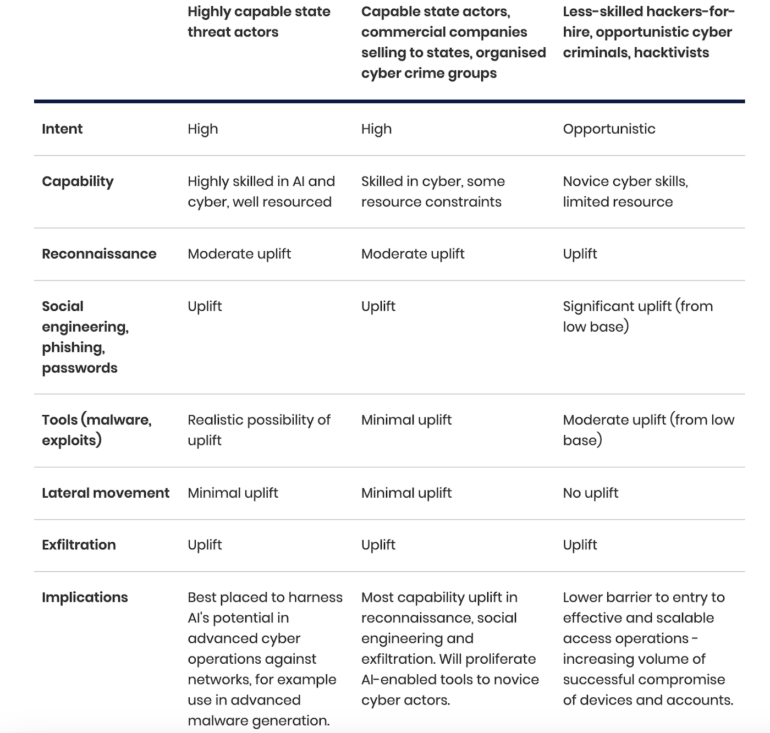
The UK's National Cyber Security Centre warns that AI is already being used to automate phishing and ransomware, lowering skill requirements for hackers-for-hire and hacktivists. This AI-driven boost in attack sophistication and targeting is fueling a fresh wave of cyber assaults on UK companies and critical infrastructure.[AI generated]

Why's our monitor labelling this an incident or hazard?

The article does not describe a realized harm or specific incident caused by AI but rather warns about the plausible future increase in cyberattacks due to AI capabilities. This fits the definition of an AI Hazard, as the development and use of AI systems could plausibly lead to significant harms such as cyberattacks and ransomware incidents. There is no indication that an AI Incident has already occurred, nor is the article primarily about responses or updates, so it is not Complementary Information.[AI generated]

AI principles
Robustness & digital securitySafetyPrivacy & data governanceRespect of human rightsAccountabilityTransparency & explainability

Industries
Digital securityGovernment, security, and defenceIT infrastructure and hosting

Affected stakeholders
BusinessGeneral public

Harm types
Economic/PropertyPublic interestHuman or fundamental rightsReputational

Severity
AI hazard

AI system task:
Content generationOrganisation/recommendersInteraction support/chatbots


Articles about this incident or hazard

Thumbnail Image

AI rise will lead to increase in cyberattacks - ET CISO

2024-01-24
ETCISO.in
Why's our monitor labelling this an incident or hazard?
The article does not describe a realized harm or specific incident caused by AI but rather warns about the plausible future increase in cyberattacks due to AI capabilities. This fits the definition of an AI Hazard, as the development and use of AI systems could plausibly lead to significant harms such as cyberattacks and ransomware incidents. There is no indication that an AI Incident has already occurred, nor is the article primarily about responses or updates, so it is not Complementary Information.
Thumbnail Image

AI rise will lead to increase in cyberattacks, Britain's spy agency warns

2024-01-24
Economic Times
Why's our monitor labelling this an incident or hazard?
The event describes a credible and plausible future risk where AI systems (generative AI tools) could be used maliciously to increase cyberattacks and ransomware incidents. Although no specific harm has yet occurred as described in the article, the involvement of AI in enabling or enhancing cyber threats is clearly stated as a likely future development. Therefore, this constitutes an AI Hazard, as the development and use of AI systems could plausibly lead to significant harms such as disruption of critical infrastructure and harm to communities through cybercrime.
Thumbnail Image

AI chatbots are making scams more convincing than ever, warn spy chiefs

2024-01-24
Yahoo! Finance
Why's our monitor labelling this an incident or hazard?
The article explicitly mentions AI tools being used by hackers to produce convincing phishing emails and ransomware attacks, which have already caused harm as evidenced by the IBM study and reports from cyber security agencies. The AI systems' use in scams directly leads to harm to people and organizations, fulfilling the criteria for an AI Incident. The harm is realized, not just potential, and the AI system's role is pivotal in enhancing the threat and enabling more effective attacks.
Thumbnail Image

AI rise will lead to increase in cyberattacks, GCHQ warns

2024-01-24
MoneyControl
Why's our monitor labelling this an incident or hazard?
The article explicitly discusses the plausible future increase in cyberattacks due to AI tools, including generative AI, which could lead to harms such as ransomware attacks and advanced malware generation. Since no actual harm or incident has yet occurred or is described as occurring, but the risk is credible and clearly articulated, this fits the definition of an AI Hazard. The AI system's development and use could plausibly lead to significant harms, but these harms are not yet realized in this report.
Thumbnail Image

AI Rise Will Lead to Increase in Cyberattacks, GCHQ Warns

2024-01-24
U.S. News & World Report
Why's our monitor labelling this an incident or hazard?
The article involves AI systems (generative AI tools, large language models) and discusses their potential misuse in cyberattacks. However, it does not report any realized harm or incident caused by AI, only a forecasted increase in cyber threats. Therefore, it fits the definition of an AI Hazard, as it plausibly could lead to AI Incidents in the future but no direct or indirect harm has yet materialized.
Thumbnail Image

British Spy Agency's Big Warning: Rapid AI Development Will Lead To A Rise In Cyberattacks - News18

2024-01-24
News18
Why's our monitor labelling this an incident or hazard?
The article focuses on the plausible future risks posed by AI in enabling more cyberattacks and enhancing capabilities of hackers, including state-backed actors. It does not report any actual AI-driven cyberattack or harm that has already occurred. Therefore, it describes a credible AI Hazard where AI's development and use could plausibly lead to significant harms in cybersecurity, but no direct or indirect harm has yet materialized as per the article.
Thumbnail Image

AI rise will lead to increase in cyber attacks, warns Britain's spy agency

2024-01-24
The Straits Times
Why's our monitor labelling this an incident or hazard?
The event involves AI systems (generative AI tools and large language models) and their potential misuse in cyber attacks. However, the article describes a forecasted increase in cyber threats rather than an actual realized incident. Therefore, it fits the definition of an AI Hazard, as the development and use of AI systems could plausibly lead to significant harms such as cyber attacks and ransomware incidents, but no direct or indirect harm has yet been reported in this article.
Thumbnail Image

AI rise will lead to increase in cyberattacks, GCHQ warns

2024-01-24
ThePrint
Why's our monitor labelling this an incident or hazard?
The article discusses credible risks and potential future harms from AI use in cyberattacks, including by opportunistic and state-backed hackers. However, it does not describe any actual AI-driven cyberattack incidents or realized harms. Therefore, it fits the definition of an AI Hazard, as it plausibly could lead to AI Incidents but no direct or indirect harm has yet occurred as per the article.
Thumbnail Image

British spy agency warns rapid development of AI will cause massive increase in cyberattacks

2024-01-24
Firstpost
Why's our monitor labelling this an incident or hazard?
The article explicitly involves AI systems, particularly generative AI and large language models, and discusses their potential misuse in cyberattacks. However, the harms described are prospective and have not yet materialized as incidents. The warning from the NCSC about the plausible increase in cyber threats due to AI fits the definition of an AI Hazard, as it outlines credible risks that could lead to AI Incidents in the future. There is no indication of realized harm or ongoing incidents, so it is not an AI Incident. The content is more than general AI news or product updates, so it is not Unrelated or merely Complementary Information.
Thumbnail Image

AI rise will lead to increase in cyberattacks: GCHQ

2024-01-24
Zee Business
Why's our monitor labelling this an incident or hazard?
The article does not report an actual AI-driven cyberattack incident but rather a forecast and analysis of how AI could plausibly lead to increased cyber threats. This fits the definition of an AI Hazard, as it concerns potential future harms stemming from AI development and use in cyberattacks. There is no direct or indirect harm reported yet, only a credible risk assessment.
Thumbnail Image

AI rise will lead to increase in cyberattacks, GCHQ warns | Technology

2024-01-24
Devdiscourse
Why's our monitor labelling this an incident or hazard?
The article focuses on the potential and anticipated increase in cyberattacks due to AI, describing credible risks and warnings about future harms. However, it does not report any actual AI-driven cyberattack incidents or realized harms. The AI system involvement is clear (generative AI, large language models), and the harms described (cyberattacks, ransomware) fit the harm categories, but these harms are projected rather than realized. Therefore, this event qualifies as an AI Hazard, reflecting plausible future harm from AI use in cyberattacks.
Thumbnail Image

GCHQ Warns: AI Advancements Will Escalate Global Cyber Threats - OtakuKart

2024-01-24
OtakuKart
Why's our monitor labelling this an incident or hazard?
The article explicitly involves AI systems, such as generative AI tools and large language models, in the context of cyber threats. It discusses the potential for these AI systems to be used by hackers to increase the volume and sophistication of cyberattacks, which could lead to harms like ransomware attacks and phishing scams. Since no actual AI-driven cyberattack incident is reported as having occurred, but the risk is clearly articulated and plausible, this qualifies as an AI Hazard. The report serves as a warning about plausible future harms rather than documenting a realized AI Incident or a response to one, and it is not merely general AI news or product updates, so it is not Complementary Information or Unrelated.
Thumbnail Image

Warning that AI will lead to increase in cyberattacks - TechCentral

2024-01-24
TechCentral
Why's our monitor labelling this an incident or hazard?
The article discusses a credible warning about the potential for AI to increase cyberattacks and related harms in the future, which fits the definition of an AI Hazard. There is no mention of actual cyberattacks or harms that have already occurred due to AI, so it does not qualify as an AI Incident. The report is a forward-looking assessment of risks, not a description of a current or past event causing harm. Therefore, the classification as an AI Hazard is appropriate.
Thumbnail Image

AI rise will lead to increase in cyberattacks, Britain's spy agency warns

2024-01-24
telecomlive.com
Why's our monitor labelling this an incident or hazard?
The article describes a credible potential risk (hazard) stemming from AI development and use, specifically that AI tools could enable more cyberattacks and ransomware. However, it does not report any actual realized harm or incident caused by AI. Therefore, it fits the definition of an AI Hazard, as the AI system's involvement could plausibly lead to harm but has not yet directly or indirectly caused harm.
Thumbnail Image

AI will make scam emails look genuine, UK cybersecurity agency warns

2024-01-24
The Guardian
Why's our monitor labelling this an incident or hazard?
The article explicitly involves AI systems, specifically generative AI and large language models, in the context of cyber threats. The NCSC warns that AI will make phishing and ransomware attacks more sophisticated and harder to detect, which could plausibly lead to harms such as data breaches, financial loss, and disruption of critical infrastructure. No specific AI-driven cyberattack incident causing harm is described; instead, the focus is on the credible risk and potential increase in cybercrime enabled by AI. This fits the definition of an AI Hazard, where AI use could plausibly lead to an AI Incident in the future.
Thumbnail Image

UK Intelligence Fears AI Will Fuel Ransomware, Exacerbate Cybercrime

2024-01-24
PCMag UK
Why's our monitor labelling this an incident or hazard?
The article involves AI systems as it discusses generative AI and AI models used by cybercriminals to enhance phishing, malware, and data analysis. The harms described (increased cyberattacks, ransomware, and data breaches) fall under harm to communities and property. However, the article primarily reports on a government intelligence agency's forecast and warnings about the likely increase in AI-enabled cybercrime rather than a specific AI Incident that has already caused harm. Therefore, this is best classified as an AI Hazard, reflecting credible potential future harm from AI use in cybercrime.
Thumbnail Image

UK Intelligence Fears AI Will Fuel Ransomware, Exacerbate Cybercrime

2024-01-24
PC Magazine
Why's our monitor labelling this an incident or hazard?
The article describes the use and potential misuse of AI systems by cybercriminals to conduct more effective cyberattacks, including ransomware and phishing. Although no specific incident of harm is detailed, the UK National Cyber Security Centre's report and other cybersecurity firms' observations establish a credible and plausible risk that AI will fuel cybercrime and cause harm to individuals and organizations. This fits the definition of an AI Hazard, as the development and use of AI systems could plausibly lead to significant harms such as injury to persons (through cybercrime consequences), disruption of critical infrastructure, and harm to communities. There is no indication that a specific AI Incident has already occurred in this report, nor is the article primarily about responses or updates, so it is not Complementary Information. It is not unrelated because AI systems are central to the discussion of the cybercrime threat.
Thumbnail Image

AI to lead self-induced cyberthreat: Report

2024-01-24
The Financial Express
Why's our monitor labelling this an incident or hazard?
The article describes a credible risk that AI will be used to increase cybercrime capabilities, which could plausibly lead to harms such as fraud, ransomware attacks, and child sexual abuse. Since the harms are anticipated but not yet realized, and the AI involvement is central to the threat, this constitutes an AI Hazard. The article does not report an actual AI Incident or realized harm, nor does it focus on responses or updates to past incidents, so it is not Complementary Information.
Thumbnail Image

NCSC says AI will increase ransomware, cyberthreats | TechTarget

2024-01-24
TechTarget
Why's our monitor labelling this an incident or hazard?
The article discusses a credible and detailed warning about the potential for AI to increase cyber threats, including ransomware and phishing attacks, but it does not report any actual AI-driven cyberattack or harm that has already occurred. The AI involvement is in the potential use by malicious actors to improve their attacks, which could plausibly lead to harms such as data breaches, financial loss, or disruption. Therefore, this qualifies as an AI Hazard, as it highlights a credible risk of future AI-related harm without describing a realized incident.
Thumbnail Image

UK Study: Generative AI May Increase Ransomware Threat

2024-01-24
TechRepublic
Why's our monitor labelling this an incident or hazard?
The article focuses on the potential for generative AI to increase cyber threats, including ransomware, phishing, and social engineering, which could plausibly lead to AI-related harms in the future. However, it does not report any actual AI-driven cyberattack incidents or realized harms at this time. The discussion is forward-looking, assessing risks and capabilities expected to emerge by 2025, and includes governance and defense measures. Therefore, the event qualifies as an AI Hazard because it describes credible future risks from AI-enabled cyber threats but no current incident or harm has been reported.
Thumbnail Image

AI will increase the number and impact of cyber attacks, intel officers say

2024-01-25
Ars Technica
Why's our monitor labelling this an incident or hazard?
The article describes a credible and authoritative forecast that AI will enable more effective cyber attacks, increasing threats such as ransomware and social engineering. While no actual AI-driven cyber attack incident is reported as having occurred, the assessment clearly states that these harms are almost certain to materialize in the near future. This fits the definition of an AI Hazard, where the development and use of AI systems could plausibly lead to harms such as disruption and harm to communities. Therefore, the event is best classified as an AI Hazard.
Thumbnail Image

States could already produce AI malware that evades detection

2024-01-24
The Next Web
Why's our monitor labelling this an incident or hazard?
The article explicitly discusses AI systems trained on exploit data to generate malware that evades detection, indicating AI system involvement in cyber threat development. The NCSC's warning about the realistic possibility that nation-states have such AI malware repositories points to a credible risk of future harm, including ransomware and cyberattacks. Since no actual incident of harm is reported but a credible threat is identified, this qualifies as an AI Hazard under the framework, as the AI system's development and potential use could plausibly lead to significant harms.
Thumbnail Image

UK Cyber Agency: AI Will Lead to More Ransomware Attacks

2024-01-24
PYMNTS.com
Why's our monitor labelling this an incident or hazard?
The article explicitly mentions AI systems being used in illegal cyber activities, including generative AI offered as a service to criminals, which could plausibly lead to increased ransomware attacks causing harm to organizations and critical infrastructure. The harm is not yet described as having directly occurred due to AI in this article, but the credible risk and warnings from a national cyber agency about future increased ransomware threats due to AI qualify this as an AI Hazard. There is no description of a specific AI-caused ransomware incident, so it is not an AI Incident. The article is not merely complementary information or unrelated, as it focuses on the risk of AI-driven cybercrime harm.
Thumbnail Image

UK cyber attack: GCHQ warns of AI ransomware threat

2024-01-24
ReadWrite
Why's our monitor labelling this an incident or hazard?
The event involves AI systems in the context of cybersecurity threats, specifically ransomware, but the harm described is prospective rather than realized. The article emphasizes the potential for AI to increase cyber attacks and ransomware impact, which constitutes a credible risk of future harm. There is no mention of an actual AI-driven ransomware attack causing harm yet, so this fits the definition of an AI Hazard rather than an AI Incident. The article also includes information about government and industry responses, but the primary focus is the warning about plausible future harm from AI-enhanced ransomware.
Thumbnail Image

ChatGPT warning and UK cybersecurity agency says 'almost certainly'

2024-01-25
Birmingham Mail
Why's our monitor labelling this an incident or hazard?
The event involves the use of AI systems (generative AI and large language models) in cybercrime, specifically phishing and social engineering attacks. Although no specific harm has yet occurred as described in the article, the NCSC explicitly states that AI will almost certainly increase cyber-attacks and their impact in the near future, posing a credible risk of harm to people and businesses. This fits the definition of an AI Hazard, as the development and use of AI systems could plausibly lead to significant harms such as financial loss and disruption caused by cybercrime. There is no indication of a realized incident in this article, nor is it merely complementary information or unrelated news.
Thumbnail Image

AI Will Fuel Rise in Ransomware, UK Cyber Agency Says

2024-01-25
Security Boulevard
Why's our monitor labelling this an incident or hazard?
The article explicitly states that AI systems (generative AI and LLMs) are already integrated into cybercriminal operations, enhancing the effectiveness of ransomware, phishing, and malware attacks. These activities cause direct harm to individuals and organizations (fraud, data theft, child sexual abuse), fulfilling the criteria for an AI Incident. The harms are ongoing and not merely potential, and the AI system's use is a contributing factor to these harms. Therefore, this is not just a hazard or complementary information but an AI Incident.
Thumbnail Image

UK cyber-security agency issues warning over amateur AI attacks

2024-01-24
Institution of Engineering and Technology
Why's our monitor labelling this an incident or hazard?
The National Cyber Security Centre's report explicitly states that AI tools are already being used by threat actors and that their use will almost certainly increase the number and impact of cyber attacks in the near future. This constitutes a plausible risk of harm (to individuals and organizations through cybercrime) directly linked to AI system use. Since the harm is potential and not yet realized, this event fits the definition of an AI Hazard rather than an AI Incident. The report's focus on future risks and the lowering of barriers for amateur attackers using AI supports this classification.
Thumbnail Image

AI advancements could offset self-induced cyberthreat: NCSC report

2024-01-24
TradingView
Why's our monitor labelling this an incident or hazard?
The article discusses potential future risks of AI in cyber threats and the balancing role of AI in cybersecurity, based on a government report. There is no mention of an actual AI-driven cyberattack causing harm or an incident that has occurred. The focus is on plausible future risks and recommendations for further study, which fits the definition of an AI Hazard. It is not Complementary Information because it is not updating or responding to a past incident, nor is it unrelated since it clearly involves AI systems and their impact on cyber threats.
Thumbnail Image

Is AI Set to Supercharge Global Ransomware Threats? NCSC Weighs In | Cryptopolitan

2024-01-25
Cryptopolitan
Why's our monitor labelling this an incident or hazard?
The article clearly involves AI systems as it discusses AI's role in enabling cybercriminals to conduct more effective ransomware attacks. The event stems from the potential use and misuse of AI in cybercrime, which could plausibly lead to significant harm such as disruption of digital infrastructure and harm to communities. Since the article does not report an actual ransomware attack caused by AI but warns about the escalating threat and the need for preparedness, it fits the definition of an AI Hazard. The article also includes complementary information about government responses and initiatives, but the primary focus is on the plausible future harm from AI-enabled ransomware threats.
Thumbnail Image

AI-Enhanced Malware Poses Growing Threat, Warns UK's NCSC

2024-01-24
Cryptopolitan
Why's our monitor labelling this an incident or hazard?
The event involves AI systems in the form of AI-generated malware and AI-assisted cyberattacks, which could plausibly lead to significant harms such as disruption of critical infrastructure, data breaches, and harm to organizations and individuals. However, the article does not describe any realized harm or incident caused by AI systems but rather warns about the potential and credible future risks. Therefore, this qualifies as an AI Hazard, as the development and use of AI in cyberattacks could plausibly lead to an AI Incident in the future. The article is not merely complementary information because it focuses on the credible threat and potential harms rather than just updates or responses.
Thumbnail Image

Global ransomware threat surely will rise with AI, U.K.'s NCSC warns | IT World Canada News

2024-01-24
ITWorld Canada
Why's our monitor labelling this an incident or hazard?
The event involves AI systems being used maliciously in cybercrime, specifically ransomware, which is a recognized harm to organizations and potentially individuals. However, the article focuses on the forecasted increase in threat and the potential for harm rather than describing a concrete AI-driven ransomware incident that has already caused harm. Therefore, it fits the definition of an AI Hazard, as it plausibly could lead to AI Incidents (harm) in the near term. The article also includes some complementary information about governance and defensive opportunities, but the main focus is the plausible future risk of AI-enhanced ransomware attacks.
Thumbnail Image

AI Intensifying Global Ransomware Threat, Warns The NCSC

2024-01-25
The Tech Report
Why's our monitor labelling this an incident or hazard?
The event involves AI systems (generative AI tools) being used or potentially used by cybercriminals to facilitate ransomware and other cyberattacks. While the article describes the increased threat and potential harms (ransomware attacks, fraud, child abuse), it does not report a specific AI-driven ransomware incident causing realized harm. Instead, it warns about plausible future harms and evolving risks. Therefore, this qualifies as an AI Hazard, as the development and use of AI could plausibly lead to AI Incidents involving ransomware and cybercrime. The article also includes some complementary information about defensive measures but the main focus is on the hazard posed by AI to cybersecurity.
Thumbnail Image

Artificial Intelligence to Amplify Global Ransomware Threat, Warns UK Government Agency

2024-01-26
International Business Times UK
Why's our monitor labelling this an incident or hazard?
The article explicitly states that AI is already being exploited in cyberattacks and that this exploitation is expected to increase ransomware threats, which cause harm to organisations and sectors such as education, government, and healthcare. The use of AI lowers the barrier for less skilled cybercriminals to conduct sophisticated attacks, directly linking AI use to increased harm. Although the article focuses on warnings and predictions, it also references ongoing harms and the evolving threat landscape. Therefore, this event qualifies as an AI Hazard because it describes a credible and plausible future risk of AI-driven harm, with some current indirect harm already occurring. It does not describe a specific incident of AI-caused harm but rather a credible threat escalation due to AI integration in cybercrime.
Thumbnail Image

AI will increase volume and impact of cyberattacks in next 2 years says NCSC

2024-01-25
Computing
Why's our monitor labelling this an incident or hazard?
The article explicitly states that AI is currently used in cyberattacks and that its use will increase the volume and impact of such attacks over the next two years, which constitutes a plausible risk of harm (ransomware and cybercrime) caused by AI systems. There is no mention of a specific incident or realized harm caused by AI, only a forecast and assessment of potential future harms. The involvement of AI in cyberattacks and the lowering of entry barriers for criminals is a credible risk that could lead to significant harms, fitting the definition of an AI Hazard rather than an AI Incident or Complementary Information.
Thumbnail Image

NCSC AI Being Used By Ransomware Hackers | Silicon UK

2024-01-25
Silicon UK
Why's our monitor labelling this an incident or hazard?
The article explicitly states that AI is already being used in malicious cyber activities, including ransomware and phishing, which are causing harm to organizations and individuals. The involvement of AI in lowering the skill barrier and improving attack effectiveness directly contributes to ongoing cybercrime harms. This meets the definition of an AI Incident because the AI system's use has directly or indirectly led to harm (financial, operational, and security-related) to people and organizations. The article does not merely warn of potential future harm but confirms current malicious use and impact, distinguishing it from an AI Hazard or Complementary Information.
Thumbnail Image

NCSC: AI to significantly boost cyber threats over next two years

2024-01-24
AI News
Why's our monitor labelling this an incident or hazard?
The article focuses on the forecasted increase in cyber threats enabled by AI, highlighting plausible future risks rather than actual incidents of harm. The AI system's involvement is in the potential use of generative AI to enhance phishing and hacking capabilities, which could plausibly lead to AI Incidents in the future. Since no specific harm has yet occurred, and the main narrative is about potential risks and strategic responses, this fits the definition of an AI Hazard rather than an AI Incident or Complementary Information.
Thumbnail Image

UK: AI to 'Almost Certainly' Increase Cyber Attacks in Next 2 Years

2024-01-26
AI Business
Why's our monitor labelling this an incident or hazard?
The event involves AI systems being used or misused by cyber attackers, which is explicitly stated. The harms described include increased cyber attacks, ransomware, and data exfiltration, which are recognized harms under the framework (disruption, harm to property, communities, or organizations). However, the article does not describe any realized harm caused by AI but rather a credible forecast of increased risk and impact in the near future. Therefore, it fits the definition of an AI Hazard, as the development and use of AI in cyber attacks could plausibly lead to an AI Incident within the next two years. The article also mentions current limited use of AI by attackers but emphasizes the expected escalation, reinforcing the hazard classification rather than an incident.
Thumbnail Image

UK firms braced for fresh wave of ransomware attacks - DecisionMarketing

2024-01-26
decisionmarketing.co.uk
Why's our monitor labelling this an incident or hazard?
The event involves AI systems explicitly used by cyber criminals to enhance ransomware attacks, which have already caused harm to UK companies and critical infrastructure. The AI's role in lowering the skill barrier and improving attack effectiveness directly contributes to realized harms (disruption, financial loss). Therefore, this is an AI Incident. Although the article mentions future risks and responses, the main narrative centers on ongoing harms caused by AI-enabled ransomware attacks, meeting the criteria for an AI Incident rather than a hazard or complementary information.
Thumbnail Image

AI predicted to boost global ransomware threat - NCSC

2024-01-25
SecurityBrief Asia
Why's our monitor labelling this an incident or hazard?
The event involves AI systems as it discusses AI's role in enabling more efficient ransomware attacks by malicious actors. The NCSC's warning is about a plausible future increase in harm (ransomware attacks) due to AI use, which fits the definition of an AI Hazard. There is no indication that AI-driven ransomware attacks have already caused harm in this report, so it is not an AI Incident. The article also includes information about government responses and investments, but the main focus is the credible risk of future harm from AI-enabled ransomware, not just complementary information.
Thumbnail Image

Emerging AI tech amplifies ransomware dangers, NCSC warns

2024-01-25
RegTech Analyst
Why's our monitor labelling this an incident or hazard?
The article discusses the plausible future risks of AI-enhanced ransomware and cybercrime, emphasizing the evolving threat landscape and the need for preparedness. No specific AI-driven cyberattack or ransomware incident causing harm is reported. The involvement of AI is in the potential amplification of cyber threats, making this a credible AI Hazard. The report and government responses aim to mitigate these risks, but no direct or indirect harm from AI systems has yet occurred as described in the article.
Thumbnail Image

Fake emails will become increasingly believable due to AI - Softonic

2024-01-24
Softonic
Why's our monitor labelling this an incident or hazard?
The article explicitly mentions generative AI being used to produce more convincing phishing emails, which is an AI system's use. The harm described (fraud, theft of confidential information) is a violation of rights and harm to individuals. Since the article discusses the plausible future increase in such AI-enabled phishing attacks and the associated risks, but does not describe a specific incident where harm has already occurred, this qualifies as an AI Hazard rather than an AI Incident. The warnings and guidelines from the National Cyber Security Centre and the British government further support the assessment of a credible potential risk rather than a realized harm.
Thumbnail Image

AI makes ransomware attacks easy for budding cybercriminals, warns UK NCSC

2024-01-25
THE DECODER
Why's our monitor labelling this an incident or hazard?
The article explicitly mentions that AI is already used in malicious cyber activities, including ransomware, which is a significant cyber threat causing harm to organizations and businesses. The use of AI to create convincing phishing campaigns and improve malware development directly contributes to realized harms such as data breaches, financial loss, and operational disruption. This fits the definition of an AI Incident because the AI system's use has directly or indirectly led to harm (harm to property, communities). The warnings about future increased threats reinforce the ongoing nature of the incident rather than merely a hazard. The article also discusses societal and governance responses but the primary focus is on the realized and ongoing harms caused by AI-enabled cyberattacks.
Thumbnail Image

AI will make scam emails look genuine, UK cybersecurity agency warns - Business Telegraph

2024-01-24
Business Telegraph
Why's our monitor labelling this an incident or hazard?
The article explicitly involves AI systems, specifically generative AI and large language models, in the context of cyber threats. The harms discussed include phishing scams and ransomware attacks, which can cause injury to individuals (through data theft, financial loss) and harm to organizations and communities. However, the article focuses on warnings and assessments of potential future impacts rather than describing a concrete AI-driven cyber-attack event that has already occurred. Therefore, the event is best classified as an AI Hazard, as it plausibly leads to AI Incidents but does not report a specific incident itself.
Thumbnail Image

National Cyber Security Centre Study: Generative AI May Increase Global Ransomware Threat

2024-01-24
FocusTechnica
Why's our monitor labelling this an incident or hazard?
The article focuses on the potential future risks posed by generative AI to cyber security, particularly ransomware and phishing attacks, which could plausibly lead to AI-related harms such as disruption and violations of rights. However, it does not describe any actual AI-driven cyber incidents or harms that have occurred. The involvement of AI is clear and central, and the risks are credible and foreseeable, but the harms remain prospective. Therefore, this event fits the definition of an AI Hazard rather than an AI Incident or Complementary Information, as it outlines plausible future harms from AI-enhanced cyber threats without reporting realized harm.
Thumbnail Image

Artificial Intelligence and Cybersecurity: A Growing Threat

2024-01-24
COINTURK NEWS
Why's our monitor labelling this an incident or hazard?
The article focuses on the potential for AI to be used by threat actors to enhance cyberattacks, particularly phishing and ransomware, which could plausibly lead to harms such as data loss, financial harm, and disruption. However, it does not report any actual AI-driven cyberattack or harm that has occurred. Therefore, it describes a credible risk scenario, fitting the definition of an AI Hazard rather than an AI Incident or Complementary Information.
Thumbnail Image

British intelligence warns AI will cause surge in ransomware volume and impact

2024-01-24
therecord.media
Why's our monitor labelling this an incident or hazard?
The event involves AI systems explicitly, particularly generative AI used to enhance cyberattack capabilities. The British intelligence assessment is based on multiple sources and expresses high confidence that AI will increase ransomware attacks and their impact, which is a form of harm to property and communities. However, the article does not report that AI-driven ransomware attacks have already caused new or specific incidents beyond existing trends; rather, it warns of a credible and significant increase in the near future. Thus, the AI system's involvement could plausibly lead to an AI Incident but has not yet directly or indirectly caused a new incident described here. This fits the definition of an AI Hazard, as it is a credible risk of future harm due to AI development and use in cyber operations.
Thumbnail Image

UK: NCSC publishes report on near-term impact of AI on cybersecurity

2024-01-24
DataGuidance
Why's our monitor labelling this an incident or hazard?
The report discusses the plausible future impact of AI on cyber threats, including increased capabilities for cybercrime and state actors, which could lead to AI-related harms such as cyber attacks. However, no specific AI Incident or harm has occurred yet as per the article. The content is primarily an assessment and forecast, making it an AI Hazard. It is not merely general AI news or product announcement, but a credible warning about potential AI-driven cyber threats, fitting the definition of an AI Hazard.
Thumbnail Image

Beware the threat of AI malware, says NCSC in new report

2024-01-24
Tech Monitor
Why's our monitor labelling this an incident or hazard?
The article explicitly discusses AI systems (e.g., generative AI, AI malware) and their potential malicious use in cyberattacks. While no actual AI-driven cyberattack harm is reported as having occurred, the NCSC warns that such AI malware likely exists and could plausibly lead to significant harms such as data breaches and ransomware attacks. This fits the definition of an AI Hazard, as it involves plausible future harm from AI system use in cybercrime. The article is not merely general AI news or a product announcement, nor does it describe a realized AI Incident. It is a credible warning about potential AI-enabled cyber threats, thus classifying it as an AI Hazard.
Thumbnail Image

AI Will 'Almost Certainly' Turbocharge Cyberattacks, UK Warns

2024-01-24
The Messenger
Why's our monitor labelling this an incident or hazard?
The event describes a credible and plausible future risk where AI systems, especially generative AI, could be used maliciously to facilitate cyberattacks, phishing, and ransomware. Although no specific harm has yet occurred as per the article, the report's authoritative warning about the likely increase in AI-enabled cyber threats constitutes an AI Hazard, as it plausibly could lead to harms such as disruption of critical infrastructure or harm to individuals through cybercrime. There is no indication of an incident already occurring, nor is this merely complementary information or unrelated news.
Thumbnail Image

AI to amplify global ransomware threat, warns GCHQ

2024-01-24
Verdict
Why's our monitor labelling this an incident or hazard?
The article clearly involves AI systems as it discusses AI's role in cyber attacks, including generative AI used by cybercriminals. The event stems from the use and development of AI systems in malicious cyber activities. Although no specific AI-caused harm is reported as having occurred, the report warns of a plausible and credible increase in ransomware and cyber threats driven by AI in the near future. This fits the definition of an AI Hazard, as the development and use of AI systems could plausibly lead to significant harms such as disruption of critical infrastructure and harm to communities through ransomware attacks. The article also mentions government responses, but the main focus is on the threat itself rather than on responses or updates, so it is not Complementary Information. Therefore, the classification is AI Hazard.
Thumbnail Image

AI will heighten global ransomware threat, says NCSC | Computer Weekly

2024-01-24
Computer Weekly
Why's our monitor labelling this an incident or hazard?
The event involves the use of AI systems in cyber attacks, specifically ransomware, which can cause harm to individuals, organizations, and communities by disrupting critical infrastructure and causing financial and operational damage. The NCSC's assessment is a forward-looking warning about the plausible future use of AI to increase cyber threats, fitting the definition of an AI Hazard. There is no indication that an AI-driven ransomware incident has already occurred, so it is not an AI Incident. The article is not merely complementary information about past incidents or governance responses but a credible risk assessment about future harm potential.
Thumbnail Image

AI will increase global ransomware threat, UK cyber security chiefs...

2024-01-24
Daily Mail Online
Why's our monitor labelling this an incident or hazard?
The event involves the use of AI systems by cyber criminals to carry out ransomware attacks and other malicious cyber activities, which directly harm individuals and organizations by stealing or locking data and demanding ransom. The AI's role in lowering barriers to entry and improving attack effectiveness is explicitly stated, indicating direct involvement in causing harm. Therefore, this qualifies as an AI Incident because the development and use of AI systems have directly led to realized harms in cybersecurity.
Thumbnail Image

AI will increase global ransomware threat, UK cyber security chiefs warn

2024-01-24
Yahoo
Why's our monitor labelling this an incident or hazard?
The event involves the use of AI systems (generative AI models) by cyber criminals to carry out ransomware and other cyber attacks, which are causing direct harm to individuals and organizations. The article describes realized harms (ransomware attacks, fraud, child sexual abuse) facilitated by AI, fulfilling the criteria for an AI Incident. The involvement of AI is explicit and central to the increased threat, and the harms are clearly articulated and ongoing. Therefore, this is not merely a potential risk (hazard) or complementary information but an AI Incident.
Thumbnail Image

Britons must 'strengthen defences' against growing threat of AI-assisted ransomware, cyber security chief warns

2024-01-24
Sky News
Why's our monitor labelling this an incident or hazard?
The article clearly involves AI systems as it discusses AI-assisted ransomware, which is an AI system used maliciously. The event stems from the use and development of AI by cyber criminals to enhance ransomware attacks. While ransomware attacks have caused harm in the past, the article focuses on the evolving threat due to AI, emphasizing potential and ongoing risks rather than a new specific incident of harm caused by AI ransomware. Therefore, this is best classified as an AI Hazard, as the AI involvement could plausibly lead to increased cyber attacks and harm in the near future, but no new specific AI Incident is described.
Thumbnail Image

Dedicated laws on AI, Deepfake Need of the Hour: Advocate Pawan Duggal

2024-01-26
The New Indian Express
Why's our monitor labelling this an incident or hazard?
The event involves the use of AI systems (deepfake technology) in the commission of cyber crimes, specifically the creation and distribution of sexually explicit content without consent. This constitutes a violation of rights and harm to individuals and communities. Since the harm (publication and viral spread of deepfake content) has already occurred, and AI was directly involved in generating the harmful content, this qualifies as an AI Incident under the framework.
Thumbnail Image

NCSC: AI to boost nation-states' malware potency

2024-01-24
TheRegister.com
Why's our monitor labelling this an incident or hazard?
The article explicitly involves AI systems in the context of cyber operations and malware generation, indicating AI's role in enhancing cyberattack capabilities. The harms described—such as increased malware potency, evasion of detection, and more effective ransomware extortion—are significant and align with the definitions of harms to property, communities, and potentially national security. However, the article frames these as realistic possibilities and future threats rather than reporting any actual AI-driven cyberattack incidents that have already caused harm. The NCSC report serves as a warning and risk assessment rather than documenting a specific AI Incident. Thus, the event fits the definition of an AI Hazard, where AI's development and use could plausibly lead to significant harms in the future.
Thumbnail Image

Global ransomware threat expected to rise with AI, NCSC warns

2024-01-24
Finextra Research
Why's our monitor labelling this an incident or hazard?
The article explicitly states that AI is currently used in malicious cyber activities, including ransomware attacks, which are causing harm to organizations and businesses. The involvement of AI in enabling more effective cyber attacks and lowering barriers for criminals directly links AI system use to realized harm. The harms include financial damage and disruption to organizations, fitting the definition of an AI Incident. The article also discusses future risks and mitigation efforts, but the primary focus is on the existing and ongoing AI-enabled cybercrime harm, not just potential future harm or general information, so it is not merely Complementary Information or an AI Hazard.
Thumbnail Image

AI will increase global ransomware threat, UK cyber security chiefs warn

2024-01-24
Jersey Evening Post
Why's our monitor labelling this an incident or hazard?
The article explicitly mentions AI systems being used by cyber criminals to improve ransomware attacks, which could plausibly lead to harm such as data theft, system lockouts, and financial extortion. Although no specific AI-driven ransomware incident is reported as having occurred, the credible warning from a national cyber security agency about the increasing volume and impact of such attacks due to AI qualifies this as a plausible future harm scenario. Hence, it fits the definition of an AI Hazard rather than an AI Incident or Complementary Information.
Thumbnail Image

AI and LLMs from a cyber security perspective

2024-01-24
teiss
Why's our monitor labelling this an incident or hazard?
The article describes a planned discussion event about AI and LLMs in cybersecurity, highlighting both risks and benefits. It mentions potential harms like AI-generated deepfakes used by criminals, but only as a general risk context, not as an event where harm has occurred or is imminent. There is no report of a specific AI system causing harm or malfunctioning, nor a credible imminent threat described. The main focus is on sharing insights and strategies, which fits the definition of Complementary Information as it provides context and governance-related discussion without reporting a new incident or hazard.
Thumbnail Image

NCSC on AI and ransomware threat

2024-01-24
Professional Security
Why's our monitor labelling this an incident or hazard?
The report from the UK National Cyber Security Centre explicitly discusses how AI is already being used by cyber threat actors and predicts an increase in AI-enabled cyber attacks, including ransomware, that could cause significant harm. The AI systems involved include generative AI and large language models used to facilitate phishing, social engineering, and faster exploitation of vulnerabilities. While the report does not describe a specific incident of harm occurring, it clearly outlines a credible risk of future harm due to AI's role in cyber threats. This fits the definition of an AI Hazard, as the development and use of AI systems could plausibly lead to AI Incidents involving harm to individuals, organizations, or critical infrastructure.
Thumbnail Image

AI will increase global ransomware threat, UK cyber security chiefs warn - Evening Standard - Business Telegraph

2024-01-24
Business Telegraph
Why's our monitor labelling this an incident or hazard?
The article explicitly states that AI is being used in malicious cyber activity, including ransomware attacks, which cause harm to individuals and organizations by disrupting systems and potentially causing financial and operational damage. Since the AI's use is directly linked to ongoing harmful cyber attacks, this qualifies as an AI Incident under the framework, as the AI system's use has directly led to harm.