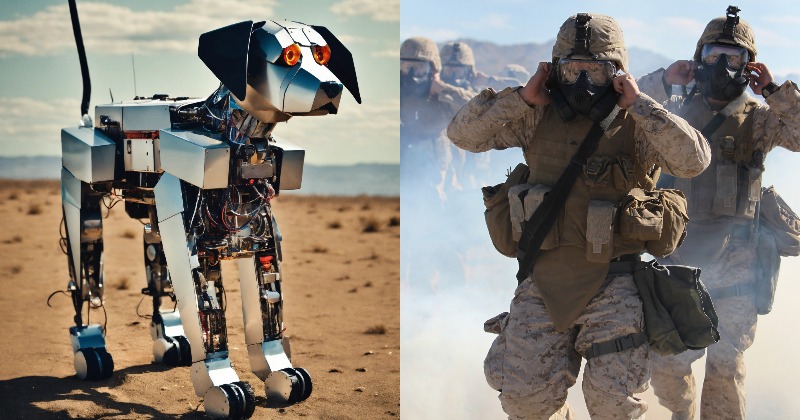
China Deploys AI-Powered Robotic Dogs Armed with Machine Guns in Military Exercises

Thumbnail Image

The information displayed in the AIM should not be reported as representing the official views of the OECD or of its member countries.

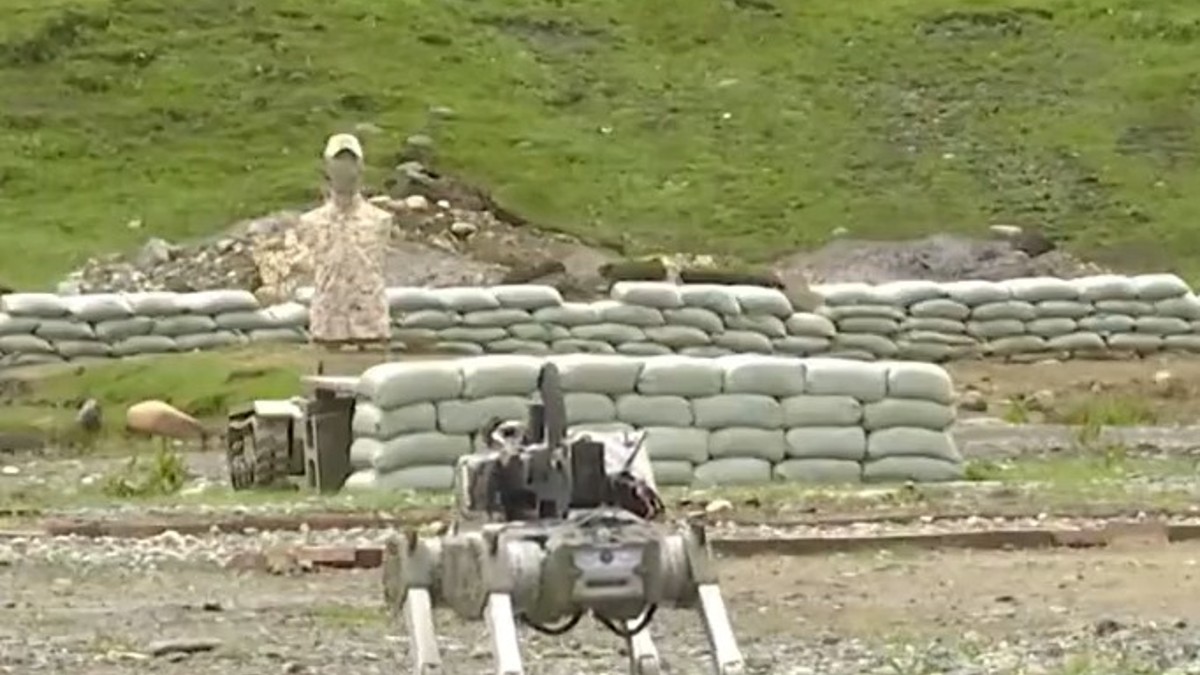
Chinese scientists have developed AI-enabled robotic dogs capable of firing machine guns with high accuracy, and these have been deployed in live military exercises. While critics question their effectiveness, the technology raises significant concerns about the future risks of autonomous weapon systems in warfare.[AI generated]

Why's our monitor labelling this an incident or hazard?

The article explicitly discusses AI-enabled robotic dogs equipped with machine guns, which are autonomous or semi-autonomous AI systems designed for military use. The development and testing of these systems pose a credible risk of harm in future conflicts, including injury or death, and raise ethical and legal issues. However, there is no report of an actual incident causing harm yet. Thus, the event fits the definition of an AI Hazard, as it plausibly could lead to an AI Incident in the future. The article also includes complementary information about ethical concerns and calls for regulation, but the primary focus is on the development and potential impact of these AI military systems.[AI generated]
AI principles
AccountabilitySafetyRobustness & digital securityRespect of human rightsTransparency & explainabilityDemocracy & human autonomyHuman wellbeing

Industries
Government, security, and defenceRobots, sensors, and IT hardware

Affected stakeholders
General public

Harm types
Physical (death)Physical (injury)Human or fundamental rightsPublic interestPsychological

Severity
AI hazard

Business function:
Other

AI system task:
Recognition/object detectionGoal-driven organisationReasoning with knowledge structures/planning


Articles about this incident or hazard

Thumbnail Image

China's robotic dog can shoot like a pro. What is the US doing?

2024-03-01
South China Morning Post
Why's our monitor labelling this an incident or hazard?
The robotic dogs are AI systems capable of autonomous or semi-autonomous operation in combat, including firing weapons with precision. Their deployment in military exercises and the demonstrated capability to shoot accurately directly implicate them in potential harm to humans in conflict, fulfilling the criteria for an AI Incident. The ethical concerns about autonomous lethal decision-making further underscore the direct link to harm. Although some aspects are speculative or developmental, the current use and demonstrated capabilities indicate realized or imminent harm potential, prioritizing classification as an AI Incident over a hazard or complementary information.
Thumbnail Image

China's robotic dog can shoot like a pro. What is the US doing?

2024-03-04
The Star
Why's our monitor labelling this an incident or hazard?
The article explicitly describes AI-enabled robotic dogs armed with machine guns used by the Chinese military in live exercises, demonstrating precise shooting capabilities. This shows AI system use in a context that can cause injury or death, fulfilling the harm criteria. The US military's evaluation and the Chinese research on improving these systems further confirm AI involvement in development and use. Ethical concerns about autonomous lethal decision-making underscore the potential for direct harm. Since the AI systems are actively used in military operations with lethal potential, this is an AI Incident rather than a hypothetical hazard or complementary information.
Thumbnail Image

Canines at War: Watch out for China's robotic dogs equipped with arms

2024-03-01
Firstpost
Why's our monitor labelling this an incident or hazard?
The article explicitly discusses AI-enabled robotic dogs equipped with machine guns, which are autonomous or semi-autonomous AI systems designed for military use. The development and testing of these systems pose a credible risk of harm in future conflicts, including injury or death, and raise ethical and legal issues. However, there is no report of an actual incident causing harm yet. Thus, the event fits the definition of an AI Hazard, as it plausibly could lead to an AI Incident in the future. The article also includes complementary information about ethical concerns and calls for regulation, but the primary focus is on the development and potential impact of these AI military systems.
Thumbnail Image

China is making robotic dogs which can shoot. Here's what it means in a warring world

2024-03-01
WION
Why's our monitor labelling this an incident or hazard?
The article explicitly mentions AI-enabled robotic dogs capable of firing machine guns with high accuracy, developed and tested by Chinese scientists and evaluated by the US military. The AI system's involvement is in the development and use of autonomous or semi-autonomous weaponized robots. While no actual harm or incident is reported, the potential for these systems to cause injury or death in warfare is clear and credible. The event thus represents a plausible future risk of harm (AI Hazard) rather than a realized harm (AI Incident).
Thumbnail Image

China's Shooting Robot Dogs: What It Means For A World In Conflict

2024-03-01
IndiaTimes
Why's our monitor labelling this an incident or hazard?
The article explicitly discusses AI-enabled robotic dogs equipped with firearms used by the Chinese military, which qualifies as an AI system. Although no direct harm or incident has occurred yet, the technology's military application and potential to outperform human troops in combat imply a credible risk of future harm, including injury or escalation of conflict. The development and deployment of such autonomous or semi-autonomous armed robots represent a plausible AI Hazard under the framework, as they could lead to injury, violations of rights, or disruption of peace if used in conflict. Hence, the classification is AI Hazard.