AI-Generated Deepfake Robocall Targets New Hampshire Voters, Raising Election Security Fears

Thumbnail Image

The information displayed in the AIM should not be reported as representing the official views of the OECD or of its member countries.

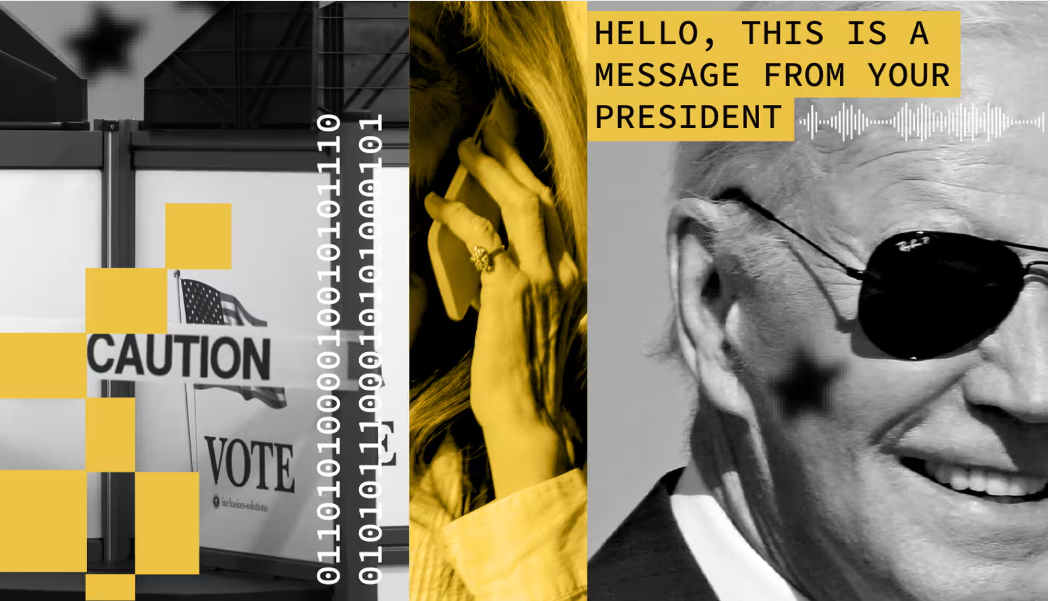
An AI-generated robocall impersonating President Biden urged up to 25,000 New Hampshire voters not to participate in the primary, highlighting the real threat of AI-driven misinformation in elections. The incident has prompted election officials nationwide to increase training and preparedness against potential future AI-enabled disinformation and impersonation attacks.[AI generated]

Why's our monitor labelling this an incident or hazard?

The event involves the use of an AI system to generate fabricated audio content that was used to mislead voters, constituting a direct harm to communities by undermining trust in elections and potentially influencing voter behavior. This meets the criteria for an AI Incident because the AI-generated robocall directly caused harm through misinformation and election interference. The article also discusses potential future AI threats and mitigation, but the primary focus is on the realized harm from the robocall incident.[AI generated]
AI principles
AccountabilityTransparency & explainabilityDemocracy & human autonomy

Industries
Government, security, and defenceDigital security

Affected stakeholders
General public

Harm types
Public interestHuman or fundamental rights

Severity
AI incident

AI system task:
Content generationGoal-driven organisation

In other databases

Articles about this incident or hazard

Thumbnail Image

America's election chiefs are worried AI is coming for them

2024-03-11
Yahoo
Why's our monitor labelling this an incident or hazard?
The article explicitly discusses generative AI systems (deepfakes, AI-generated phishing emails) and their potential misuse to impersonate election officials and spread misinformation. Although no specific AI-driven harm has yet materialized, the officials' concerns and preparations indicate a credible risk that such AI misuse could lead to harms including disruption of election operations and harm to communities through misinformation. Therefore, this event qualifies as an AI Hazard because it plausibly could lead to an AI Incident involving harm to the democratic process and election infrastructure.
Thumbnail Image

Eight best practices for state election officials on AI | Brookings

2024-03-11
Brookings
Why's our monitor labelling this an incident or hazard?
The article does not describe a specific event where AI use has directly or indirectly caused harm (AI Incident), nor does it report a particular event where AI use could plausibly lead to harm imminently (AI Hazard). Instead, it provides guidance and recommendations for election officials to address potential AI risks and improve AI governance in elections. This fits the definition of Complementary Information, as it supports understanding and management of AI-related issues without reporting a new incident or hazard.
Thumbnail Image

8 best practices for state election officials on AI | Brookings

2024-03-12
Brookings
Why's our monitor labelling this an incident or hazard?
The article does not describe a specific AI Incident or AI Hazard event but rather provides guidance and recommendations to mitigate potential AI risks in elections. It is primarily a governance and policy-oriented discussion aimed at preventing harm and improving AI oversight in election contexts. Therefore, it fits the definition of Complementary Information as it supports understanding and response to AI-related challenges without reporting a new incident or hazard.
Thumbnail Image

Election Officials on High Alert Amid AI Deepfake Concerns

2024-03-12
Tech Times
Why's our monitor labelling this an incident or hazard?
The article explicitly involves AI systems in the form of generative AI and deepfake technology used to create false impersonations. The event stems from the potential use (and misuse) of AI systems to spread misinformation and impersonate election officials, which could plausibly lead to harm such as erosion of public trust and disruption of elections. Since no actual harm has been reported yet, but credible warnings and preparations are underway, this fits the definition of an AI Hazard rather than an AI Incident. The article also includes descriptions of training and mitigation efforts, but the main focus is on the plausible future harm from AI misuse in elections, not on a completed incident or a governance response alone.
Thumbnail Image

Training days: How officials are using AI to prepare election workers for voting chaos

2024-03-14
CyberScoop
Why's our monitor labelling this an incident or hazard?
The event involves AI systems explicitly, specifically AI-generated deepfakes and synthetic media used in training exercises. The use of AI here is to simulate potential malicious AI-generated disinformation that could be used to disrupt elections, which could plausibly lead to harms such as violations of democratic processes and harm to communities. However, the article does not report any realized harm or incident caused by AI-generated content; rather, it focuses on preparedness and mitigation efforts. Therefore, this qualifies as an AI Hazard, as the AI system's involvement could plausibly lead to an AI Incident in the future if such disinformation is deployed maliciously during elections.
Thumbnail Image

Elections workers must wake up to the risks posed by AI

2024-03-13
The Fulcrum
Why's our monitor labelling this an incident or hazard?
The event involves the use of an AI system to generate fabricated audio content that was used to mislead voters, constituting a direct harm to communities by undermining trust in elections and potentially influencing voter behavior. This meets the criteria for an AI Incident because the AI-generated robocall directly caused harm through misinformation and election interference. The article also discusses potential future AI threats and mitigation, but the primary focus is on the realized harm from the robocall incident.
Thumbnail Image

Европскиот парламент усвои Закон за регулирање на вештачката интелигенција

2024-03-13
Anadolu Ajansı
Why's our monitor labelling this an incident or hazard?
The article reports on a legislative and regulatory development concerning AI, which is a societal and governance response to AI-related risks. There is no description of an AI system causing harm or a plausible risk of harm occurring or imminent. The focus is on establishing rules and protections to prevent harms and promote responsible AI use. Therefore, this event fits the definition of Complementary Information as it provides important context and updates on AI governance but does not describe an AI Incident or AI Hazard.
Thumbnail Image

Истражување: Над 70 отсто од младите во ВИ гледаат можност, а останатите гледаат закана

2024-03-13
meta.mk
Why's our monitor labelling this an incident or hazard?
The article involves AI systems (e.g., ChatGPT) and discusses their use and potential misuse in education. However, it does not report any realized harm or incidents directly caused by AI, nor does it describe a specific event where AI use led to injury, rights violations, or other harms. The concerns expressed are about possible future risks and the need for regulation, which aligns with a discussion of potential hazards but without a concrete event or credible imminent risk described. Therefore, it is best classified as Complementary Information, providing context and societal response insights rather than reporting an AI Incident or AI Hazard.
Thumbnail Image

Дезинформации на стероиди: Вештачката интелигенција и изборите во САД - Рацин.мк

2024-03-10
Рацин.мк
Why's our monitor labelling this an incident or hazard?
The article explicitly mentions AI-generated robocalls that mislead voters, which is a direct use of AI systems causing harm to the electoral process and potentially violating voters' rights. The harm is realized as these calls have been made and are linked to attempts to influence voter behavior. The involvement of AI in generating deepfake audio calls is clear, and the harm includes misinformation and potential voter suppression, which fits the definition of an AI Incident. The discussion of regulatory responses supports the context but does not change the classification.
Thumbnail Image

Crackdown on 'deceptive' AI in political ads passes NH House without debate

2024-03-28
Fox News
Why's our monitor labelling this an incident or hazard?
The article involves AI systems explicitly (voice-cloning AI used in robocalls) that have already caused harm by spreading deceptive political messages violating voter suppression laws, which is a violation of legal protections and harms democratic processes (harm to communities). The legislative response is a governance measure addressing this harm. Since the AI-generated robocalls have already been used and caused harm, this qualifies as an AI Incident. The bill itself is complementary information about the response, but the main event described is the AI Incident of deceptive AI use in political ads causing harm.
Thumbnail Image

New Hampshire House passes AI election rules after Biden deepfake

2024-03-29
Aol
Why's our monitor labelling this an incident or hazard?
The article centers on a legislative response to a prior AI incident (the Biden deepfake robocall) and broader regulatory efforts to address AI election disinformation. While the original robocall incident involved an AI system causing harm (deceptive political communication), this article primarily reports on the new AI-related election rules passed as a response. Therefore, it constitutes Complementary Information, as it provides context and governance developments following an AI Incident rather than reporting a new incident or hazard itself.
Thumbnail Image

New Hampshire House Takes on Artificial Intelligence in Political Advertising

2024-03-28
U.S. News & World Report
Why's our monitor labelling this an incident or hazard?
An AI system was used to generate a voice mimicking President Biden in robocalls sent to thousands of voters, which is a direct use of AI in a political context. The calls violated voter suppression laws, indicating harm related to legal rights and democratic processes. This constitutes an AI Incident because the AI system's use directly led to harm through unlawful political interference and potential voter manipulation.
Thumbnail Image

New Hampshire responds to Biden deepfake

2024-03-29
The Hill
Why's our monitor labelling this an incident or hazard?
The article focuses on a legislative response to AI-generated deceptive political ads, prompted by a prior AI incident involving deepfake robocalls that misled voters, constituting harm to communities and election integrity. However, the main subject is the new bill and regulatory efforts rather than the incident itself. Therefore, this is Complementary Information as it provides societal and governance responses to an AI Incident rather than describing a new incident or hazard.
Thumbnail Image

New Hampshire House passes AI election rules after Biden deepfake

2024-03-30
The Island Packet
Why's our monitor labelling this an incident or hazard?
The article explicitly mentions an AI system generating deceptive robocalls impersonating a political figure, which led to violations of voter suppression laws, constituting harm to the democratic process and communities. This qualifies as an AI Incident because the AI-generated content directly caused harm. The main focus of the article is on the legislative response to this incident, which is complementary information. However, since the incident of AI-generated deceptive robocalls causing harm has occurred, the event is primarily an AI Incident with complementary governance response context. Given the instructions prioritize incidents over hazards and complementary info, the classification is AI Incident.
Thumbnail Image

New Hampshire lawmakers take on AI in political ads

2024-03-29
New Hampshire Public Radio
Why's our monitor labelling this an incident or hazard?
The article discusses the use of AI systems (voice cloning, image generation) in political ads that have led to deceptive practices and voter suppression, which are violations of legal protections and can harm democratic processes (harm to communities and violation of rights). The robocalls with AI-generated voices have already occurred and are under investigation for legal violations, indicating realized harm. The legislative response is a governance measure addressing these harms. Since the AI-generated robocalls have already caused harm and legal issues, this qualifies as an AI Incident. The bill itself is complementary information about the response, but the main event includes the AI-generated robocalls causing harm, so the classification is AI Incident.
Thumbnail Image

New Hampshire House takes on artificial intelligence in political advertising

2024-03-28
Brattleboro Reformer
Why's our monitor labelling this an incident or hazard?
The article involves AI systems explicitly (voice-cloning software and image generators) used in political ads and robocalls. The robocalls with AI-generated voices caused harm by potentially suppressing voters, a violation of legal rights, which qualifies as an AI Incident. The legislative response to require disclosure is complementary information but the main event described is the harm caused by AI-generated deceptive media in political advertising. Therefore, the classification is AI Incident because the AI system's use has directly led to violations of rights and misinformation harms.