Waymo Robotaxis Cause Traffic Chaos by Entering Closed Road in San Francisco

Thumbnail Image

The information displayed in the AIM should not be reported as representing the official views of the OECD or of its member countries.

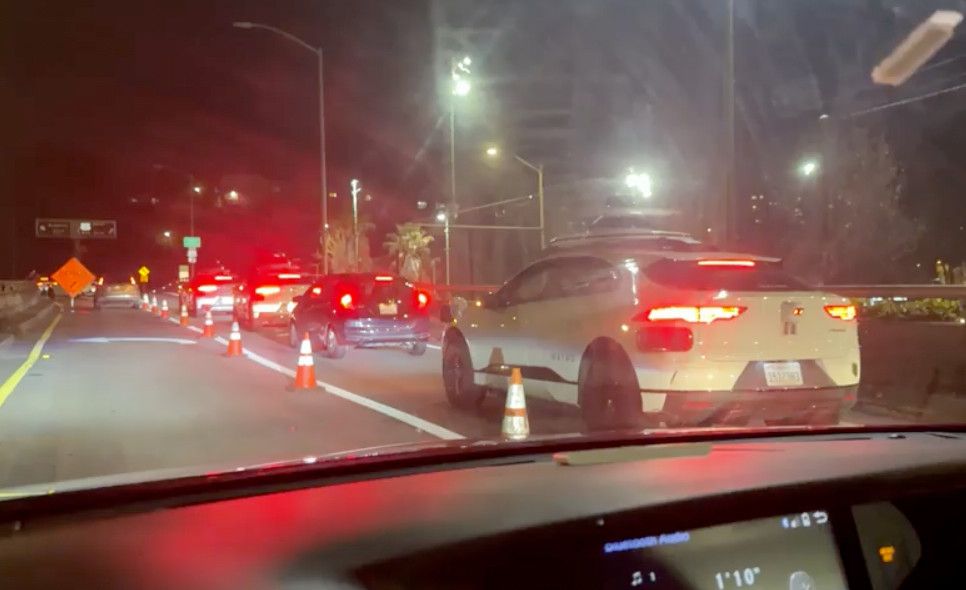
Six Waymo autonomous vehicles malfunctioned and led both robotaxis and human drivers onto a closed road near a Highway 101 on-ramp in San Francisco, causing a traffic jam and disruption. The incident highlights the risks of AI-driven vehicles misinterpreting road conditions and impacting critical infrastructure.[AI generated]

Why's our monitor labelling this an incident or hazard?

The event involves an AI system explicitly (Waymo's driverless cars) whose malfunction (wrong turn and inability to reroute) directly caused a traffic disruption on a freeway, a critical infrastructure. The incident led to a traffic jam and required intervention to clear the vehicles, fulfilling the criteria for an AI Incident under disruption of critical infrastructure. The harm is realized, not just potential, so it is not an AI Hazard. It is not merely complementary information or unrelated news.[AI generated]
AI principles
SafetyRobustness & digital securityAccountabilityTransparency & explainabilityDemocracy & human autonomy

Industries
Mobility and autonomous vehiclesRobots, sensors, and IT hardwareGovernment, security, and defence

Affected stakeholders
General public

Harm types
Public interestEconomic/PropertyReputational

Severity
AI incident

Business function:
Monitoring and quality controlOther

AI system task:
Recognition/object detectionForecasting/predictionGoal-driven organisation


Articles about this incident or hazard

Thumbnail Image

Driverless Cars Cause Traffic Incident On Freeway: REPORT

2024-04-18
The Daily Caller
Why's our monitor labelling this an incident or hazard?
The event involves an AI system explicitly (Waymo's driverless cars) whose malfunction (wrong turn and inability to reroute) directly caused a traffic disruption on a freeway, a critical infrastructure. The incident led to a traffic jam and required intervention to clear the vehicles, fulfilling the criteria for an AI Incident under disruption of critical infrastructure. The harm is realized, not just potential, so it is not an AI Hazard. It is not merely complementary information or unrelated news.
Thumbnail Image

Waymo robotaxis block freeway traffic in California

2024-04-18
Washington Times
Why's our monitor labelling this an incident or hazard?
The event explicitly involves AI systems in Waymo's self-driving taxis. The taxis' automated behavior led to a traffic jam by blocking a freeway, which is a disruption of critical infrastructure management (harm category b). The incident was caused by the AI system's operational limitations or malfunction (stopping abruptly and blocking traffic). The harm is realized as traffic disruption and safety concerns, not just a potential risk. Hence, this is an AI Incident rather than a hazard or complementary information.
Thumbnail Image

Waymo riders most frequently travel to these areas of San Francisco: data

2024-04-21
TESLARATI
Why's our monitor labelling this an incident or hazard?
The article primarily provides data and context about Waymo's robotaxi service usage and regulatory environment. It does not describe any new incident where the AI system caused harm or malfunctioned, nor does it indicate a plausible future harm directly linked to Waymo's AI system. The mention of a past Cruise accident serves as background information. Therefore, this is Complementary Information as it supports understanding of AI deployment and societal responses without reporting a new AI Incident or AI Hazard.
Thumbnail Image

Confused Waymo Cars Block 101 On-Ramp In Potrero Hill, Then Go Down Closed Road

2024-04-18
SFist - San Francisco News, Restaurants, Events, & Sports
Why's our monitor labelling this an incident or hazard?
The event explicitly involves AI systems in Waymo's autonomous vehicles malfunctioning or being confused, leading to a traffic jam and vehicles entering a closed road. This disruption of traffic management and operation of critical infrastructure (the highway on-ramp) fits the definition of harm under (b) "Disruption of the management and operation of critical infrastructure." The incident is a direct consequence of the AI system's malfunction or failure to respond appropriately to the situation, thus qualifying as an AI Incident. There is no indication that this is merely a potential risk (hazard) or a complementary information update, and it is more than general unrelated news about AI.
Thumbnail Image

Robotaxi company Waymo testing self-driving cars in Atlanta

2024-04-18
WMAZ
Why's our monitor labelling this an incident or hazard?
The article describes the deployment and testing of an AI system (Waymo's autonomous vehicles) and mentions past AI incidents involving the system (crashes and a fatality). However, the current event is about testing without any reported harm or incident occurring in Atlanta. The past incidents are background context, not the main event. Therefore, this is not a new AI Incident or AI Hazard but rather complementary information about ongoing AI system deployment and past incidents, providing context and updates on safety concerns.
Thumbnail Image

Waymo Self-Driving Taxis Heading to Atlanta

2024-04-18
IoT World Today
Why's our monitor labelling this an incident or hazard?
The event involves an AI system (Waymo's autonomous driving technology) being used in a new environment, but there is no indication of any injury, rights violation, disruption, or other harm caused or plausibly caused by the AI system. The article is primarily an update on the deployment and testing plans, which fits the definition of Complementary Information rather than an Incident or Hazard.
Thumbnail Image

Autonomous Vehicles, Artificial Intelligence and The Internet of Things

2024-04-18
21st Century Tech Blog
Why's our monitor labelling this an incident or hazard?
The article primarily provides an overview of AI systems in autonomous vehicles and their potential future impacts, both positive and negative. It does not describe any realized harm or incident caused by AI systems, nor does it report any near-miss or credible risk event that could plausibly lead to harm. The economic disruptions mentioned are potential future consequences rather than current harms caused directly or indirectly by AI system malfunction or misuse. Therefore, the article fits best as Complementary Information, offering context and insight into the evolving AI ecosystem in autonomous vehicles without reporting a specific AI Incident or AI Hazard.
Thumbnail Image

Waymo leads drivers into closed road, causes chaos on 101 ramp

2024-04-19
The San Francisco Standard
Why's our monitor labelling this an incident or hazard?
The incident involves autonomous vehicles controlled by AI systems that malfunctioned or misinterpreted road conditions, leading to multiple vehicles entering a closed road and causing traffic chaos. The AI system's malfunction directly led to disruption of critical infrastructure (highway traffic flow), which fits the definition of an AI Incident under category (b) - disruption of critical infrastructure. The presence of multiple autonomous vehicles and the resulting traffic blockage confirms the AI system's role in causing harm. Therefore, this event qualifies as an AI Incident.