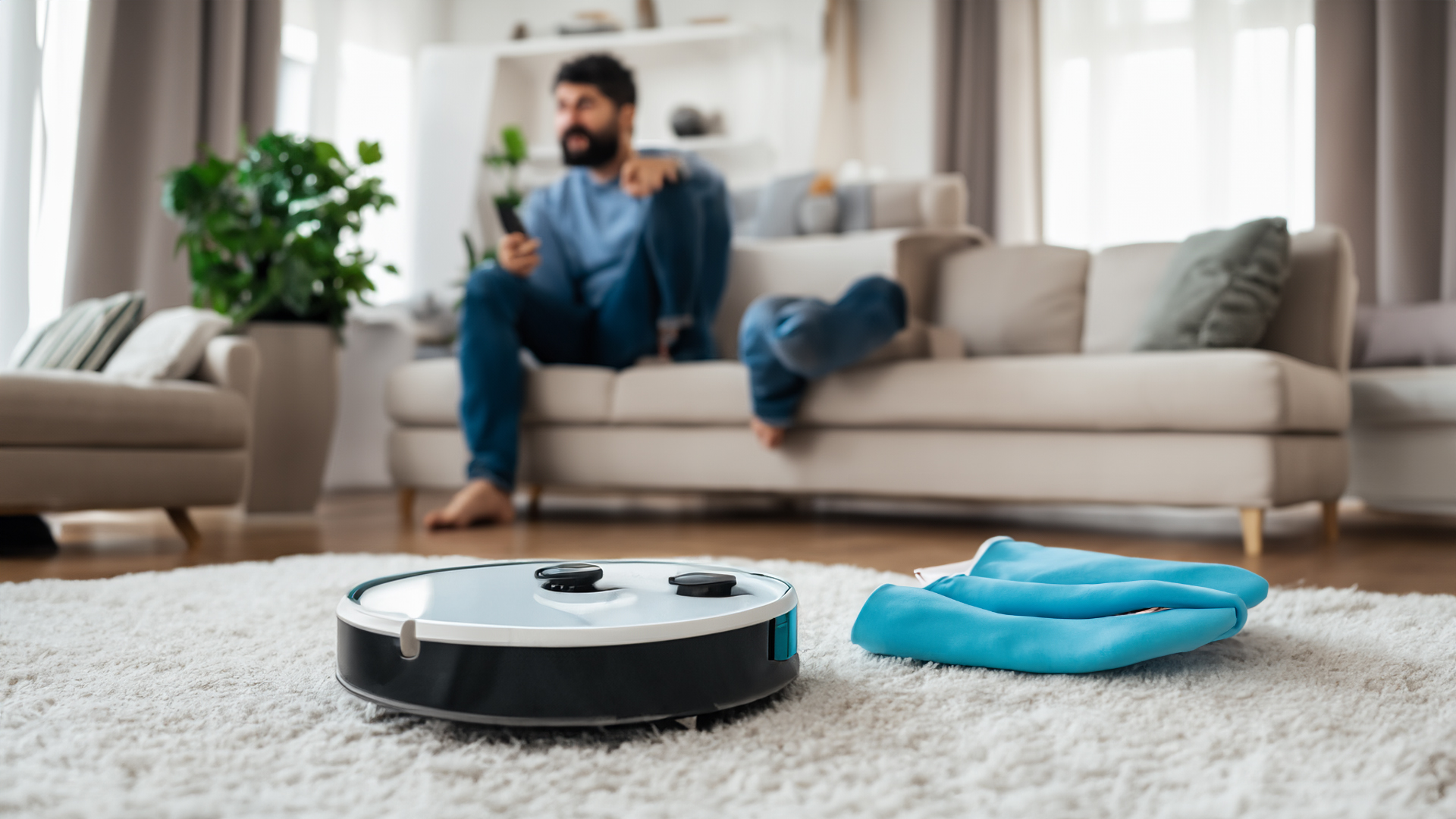
Robot Vacuum Security Breach Exposes Privacy Risks

Thumbnail Image

The information displayed in the AIM should not be reported as representing the official views of the OECD or of its member countries.

Ecovacs, the largest home robotics company, failed to address security vulnerabilities in its robot vacuums, allowing hackers to access the devices' cameras remotely. This breach, affecting models like the Deebot X2, poses significant privacy risks as these vacuums operate in numerous households globally, including Australia.[AI generated]

Why's our monitor labelling this an incident or hazard?

Ecovacs robot vacuums incorporate on-device AI for navigation and sensing. A researcher discovered and demonstrated a Bluetooth exploit, remotely taking over the robot’s computer and streaming live camera and audio data. The company was previously warned but had not fixed the flaw, and the hack resulted in an actual privacy intrusion (harm) to the consenting participant’s family. Because the AI system’s malfunction/misuse directly led to realized harm (violation of privacy), this qualifies as an AI Incident.[AI generated]
AI principles
AccountabilityPrivacy & data governanceRobustness & digital securityRespect of human rightsSafety

Industries
Robots, sensors, and IT hardwareConsumer productsDigital security

Affected stakeholders
Consumers

Harm types
Human or fundamental rightsPsychologicalReputationalEconomic/Property

Severity
AI incident

AI system task:
Recognition/object detectionGoal-driven organisation


Articles about this incident or hazard

Thumbnail Image

We hacked a popular robot vacuum -- and could watch live through its camera

2024-10-03
Australian Broadcasting Corporation
Why's our monitor labelling this an incident or hazard?
Ecovacs robot vacuums incorporate on-device AI for navigation and sensing. A researcher discovered and demonstrated a Bluetooth exploit, remotely taking over the robot’s computer and streaming live camera and audio data. The company was previously warned but had not fixed the flaw, and the hack resulted in an actual privacy intrusion (harm) to the consenting participant’s family. Because the AI system’s malfunction/misuse directly led to realized harm (violation of privacy), this qualifies as an AI Incident.
Thumbnail Image

Insecure Deebot robot vacuums collect photos and audio to train AI

2024-10-04
Australian Broadcasting Corporation
Why's our monitor labelling this an incident or hazard?
The event describes an AI system (robotic vacuum + AI training pipeline) whose use has directly led to the unauthorized collection and retention of private user data and exposes that data to hacking. The realized privacy breach and potential misuse of personal images and recordings qualify as a human‐rights violation and a concrete harm caused by the system’s development, deployment, and malfunction.
Thumbnail Image

If you think your robot vacuum is watching you, you might not be wrong

2024-10-04
TechRadar
Why's our monitor labelling this an incident or hazard?
The robot vacuum is an AI system with sensors and autonomous functions. The hacking incident directly led to a violation of user privacy, a breach of fundamental rights related to data protection and privacy. The AI system's malfunction or exploitation caused harm to individuals by enabling unauthorized surveillance. Therefore, this qualifies as an AI Incident due to realized harm stemming from the AI system's use and security flaws.
Thumbnail Image

Robot Vacuum Cleaners' Security Vulnerabilities and Hackability Issues

2024-10-04
RayHaber | RaillyNews
Why's our monitor labelling this an incident or hazard?
The robot vacuum cleaners described are AI systems as they perform autonomous navigation and environment sensing, including camera and microphone data collection. The hacking incidents have directly led to violations of privacy, which is a breach of fundamental rights and can be considered harm to individuals. The article details realized harm through unauthorized access and data breaches, not just potential risks. Therefore, this qualifies as an AI Incident due to direct harm caused by the AI system's malfunction or security flaws leading to privacy violations and potential blackmail.
Thumbnail Image

Ecovacs Robots No Different To LG Or Samsung When It Comes To Camers & Mapping Vunerabilities -

2024-10-06
SmartHouse
Why's our monitor labelling this an incident or hazard?
The article explicitly describes AI systems (robotic vacuum cleaners with LiDAR and camera navigation) being hacked by professional hackers, leading to unauthorized access to live video feeds inside homes, which is a violation of privacy and a breach of fundamental rights. The involvement of AI is clear in the navigation and sensing systems, and the harm (privacy violation) has occurred. The article also discusses mitigation efforts and company responses, but the primary focus is on the realized security vulnerabilities and harms. Therefore, this is an AI Incident rather than a hazard or complementary information.
Thumbnail Image

If You Think Your Robot Vacuum Cleaner Is Watching You, You Might Not Be Wrong - Ny Breaking News

2024-10-04
NY Breaking News
Why's our monitor labelling this an incident or hazard?
The robot vacuum cleaner is an AI system with autonomous capabilities and sensors, including a camera. The hacking incident involves exploitation of vulnerabilities in the AI system's software, leading to unauthorized access to the camera feed and speaker, which directly harms the privacy rights of the user. This constitutes a violation of fundamental rights (privacy) and is a clear harm caused by the malfunction or misuse of an AI system. Therefore, this event qualifies as an AI Incident.
Thumbnail Image

Daily Tech News 7 October 2024

2024-10-07
acecomments.mu.nu
Why's our monitor labelling this an incident or hazard?
The event involves an AI system (home robotics with data collection and processing capabilities) whose use raises significant privacy and security concerns. The cybersecurity researcher highlights vulnerabilities that could lead to unauthorized access or misuse, implying a credible risk of harm. However, the article does not report any actual harm or incident resulting from these vulnerabilities. The potential for harm through data misuse or espionage is plausible, fitting the definition of an AI Hazard rather than an AI Incident. The lack of concrete harm or legal violation at this stage excludes classification as an AI Incident or Complementary Information. It is not unrelated because AI systems are involved and privacy risks are central.