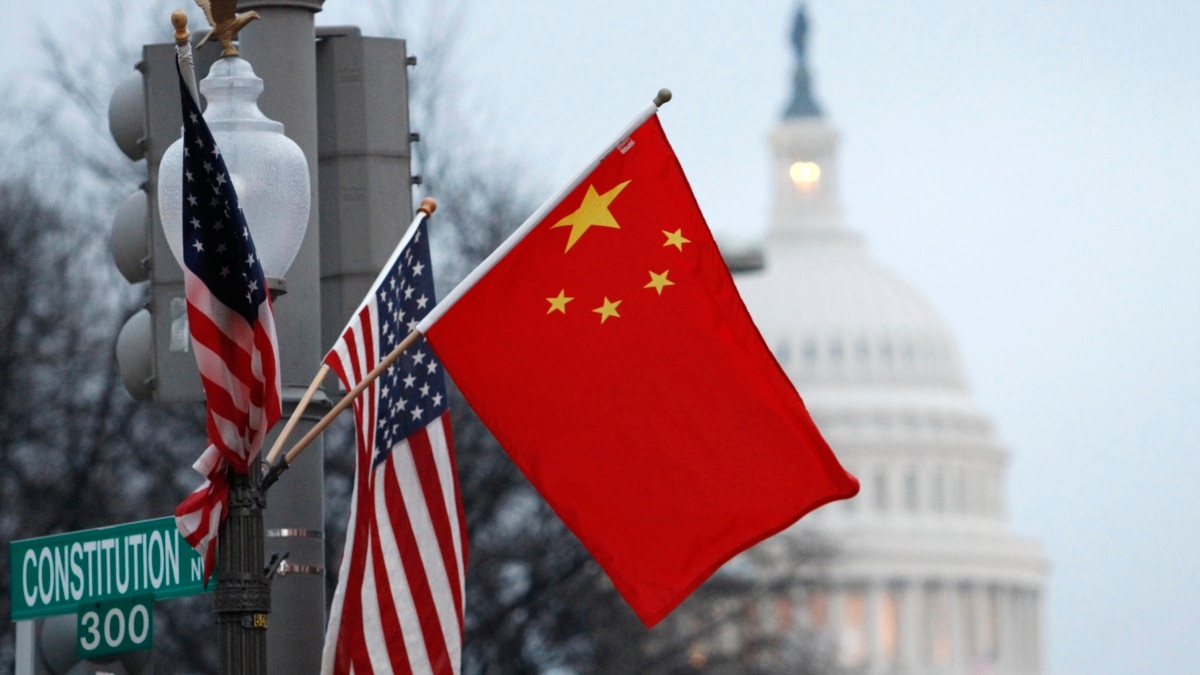
US and Taiwan tighten controls on Chinese AI investments and applications

Thumbnail Image

The information displayed in the AIM should not be reported as representing the official views of the OECD or of its member countries.

President Trump signed a national security memorandum directing CFIUS to impose stricter limits on Chinese investment in critical technologies, including AI, semiconductors and quantum. In parallel, Taiwan’s Ministry of National Defense reaffirmed a ban on Chinese-made AI apps like DeepSeek and WeChat on government and military devices to mitigate cybersecurity and privacy risks.[AI generated]

Why's our monitor labelling this an incident or hazard?

The article describes a policy and security measure to prevent the use of certain AI-related applications and Chinese-made communication devices within the military to avoid potential data leaks and cybersecurity risks. While it involves AI systems (DeepSeek AI service), the article does not report any actual harm or incident caused by these AI systems. Instead, it focuses on preventive measures and regulations to mitigate potential risks. Therefore, this is a case of an AI Hazard, as the use of these AI systems could plausibly lead to harm (e.g., data leakage, security breaches) if not controlled, but no harm has yet occurred according to the article.[AI generated]
AI principles
Privacy & data governanceRobustness & digital securityRespect of human rightsAccountabilityTransparency & explainabilityDemocracy & human autonomy

Industries
Government, security, and defenceDigital securityIT infrastructure and hostingMedia, social platforms, and marketingReal estateReal estate

Affected stakeholders
Government

Harm types
Human or fundamental rightsPublic interest

Severity
AI hazard

Business function:
ICT management and information securityResearch and development

AI system task:
Interaction support/chatbotsOrganisation/recommendersContent generation


Articles about this incident or hazard

Thumbnail Image

國軍重申 公務手機嚴禁安裝DeepSeek等陸應用程式

2025-02-21
Yahoo News (Taiwan)
Why's our monitor labelling this an incident or hazard?
The article describes a policy and security measure to prevent the use of certain AI-related applications and Chinese-made communication devices within the military to avoid potential data leaks and cybersecurity risks. While it involves AI systems (DeepSeek AI service), the article does not report any actual harm or incident caused by these AI systems. Instead, it focuses on preventive measures and regulations to mitigate potential risks. Therefore, this is a case of an AI Hazard, as the use of these AI systems could plausibly lead to harm (e.g., data leakage, security breaches) if not controlled, but no harm has yet occurred according to the article.
Thumbnail Image

公務手機禁用DeepSeek等程式 國防部重申禁令

2025-02-21
Yahoo News (Taiwan)
Why's our monitor labelling this an incident or hazard?
The article explicitly mentions DeepSeek, an AI service, and other Chinese AI-related applications being banned on government devices due to risks of cybersecurity vulnerabilities and privacy breaches. Although no actual harm is reported, the directive is a response to the plausible risk that these AI systems could lead to significant harms such as data leakage or espionage. This fits the definition of an AI Hazard, where the development or use of AI systems could plausibly lead to harm. The event is not an AI Incident because no realized harm is described, nor is it Complementary Information or Unrelated, as the focus is on the risk and preventive policy regarding AI systems.
Thumbnail Image

公務手機禁用DeepSeek等程式 國防部重申禁令 | 聯合新聞網

2025-02-21
UDN
Why's our monitor labelling this an incident or hazard?
The article involves AI systems indirectly, as DeepSeek is an AI service, and the ban is due to concerns about cybersecurity vulnerabilities and privacy risks linked to these AI-enabled applications. However, the article does not report any realized harm or incident caused by these AI systems; rather, it describes preventive measures and policies to mitigate potential risks. Therefore, this is an AI Hazard scenario, where the use or presence of AI systems could plausibly lead to harm (e.g., data breaches, espionage), but no actual harm has been reported yet.
Thumbnail Image

公務手機禁用DeepSeek等程式 國防部重申禁令 | 政治 | 中央社 CNA

2025-02-21
Central News Agency
Why's our monitor labelling this an incident or hazard?
The event involves AI systems (DeepSeek AI service) and Chinese-made software/hardware that could pose cybersecurity and privacy risks. However, the article describes a preventive policy measure to avoid potential harm rather than an actual incident or realized harm. There is no report of direct or indirect harm caused by the AI systems or software, only a risk of such harm. Therefore, this is best classified as Complementary Information, as it details governance and security responses to AI-related risks rather than an AI Incident or AI Hazard.
Thumbnail Image

特朗普下令加強對中國關鍵領域投資的限制

2025-02-22
美國之音
Why's our monitor labelling this an incident or hazard?
The article focuses on a national security policy restricting foreign investment in AI and other critical technologies to prevent potential misuse or harm. It involves AI systems indirectly as part of the sensitive technologies but does not report any actual harm or malfunction caused by AI. The event is a governance and policy measure addressing potential risks, not an incident or hazard itself. Hence, it fits the definition of Complementary Information, providing context and updates on AI-related governance and risk mitigation efforts rather than describing a new AI Incident or AI Hazard.