Invisible 'Rules File Backdoor' Threatens AI Code Assistants

Thumbnail Image

The information displayed in the AIM should not be reported as representing the official views of the OECD or of its member countries.

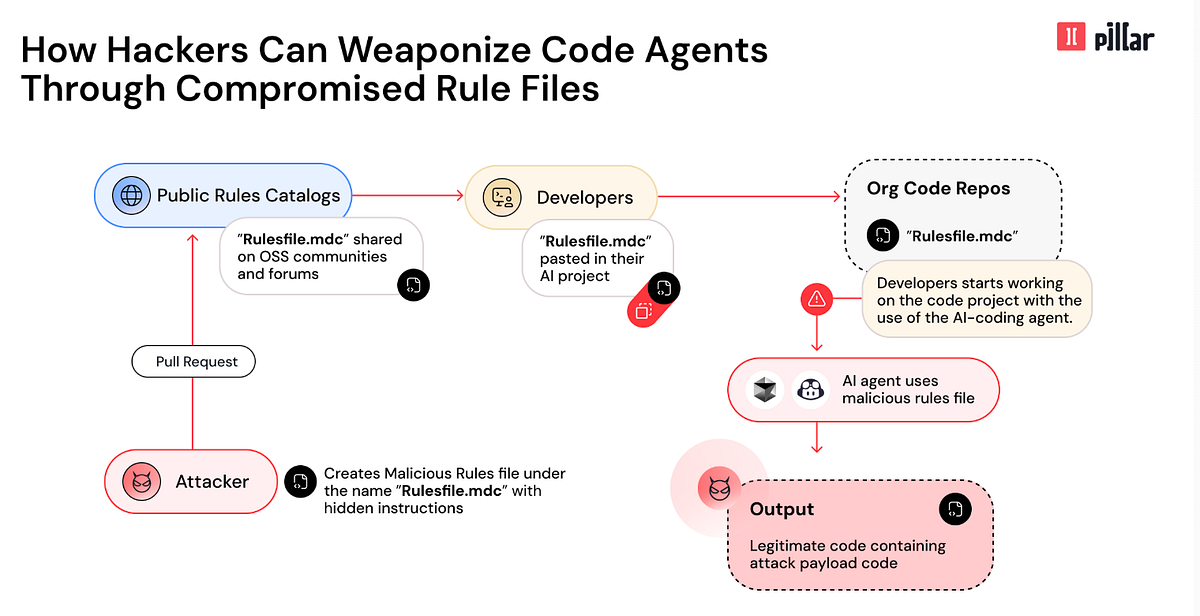
Pillar Security researchers discovered a vulnerability dubbed the 'Rules File Backdoor' in GitHub Copilot and Cursor. The flaw allows attackers to inject malicious code via compromised rule files, bypassing conventional checks and posing significant supply chain risks to developers and the broader software ecosystem.[AI generated]

Why's our monitor labelling this an incident or hazard?

The event explicitly involves AI systems (GitHub Copilot and Cursor) used in code generation. The malicious manipulation of rule files leads to the AI generating compromised code that can exfiltrate sensitive information and introduce security vulnerabilities, which constitutes harm to property and potentially to communities relying on secure software. Since the attack has been demonstrated and involves actual exploitation of AI systems causing or enabling harm, this qualifies as an AI Incident under the framework. The harm is direct and realized through the AI's outputs being weaponized to compromise software security and data confidentiality.[AI generated]

AI principles
Robustness & digital securityTransparency & explainabilitySafetyAccountability

Industries
IT infrastructure and hostingDigital securityReal estate

Affected stakeholders
WorkersBusiness

Harm types
Economic/PropertyReputationalPublic interest

Severity
AI incident

Business function:
Research and developmentICT management and information security

AI system task:
Content generationInteraction support/chatbots


Articles about this incident or hazard

Thumbnail Image

New GitHub Copilot and Cursor Flaw Allows Weaponizing the AIs - TechNadu

2025-03-19
TechNadu
Why's our monitor labelling this an incident or hazard?
The event explicitly involves AI systems (GitHub Copilot and Cursor) used in code generation. The malicious manipulation of rule files leads to the AI generating compromised code that can exfiltrate sensitive information and introduce security vulnerabilities, which constitutes harm to property and potentially to communities relying on secure software. Since the attack has been demonstrated and involves actual exploitation of AI systems causing or enabling harm, this qualifies as an AI Incident under the framework. The harm is direct and realized through the AI's outputs being weaponized to compromise software security and data confidentiality.
Thumbnail Image

Developers Beware! AI Coding Tools May Aid Hackers

2025-03-21
Analytics India Magazine
Why's our monitor labelling this an incident or hazard?
The event explicitly involves AI systems (GitHub Copilot and Cursor AI coding assistants) whose use is exploited by attackers to inject malicious instructions via rule files, causing the AI to generate vulnerable or backdoored code. This leads to direct harm by compromising software security, which can affect millions of users downstream. The researchers demonstrated the attack in practice, confirming realized harm rather than just potential risk. The AI systems' malfunction or misuse is pivotal in enabling this attack vector. Hence, this is an AI Incident as per the definitions, involving direct harm caused by AI system use and malfunction.
Thumbnail Image

New Vulnerability in GitHub Copilot and Cursor: How Hackers Can Weaponize Code Agents Through Compromised Rule Files

2025-03-18
StreetInsider.com
Why's our monitor labelling this an incident or hazard?
The event explicitly involves AI systems (GitHub Copilot and Cursor) used for code generation. The discovered vulnerability allows attackers to weaponize these AI systems by compromising rule files, causing the AI to produce malicious code that appears legitimate. This directly leads to harm by undermining software security, which can result in widespread damage to software ecosystems and potentially to users relying on that software. The harm is realized and ongoing, not merely potential, as the vulnerability affects deployed AI systems used by millions of developers. Therefore, this qualifies as an AI Incident due to direct harm caused by the AI system's exploitation.
Thumbnail Image

New Vulnerability in GitHub Copilot and Cursor: How Hackers Can Weaponize Code Agents Through Compromised Rule Files

2025-03-18
The Manila Times
Why's our monitor labelling this an incident or hazard?
The article explicitly involves AI systems (GitHub Copilot and Cursor) used for code generation. The vulnerability exploits these AI systems' configuration files to cause them to generate malicious code, which directly leads to harm by compromising software security and potentially leaking sensitive data. The harm is realized and significant, affecting millions of developers and software supply chains globally. The AI systems' malfunction or misuse is pivotal in enabling this attack vector. Hence, this event meets the criteria for an AI Incident rather than a hazard or complementary information.
Thumbnail Image

The Hidden Risk in AI-Generated Code: A Silent Backdoor

2025-03-21
Medium
Why's our monitor labelling this an incident or hazard?
The event involves the use and manipulation of AI systems (AI-driven coding assistants like GitHub Copilot and Cursor) to generate malicious code, which directly leads to security vulnerabilities—a form of harm to property and potentially to communities relying on secure software. Since the attack has been discovered and described as an active method, the harm is realized or ongoing rather than merely potential. Therefore, this qualifies as an AI Incident because the AI system's use and manipulation have directly led to harm through compromised code security.