Court filing reveals Meta profits from Llama AI amidst copyright lawsuit

Thumbnail Image

The information displayed in the AIM should not be reported as representing the official views of the OECD or of its member countries.

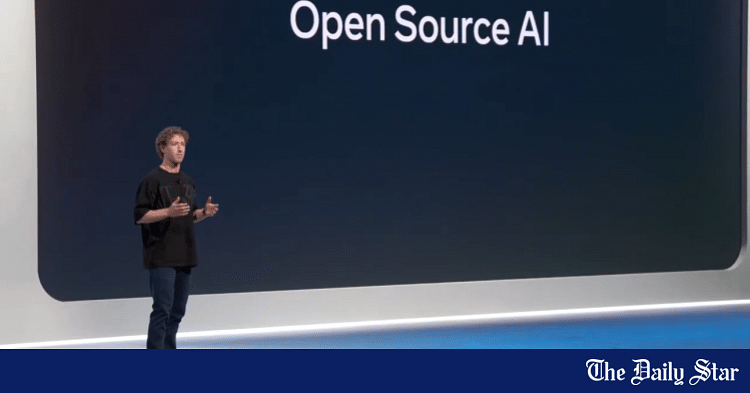
A court filing in the Kadrey v. Meta lawsuit reveals Meta shares revenue with cloud hosts like AWS, Google Cloud, and Nvidia for its Llama AI models. Plaintiffs allege Meta trained Llama on hundreds of terabytes of pirated ebooks, constituting copyright infringement in its AI development.[AI generated]

Why's our monitor labelling this an incident or hazard?

The article discusses Meta's use and monetization of its Llama AI models, including revenue sharing and alleged copyright violations in training data. The involvement of AI systems (Llama models) is explicit, and the lawsuit alleges violations of intellectual property rights, which is a breach of applicable law protecting such rights. Since the alleged copyright infringement has already occurred and is central to the lawsuit, this constitutes a violation of intellectual property rights caused by the AI system's development. Therefore, this qualifies as an AI Incident under the framework, as the AI system's development has directly or indirectly led to a breach of intellectual property rights. The article does not primarily focus on responses or updates but reveals new information about the incident itself.[AI generated]
AI principles
AccountabilityTransparency & explainabilityPrivacy & data governance

Industries
Media, social platforms, and marketingIT infrastructure and hostingReal estateReal estate

Affected stakeholders
Other

Harm types
Economic/PropertyReputationalPublic interest

Severity
AI incident

Business function:
Research and development

AI system task:
Content generationInteraction support/chatbots


Articles about this incident or hazard

Thumbnail Image

Meta has revenue sharing agreements with Llama AI model hosts, filing reveals

2025-03-21
Yahoo! Finance
Why's our monitor labelling this an incident or hazard?
The article involves an AI system (Llama models) and discusses allegations of copyright infringement in its training data, which constitutes a violation of intellectual property rights. However, the event focuses on the legal case and Meta's revenue-sharing arrangements rather than describing a realized harm caused by the AI system's outputs or use. Since the harm (copyright violation) is alleged and part of a legal dispute, and no direct harm from the AI system's deployment is described, this fits best as Complementary Information. It provides context and updates on AI-related legal and governance issues without reporting a new AI Incident or AI Hazard.
Thumbnail Image

Meta has revenue sharing agreements with Llama AI model hosts, filing reveals

2025-03-21
TechCrunch
Why's our monitor labelling this an incident or hazard?
The article discusses Meta's use and monetization of its Llama AI models, including revenue sharing and alleged copyright violations in training data. The involvement of AI systems (Llama models) is explicit, and the lawsuit alleges violations of intellectual property rights, which is a breach of applicable law protecting such rights. Since the alleged copyright infringement has already occurred and is central to the lawsuit, this constitutes a violation of intellectual property rights caused by the AI system's development. Therefore, this qualifies as an AI Incident under the framework, as the AI system's development has directly or indirectly led to a breach of intellectual property rights. The article does not primarily focus on responses or updates but reveals new information about the incident itself.
Thumbnail Image

Meta's Llama AI generates revenue through cloud hosting deals,

2025-03-22
The Daily Star
Why's our monitor labelling this an incident or hazard?
The event explicitly involves an AI system (Meta's Llama models) and details a lawsuit alleging that the AI's development involved copyright infringement, a violation of intellectual property rights. This constitutes a breach of applicable law protecting intellectual property rights, which is a form of harm under the AI Incident definition. The financial arrangements and alleged distribution of pirated content further link the AI system's development and use to realized legal and rights violations. Therefore, this qualifies as an AI Incident due to the direct involvement of the AI system in causing harm through copyright violations.
Thumbnail Image

Meta has revenue sharing agreements with Llama AI model hosts, filing reveals - RocketNews

2025-03-21
RocketNews | Top News Stories From Around the Globe
Why's our monitor labelling this an incident or hazard?
The article involves AI systems (Llama AI models) and their monetization, but it does not describe any realized harm or plausible future harm caused by these AI systems. The mention of a copyright lawsuit indicates a legal dispute over the training data, which relates to intellectual property rights, but the article does not state that the AI system's use has directly or indirectly caused a violation or harm yet; it is part of ongoing litigation. The main focus is on the revelation of revenue-sharing agreements and Meta's business strategy, which provides context and updates on AI governance and legal challenges. Therefore, this fits the definition of Complementary Information rather than an AI Incident or AI Hazard.
Thumbnail Image

'Employee chats' in court filings that 'confirm' how Facebook parent Meta used copyrighted content to train company's AI model - The Times of India

2025-02-22
The Times of India
Why's our monitor labelling this an incident or hazard?
The event explicitly involves AI systems (Meta's AI models) and their development process (training data acquisition). The use of copyrighted content without authorization is a clear violation of intellectual property rights, which is one of the harms defined under AI Incidents. The court filings confirm that this unauthorized use has occurred, making it a realized harm rather than a potential one. Hence, this qualifies as an AI Incident due to the direct link between the AI system's development and the violation of legal rights.
Thumbnail Image

Court filings show Meta staffers discussed using copyrighted content for AI training | TechCrunch

2025-02-21
TechCrunch
Why's our monitor labelling this an incident or hazard?
The event explicitly involves the development and use of AI systems (Meta's Llama models and other AI models) trained on copyrighted content obtained through legally questionable means. This directly implicates violations of intellectual property rights, a recognized category of harm under the AI Incident definition. The court case and filings confirm that these practices have occurred, not merely that they could occur, indicating realized harm. Hence, the event meets the criteria for an AI Incident rather than a hazard or complementary information.
Thumbnail Image

Meta defends its vast book torrenting: We're just a leech, no proof of seeding

2025-02-20
Ars Technica
Why's our monitor labelling this an incident or hazard?
The article explicitly describes Meta's use of pirated books obtained through torrenting to train AI models, which is alleged to violate copyright and data access laws. The AI system (LLM) is central to the harm, as the unauthorized data use directly supports AI development. The harm is realized (copyright infringement and unlawful distribution), not just potential. The involvement of AI in the harm and the legal dispute over unauthorized data use for AI training fits the definition of an AI Incident, as it involves violations of intellectual property rights caused by the AI system's development and use.
Thumbnail Image

There May Be Downsides Now That Mark Zuckerberg Can Read Your Thoughts With a Scanning Device

2025-02-21
Futurism
Why's our monitor labelling this an incident or hazard?
The article explicitly mentions an AI system trained to decode brain waves with high accuracy, which qualifies as an AI system under the definitions. The involvement is in the development and potential use of this system. Although no direct harm has occurred yet, the article highlights credible concerns about Meta's invasive data practices and the risks of having such sensitive data controlled by a company with a poor privacy track record. This creates a plausible risk of harm to human rights, particularly privacy rights, fitting the definition of an AI Hazard. There is no indication that harm has already occurred, so it is not an AI Incident. The article is not merely complementary information or unrelated, as it focuses on the potential risks of this AI technology.
Thumbnail Image

Meta staff discussed using copyrighted content for AI training, court documents show

2025-02-22
Cryptopolitan
Why's our monitor labelling this an incident or hazard?
The article explicitly details how Meta staff discussed and implemented the use of copyrighted and potentially pirated content to train AI models, including internal communications about circumventing licensing deals and using unauthorized sources like Libgen. This constitutes a breach of intellectual property rights, a recognized harm under the AI Incident definition. The AI system's development (training) is directly involved in causing this harm. Hence, the event meets the criteria for an AI Incident rather than a hazard or complementary information.
Thumbnail Image

Court filings show Meta staffers discussed using copyrighted content for AI training - RocketNews

2025-02-22
RocketNews | Top News Stories From Around the Globe
Why's our monitor labelling this an incident or hazard?
The event explicitly involves AI system development (training AI models) using copyrighted content obtained through legally questionable means. This has led to legal disputes alleging violations of intellectual property rights, which is a recognized harm under the AI Incident definition. The internal discussions show awareness and intentional use of such content, confirming direct involvement of AI system development in causing harm. Hence, this is an AI Incident rather than a hazard or complementary information.
Thumbnail Image

Meta Faces Legal Battle Over AI Training with Copyrighted Content

2025-02-22
るなてち
Why's our monitor labelling this an incident or hazard?
The article explicitly details Meta's use of copyrighted and pirated materials to train AI models, which is a clear violation of intellectual property rights. The involvement of AI systems in training on unlicensed data directly links the AI system's development and use to a breach of legal protections. The harm is realized as the lawsuit alleges actual unauthorized use, not just potential misuse. Hence, this is an AI Incident involving violation of intellectual property rights under the defined framework.