Fed Warns: AI Deepfakes Heighten Banking Cybersecurity Risks

Thumbnail Image

The information displayed in the AIM should not be reported as representing the official views of the OECD or of its member countries.

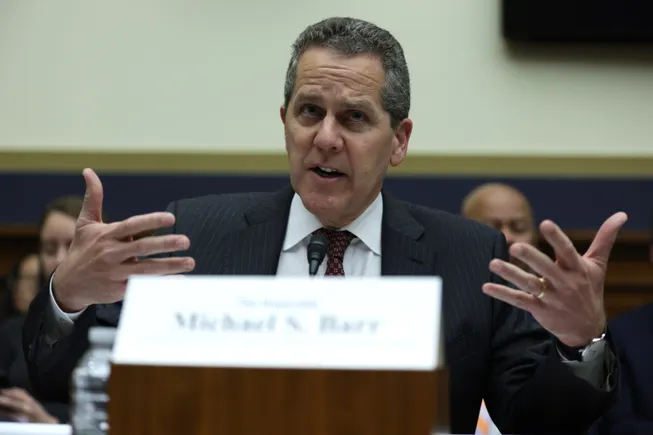
Federal Reserve Governor Michael S. Barr warned that AI-powered deepfakes are increasingly used to impersonate key figures and bypass identity verification in the financial sector. He stressed that these sophisticated audio and video manipulations intensify identity fraud risks, urging banks and regulators to bolster defenses.[AI generated]

Why's our monitor labelling this an incident or hazard?

The article explicitly mentions AI systems generating deepfake audio and video that have been used to impersonate individuals and commit fraud, resulting in significant financial losses and attempted fraud. This constitutes direct harm to property and financial institutions, fulfilling the criteria for an AI Incident. The involvement of AI in the development and use of deepfakes causing these harms is clear and central to the event.[AI generated]
AI principles
Privacy & data governanceRobustness & digital securitySafetyTransparency & explainabilityAccountabilityRespect of human rightsDemocracy & human autonomy

Industries
Financial and insurance servicesDigital securityGovernment, security, and defence

Affected stakeholders
ConsumersBusinessGeneral public

Harm types
Economic/PropertyReputationalHuman or fundamental rightsPublic interestPsychological

Severity
AI incident

Business function:
ICT management and information securityCompliance and justice

AI system task:
Content generation


Articles about this incident or hazard

Thumbnail Image

Fed's Barr warns deepfakes pose growing cybersecurity risk to banks By Investing.com

2025-04-17
Investing.com
Why's our monitor labelling this an incident or hazard?
The article explicitly mentions AI systems generating deepfake audio and video that have been used to impersonate individuals and commit fraud, resulting in significant financial losses and attempted fraud. This constitutes direct harm to property and financial institutions, fulfilling the criteria for an AI Incident. The involvement of AI in the development and use of deepfakes causing these harms is clear and central to the event.
Thumbnail Image

Federal Reserve's Barr Warns: Deepfakes Raise Alarming Risks For Bank Cybersecurity - FinanceFeeds

2025-04-18
FinanceFeeds
Why's our monitor labelling this an incident or hazard?
The event involves the use of AI systems (deepfake generative AI) in actual fraud incidents causing financial harm, which fits the definition of an AI Incident. The harms include financial loss due to identity fraud facilitated by AI-generated synthetic media. The article details direct consequences of AI misuse leading to harm, meeting the criteria for an AI Incident rather than a hazard or complementary information.
Thumbnail Image

Deepfake-enabled fraud caused more than $200 million in losses

2025-04-22
Security Magazine
Why's our monitor labelling this an incident or hazard?
The article reports on actual financial losses exceeding $200 million caused by deepfake-enabled fraud, which directly involves AI systems generating synthetic media to impersonate individuals. The harms include economic loss, reputational damage, harassment, and blackmail, all of which are direct consequences of the AI system's use. The presence of AI is explicit (deepfake technology), and the harms are realized, not just potential. Hence, this event meets the criteria for an AI Incident.
Thumbnail Image

5 Strategies To Identify AI Deepfakes Posing As Job Candidates

2025-04-23
Forbes
Why's our monitor labelling this an incident or hazard?
The event involves AI systems (deepfake generation technology) being used maliciously to impersonate job candidates, which has already led to realized harms such as unauthorized access and potential cybersecurity breaches. Since the article describes actual occurrences of AI deepfakes infiltrating hiring processes and causing harm, this qualifies as an AI Incident. The article's focus is on the harm caused by AI deepfakes and how to detect and respond to them, not merely on potential risks or general information.
Thumbnail Image

GUEST ESSAY: Ponemon study warns: AI-enhanced deepfake attacks taking aim at senior execs

2025-04-22
Security Boulevard
Why's our monitor labelling this an incident or hazard?
The event involves the use of AI systems (deep learning models generating deepfakes) that have directly led to harms including financial loss and reputational damage to executives and their companies. The article details actual incidents of deepfake attacks already occurring, not just potential risks, fulfilling the criteria for an AI Incident. The harms are clearly articulated and stem from the malicious use of AI-generated content, meeting the definition of an AI Incident rather than a hazard or complementary information.
Thumbnail Image

Potential for deepfake audio, video to warp reality is building to crisis level | Biometric Update

2025-04-21
Biometric Update
Why's our monitor labelling this an incident or hazard?
The article clearly involves AI systems, specifically generative AI models that create deepfake audio and video used in fraud and scams. These AI systems are actively causing harm by enabling financial fraud and deception, which directly harms individuals financially and undermines trust in institutions. The harms described include realized financial losses, scams targeting vulnerable populations, and the broader societal impact of misinformation and deception. Therefore, this qualifies as an AI Incident because the AI system's use has directly led to significant harm. The article also discusses responses and detection methods, but the primary focus is on the ongoing harms caused by AI-generated deepfakes and fraud.
Thumbnail Image

The deepfake crisis: The alarm has been sounded - South Africa Today

2025-04-22
South Africa Today
Why's our monitor labelling this an incident or hazard?
The article explicitly identifies deepfakes as AI-generated synthetic media used maliciously for fraud, misinformation, and cybercrime, with concrete examples of realized harms such as financial losses exceeding billions of dollars, election misinformation, and scams. The harms are direct and ongoing, caused by the use of AI systems to create deceptive content. This meets the criteria for an AI Incident because the AI system's use has directly led to significant harms to individuals, companies, and communities. The article also discusses detection challenges and responses, but the primary focus is on the realized harms caused by AI deepfakes, not just potential future risks or responses, so it is not merely Complementary Information or an AI Hazard.
Thumbnail Image

Banks must fight deepfakes with better AI, Barr says

2025-04-21
Banking Dive
Why's our monitor labelling this an incident or hazard?
The article explicitly mentions that one in ten companies have been targeted by deepfake scams, which are AI-generated fraudulent impersonations causing financial harm. This constitutes an AI Incident because the development and use of generative AI systems for deepfake creation have directly led to harm (fraud and identity theft). The discussion about improving AI defenses is a response to this ongoing harm, but the core event is the realized harm from AI-enabled deepfake frauds. Therefore, the event is best classified as an AI Incident.
Thumbnail Image

Deepfakes and the AI arms race in bank cybersecurity - Caribbean News Global

2025-04-20
Caribbean News Global
Why's our monitor labelling this an incident or hazard?
The article explicitly describes the use of AI systems (generative AI and GANs) to create deepfake audio and video that have been used to commit fraud, causing financial harm to individuals and institutions. It details real incidents where deepfakes were used to deceive bank employees into transferring large sums of money, which constitutes direct harm to property and communities. The involvement of AI in these harms is clear and central to the event. Therefore, this qualifies as an AI Incident rather than a hazard or complementary information.
Thumbnail Image

White House includes NSF research on deepfakes among threats to free speech | Biometric Update

2025-04-23
Biometric Update
Why's our monitor labelling this an incident or hazard?
The article centers on policy shifts and funding cuts impacting AI research on deepfake detection, which is a governance and societal response issue rather than a direct or indirect AI incident or hazard. It also summarizes a security report on deepfake threats, which informs about ongoing risks but does not describe a new incident or hazard event itself. Therefore, the content fits the definition of Complementary Information, as it enhances understanding of AI ecosystem developments and responses without reporting a new AI Incident or AI Hazard.