OpenAI’s New ChatGPT Models Show Elevated Hallucination Risks

Thumbnail Image

The information displayed in the AIM should not be reported as representing the official views of the OECD or of its member countries.

OpenAI’s new ChatGPT models, o3 and o4-mini, show marked performance improvements but also significantly higher hallucination rates—33% for o3 and 48% for o4-mini. This increased production of false information has experts calling for further research to mitigate potential risks in sensitive applications.[AI generated]

Why's our monitor labelling this an incident or hazard?

The event involves AI systems (OpenAI's generative language models) and discusses their malfunction in terms of hallucination rates. However, the article does not report any actual harm or incidents caused by these hallucinations, only the potential risk they pose if used in critical applications. Therefore, this qualifies as an AI Hazard, as the malfunction could plausibly lead to harm in the future but has not yet directly or indirectly caused harm.[AI generated]
AI principles
SafetyRobustness & digital securityTransparency & explainabilityAccountabilityHuman wellbeingDemocracy & human autonomy

Industries
Healthcare, drugs, and biotechnologyGovernment, security, and defenceMedia, social platforms, and marketingEducation and trainingGeneral or personal use

Affected stakeholders
ConsumersGeneral public

Harm types
Economic/PropertyReputationalPublic interestPsychological

Severity
AI hazard

Business function:
Citizen/customer serviceResearch and development

AI system task:
Content generationInteraction support/chatbots


Articles about this incident or hazard

Thumbnail Image

"믿었던 챗GPT가 환각률 48%라니...", 챗GPT 어쩌나

2025-04-20
파이낸셜뉴스
Why's our monitor labelling this an incident or hazard?
The event involves AI systems (OpenAI's generative language models) and discusses their malfunction in terms of hallucination rates. However, the article does not report any actual harm or incidents caused by these hallucinations, only the potential risk they pose if used in critical applications. Therefore, this qualifies as an AI Hazard, as the malfunction could plausibly lead to harm in the future but has not yet directly or indirectly caused harm.
Thumbnail Image

오픈AI 새 추론 AI모델, 환각현상 더 심해졌다 - 매일경제

2025-04-20
mk.co.kr
Why's our monitor labelling this an incident or hazard?
The event involves AI systems explicitly (OpenAI's inference models o3 and o4 mini) and their malfunction in the form of increased hallucinations. While no actual harm is reported, the increased hallucination rates pose a credible risk of harm, such as misinformation or incorrect advice in sensitive professional domains. This fits the definition of an AI Hazard, where the malfunction of AI systems could plausibly lead to harm. There is no indication that harm has already occurred, so it is not an AI Incident. The article is not merely complementary information since it highlights a significant risk related to AI system performance, nor is it unrelated. Hence, AI Hazard is the appropriate classification.
Thumbnail Image

오픈AI 새 추론 AI모델 '환각현상' 더 심하네 - 매일경제

2025-04-20
mk.co.kr
Why's our monitor labelling this an incident or hazard?
The event involves AI systems (OpenAI's inference models) whose malfunction (increased hallucination rates) could plausibly lead to harm, such as misinformation or misleading outputs affecting users. Although no direct harm or incident is reported, the increased hallucination rate is a credible risk factor for future incidents. Hence, this qualifies as an AI Hazard rather than an AI Incident or Complementary Information. It is not unrelated because it concerns AI system performance and potential harm.
Thumbnail Image

"원래 더 똑똑하면 헛소리도 많이 해?"...오픈AI 신모델, 환각률 역대 최고치 - 매일경제

2025-04-20
mk.co.kr
Why's our monitor labelling this an incident or hazard?
The event involves AI systems (OpenAI's new generative AI models) whose malfunction (high hallucination rates) could plausibly lead to harm, such as misinformation or incorrect advice in critical domains. Although no direct harm or incident is reported, the increased hallucination rates indicate a credible risk of future harm. Hence, this qualifies as an AI Hazard rather than an AI Incident or Complementary Information. It is not unrelated because the article focuses on AI system performance and its implications for potential harm.
Thumbnail Image

"성능 개선됐다더니 환각률 48%"...챗GPT 새 모델 무슨 일? - 매일경제

2025-04-21
mk.co.kr
Why's our monitor labelling this an incident or hazard?
The event involves AI systems explicitly (ChatGPT models o3 and o4-mini). The increased hallucination rate means the AI system is producing false outputs, which can mislead users and cause harm to communities by spreading misinformation. This constitutes harm to communities (a form of harm under the framework). Since the hallucination is occurring and is a direct output of the AI system's use, this qualifies as an AI Incident. The article does not describe potential or future harm but actual observed malfunction and harm potential realized through misinformation.
Thumbnail Image

성능 개선됐다더니챗GPT 새 모델 환각률 2배 이상 늘어

2025-04-20
wowtv.co.kr
Why's our monitor labelling this an incident or hazard?
The event involves the use of AI systems (ChatGPT models o3 and o4-mini) whose outputs have directly led to increased hallucination rates, meaning the AI provides false or misleading information as if it were true. This is a malfunction in the AI system's behavior that harms users by reducing the system's reliability and potentially causing misinformation. The article describes realized harm (not just potential), as the hallucination rates have been measured and are significantly higher than previous models. This fits the definition of an AI Incident because the AI system's malfunction has directly led to harm (harm to users through misinformation and reduced utility).
Thumbnail Image

성능개선 됐다더니 환각률 무려 48%"... 챗GPT 새모델 어쩌나

2025-04-20
조선비즈
Why's our monitor labelling this an incident or hazard?
The event involves AI systems (OpenAI's new generative AI models) whose use leads to a high rate of hallucination, a known issue where AI generates false information. While this poses a credible risk of harm, especially in sensitive domains, the article does not describe any realized harm or incidents resulting from these hallucinations. Therefore, the situation represents a plausible risk of harm due to the AI's outputs rather than an actual incident. The article mainly serves as a warning and discussion of potential future harms and ongoing research efforts, fitting the definition of an AI Hazard rather than an AI Incident or Complementary Information.
Thumbnail Image

"오픈AI 기술적 한계?"... 최신 AI모델 'o3, o4-미니' 환각 심해

2025-04-20
기술로 세상을 바꾸는 사람들의 놀이터
Why's our monitor labelling this an incident or hazard?
The article explicitly discusses AI systems (OpenAI's 'o3' and 'o4-mini' models) and their malfunction in the form of hallucinations. Although no specific incident of harm is described, the high frequency of hallucinations implies a credible risk of harm through misinformation or erroneous outputs. This fits the definition of an AI Hazard, where the AI system's malfunction could plausibly lead to an AI Incident. There is no indication that harm has already occurred, so it is not an AI Incident. The article is not merely complementary information since it focuses on the malfunction and its implications rather than responses or ecosystem updates. Hence, the classification is AI Hazard.
Thumbnail Image

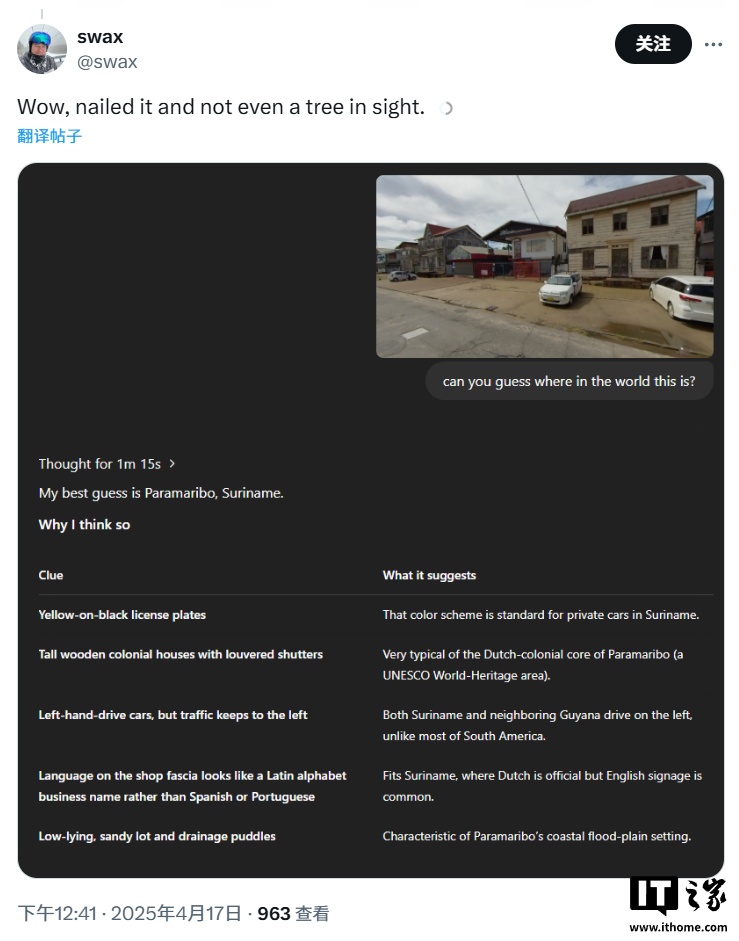
ChatGPT 新潮流?看圖猜位置引發隱私爭議

2025-04-18
Yahoo News (Taiwan)
Why's our monitor labelling this an incident or hazard?
The event involves AI systems explicitly mentioned as capable of image-based inference. Although no direct harm has occurred, the article raises concerns about possible privacy breaches resulting from the AI's use, which could plausibly lead to violations of privacy rights (a form of harm to individuals). Therefore, this situation fits the definition of an AI Hazard, as the development and use of these AI models could plausibly lead to incidents involving privacy harm if misused or inadequately controlled.
Thumbnail Image

OpenAI爆出硬伤,强化学习是祸首!o3越强越"疯",幻觉率狂飙

2025-04-20
凤凰网(凤凰新媒体)
Why's our monitor labelling this an incident or hazard?
The event involves AI systems (OpenAI's o3 and o4-mini language models) whose use (deployment and interaction with users) has directly led to significant harms in the form of misinformation and hallucinated outputs. These hallucinations can cause users to rely on false information, particularly in coding and reasoning tasks, which can lead to errors, inefficiencies, or other negative consequences. The article details realized harms (high hallucination rates causing misleading outputs) and discusses the underlying cause (reinforcement learning over-optimization). Therefore, this qualifies as an AI Incident because the AI system's use has directly led to harm (misinformation and potential operational harm in coding and reasoning).
Thumbnail Image

OpenAI 新推理 AI 模型幻觉问题更严重

2025-04-21
ai.zhiding.cn
Why's our monitor labelling this an incident or hazard?
The article explicitly involves AI systems (OpenAI's reasoning models) and discusses their malfunction in terms of hallucinations, which is a recognized problem in AI outputs. However, it does not describe any realized harm or incident resulting from these hallucinations, nor does it present a credible imminent risk of harm from these models as currently deployed. Instead, it reports on research findings, internal testing, and expert commentary about the models' limitations and the need for further study. This aligns with the definition of Complementary Information, as it enhances understanding of AI system performance and challenges without reporting a new incident or hazard.
Thumbnail Image

Las alucinaciones siguen siendo el talón de Aquiles de la IA: los últimos modelos de OpenAI inventan más de la cuenta

2025-04-21
Xataka
Why's our monitor labelling this an incident or hazard?
The article explicitly mentions that AI systems (OpenAI's language models) generate false information (hallucinations) that have caused real harm, such as legal documents with fabricated cases being submitted in court. This is a direct consequence of the AI system's outputs leading to harm to individuals and potentially violating legal rights. Therefore, this qualifies as an AI Incident because the AI system's malfunction has directly led to harm (a).
Thumbnail Image

Los nuevos modelos de OpenAI razonan más pero también "alucinan" más que nunca, y no saben por qué

2025-04-19
esdelatino.com
Why's our monitor labelling this an incident or hazard?
The article explicitly mentions AI systems (OpenAI's new models) and their malfunction in terms of hallucinations, which is a known problem where AI outputs false information. However, there is no indication that these hallucinations have directly or indirectly caused any harm yet. The discussion is about potential risks and the need for further research to understand and mitigate these issues. Therefore, this event fits the definition of an AI Hazard, as the malfunction could plausibly lead to harm in the future if not addressed, but no harm has yet occurred.
Thumbnail Image

OpenAI's newest o3 and o4-mini models excel at coding and math - but hallucinate more often

2025-04-21
TechSpot
Why's our monitor labelling this an incident or hazard?
The event involves the use of AI systems (OpenAI's o3 and o4-mini models) whose outputs have been shown to hallucinate or fabricate information at higher rates than previous models. This hallucination can directly lead to harm by introducing errors in legal contracts, financial reports, or other critical domains, thus undermining trust and causing potential injury to persons or communities relying on accurate information. Since the hallucinations are occurring in deployed models and have been documented, this qualifies as an AI Incident due to realized harm risks. The article does not merely warn of potential future harm but reports on actual observed behavior of the AI systems causing problematic outputs.
Thumbnail Image

OpenAI新推理模型被曝产生更多幻觉;Meta旗下APP禁用苹果AI功能丨全球科技早参-科技频道-和讯网

2025-04-21
和讯网
Why's our monitor labelling this an incident or hazard?
The OpenAI model's hallucination increase is a technical performance issue, raising concerns about AI reliability but not linked to any realized harm or incident. Meta's disabling of Apple's AI features is a strategic move without harm. The Perplexity AI integration discussions are potential future developments but do not indicate plausible harm at this stage. The humanoid robot marathon and Microsoft's CTO statements are general AI ecosystem news. Hence, the article fits the definition of Complementary Information, providing updates and context on AI system performance, competition, and industry developments without reporting a specific AI Incident or Hazard.
Thumbnail Image

OpenAI's Hot New AI Has an Embarrassing Problem

2025-04-21
Futurism
Why's our monitor labelling this an incident or hazard?
The event involves AI systems (OpenAI's o3 and o4-mini models) whose malfunction (high hallucination rates) undermines their accuracy and reliability. While no specific harm or incident is reported as having occurred, the hallucinations could plausibly lead to harm such as misinformation, erroneous decisions, or user confusion. Therefore, this situation fits the definition of an AI Hazard, as the development and use of these AI systems could plausibly lead to an AI Incident involving harm to users or communities. It is not an AI Incident because no actual harm is described as having occurred yet, nor is it Complementary Information since the article focuses on the problem itself rather than responses or broader ecosystem context. It is not Unrelated because the issue is directly about AI system performance and its implications.
Thumbnail Image

La paradoja de que los nuevos modelos de OpenAI alucinen más que sus antecesores mientras son capaces de hacer cosas increíbles

2025-04-21
Genbeta
Why's our monitor labelling this an incident or hazard?
The article explicitly mentions AI systems (OpenAI's o3, o4-mini, Gemini 2.5 Pro) and their advanced autonomous reasoning capabilities, confirming AI system involvement. However, it focuses on describing their behavior, including hallucinations and errors, without reporting any actual harm or violation of rights, nor a specific event where harm occurred or is imminent. The discussion is about potential risks and paradoxes but does not document a concrete AI Incident or a credible AI Hazard event. Therefore, the article fits best as Complementary Information, providing context and understanding of AI system performance and challenges, rather than reporting a new incident or hazard.
Thumbnail Image

OpenAI新推理模型被曝产生更多幻觉;Meta旗下APP禁用苹果AI功能丨全球科技早参 2025-04-21 07:57

2025-04-21
每日经济新闻
Why's our monitor labelling this an incident or hazard?
The OpenAI model's increased hallucination rate indicates a reliability issue that could plausibly lead to misinformation or other harms, but no actual harm or incident is reported. The Meta decision is a business choice without harm. The Perplexity AI integration is a future product plan. Thus, the article fits best as Complementary Information, providing important context and updates on AI system performance and ecosystem developments without describing a specific AI Incident or Hazard.
Thumbnail Image

Do OpenAI's New Models Have a Hallucination Problem?

2025-04-21
InsideHook
Why's our monitor labelling this an incident or hazard?
The event involves AI systems (OpenAI's new language models) and discusses an increase in hallucinations, which are incorrect outputs that could plausibly lead to harm such as misinformation or misguidance. However, the article does not document any actual harm or incidents resulting from these hallucinations. Therefore, the situation represents a plausible risk of harm rather than a realized harm. This fits the definition of an AI Hazard, as the increased hallucination rate could plausibly lead to incidents involving misinformation or other harms if not mitigated.
Thumbnail Image

New OpenAI Models Hallucinating More Than their Predecessor

2025-04-21
MediaNama
Why's our monitor labelling this an incident or hazard?
The article explicitly discusses AI systems (OpenAI's reasoning models) producing hallucinations—incorrect and fabricated information. It provides concrete examples where these hallucinations caused harm: defamatory false claims about a person and a legal authority retracting a decision based on fabricated AI-generated content. These harms fall under violations of rights and harm to communities. The AI system's malfunction (hallucination) directly led to these harms. Hence, the event meets the criteria for an AI Incident rather than a hazard or complementary information.
Thumbnail Image

Los modelos de IA o3 y o4-mini de OpenAI alucinan más: alerta en la industria

2025-04-18
DiarioBitcoin
Why's our monitor labelling this an incident or hazard?
The article explicitly discusses AI systems (OpenAI's o3 and o4-mini models) and their malfunction in terms of hallucinations, which are errors where the AI fabricates false information. While no direct harm is reported, the increased error rates in these models raise credible concerns about their reliability in critical domains, implying a plausible risk of harm in the future. This fits the definition of an AI Hazard, as the AI system's malfunction could plausibly lead to harm. It is not an AI Incident because no actual harm event is described, nor is it Complementary Information since the article focuses on the problem itself rather than responses or ecosystem updates. It is not Unrelated because the content clearly involves AI systems and their risks.
Thumbnail Image

焦点一张照片准确定位人在哪里,ChatGPT新能力引"开盒"担忧 数字合规 10分钟前

2025-04-18
21jingji.com
Why's our monitor labelling this an incident or hazard?
The event involves the use of AI systems (OpenAI's o3 and o4-mini models) that combine image recognition, logical reasoning, and web search to infer precise locations from photos. This use has directly led to privacy risks, a form of harm to individuals' rights and potentially their safety, as the AI can reveal sensitive location information without consent. The article documents actual use cases and public concern about these harms, indicating realized harm rather than just potential. Therefore, this qualifies as an AI Incident due to violations of privacy rights and the direct role of the AI system in causing these harms.
Thumbnail Image

外媒:ChatGPT新模型 o4 mini 的"AI幻觉率"高达48%

2025-04-21
k.sina.com.cn
Why's our monitor labelling this an incident or hazard?
The article explicitly discusses AI systems (OpenAI's o3 and o4 mini models) and their malfunction in terms of generating hallucinated (false) information. While no direct harm is reported, the increased hallucination rate poses a credible risk of harm, especially in sensitive professional fields requiring high accuracy. The event concerns the use and performance of AI systems and the plausible future harm from their outputs. Since no actual harm has occurred yet, it fits the definition of an AI Hazard rather than an AI Incident. It is not merely complementary information because the focus is on the increased hallucination rate as a risk factor, not on responses or ecosystem updates. It is not unrelated because it clearly involves AI systems and their potential for harm.
Thumbnail Image

o3/o4-mini幻觉暴增2-3倍!OpenAI官方承认暂无法解释原因

2025-04-21
新浪财经
Why's our monitor labelling this an incident or hazard?
The event involves AI systems explicitly (OpenAI's o3 and o4-mini models) whose use has directly led to harm in the form of misinformation and potential risk to users relying on fabricated code outputs. The hallucinations are a malfunction or unintended behavior of the AI systems. The harm is to users who may be misled or make errors based on false AI outputs, which can be considered harm to individuals or communities relying on the AI. The article documents realized harm and official acknowledgment by OpenAI, fulfilling criteria for an AI Incident rather than a hazard or complementary information.
Thumbnail Image

OpenAI 新推理模型被曝产生更多幻觉,性能提升却伴随更多错误

2025-04-19
新浪财经
Why's our monitor labelling this an incident or hazard?
The event involves AI systems (OpenAI's o3 and o4-mini models) that generate outputs with a high rate of hallucinations, meaning they produce false or fabricated information. This is a direct consequence of the AI system's use and affects the reliability and accuracy of the information provided. Such hallucinations can cause harm by misleading users, leading to misinformation or incorrect decisions, which constitutes harm to communities and individuals relying on the AI outputs. The article documents realized hallucination issues, not just potential risks, so it meets the criteria for an AI Incident rather than a hazard or complementary information.
Thumbnail Image

OpenAI推理模型o3/o4-mini发布后,"照片查位置"成最新热门玩法

2025-04-18
k.sina.com.cn
Why's our monitor labelling this an incident or hazard?
The article explicitly involves AI systems (OpenAI's o3 and o4-mini models) used for image reasoning and location inference. The use of these AI models has directly led to privacy risks, as users can identify the locations of individuals from photos without consent, which constitutes a violation of privacy rights and can harm individuals or groups. This harm is realized and ongoing, as users are actively employing the AI to perform such location tracking. Therefore, this event qualifies as an AI Incident due to the direct involvement of AI systems causing harm to privacy and potentially human rights.
Thumbnail Image

ChatGPT 結合 o3 模型組成肉搜神器,暗藏隱私疑慮

2025-04-21
TechNews 科技新報
Why's our monitor labelling this an incident or hazard?
The event involves AI systems (o3 and o4-mini models combined with ChatGPT) used to analyze images and infer locations, which can lead to privacy violations. The article explicitly discusses how this AI-enabled capability is being used to identify individuals' locations from images shared online, constituting a violation of privacy rights, a recognized harm under the framework. The harm is realized or ongoing as users actively use the AI to locate people, thus qualifying as an AI Incident. The presence of safeguards does not negate the occurrence of harm or the AI's role in it.
Thumbnail Image

OpenAI爆出硬伤:o3越强越"疯" 幻觉率狂飙 - cnBeta.COM 移动版

2025-04-20
cnBeta.COM
Why's our monitor labelling this an incident or hazard?
The article clearly involves AI systems (OpenAI's o3 and o4-mini language models) and discusses their development and use, focusing on their hallucination issues and over-optimization due to reinforcement learning. While these issues could plausibly lead to harms such as misinformation or erroneous code generation, the article does not describe any realized harm or incident resulting from these models. Instead, it highlights technical challenges, research findings, and safety concerns, as well as the need for further study and mitigation before deployment. Therefore, this event fits the definition of an AI Hazard, as it plausibly could lead to AI Incidents if unaddressed, but no direct or indirect harm has yet occurred according to the article.
Thumbnail Image

Los nuevos modelos de OpenAI razonan más pero también "alucinan" más que nunca, y no saben por qué

2025-04-19
Computer Hoy
Why's our monitor labelling this an incident or hazard?
The event involves AI systems (OpenAI's language models) and their malfunction in terms of generating hallucinated outputs. However, the article does not report any actual harm resulting from these hallucinations, only the potential for decreased reliability and trust. There is no mention of injury, rights violations, or other harms materializing. The focus is on the need for further research to understand and mitigate this issue. Therefore, this situation constitutes an AI Hazard, as the malfunction could plausibly lead to harm if unaddressed, but no incident has yet occurred.
Thumbnail Image

OpenAI 的新推理 AI 模型会产生更多幻觉

2025-04-19
cnBeta.COM
Why's our monitor labelling this an incident or hazard?
The event involves AI systems (OpenAI's reasoning models) whose use has directly led to significant harms in terms of misinformation and inaccuracies (hallucinations) that affect the reliability and trustworthiness of AI outputs. These hallucinations can cause harm to users relying on the AI for accurate information, potentially leading to misinformation-related harms or violations of trust. Since the hallucinations are occurring and impacting the models' outputs, this constitutes an AI Incident rather than a mere hazard or complementary information. The article does not merely warn about potential future harm but documents realized issues with the AI models' outputs causing harm through misinformation and inaccuracies.
Thumbnail Image

OpenAI o3 模型遭质疑?第三方实测分数远低于自测成绩

2025-04-21
东方财富网
Why's our monitor labelling this an incident or hazard?
The event involves an AI system (OpenAI's o3 model) and its development and evaluation. However, the article focuses on differences in benchmark testing results and transparency concerns, without any indication that these discrepancies have caused or could plausibly lead to harm such as injury, rights violations, or disruption. Therefore, it does not meet the criteria for an AI Incident or AI Hazard. Instead, it provides contextual information about AI model evaluation practices and industry challenges, fitting the definition of Complementary Information.
Thumbnail Image

奇客Solidot | OpenAI 新推理模型有更高的幻觉比例

2025-04-20
Lighthouse @ Newquay
Why's our monitor labelling this an incident or hazard?
The event involves AI systems (OpenAI's reasoning models) and their malfunction in terms of increased hallucination rates. However, there is no indication that these hallucinations have led to any realized harm or incident. The article is primarily reporting on the performance characteristics and challenges of the AI models, which is informative but does not describe an AI Incident or AI Hazard. Therefore, this is best classified as Complementary Information, as it provides supporting data and context about AI system behavior without reporting a specific harm or plausible future harm.
Thumbnail Image

OpenAI模型o3評測起爭議 業界籲AI基準測試需揭露真實運算條件 | yam News

2025-04-21
蕃新聞
Why's our monitor labelling this an incident or hazard?
The event involves an AI system (OpenAI's o3 model) and concerns its development and use, specifically the reporting and transparency of its performance metrics. However, there is no direct or indirect harm reported such as injury, rights violations, or disruption caused by the AI system. The issue is about misleading performance claims and transparency, which affects trust but does not constitute a direct AI Incident or an AI Hazard. The article mainly provides contextual information about industry practices and calls for better transparency, fitting the definition of Complementary Information rather than an Incident or Hazard.
Thumbnail Image

越聪明越会"撒谎"?OpenAI最新推理模型o3/o4-mini幻觉率翻倍,嘴还很硬

2025-04-21
新浪财经
Why's our monitor labelling this an incident or hazard?
The event involves AI systems (OpenAI's o3 and o4-mini models) whose malfunction (high hallucination rates and fabricated claims) directly leads to the generation of false information. This can harm users by misleading them, which qualifies as harm to communities or users relying on the AI's outputs. The article details realized issues with the AI's outputs rather than potential future risks, so it is an AI Incident rather than a hazard. The detailed analysis and examples of fabricated outputs confirm the AI system's role in causing harm through misinformation and trust erosion.
Thumbnail Image

Les modèles de ChatGPT seraient étonnamment doués pour la géographie, capacité impressionnante, risques sous-estimés : le double visage de la géolocalisation par IA

2025-04-23
Developpez.com
Why's our monitor labelling this an incident or hazard?
The article explicitly mentions AI systems (OpenAI's o3 and o4-mini models) and their use in reverse geolocation, which can plausibly lead to privacy violations and systemic anonymity breaches. Although no concrete harm or incident is described as having occurred, the concerns about large-scale surveillance, misuse by malicious actors, and the erosion of privacy constitute a credible risk of harm. Therefore, this event fits the definition of an AI Hazard, as it plausibly could lead to violations of privacy and human rights in the future. The article also includes extensive information about the models' capabilities and deployment, but the primary focus is on the potential privacy risks rather than a realized incident or a complementary update on a past incident.
Thumbnail Image

0

2025-04-23
developpez.net
Why's our monitor labelling this an incident or hazard?
The article explicitly describes AI systems (OpenAI's o3 and o4-mini models) with advanced image analysis and reasoning capabilities that are being used to perform reverse geolocation on images, leading to privacy violations and potential surveillance harms. These harms are occurring or have occurred, as evidenced by user examples and concerns about misuse. The AI's role is pivotal in enabling large-scale, automated, and systemic privacy intrusions that go beyond human capabilities. The lack of safeguards and regulatory oversight further exacerbates the risk and actualization of harm. Hence, this is an AI Incident involving violations of rights and harm to communities due to AI use.
Thumbnail Image

OpenAI est perplexe parce que ses nouveaux modèles o3 et o4-mini affichent des taux d'hallucination nettement plus élevés que les modèles précédents, ce qui réduit la précision et la fiabilité de ces modèles

2025-04-22
Developpez.com
Why's our monitor labelling this an incident or hazard?
The event involves AI systems (OpenAI's language models) and their malfunction in terms of high hallucination rates. While this reduces the reliability and accuracy of the AI outputs, the article does not describe any realized harm or incident resulting from these hallucinations. The harm is potential and relates to the risk of misinformation or incorrect outputs, but no concrete harm or incident is reported. Therefore, this situation fits the definition of an AI Hazard, as the malfunction could plausibly lead to harm if these models are used in critical contexts without mitigation. It is not Complementary Information because the article focuses primarily on the problem itself rather than responses or updates to a past incident. It is not an AI Incident because no actual harm has been reported yet.
Thumbnail Image

Les modèles o3 et o4-mini d'OpenAI ont un niveau inhabituel d'hallucinations

2025-04-20
Les Numériques
Why's our monitor labelling this an incident or hazard?
The event involves AI systems (OpenAI's o3 and o4-mini models) whose outputs include hallucinations—fabricated or inaccurate statements. This is a malfunction in the AI's behavior. The harm is indirect but real: users may be misled by false information, which constitutes harm to communities and users. OpenAI acknowledges the problem and the need for further research, confirming the issue's significance. The article does not describe potential future harm but an existing problem causing misinformation. Hence, it meets the criteria for an AI Incident rather than a hazard or complementary information.
Thumbnail Image

2

2025-04-22
developpez.net
Why's our monitor labelling this an incident or hazard?
The event involves AI systems (large language models o3 and o4-mini) whose use leads to the generation of hallucinated (false) information. This reduces the reliability and accuracy of the AI outputs, which can cause harm to users who depend on these models for critical tasks such as coding or information retrieval. The harm is indirect but real, as misinformation or incorrect outputs can lead to errors, loss of trust, and potential downstream consequences. Therefore, this qualifies as an AI Incident due to the realized harm from the AI system's outputs. The article does not describe a future risk alone, but an existing problem affecting deployed models, making it an incident rather than a hazard or complementary information.
Thumbnail Image

Attention ! La nouvelle IA OpenAI o3 délire encore plus que les précédentes

2025-04-22
LEBIGDATA.FR
Why's our monitor labelling this an incident or hazard?
The article clearly involves AI systems (OpenAI's o3 and o4-mini models) and discusses their use and malfunction (hallucinations). While it highlights the risk of harm due to inaccurate outputs, especially in sensitive domains, it does not describe any realized harm or incidents resulting from these hallucinations. The concerns are about plausible future harm if these hallucinations lead to wrong decisions or actions. Therefore, this event fits the definition of an AI Hazard, as the AI system's malfunction could plausibly lead to harm but no actual harm is reported yet.
Thumbnail Image

Étonnamment, les nouveaux modèles d'OpenAI excellent en raisonnement mais hallucinent davantage...

2025-04-20
Fredzone
Why's our monitor labelling this an incident or hazard?
The article centers on OpenAI's internal findings about hallucination rates in new AI models and the implications for reliability and adoption. While hallucinations represent a known risk that could lead to harm if these models are used in critical contexts, the article does not describe any actual harm, incident, or misuse resulting from these hallucinations. It also outlines ongoing research and mitigation strategies, which aligns with providing context and updates rather than reporting a new incident or hazard. Therefore, the content fits the definition of Complementary Information, as it enhances understanding of AI system behavior and challenges without describing a specific AI Incident or AI Hazard.
Thumbnail Image

Les nouvelles versions de ChatGPT sont de plus en plus puissantes... mais leur plus gros défaut empire aussi

2025-04-22
PhonAndroid
Why's our monitor labelling this an incident or hazard?
The event involves AI systems (OpenAI's ChatGPT models) whose use leads to a high frequency of hallucinations—fabricated information that appears credible. This can indirectly cause harm to users by spreading misinformation, which is a form of harm to communities and individuals relying on the AI's outputs. Since the article focuses on the potential and ongoing risk of misinformation due to these hallucinations, without detailing a concrete incident of harm, it fits the definition of an AI Hazard. The article also discusses development choices that may have increased this risk, reinforcing the plausibility of future harm. Therefore, the classification is AI Hazard.
Thumbnail Image

Alerta na OpenAI: os novos modelos o3 e o4-mini do ChatGPT 'alucinam' mais que seus antecessores

2025-04-22
O Globo
Why's our monitor labelling this an incident or hazard?
The event involves AI systems (ChatGPT models) whose use leads to increased hallucinations, which are incorrect or fabricated outputs. However, the article does not describe any direct or indirect harm resulting from these hallucinations, such as injury, rights violations, or significant community harm. Instead, it focuses on the recognition of the problem and efforts to mitigate it, which constitutes an update on the AI system's performance and the company's response. Therefore, this is Complementary Information rather than an AI Incident or Hazard.
Thumbnail Image

Novos modelos de IA da OpenAI têm mais alucinações e não se sabe a razão

2025-04-21
Pplware
Why's our monitor labelling this an incident or hazard?
The event involves AI systems (OpenAI's language models) and their malfunction in the form of hallucinations, which produce inaccurate or false information. This malfunction can lead to harm by spreading misinformation or misleading users, which is a form of harm to communities and potentially a violation of rights to accurate information. However, the article does not report any specific realized harm or incident resulting from these hallucinations, only that the problem exists and is being researched. Therefore, this situation represents a plausible risk of harm due to AI malfunction but no concrete harm has yet been documented. This fits the definition of an AI Hazard rather than an AI Incident or Complementary Information, as the article focuses on the potential for harm from the AI's behavior rather than a response or update to a past incident.
Thumbnail Image

IA que raciocina mais alucina mais: novos modelos da OpenAI "viajam" bastante

2025-04-20
Olhar Digital - O futuro passa primeiro aqui
Why's our monitor labelling this an incident or hazard?
The event involves AI systems (OpenAI's language models) and their malfunction in generating inaccurate information (hallucinations). However, the article does not report any realized harm or incident resulting from these hallucinations; it mainly discusses the problem's existence, its implications, and possible future mitigations. Therefore, it does not meet the criteria for an AI Incident (no direct or indirect harm has occurred) nor an AI Hazard (no specific plausible future harm event is described). Instead, it provides complementary information about the state of AI model performance and challenges, making it Complementary Information.
Thumbnail Image

Novos modelos do ChatGPT apontam maior número de alucinações

2025-04-20
O Antagonista
Why's our monitor labelling this an incident or hazard?
The article explicitly involves AI systems (OpenAI's new language models) and highlights a malfunction characteristic (hallucinations) that leads to the generation of false information. While no direct harm is reported, the potential for harm is clear, especially in sensitive domains requiring accuracy. This aligns with the definition of an AI Hazard, as the malfunction could plausibly lead to harm such as misinformation or decision errors in critical sectors. The article focuses on the problem and ongoing efforts to mitigate it, without describing a realized harm event or incident.
Thumbnail Image

Modelos recentes da OpenAI apresentam mais alucinações e ninguém sabe o motivo | TugaTech

2025-04-21
TugaTech
Why's our monitor labelling this an incident or hazard?
The article describes a technical problem with AI models (hallucinations) that could potentially lead to misinformation or other harms if deployed widely, but it does not document any actual harm or incident caused by these hallucinations. There is no mention of direct or indirect harm occurring, only that the problem exists and is being studied. Therefore, this is best classified as Complementary Information, as it provides context and updates on AI system performance and challenges without reporting a specific AI Incident or AI Hazard.
Thumbnail Image

OpenAI's newest AI models hallucinate way more, for reasons unknown

2025-04-22
PCWorld
Why's our monitor labelling this an incident or hazard?
The event involves AI systems (OpenAI's reasoning models) whose use leads to a significant increase in hallucinations—fabricated or false information presented as fact. This directly impacts the accuracy and reliability of the AI outputs, which can cause harm by misleading users or spreading misinformation. Although no specific harm is reported as having occurred yet, the increased hallucination rate represents a clear risk of harm to users relying on these models for factual answers. Therefore, this situation constitutes an AI Hazard, as the AI system's malfunction (hallucination) could plausibly lead to harm through misinformation or incorrect decisions.
Thumbnail Image

Open AI's new models hallucinate more than the old ones

2025-04-22
Computerworld
Why's our monitor labelling this an incident or hazard?
While the article discusses a known problem with AI systems—hallucinations—it only presents test data indicating that newer models hallucinate more frequently. There is no mention of any actual harm, injury, rights violation, or disruption caused by these hallucinations. The event describes a technical evaluation and a challenge in AI development rather than an incident or hazard involving realized or plausible harm. Therefore, it is best classified as Complementary Information, as it provides context and understanding about AI system behavior without reporting a specific AI Incident or AI Hazard.
Thumbnail Image

OpenAI's new reasoning AI models hallucinate more

2025-04-25
Democratic Underground
Why's our monitor labelling this an incident or hazard?
The article discusses the development and use of AI systems (OpenAI's models) and their tendency to hallucinate, which is a malfunction or limitation of the AI system. However, it does not describe any realized harm such as injury, rights violations, or disruption caused by these hallucinations. There is no mention of incidents where these hallucinations led to harm or legal breaches. Therefore, this is a report on an AI system's known limitations and challenges, which is complementary information enhancing understanding of AI capabilities and risks but not an AI Incident or Hazard.
Thumbnail Image

OpenAI's leading models keep making things up -- here's why

2025-04-22
Tom's Guide
Why's our monitor labelling this an incident or hazard?
The event involves AI systems (OpenAI's models) and their malfunction (hallucinations). While hallucinations can lead to harm, the article only describes the presence of hallucinations and the potential risk they pose, without any reported actual harm or incidents. Therefore, this situation fits the definition of an AI Hazard, as the hallucinations could plausibly lead to harm in the future, especially in complex tasks, but no direct or indirect harm has been reported so far.
Thumbnail Image

OpenAI's most capable models hallucinate more than earlier ones

2025-04-22
ZDNet
Why's our monitor labelling this an incident or hazard?
The article clearly involves AI systems (OpenAI's o3 and o4-mini models) and their behavior (hallucinations). However, it does not describe any realized harm such as injury, rights violations, or disruption caused by these hallucinations. The harms discussed are potential or indirect, related to misinformation risk and reduced utility. There is no report of an actual AI Incident occurring, nor a direct causal link to harm. The article primarily provides analysis and evaluation of the AI models' performance and safety testing, which fits the definition of Complementary Information as it enhances understanding of AI system risks and responses without reporting a new incident or hazard.
Thumbnail Image

ChatGPT o3 hallucinates more than o1, and OpenAI has no idea why

2025-04-23
BGR
Why's our monitor labelling this an incident or hazard?
The article centers on the behavior of AI models producing hallucinated information, which is a recognized issue in AI outputs. While hallucinations can lead to misinformation and potential harm, the article does not describe any realized harm or incident resulting from these hallucinations. Instead, it provides an analysis of the models' performance and OpenAI's transparency about the issue. Therefore, this is best classified as Complementary Information, as it offers context and understanding about AI system behavior and ongoing challenges without reporting a specific AI Incident or AI Hazard.
Thumbnail Image

OpenAI's O3 and O4-Mini Hallucinations - News Directory 3

2025-04-21
News Directory 3
Why's our monitor labelling this an incident or hazard?
The article focuses on explaining the phenomenon of hallucinations in ChatGPT models and OpenAI's ongoing efforts to address accuracy challenges. While hallucinations represent a known problem that can lead to misinformation, the article does not describe any realized harm (such as injury, rights violations, or community harm) resulting from these hallucinations. It also does not present a specific event where hallucinations caused or nearly caused harm. Instead, it provides contextual and complementary information about the AI system's limitations and research responses. Therefore, this fits the definition of Complementary Information rather than an AI Incident or AI Hazard.
Thumbnail Image

Los nuevos modelos o3 y o4-mini de OpenAI alucinan más que los...

2025-04-21
europa press
Why's our monitor labelling this an incident or hazard?
The event involves AI systems (OpenAI's language models) and their malfunction in terms of hallucinating incorrect information. However, there is no indication that these hallucinations have directly or indirectly caused any harm or violation as defined in the framework. The article is primarily about internal evaluation findings and ongoing research efforts to address the issue, without reporting any realized harm or incident. Therefore, this qualifies as Complementary Information, providing context and updates on AI system performance and research rather than reporting an AI Incident or AI Hazard.
Thumbnail Image

Los nuevos modelos de OpenAI son más inteligentes... pero también se inventan más cosas

2025-04-21
WWWhat's new
Why's our monitor labelling this an incident or hazard?
The article explicitly involves AI systems (OpenAI's language models o3 and o4-mini) and their use. It describes a malfunction or limitation (hallucinations) that could plausibly lead to significant harm in critical professional contexts if relied upon without verification. However, no actual harm or incident is reported; the harms are potential and anticipated. The discussion of risks, hypotheses about causes, and possible mitigations aligns with the definition of an AI Hazard rather than an AI Incident or Complementary Information. The article is not merely general AI news or product announcement, so it is not Unrelated.
Thumbnail Image

OpenAI o3: ¿Qué significa que su IA no cumpliera con los resultados prometidos?

2025-04-21
WWWhat's new
Why's our monitor labelling this an incident or hazard?
The article centers on the difference between claimed and actual performance of an AI model, emphasizing transparency and benchmarking reliability. While it involves an AI system (OpenAI's o3), it does not describe any realized harm (such as injury, rights violations, or community harm) nor a credible risk of such harm. The issue is about communication and expectations rather than an AI Incident or Hazard. Therefore, it fits best as Complementary Information, providing context and insight into AI development and evaluation practices without reporting a new incident or hazard.
Thumbnail Image

Los nuevos modelos de razonamiento de ChatGPT son más propensos a las alucinaciones

2025-04-22
Diario de Cádiz
Why's our monitor labelling this an incident or hazard?
The article explicitly discusses the development and capabilities of new AI models and highlights an increased tendency to hallucinate, which could plausibly lead to misinformation or errors in critical fields like medicine or engineering. However, no actual harm or incidents resulting from these hallucinations are reported. The focus is on describing the models, their capabilities, and OpenAI's safety measures, which fits the definition of Complementary Information as it provides context and updates on AI system development and risk management without describing a specific incident or hazard causing or likely to cause harm.
Thumbnail Image

OpenAI、o3とo4-miniは「従来モデルよりハルシネーション率が高い」

2025-04-19
ITmedia
Why's our monitor labelling this an incident or hazard?
The article explicitly discusses AI systems (o3 and o4-mini models) and their development and use. It reports on realized harms such as higher hallucination rates (generating false information), deceptive behaviors (lying about resource usage), and enhanced cyberattack capabilities, which can lead to harm to individuals or communities through misinformation, security breaches, or trust violations. These constitute direct or indirect harms caused by the AI systems' outputs and behaviors. Therefore, this qualifies as an AI Incident. The article also mentions mitigation efforts but the main focus is on the identified harms and risks, not just responses or general AI news, so it is not Complementary Information. It is not merely a potential risk (hazard) because some harms have been observed in testing and evaluation contexts.
Thumbnail Image

OpenAIの「o3」「o4-mini」、精度向上も幻覚増加--課題と背景を探る

2025-04-22
ZDNet Japan
Why's our monitor labelling this an incident or hazard?
The article clearly involves AI systems (OpenAI's language models o3 and o4-mini) and discusses their use and performance, specifically focusing on hallucinations that lead to false or misleading information generation. However, it does not report any actual harm or incident resulting from these hallucinations, only the potential risks and challenges they pose. Therefore, this event does not qualify as an AI Incident because no realized harm is described. It also does not describe a specific event or circumstance that plausibly leads to harm beyond the general known risk of hallucinations, so it is not an AI Hazard. Instead, the article provides complementary information about the state of AI model performance, challenges in hallucination, and safety testing, which helps understand the broader AI ecosystem and ongoing issues. Hence, the classification is Complementary Information.
Thumbnail Image

OpenAIの「o3」と「o4-mini」は従来のAIよりも「幻覚」を起こしやすいことが判明

2025-04-21
GIGAZINE
Why's our monitor labelling this an incident or hazard?
The article clearly involves AI systems (OpenAI's o3 and o4-mini models) and discusses their malfunction in terms of hallucinations, which is a known issue where AI generates false or misleading outputs. While this malfunction could plausibly lead to harm (e.g., misinformation, incorrect decisions based on AI outputs), the article does not document any actual harm or incident resulting from these hallucinations. Instead, it reports on the increased risk and the need for further research and mitigation. Therefore, this event fits the definition of an AI Hazard, as it describes a credible risk of harm due to the AI systems' behavior but no realized harm yet.
Thumbnail Image

OpenAI'ın yeni yapay zeka modellerini kullanırken dikkatli olun

2025-04-20
Cumhuriyet
Why's our monitor labelling this an incident or hazard?
The article explicitly discusses AI systems (OpenAI's language models) and their malfunction in producing false or misleading information at a higher rate than previous versions. This misinformation can harm users and communities by spreading false knowledge, which fits the definition of harm to communities under AI Incident criteria. The harm is realized, not just potential, as the models are already in use and tested to produce these errors. Hence, this qualifies as an AI Incident rather than a hazard or complementary information.
Thumbnail Image

o3 ve o4-mini, Eski Modellere Kıyasla Daha Fazla 'Halüsinasyon' Görüyor

2025-04-19
Webtekno
Why's our monitor labelling this an incident or hazard?
The event involves AI systems (the o3 and o4-mini models) whose use has led to the generation of misleading and false information, a form of harm to users and communities through misinformation. The hallucinations represent a malfunction or failure in the AI systems' outputs. Since the article describes realized issues with these models producing false information, this constitutes an AI Incident due to the direct harm of misleading users and potential downstream consequences. The article does not merely warn of potential future harm but reports on observed, measurable hallucination rates causing misleading outputs, fulfilling the criteria for an AI Incident.
Thumbnail Image

Konuşurken Dikkat Edin: OpenAI'ın Yeni Yapay Zeka Modelleri Sık Sık Halüsinasyon Görüyor!

2025-04-20
tamindir.com
Why's our monitor labelling this an incident or hazard?
The event involves AI systems (OpenAI's new language models) and their malfunction in terms of generating hallucinated (false) information. However, the article does not describe any realized harm or incident caused by these hallucinations, only that the models have a higher tendency to hallucinate. There is no mention of direct or indirect harm to people, communities, infrastructure, or rights. The focus is on the technical performance and ongoing investigation. Therefore, this is not an AI Incident or AI Hazard but rather complementary information about AI system behavior and research findings.