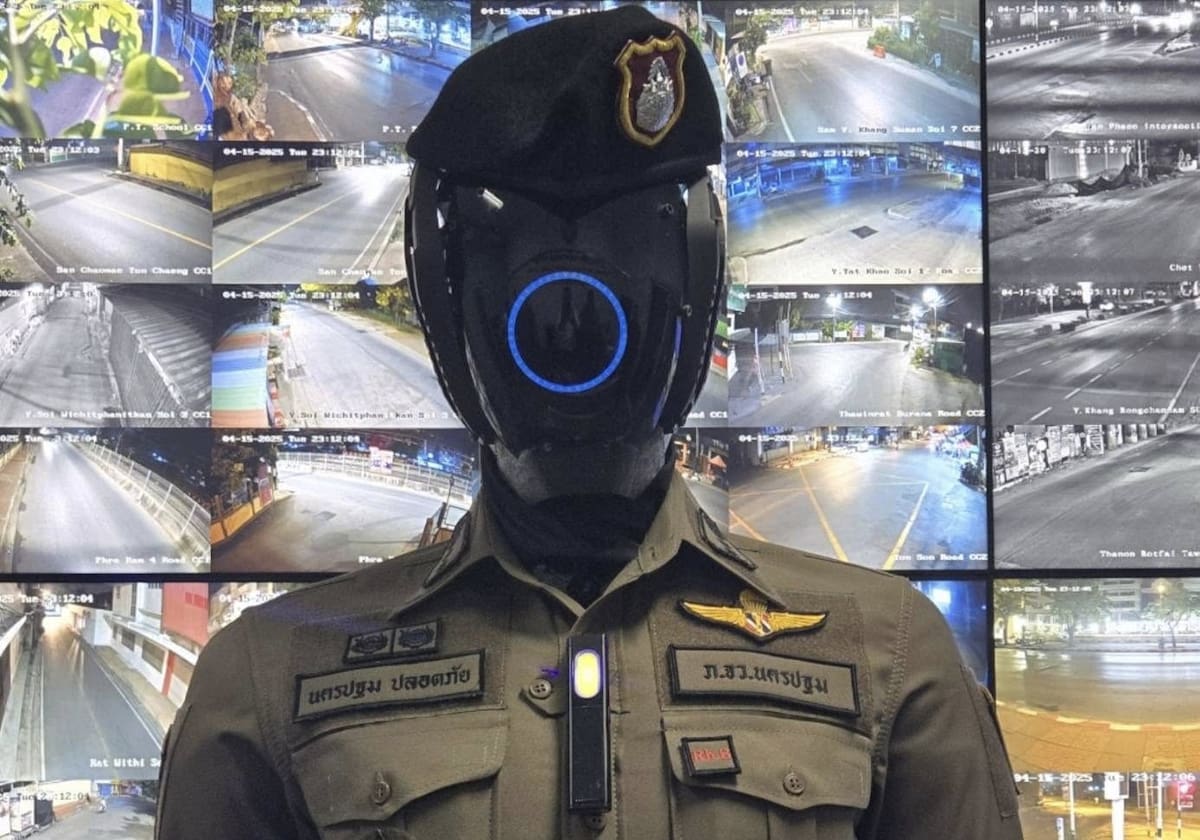
Thailand Debuts AI-Driven Police Robot for Surveillance

Thumbnail Image

The information displayed in the AIM should not be reported as representing the official views of the OECD or of its member countries.

Thailand’s Royal Police have introduced the 'Cíborg Policial con IA 1.0', an AI-powered robot for public security. Designed to support human officers during large events, it integrates with CCTV, drones, and command centers for real-time video analysis. While its capabilities spark privacy and social debates, no incidents have occurred.[AI generated]

Why's our monitor labelling this an incident or hazard?

The event involves an AI system (the police robot with AI capabilities) used in public security. However, the article does not report any realized harm or incidents resulting from its use. Instead, it highlights possible future concerns such as privacy invasion and algorithmic errors that could plausibly lead to harm. Since the robot is still experimental and no direct or indirect harm has occurred yet, the event fits the definition of an AI Hazard, reflecting plausible future risks from the AI system's deployment.[AI generated]
AI principles
Privacy & data governanceRespect of human rightsTransparency & explainabilityAccountabilityRobustness & digital securityDemocracy & human autonomyFairnessSafety

Industries
Government, security, and defenceRobots, sensors, and IT hardwareDigital securityIT infrastructure and hosting

Harm types
Human or fundamental rightsPsychologicalPublic interest

Severity
AI hazard

Business function:
Monitoring and quality controlCompliance and justiceICT management and information security

AI system task:
Recognition/object detectionEvent/anomaly detection


Articles about this incident or hazard

Thumbnail Image

Tailandia presenta su primer robot policía con inteligencia artificial: qué puede hacer y por qué genera controversia

2025-04-27
Gizmodo en Español
Why's our monitor labelling this an incident or hazard?
The event involves an AI system (the police robot with AI capabilities) used in public security. However, the article does not report any realized harm or incidents resulting from its use. Instead, it highlights possible future concerns such as privacy invasion and algorithmic errors that could plausibly lead to harm. Since the robot is still experimental and no direct or indirect harm has occurred yet, the event fits the definition of an AI Hazard, reflecting plausible future risks from the AI system's deployment.
Thumbnail Image

Tailandia tiene su primer robot policía con inteligencia artificial: controla drones y cámaras de seguridad

2025-04-26
infobae
Why's our monitor labelling this an incident or hazard?
The robot is an AI system explicitly described as using facial recognition, behavior analysis, and threat detection to support police surveillance. Although no direct harm is reported, the deployment of such AI surveillance technology in public spaces plausibly risks violations of human rights and privacy, which are recognized harms under the framework. The article discusses these risks and operational challenges but does not report any actual incidents of harm. Therefore, this event fits the definition of an AI Hazard, as the AI system's use could plausibly lead to an AI Incident involving rights violations or other harms.
Thumbnail Image

Tailandia tiene su primer robot policía con inteligencia artificial: controla drones y cámaras de seguridad

2025-04-26
La Banda Diario
Why's our monitor labelling this an incident or hazard?
The article explicitly mentions an AI system (the police robot with AI capabilities) used for surveillance and security tasks. However, it does not report any realized harm or incidents resulting from its use. Instead, it discusses potential challenges, limitations, and societal concerns about privacy and civil rights, indicating plausible future risks. Therefore, this event fits the definition of an AI Hazard, as the AI system's use could plausibly lead to harms such as violations of fundamental rights or community harm, but no direct or indirect harm has yet occurred.
Thumbnail Image

AI Police Cyborg 1.0: así es el robot policía que vigila las calles tailandesas

2025-04-25
La Nacion
Why's our monitor labelling this an incident or hazard?
The robot clearly involves AI systems (facial recognition, behavior analysis, weapon detection) used in public security. While there are concerns about potential misuse and human rights violations, no actual harm or incident has been reported so far. The article discusses the potential risks and societal implications but does not describe any realized harm or malfunction. Therefore, this event fits the definition of an AI Hazard, as the AI system's use could plausibly lead to human rights violations or other harms in the future, but no incident has yet occurred.
Thumbnail Image

اولین ربات انسان‌نمای پلیس تایلند با دید ۳۶۰ درجه و قابلیت تشخیص چهره وارد میدان شد

2025-04-18
انتخاب
Why's our monitor labelling this an incident or hazard?
The article explicitly mentions an AI system (the humanoid police robot with AI capabilities) being used for public security and facial recognition. However, there is no indication that any harm or incident has occurred due to its deployment. The event represents a new AI system deployment with potential risks related to surveillance and privacy, but these risks are not realized or reported as incidents. Therefore, this qualifies as an AI Hazard, reflecting plausible future harm from the AI system's use.
Thumbnail Image

اولین ربات انسان‌نمای پلیس تایلند با دید 360 درجه و قابلیت تشخیص چهره وارد میدان شد

2025-04-18
جهان مانا - پایگاه خبری اطلاع رسانی
Why's our monitor labelling this an incident or hazard?
The event involves the use of an AI system (the humanoid police robot with AI-based facial recognition and behavior analysis) actively deployed in a public security context. The AI system's use directly affects individuals by monitoring, identifying, and potentially acting upon perceived threats, which implicates human rights and privacy concerns. Since the robot is operational and its AI capabilities are actively influencing public security operations, this constitutes an AI Incident due to the direct involvement of AI in activities that can lead to harm or rights violations, even if no specific harm is reported yet. The deployment itself, with its surveillance and identification functions, is sufficient to classify this as an AI Incident rather than a mere hazard or complementary information.