LLM Cybersecurity Risks in Healthcare Spotlighted

Thumbnail Image

The information displayed in the AIM should not be reported as representing the official views of the OECD or of its member countries.

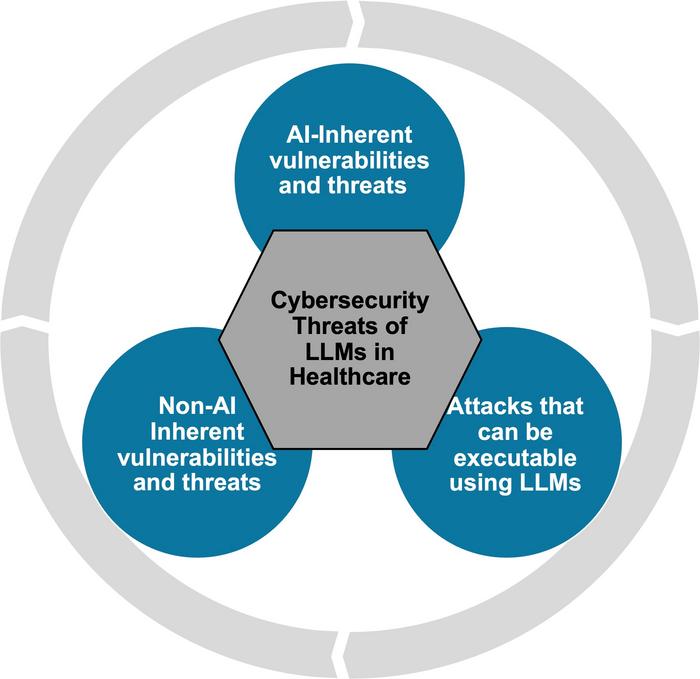
Multiple reports highlight the cybersecurity risks associated with integrating large language models like GPT-4 and Gemini in healthcare, especially radiology. Researchers warn that while these AI systems offer transformative benefits, their vulnerabilities could be exploited, necessitating robust security measures to prevent potential malicious use.[AI generated]

Why's our monitor labelling this an incident or hazard?

The article focuses on the potential cybersecurity threats posed by LLMs in healthcare, particularly radiology, and the need for protective measures to mitigate these risks. It does not describe any realized harm or incident caused by AI systems but rather warns about plausible future harms and advises on risk management. Therefore, this qualifies as an AI Hazard because it outlines credible risks that could plausibly lead to AI Incidents if not addressed.[AI generated]
AI principles
Robustness & digital securityPrivacy & data governanceSafetyAccountabilityRespect of human rightsTransparency & explainability

Industries
Healthcare, drugs, and biotechnologyDigital securityIT infrastructure and hosting

Affected stakeholders
ConsumersWorkers

Harm types
Human or fundamental rightsEconomic/PropertyReputationalPhysical (injury)Public interest

Severity
AI hazard

Business function:
Citizen/customer serviceMonitoring and quality controlResearch and development

AI system task:
Interaction support/chatbotsContent generationReasoning with knowledge structures/planningOrganisation/recommenders


Articles about this incident or hazard

Thumbnail Image

Special report highlights LLM cybersecurity threats in radiology

2025-05-14
Medical Xpress - Medical and Health News
Why's our monitor labelling this an incident or hazard?
The article focuses on the potential cybersecurity threats posed by LLMs in healthcare, particularly radiology, and the need for protective measures to mitigate these risks. It does not describe any realized harm or incident caused by AI systems but rather warns about plausible future harms and advises on risk management. Therefore, this qualifies as an AI Hazard because it outlines credible risks that could plausibly lead to AI Incidents if not addressed.
Thumbnail Image

Report: LLM Cybersecurity Risks in Radiology

2025-05-14
Mirage News
Why's our monitor labelling this an incident or hazard?
The article explicitly involves AI systems (LLMs) and their use in healthcare, particularly radiology. However, it does not report any actual harm or incident caused by these AI systems. Instead, it focuses on potential cybersecurity threats and vulnerabilities that could plausibly lead to harm if not addressed. Therefore, it fits the definition of an AI Hazard, as it highlights credible risks that could lead to AI Incidents in the future if unmitigated.
Thumbnail Image

Special report highlights LLM cybersecurity threats in radiology

2025-05-14
EurekAlert!
Why's our monitor labelling this an incident or hazard?
The article explicitly involves AI systems, specifically LLMs like GPT-4 and Gemini, used in healthcare settings. It addresses the potential for these AI systems to be exploited maliciously, which could lead to harms such as data breaches, manipulation of patient data, or disruption of healthcare services. However, no actual incident or harm has been reported; the discussion centers on potential threats and mitigation strategies. This fits the definition of an AI Hazard, as it plausibly could lead to an AI Incident if not properly managed. It is not Complementary Information because the focus is not on updates or responses to a past incident, nor is it unrelated since it directly concerns AI risks in healthcare.
Thumbnail Image

Special Report Uncovers Cybersecurity Threats of Large Language Models in

2025-05-14
Scienmag: Latest Science and Health News
Why's our monitor labelling this an incident or hazard?
The article centers on the potential cybersecurity threats posed by LLMs in healthcare and the plausible risks these AI systems could introduce if exploited or malfunctioning. It does not describe any realized harm or incident but rather warns of credible risks and advocates for mitigation strategies. Therefore, it fits the definition of an AI Hazard, as it describes circumstances where the development and use of AI systems could plausibly lead to harms such as violations of patient privacy, disruption of clinical operations, and harm to patient health if exploited.