Catalonia Fines Amazon for Concealing Worker-Monitoring AI Algorithms

Thumbnail Image

The information displayed in the AIM should not be reported as representing the official views of the OECD or of its member countries.

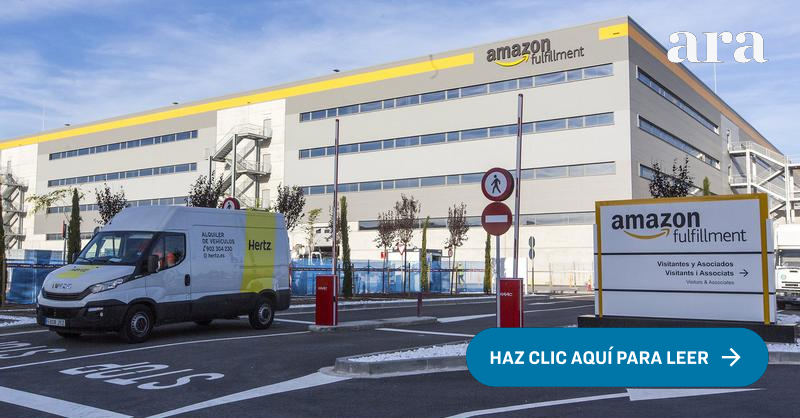
The Catalan government fined Amazon for refusing to disclose how its AI algorithms monitor productivity and assign tasks to over 2,000 workers at its El Prat logistics center. The lack of transparency violated labor laws protecting workers' rights to understand AI systems affecting their employment conditions.[AI generated]

Why's our monitor labelling this an incident or hazard?

The article explicitly mentions an AI system (an algorithm) that monitors employee productivity and controls work conditions such as break times. The denial of transparency about the algorithm's parameters to worker representatives constitutes a violation of labor rights, as established by the relevant law (Ley Rider). The algorithm's outputs are used to evaluate workers, potentially leading to unjust dismissals, which is a direct harm to workers' rights and employment security. Therefore, the event involves the use of an AI system leading to realized harm (violation of labor rights and harm to workers), qualifying it as an AI Incident rather than a hazard or complementary information.[AI generated]
AI principles
Transparency & explainabilityRespect of human rightsAccountabilityPrivacy & data governanceFairnessHuman wellbeingDemocracy & human autonomy

Industries
Logistics, wholesale, and retail

Affected stakeholders
Workers

Harm types
Human or fundamental rightsEconomic/PropertyPsychological

Severity
AI incident

Business function:
Monitoring and quality controlHuman resource management

AI system task:
Goal-driven organisationReasoning with knowledge structures/planning


Articles about this incident or hazard

Thumbnail Image

Cataluña impone a Amazon una multa simbólica: Es la primera por no permitir el acceso de los trabajadores a su algoritmo

2025-06-10
Xataka
Why's our monitor labelling this an incident or hazard?
The article explicitly mentions an AI system (an algorithm) that monitors employee productivity and controls work conditions such as break times. The denial of transparency about the algorithm's parameters to worker representatives constitutes a violation of labor rights, as established by the relevant law (Ley Rider). The algorithm's outputs are used to evaluate workers, potentially leading to unjust dismissals, which is a direct harm to workers' rights and employment security. Therefore, the event involves the use of an AI system leading to realized harm (violation of labor rights and harm to workers), qualifying it as an AI Incident rather than a hazard or complementary information.
Thumbnail Image

Catalunya multa a Amazon por ocultar los algoritmos con los que mide la productividad de sus trabajadores

2025-06-10
eldiario.es
Why's our monitor labelling this an incident or hazard?
The article explicitly mentions an AI algorithm used by Amazon to monitor employee productivity, which directly affects workers' conditions and rights. The lack of transparency and failure to share information about the AI system with unions breaches labor laws designed to protect workers. This is a clear violation of rights caused by the AI system's use, meeting the criteria for an AI Incident. The harm is realized (violation of labor rights), not just potential, and the AI system's role is pivotal in this harm.
Thumbnail Image

Cataluña multa a Amazon por ocultar los algoritmos con los que analizan a sus trabajadores

2025-06-10
El HuffPost
Why's our monitor labelling this an incident or hazard?
The event explicitly involves AI systems used for worker productivity measurement and task distribution, which are AI systems by definition. The sanction is due to refusal to reveal the AI system's functioning, which is a violation of labor rights related to transparency and participation. However, the article does not describe actual harm caused by the AI system's outputs or malfunction, only a regulatory response to non-compliance. Therefore, this is not an AI Incident (no direct or indirect harm reported), nor an AI Hazard (no plausible future harm described). Instead, it is a governance/legal response to AI use, fitting the definition of Complementary Information.
Thumbnail Image

Multa pionera de Cataluña a Amazon por ocultar los algoritmos que controlan a los trabajadores

2025-06-10
Cadena SER
Why's our monitor labelling this an incident or hazard?
The article explicitly mentions AI systems controlling worker productivity and task allocation, which are integral to labor management. The refusal to disclose how these AI algorithms operate violates workers' rights to be informed about AI systems affecting their work conditions, as established by law. The AI system's role in monitoring and controlling workers, restricting breaks, and influencing dismissals directly impacts labor rights and workers' health (mental health stress). These harms have materialized, as evidenced by the regulatory fine and worker complaints. Hence, the event meets the criteria for an AI Incident due to direct harm to labor rights and health caused by the AI system's use and lack of transparency.
Thumbnail Image

Multa a Amazon por esconder los algoritmos que controlan los empleados

2025-06-10
Ara en Castellano
Why's our monitor labelling this an incident or hazard?
The event involves AI systems that measure productivity and assign tasks, which are used to control employees. The concealment of how these AI algorithms operate and affect workers' conditions constitutes a breach of labor rights. The fine imposed is a direct response to this violation. Therefore, this qualifies as an AI Incident because the AI system's use has directly led to a violation of fundamental labor rights.