Google and Westinghouse Deploy AI in Nuclear Reactor Construction and Operation

Thumbnail Image

The information displayed in the AIM should not be reported as representing the official views of the OECD or of its member countries.

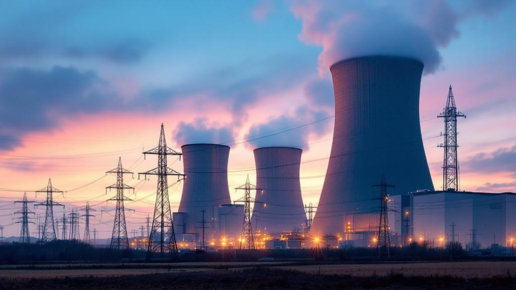
Google and Westinghouse Electric have partnered to integrate generative AI and large language models into the design, construction, and operation of nuclear reactors. While aiming to improve efficiency and performance, the use of AI in this critical infrastructure raises concerns about potential risks if AI errors occur, though no harm has been reported yet.[AI generated]

Why's our monitor labelling this an incident or hazard?

The event involves the use of AI systems (generative AI models, large language models) in the development and operation of nuclear reactors, which are critical infrastructure. Although no harm or malfunction is reported, the article acknowledges AI's known limitations and the critical nature of the application implies a credible risk of future harm if AI errors occur. Hence, it fits the definition of an AI Hazard, as the AI use could plausibly lead to harm in the future. There is no indication of realized harm or incident yet, so it is not an AI Incident. It is more than complementary information because it highlights the deployment of AI in a high-risk domain with potential for harm.[AI generated]
AI principles
SafetyRobustness & digital securityAccountabilityTransparency & explainabilityRespect of human rightsDemocracy & human autonomy

Industries
Energy, raw materials, and utilitiesGovernment, security, and defenceEnvironmental servicesDigital security

Harm types
Physical (death)Physical (injury)EnvironmentalPublic interestEconomic/PropertyReputational

Severity
AI hazard

Business function:
Research and developmentManufacturingMaintenanceMonitoring and quality controlPlanning and budgeting

AI system task:
Content generationReasoning with knowledge structures/planningForecasting/predictionEvent/anomaly detectionInteraction support/chatbotsGoal-driven organisation


Articles about this incident or hazard

Thumbnail Image

谷歌将AI技术引入核反应堆业务

2025-07-17
ai.zhiding.cn
Why's our monitor labelling this an incident or hazard?
The event involves the use of AI systems (generative AI models, large language models) in the development and operation of nuclear reactors, which are critical infrastructure. Although no harm or malfunction is reported, the article acknowledges AI's known limitations and the critical nature of the application implies a credible risk of future harm if AI errors occur. Hence, it fits the definition of an AI Hazard, as the AI use could plausibly lead to harm in the future. There is no indication of realized harm or incident yet, so it is not an AI Incident. It is more than complementary information because it highlights the deployment of AI in a high-risk domain with potential for harm.
Thumbnail Image

智通财经APP获悉,西屋电气公司临时首席执行官丹・萨姆纳周二向美国总统特朗普表示,公司计划从2030年起在美国建造10座大型核反应堆,这将为全美创造750亿美元的经济价值,其中仅在宾夕法尼亚州就将带来60亿美元的经济收益。此次表态发生在匹兹堡卡内基梅隆大学举办的一场能源与人工智能会议上。据主办方 -- -- 联邦参议员麦科密克办公室透露,会上还宣布了针对数据中心和电力基础设施的超900亿美元投资计划。过去30年间,美国仅新建了两座大型核反应堆,均为西屋电气的AP1000型号,位于佐治亚州的沃格特勒核电站。该项目超支180亿美元,工期延误7年,直接导致西屋电气陷入破产境地。2018年,西屋电气走出破产阴霾,目前由Brookfield Renewable Partners(BEP.US)持股51%,铀矿商Cameco(CCJ.US)持股49%。周二早些时候,西屋电气还宣布与谷歌(GOOGL.US)建立合作伙伴关系,双方将借助人工智能工具,把先进核反应堆的建造过程转变为"高效且可重复的流程"。两家公司表示,将把西屋电气的HiVE和Bertha核人工智能解决方案与谷歌云的技术及专业知识相结合,以简化新核电站的建设流程,同时利用人工智能工具,通过数据驱动的AI洞察来改进现有核电机组的运营。

2025-07-16
证券之星
Why's our monitor labelling this an incident or hazard?
The article mentions AI tools being used to enhance the construction and operation of nuclear reactors, which involves AI system use. However, it does not describe any realized harm or direct risk of harm caused by these AI systems. The focus is on planned future projects and partnerships leveraging AI for efficiency and operational improvements. There is no indication of malfunction, misuse, or potential for harm that is credible and imminent. Thus, the event provides contextual and supportive information about AI applications in energy infrastructure, fitting the definition of Complementary Information rather than an Incident or Hazard.
Thumbnail Image

谷歌将AI技术引入核反应堆业务

2025-07-17
k.sina.com.cn
Why's our monitor labelling this an incident or hazard?
The article explicitly mentions the use of generative AI models and large language models integrated into nuclear reactor design and operation, which are AI systems. The involvement is in the use of AI systems to optimize and transform nuclear reactor construction and operation, a critical infrastructure domain. Although no harm or malfunction is reported, the potential for AI errors or hallucinations in such a high-stakes environment could plausibly lead to serious harm or disruption. Hence, this is an AI Hazard rather than an Incident. The article also discusses energy demands driven by AI data centers, but this is contextual and not a direct harm caused by the AI systems in reactor design. There is no indication that this is merely complementary information or unrelated news, as the focus is on the AI system's deployment with potential risk.