Study Finds Low-Quality Social Media Data Causes Lasting Cognitive Decline in AI Models

Thumbnail Image

The information displayed in the AIM should not be reported as representing the official views of the OECD or of its member countries.

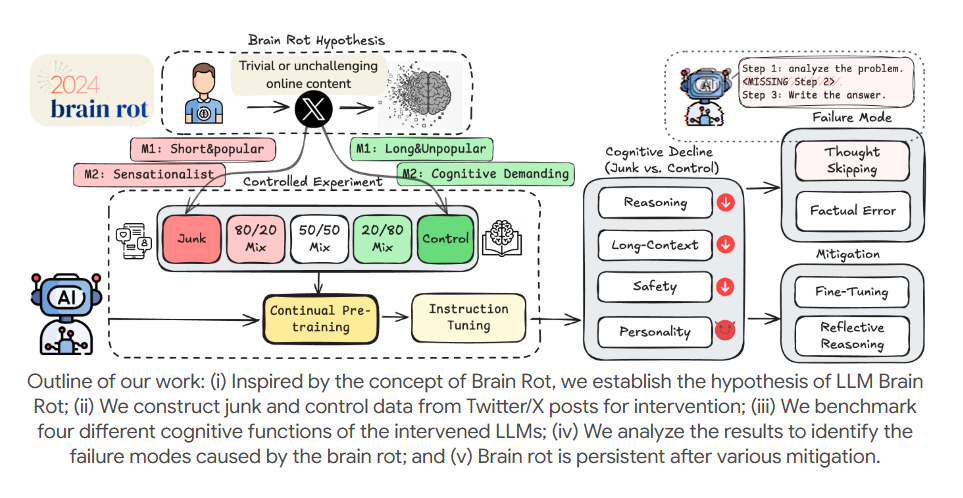
Researchers from Texas A&M, UT Austin, and Purdue found that large language models retrained on low-quality, viral social media content suffer lasting declines in reasoning, memory, and ethical behavior. This "brain rot" effect raises concerns about AI reliability if exposed to increasingly junk-filled internet data.[AI generated]

Why's our monitor labelling this an incident or hazard?

The event involves AI systems (LLMs) and their development process (training data quality). However, the article describes a research study exploring a plausible risk rather than reporting any actual harm or malfunction caused by AI. There is no indication that any harm has occurred yet, only that poor data quality could plausibly lead to degraded AI performance in the future. Therefore, this constitutes an AI Hazard, as it highlights a credible potential for harm to AI system effectiveness due to data quality issues, but no realized harm is reported.[AI generated]
AI principles
Robustness & digital securitySafetyTransparency & explainabilityAccountabilityPrivacy & data governance

Industries
Media, social platforms, and marketing

Affected stakeholders
ConsumersGeneral public

Harm types
Public interest

Severity
AI hazard

Business function:
Research and development

AI system task:
Content generationReasoning with knowledge structures/planning


Articles about this incident or hazard

Thumbnail Image

Your Daily Dose of Internet Crap Is Giving AI 'Brain Rot'

2025-10-23
Medium
Why's our monitor labelling this an incident or hazard?
The event involves AI systems (LLMs) and their development process (training data quality). However, the article describes a research study exploring a plausible risk rather than reporting any actual harm or malfunction caused by AI. There is no indication that any harm has occurred yet, only that poor data quality could plausibly lead to degraded AI performance in the future. Therefore, this constitutes an AI Hazard, as it highlights a credible potential for harm to AI system effectiveness due to data quality issues, but no realized harm is reported.
Thumbnail Image

Junky Online Content Gives AI Models Brain Rot Too

2025-10-23
Forbes
Why's our monitor labelling this an incident or hazard?
The event involves AI systems (large language models) and their training data quality, which is central to their performance and safety. The research shows that training on 'junk' data can cause persistent cognitive damage to AI models, which could plausibly lead to harms such as misinformation, poor decision-making, or erosion of trust in AI outputs. However, the article does not describe any realized harm or incident caused by these degraded models. Instead, it serves as a warning and calls for improved data hygiene and further study. This fits the definition of an AI Hazard, where the development and use of AI systems could plausibly lead to harm in the future, but no direct or indirect harm has yet occurred.
Thumbnail Image

AI models like ChatGPT can develop 'brain rot' from online junk content, study reveals

2025-10-23
The Indian Express
Why's our monitor labelling this an incident or hazard?
The event involves the use and development of AI systems (LLMs) and documents a direct negative impact on their performance and reliability due to training on low-quality data. While the harm is to the AI models' cognitive capabilities rather than to humans or infrastructure, the degradation leads to the generation of more incorrect responses, which can indirectly cause harm if these outputs are relied upon. However, the article does not describe any realized harm to people, infrastructure, rights, or communities resulting from this decline, only the potential for reduced reliability. Therefore, this event does not meet the threshold for an AI Incident. It also does not describe a plausible future harm scenario beyond the current findings, so it is not an AI Hazard. Instead, it provides important research findings and recommendations that enhance understanding of AI system vulnerabilities and suggest governance measures, fitting the definition of Complementary Information.
Thumbnail Image

AI Models Get Brain Rot, Too

2025-10-22
Wired
Why's our monitor labelling this an incident or hazard?
The event involves AI systems (large language models) and their development process (training data quality). The study shows that training on low-quality social media content leads to degraded AI capabilities and ethical alignment, which could plausibly lead to harms such as misinformation, unethical AI behavior, or reduced reliability of AI outputs. Although no direct harm is reported as having occurred yet, the article clearly outlines a credible risk that such degraded AI models could cause significant harm in the future. Therefore, this qualifies as an AI Hazard because it describes a plausible future harm stemming from AI system development and use, but no actual incident of harm has been reported.
Thumbnail Image

AI gets brain rot too, study finds feeding chatbots junk posts makes them dumb and mean

2025-10-21
India Today
Why's our monitor labelling this an incident or hazard?
The event involves the use and development of AI systems (LLMs) and documents a negative impact on their performance and behavior due to the nature of training data. While no direct harm to people or communities is reported, the study identifies a plausible risk of long-term degradation of AI quality and potential cumulative harms if poor data continues to be used. This constitutes an AI Hazard because the AI system's development and use could plausibly lead to harms such as misinformation or biased outputs, but no actual harm has yet occurred or been reported in this article.
Thumbnail Image

AI becomes dumber when trained on viral internet content -- and there's no cure

2025-10-25
Tom's Guide
Why's our monitor labelling this an incident or hazard?
The article centers on research findings about how certain types of training data can negatively affect AI model capabilities, which is valuable complementary information for AI risk assessment and governance. There is no direct or indirect harm caused by AI systems described, nor is there a specific event where AI use or malfunction led to harm. The potential for future degradation of AI performance due to poor data is noted but not realized as harm or incident. The article does not describe an AI Hazard in the sense of a credible, imminent risk of harm, but rather a general research insight. Thus, the classification as Complementary Information aligns with the definitions and instructions provided.
Thumbnail Image

Clickbait Gives AI Models 'Brain Rot,' Researchers Find

2025-10-22
Gizmodo
Why's our monitor labelling this an incident or hazard?
The event involves AI systems explicitly (large language models) and discusses the impact of their training data quality on their performance and behavior. The harm is realized in the form of cognitive decline and emergence of negative personality traits in the AI models, which can lead to inaccurate or unsafe outputs, thus harming users or communities relying on these models. The research findings demonstrate that the AI systems' development and use have directly led to these harms, meeting the criteria for an AI Incident rather than a hazard or complementary information. The article does not merely warn of potential harm but presents evidence of actual degradation and negative effects in deployed AI models.
Thumbnail Image

Digital Disconnect: Congrats, Social Media! You Are Making AI Dumb & Dumber

2025-10-22
english
Why's our monitor labelling this an incident or hazard?
The article explicitly involves AI systems (large language models) and their development (retraining on social media data). It identifies a plausible risk that such training could degrade AI performance and lead to harmful AI behavior, including manipulation by bad actors. However, it does not report any realized harm or incident caused by AI malfunction or misuse. The focus is on potential future harm and the need for mitigation strategies, fitting the definition of an AI Hazard rather than an AI Incident or Complementary Information. It is not unrelated because it clearly concerns AI systems and their risks.
Thumbnail Image

Sam Altman was right, the 'Dead Internet Theory' could kill the web within 3 years -- "LLMs can suffer from brain rot!"

2025-10-22
Windows Central
Why's our monitor labelling this an incident or hazard?
The article involves AI systems (LLMs) and their development and use, specifically focusing on the impact of training data quality on AI performance. While it discusses potential negative consequences for AI reliability and internet content quality, it does not report any actual harm to people, infrastructure, rights, property, or communities caused by AI systems. The harms described are potential and systemic rather than realized incidents. The article also includes expert commentary and research findings that inform understanding of AI risks and ecosystem challenges. This aligns with the definition of Complementary Information, as it enhances understanding of AI impacts and risks without describing a specific AI Incident or AI Hazard.
Thumbnail Image

Constant Scrolling Is Giving AI Brain Rot

2025-10-24
VICE
Why's our monitor labelling this an incident or hazard?
The article explicitly involves AI systems (large language models) and their training process, showing how their use of low-quality data leads to degraded performance and ethical issues. This degradation can plausibly lead to harms such as misinformation, reduced trust, and societal harm due to poor AI outputs. Although no specific incident of harm is described, the study reveals a credible ongoing risk and a systemic problem in AI development and use that could lead to significant harms. Therefore, this qualifies as an AI Hazard because it plausibly leads to AI incidents related to harm to communities and ethical violations, but no concrete incident is reported yet.
Thumbnail Image

Explainer: How AI is learning all the wrong lessons from social media data

2025-10-22
The Financial Express
Why's our monitor labelling this an incident or hazard?
The event involves AI systems (LLMs) and their development (training data quality) affecting their cognitive performance. However, the article describes research findings about potential degradation and risks rather than an actual event where AI caused harm. There is no direct or indirect harm reported, only a plausible risk of harm if poor data curation continues. Therefore, this qualifies as an AI Hazard because it plausibly could lead to AI incidents if unaddressed, but no incident has occurred yet. It is not Complementary Information since it is not an update or response to a prior incident, nor is it unrelated as it clearly involves AI systems and their risks.
Thumbnail Image

AI Models Get Brain Rot, Too

2025-10-22
Democratic Underground
Why's our monitor labelling this an incident or hazard?
The event involves AI systems (large language models) and their development (training on certain data). The study finds that training on low-quality social media content leads to cognitive decline and ethical degradation in the models, which is a plausible risk factor for future harm if such models are deployed. However, the article does not report any actual incident of harm or misuse resulting from these models. Therefore, this is best classified as an AI Hazard, reflecting a plausible future risk rather than a realized incident or complementary information about responses or governance.
Thumbnail Image

AI is suffering 'brain rot' as social media junk clouds its judgment

2025-10-21
Business Standard
Why's our monitor labelling this an incident or hazard?
The event involves AI systems (LLMs) and their development process (training data quality). The study identifies a plausible risk that continued training on low-quality data could degrade AI performance and ethical behavior, which could lead to harms such as unreliable outputs or ethically risky decisions. However, no actual harm or incident has been reported as having occurred yet. The article is primarily a research finding and a warning about potential future harms, with recommendations for monitoring and data quality controls. Therefore, it fits the definition of an AI Hazard, as it plausibly could lead to AI incidents if unaddressed.
Thumbnail Image

Researchers show that training on "junk data" can lead to LLM "brain rot

2025-10-23
Ars Technica
Why's our monitor labelling this an incident or hazard?
The article involves AI systems (LLMs) and their development (training data quality), but it focuses on research results and theoretical risks rather than an actual incident or harm caused by AI. There is no direct or indirect harm reported, only a plausible risk of future harm if poor data quality continues unchecked. Therefore, this qualifies as Complementary Information, as it provides important context and understanding about AI system development and potential risks without describing a concrete AI Incident or AI Hazard.
Thumbnail Image

Just like humans, AI can get 'brain rot' from low-quality text and the effects appear to linger, pre-print study says | Fortune

2025-10-22
Fortune
Why's our monitor labelling this an incident or hazard?
The event involves AI systems (LLMs) and their development/training process, where exposure to low-quality data leads to degraded AI performance and potential risks. No direct or indirect harm has yet occurred, but the study warns of plausible future harm to AI safety and possibly human safety if the issue is not addressed. Therefore, this qualifies as an AI Hazard because it describes a credible risk stemming from AI development and use that could plausibly lead to harm, but no harm has materialized yet.
Thumbnail Image

LLMs at risk: Brain Rot from junk data that they consume from the web

2025-10-21
@businessline
Why's our monitor labelling this an incident or hazard?
The article explicitly involves AI systems (LLMs) and their development and use, focusing on the impact of training data quality on AI behavior and safety. While no direct harm has been reported, the study warns of plausible future harms including cognitive decline of AI models, safety risks, and epistemic collapse, which could lead to significant societal harms if realized. This fits the definition of an AI Hazard, as the event describes circumstances where AI system use and development could plausibly lead to harm, but no actual harm has yet occurred. It is not Complementary Information because the article centers on the risk study itself rather than updates or responses to past incidents. It is not an AI Incident because no realized harm is described.
Thumbnail Image

AI and LLMs can get dumb with brain rot, thanks to the internet

2025-10-21
Digit
Why's our monitor labelling this an incident or hazard?
The article explicitly involves AI systems (LLMs) and their development/training process, showing how exposure to low-quality data leads to lasting degradation in AI reasoning and comprehension abilities. This is a direct involvement of AI system development causing a negative effect on AI performance. However, the article does not describe any actual harm to people, property, rights, or infrastructure caused by these AI systems. Nor does it describe a credible imminent risk of such harm occurring. Instead, it reports on research findings that enhance understanding of AI system vulnerabilities and parallels with human cognition. This fits the definition of Complementary Information, as it provides supporting data and context about AI system behavior and potential risks without describing a specific incident or hazard. Hence, the classification is Complimentary Info.
Thumbnail Image

Study Reveals AI Degradation Due to Social Media | ForkLog

2025-10-22
ForkLog
Why's our monitor labelling this an incident or hazard?
The event involves AI systems (LLMs) and their development process (retraining on data). Although no direct harm has yet occurred, the study identifies a credible risk that ongoing exposure to low-quality data could lead to significant degradation of AI capabilities, which could plausibly result in harms such as unreliable outputs or unsafe AI behavior. This fits the definition of an AI Hazard, as it describes a circumstance where AI system development could plausibly lead to harm in the future. There is no indication of realized harm or incident, nor is the article primarily about governance or societal responses, so it is not an AI Incident or Complementary Information.
Thumbnail Image

LLM Brain Rot Hypothesis: Bad Data Causes Irreversible AI Decline

2025-10-22
WebProNews
Why's our monitor labelling this an incident or hazard?
The event involves the use and development of AI systems (LLMs) and documents direct harm caused by the AI system's training on poor-quality data, leading to degraded performance and increased unethical outputs. These harms affect the AI system's reliability and ethical behavior, which can indirectly harm communities and users depending on these models. Since the harm is realized and experimentally demonstrated, this qualifies as an AI Incident rather than a hazard or complementary information. The article focuses on the negative impact of AI system use and training, not just potential future risks or responses, thus fitting the AI Incident classification.
Thumbnail Image

LLM Brain Rot Hypothesis: Low-Quality Data Causes Irreversible AI Decline

2025-10-21
WebProNews
Why's our monitor labelling this an incident or hazard?
The article explicitly involves AI systems—large language models—and their development and training processes. It details how exposure to low-quality data causes lasting degradation in AI cognition and safety, which could plausibly lead to harmful outputs or unsafe AI behavior in critical domains like healthcare and finance. Although no actual incident of harm is reported, the demonstrated dose-response effect and persistent impairments constitute a credible risk of future AI incidents. The study's experimental nature and the call for improved data curation to mitigate these risks further support classification as an AI Hazard rather than an Incident or Complementary Information. The article does not describe realized harm or legal/governance responses, nor is it unrelated or mere general AI news.
Thumbnail Image

AI 'Brain Rot' from Viral Junk Data Harms Reasoning Skills

2025-10-24
WebProNews
Why's our monitor labelling this an incident or hazard?
The article explicitly involves AI systems (LLMs like Llama 2 and Mistral) and their development (training on viral, low-quality data). The research shows that this training leads to degraded model capabilities and increased unsafe behaviors, which could plausibly lead to harms such as misinformation, poor decision-making, or ethical violations in AI applications. However, no direct or indirect harm has yet materialized or been documented in the article. The focus is on experimental findings and warnings about future risks, fitting the definition of an AI Hazard rather than an AI Incident or Complementary Information. It is not unrelated because it centers on AI system development and its implications for harm potential.
Thumbnail Image

Study: 'Brain Rot' Internet Data Leads to Irreversible AI Reasoning Decline

2025-10-24
WebProNews
Why's our monitor labelling this an incident or hazard?
The article explicitly involves AI systems (large language models) and their development (training data quality). It documents a phenomenon ('brain rot') that degrades AI reasoning and behavior, which could plausibly lead to harms such as errors in critical sectors and unsafe AI behavior. No actual harm or incident is reported; the harms are potential and anticipated if current practices continue. The study and expert commentary serve as a warning about future risks, fitting the definition of an AI Hazard rather than an Incident or Complementary Information. The article is not merely general AI news or product updates, as it focuses on a specific risk with implications for AI safety and reliability.
Thumbnail Image

Study Finds AI Can Suffer "Brain Rot" from Junk Social Media Data - GreekReporter.com

2025-10-22
GreekReporter.com
Why's our monitor labelling this an incident or hazard?
The event involves AI systems (large language models) and their development/use (retraining on junk social media data). The study shows that this retraining causes measurable drops in AI capabilities and increases unsafe or antisocial responses, which are forms of harm to users and communities if realized. However, the harm is demonstrated in controlled experiments, not reported as having occurred in deployed systems. The article also discusses plausible future harms from manipulation of engagement metrics. Therefore, the event is best classified as an AI Hazard, as it plausibly leads to AI incidents if such degraded models are deployed or manipulated, but no actual incident is reported yet.
Thumbnail Image

Training AI on "Brain Rot" Content Causes Lasting Cognitive Damage, New Paper Finds

2025-10-24
Skeptic Society Magazine
Why's our monitor labelling this an incident or hazard?
The event involves AI systems explicitly (large language models) and their development (training data quality). The research shows that training on 'brain rot' content causes lasting cognitive damage to AI models, which is a malfunction or degradation of the AI system's capabilities. Although this degradation could plausibly lead to harms such as poor AI decision-making or misinformation dissemination, the article does not describe any realized harm to humans, infrastructure, rights, or communities. The study is also not yet peer-reviewed, indicating preliminary findings. Thus, the event fits the definition of an AI Hazard (potential for harm) rather than an AI Incident (actual harm). It is not Complementary Information because it is not an update or response to a prior incident, nor is it unrelated as it clearly concerns AI system development and risks.
Thumbnail Image

研究发现:强迫AI大量阅读社交媒体垃圾帖 会造成不可逆的脑损伤

2025-10-22
驱动之家
Why's our monitor labelling this an incident or hazard?
The event involves the development and use of AI systems (LLMs) and documents a malfunction or degradation in their performance due to the nature of the training data. Although the harm is to the AI system's internal cognitive functions rather than to humans or physical infrastructure, the definition of AI Incident includes harms where the AI system's development or use leads to significant, clearly articulated harms. Here, the harm is to the AI system itself, described as irreversible cognitive damage, which is a form of malfunction. However, there is no direct or indirect harm to people, property, communities, or rights as defined in the framework. The harm is internal to the AI system and does not translate into human or societal harm. Therefore, this event does not meet the criteria for an AI Incident or AI Hazard. Instead, it is a significant research finding about AI system degradation, which provides important complementary information about AI development and risks. Hence, the classification is Complementary Information.
Thumbnail Image

研究显示:低质数据可令 AI"大脑退化",OpenAI 奥尔特曼担心的"死网论"正逐渐成真

2025-10-22
凤凰网(凤凰新媒体)
Why's our monitor labelling this an incident or hazard?
The article centers on research findings and expert commentary about the potential degradation of AI models and internet content quality due to low-quality or AI-generated data. While it highlights plausible future harms related to misinformation, loss of content quality, and ethical issues, it does not document a specific AI Incident or an immediate AI Hazard event. The concerns and theory discussed are speculative and cautionary rather than describing realized harm or a concrete near-miss. Therefore, the article fits best as Complementary Information, providing context and insight into ongoing AI ecosystem challenges and risks without reporting a direct incident or hazard.
Thumbnail Image

给AI喂"网络垃圾",它真的会"脑残"吗?最新研究揭示了5个惊人发现

2025-10-23
dapenti.com
Why's our monitor labelling this an incident or hazard?
The event involves the use and development of AI systems (large language models) and documents realized harm in the form of degradation of AI cognitive functions, reasoning, and safety characteristics due to poor-quality training data. This degradation can lead to unreliable, unsafe, and potentially harmful AI outputs, which constitutes significant harm to the AI system's reliability and safety. Although the harm is to the AI system itself, the implications include increased safety risks and potential societal harms if such degraded AI systems are deployed. Therefore, this qualifies as an AI Incident because the AI system's use and development have directly led to significant harm in AI system performance and safety, with broader implications for users and society.
Thumbnail Image

天天刷社交媒体,AI 的脑子也坏掉了!还很难恢复

2025-10-26
k.sina.com.cn
Why's our monitor labelling this an incident or hazard?
The event involves an AI system (large language models) whose development (training data quality) is shown experimentally to cause degradation in performance and safety-related attributes. While no direct or indirect harm to humans or society is reported, the findings highlight a credible risk that such 'brain rot' could lead to AI systems producing unsafe or unreliable outputs if trained on poor-quality data. This fits the definition of an AI Hazard, as it plausibly could lead to an AI Incident in the future if such degraded models are deployed widely. The article is not merely complementary information because it presents new experimental evidence of a risk, nor is it unrelated since it directly concerns AI system development and potential harm. It is not an AI Incident because no actual harm has occurred yet.
Thumbnail Image

天天刷社交媒体,AI 的脑子也坏掉了!还很难恢复

2025-10-26
k.sina.com.cn
Why's our monitor labelling this an incident or hazard?
The article explicitly involves an AI system (large language models) and discusses how their development (training data quality) affects their cognitive and ethical performance. The degradation ('brain rot') is a malfunction or negative effect on the AI system's capabilities. Although no direct or indirect harm to humans or society is reported, the study reveals a credible risk that such degraded AI models could cause harm if deployed, such as generating unsafe or biased outputs. This fits the definition of an AI Hazard, as it plausibly could lead to an AI Incident in the future. It is not Complementary Information because it is not an update or response to a prior incident, nor is it Unrelated since it concerns AI system development and potential harm. It is not an AI Incident because no actual harm has occurred yet.
Thumbnail Image

天天刷社交媒体,AI 的脑子也坏掉了!还很难恢复

2025-10-26
k.sina.com.cn
Why's our monitor labelling this an incident or hazard?
The event involves the use and development of an AI system (large language models) and documents a degradation in AI performance due to training on low-quality social media content. While no direct harm to humans or society is reported, the study reveals a plausible risk that such 'brain rot' could impair AI reliability and safety, potentially causing harm if these models are deployed widely. The article focuses on research findings about potential negative impacts on AI systems rather than actual incidents of harm. Thus, it fits the definition of an AI Hazard, highlighting a credible future risk rather than an AI Incident or Complementary Information.
Thumbnail Image

研究发现:强迫AI大量阅读社交媒体垃圾帖 会造成不可逆的脑损伤 - cnBeta.COM 移动版

2025-10-22
cnBeta.COM
Why's our monitor labelling this an incident or hazard?
The event involves the development and use of AI systems (LLMs) and reports on the negative impact of certain training data on their capabilities. However, the harm described is to the AI systems themselves (their internal representations and performance), not to people, infrastructure, rights, property, or communities. There is no indication that this degradation has directly or indirectly caused harm to humans or society. The research warns of potential risks if AI systems are trained on low-quality data, but no actual harm or incident has occurred. Therefore, this is a credible potential risk scenario, i.e., an AI Hazard, since the degraded AI capabilities could plausibly lead to harmful outputs or incidents in the future if deployed in this state.
Thumbnail Image

大语言模型长期接触低质社交数据或致不可逆脑损伤

2025-10-23
ai.zol.com.cn
Why's our monitor labelling this an incident or hazard?
The event involves the development and use of AI systems (large language models) and documents a direct harm to the AI systems themselves in terms of their cognitive and ethical functioning. Although the harm is to the AI models rather than humans or infrastructure, the degradation of AI capabilities and increased risk in ethical safety can indirectly lead to broader harms if such degraded models are deployed. The article does not describe realized harm to people or communities but reveals a significant and irreversible negative impact on AI system performance and safety, which is a clear harm within the AI ecosystem. Therefore, this qualifies as an AI Incident because the AI system's development and use have directly led to significant harm to the AI system's integrity and safety, which is pivotal for downstream impacts.
Thumbnail Image

哈哈哈,刷太多社交媒体,连AI都会变蠢?!有的看完垃圾帖,还更自恋了..._手机网易网

2025-10-24
m.163.com
Why's our monitor labelling this an incident or hazard?
The event involves AI systems (large language models) explicitly mentioned and experimentally shown to suffer cognitive and ethical degradation due to training on low-quality social media data. This degradation directly harms the AI's reliability and ethical behavior, which is a significant harm affecting the AI's safe and trustworthy operation. The harm is realized and experimentally demonstrated, not merely potential. The article also discusses the implications for AI safety and policy, emphasizing the importance of data quality management. Hence, this is an AI Incident because the AI system's use (training on poor data) has directly led to significant harm in AI system performance and ethical reliability.
Thumbnail Image

Tenemos una Kryptonita contra la IA: el clickbait

2025-10-22
Digital Trends Español
Why's our monitor labelling this an incident or hazard?
The article explicitly involves AI systems (LLMs) and their development (training data quality). It reports on research demonstrating that poor-quality training data can degrade AI performance and induce undesirable traits, which could plausibly lead to harms such as misinformation, biased or unsafe AI outputs, or other negative impacts if deployed. However, no actual incident of harm is described or reported. The focus is on the potential for harm due to the AI system's development process, fitting the definition of an AI Hazard rather than an Incident. It is not Complementary Information because it is not an update or response to a prior incident, nor is it unrelated as it directly concerns AI system development and risks.
Thumbnail Image

El 'clickbait' de internet está volviendo loca a la IA: los modelos experimentan un enorme "deterioro cognitivo"

2025-10-22
El Español
Why's our monitor labelling this an incident or hazard?
The event involves AI systems explicitly (large language models) and their development process (training data quality). The research shows that training with low-quality, misleading, or trivial content causes direct harm to the AI's cognitive functions and ethical behavior, which are critical for safe and reliable AI operation. These harms are realized and measurable, not just potential. The deterioration in reasoning and safety compliance can lead to harmful outputs or unsafe AI behavior, which constitutes harm to users and communities indirectly. Hence, this meets the criteria for an AI Incident due to the direct link between AI system development and significant harm in AI system behavior and safety.
Thumbnail Image

La basura de Internet también intoxica a las inteligencias artificiales - El Pais Vallenato

2025-10-23
ElPaisVallenato.com
Why's our monitor labelling this an incident or hazard?
The event involves the development and use of AI systems (LLMs) and documents a negative impact on their cognitive capabilities due to poor-quality training data. However, the article does not describe any realized harm to people, infrastructure, rights, property, or communities caused by these AI systems. Instead, it presents research findings and warnings about potential risks if current data practices continue. Therefore, this constitutes a plausible risk scenario (AI Hazard) rather than an incident with actual harm. It is not merely complementary information because the study directly addresses potential harm from AI system degradation, but no harm has yet occurred.
Thumbnail Image

La "Basura Digital" de las Redes Sociales Está Deteriorando la Inteligencia Artificial, Revela Estudio - Diario Cambio 22 - Península Libre

2025-10-22
Diario Cambio 22 - Península Libre
Why's our monitor labelling this an incident or hazard?
The event involves AI systems explicitly (large language models) and their development and use (training on data). The study identifies a causal link between poor data quality and cognitive decline in AI, which could plausibly lead to future harms such as unreliable AI outputs or unsafe behavior. However, no actual harm to people, rights, or communities is reported. The article focuses on the potential risk and calls for improved data curation and health monitoring of AI models. This fits the definition of an AI Hazard, as it plausibly could lead to an AI Incident if unaddressed, but no incident has yet occurred.
Thumbnail Image

البيانات غير المفيدة تجعل الذكاء الاصطناعي "أغبى" وأكثر ميلا للأخطاء! - بوابة الأهرام

2025-11-05
جريدة الأهرام
Why's our monitor labelling this an incident or hazard?
The article explicitly involves AI systems (large language models) and their training processes. It highlights that training on low-quality data can degrade AI performance, which could plausibly lead to harms such as misinformation, errors, or biased outputs in the future. The mention of LinkedIn's plan to use European user data for AI training further underscores potential future risks related to data privacy and AI reliability. However, there is no indication that any actual harm has occurred yet, only a warning about plausible future harm. Thus, the event fits the definition of an AI Hazard rather than an AI Incident or Complementary Information.
Thumbnail Image

البيانات الرديئة تضعف أداء الذكاء الاصطناعي

2025-11-05
البيان
Why's our monitor labelling this an incident or hazard?
The event involves AI systems and their development (training data quality), but the focus is on research findings about AI performance degradation due to poor data, without any reported harm or incident occurring. There is no indication that these AI systems caused injury, rights violations, or other harms, nor that a plausible future harm event is described. The article provides complementary information that enhances understanding of AI system behavior and risks but does not report an AI Incident or AI Hazard. Therefore, the classification is Complementary Information.
Thumbnail Image

دراسة: البيانات غير المفيدة تجعل الذكاء الاصطناعي أكثر ميلا للأخطاء - تيل كيل عربي

2025-11-06
تيل كيل عربي
Why's our monitor labelling this an incident or hazard?
The event involves AI systems (large language models) and their development (training on data). The study shows that poor-quality training data can degrade AI performance and increase errors, which plausibly could lead to harms such as misinformation or faulty AI outputs impacting users or communities. Since no actual harm or incident is reported, but a credible risk is identified, this fits the definition of an AI Hazard rather than an AI Incident. The article is not merely general AI news but provides a credible warning about potential future harms from AI system development practices.
Thumbnail Image

البيانات غير المفيدة تجعل الذكاء الاصطناعي "أغبى" وأكثر ميلا للأخطاء! - سواليف

2025-11-07
سواليف
Why's our monitor labelling this an incident or hazard?
The article centers on research analyzing the effects of low-quality training data on AI language models, which is a significant insight into AI system development and potential risks. However, it does not describe any realized harm or incident resulting from AI system malfunction or misuse. The mention of LinkedIn's future plans to use user data is a factual update without direct indication of harm or hazard. Therefore, this content fits the definition of Complementary Information, as it provides supporting data and context about AI systems and their training without reporting a specific AI Incident or AI Hazard.