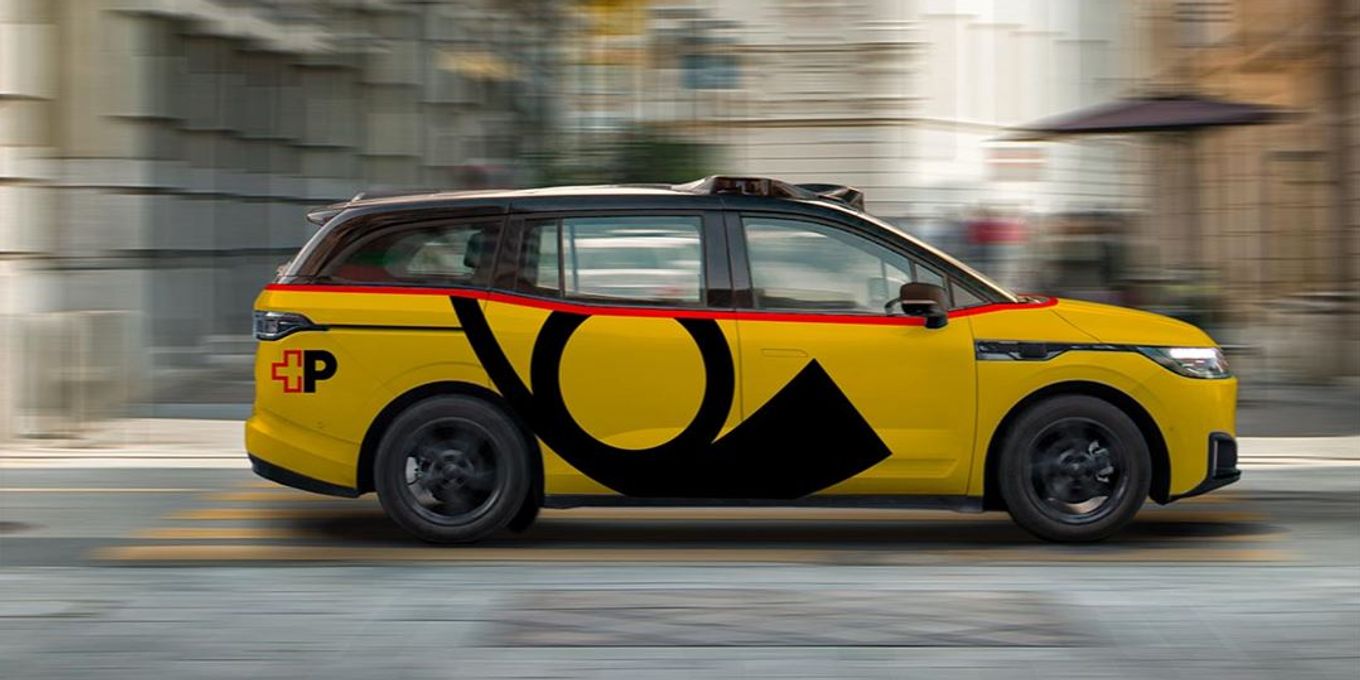
PostAuto Tests Self-Driving Taxis in Eastern Switzerland

Thumbnail Image

The information displayed in the AIM should not be reported as representing the official views of the OECD or of its member countries.

PostAuto Schweiz has begun testing self-driving taxis in Eastern Switzerland, with vehicles bookable via app and equipped with safety drivers. No passengers are involved yet. Regular autonomous operations are planned for 2027, aiming to expand public transport in rural areas. Up to 25 vehicles are planned for full deployment.[AI generated]

Why's our monitor labelling this an incident or hazard?

The event involves AI systems (self-driving cars) being tested and planned for public transport use, which fits the definition of an AI system. There is no direct or indirect harm reported, so it is not an AI Incident. Since the autonomous vehicles could plausibly lead to harm in the future (e.g., accidents, safety issues), it qualifies as an AI Hazard. The article does not focus on responses, governance, or updates to past incidents, so it is not Complementary Information. It is not unrelated because it clearly involves AI systems and their deployment.[AI generated]

Industries
Mobility and autonomous vehicles

Severity
AI hazard

Business function:
Other

AI system task:
Recognition/object detectionReasoning with knowledge structures/planningGoal-driven organisation


Articles about this incident or hazard

Thumbnail Image

Hier testet die Post automatisiert fahrende Taxis

2025-10-22
www.Bluewin.ch
Why's our monitor labelling this an incident or hazard?
The event involves AI systems (self-driving cars) being tested and planned for public transport use, which fits the definition of an AI system. There is no direct or indirect harm reported, so it is not an AI Incident. Since the autonomous vehicles could plausibly lead to harm in the future (e.g., accidents, safety issues), it qualifies as an AI Hazard. The article does not focus on responses, governance, or updates to past incidents, so it is not Complementary Information. It is not unrelated because it clearly involves AI systems and their deployment.
Thumbnail Image

Die Post testet in der Ostschweiz selbstfahrendes Auto auf Abruf

2025-10-22
GMX News
Why's our monitor labelling this an incident or hazard?
The event involves the use of AI systems (self-driving cars) in a real-world test setting. While no harm or incident has occurred, the nature of autonomous vehicles implies a credible risk of future harm (e.g., accidents, injuries) once the system is in regular operation. The article focuses on the testing and planned deployment, with safety drivers present and no passengers yet, indicating no current incident. Hence, it is not an AI Incident. It is not Complementary Information because it is not an update or response to a prior incident or hazard, but a new development with potential risk. It is not Unrelated because AI systems are clearly involved. Therefore, the classification is AI Hazard.
Thumbnail Image

In der Ostschweiz: Postauto testet selbstfahrende Taxis

2025-10-22
Nau
Why's our monitor labelling this an incident or hazard?
The event involves AI systems (self-driving cars) in testing and planned use, which fits the definition of AI systems. However, no harm or incident has occurred yet; the vehicles are currently in test phases with safety drivers and no passengers. The article does not report any injury, rights violation, or other harm caused by the AI system. The deployment of autonomous vehicles in public transport is a credible scenario that could plausibly lead to harm in the future (e.g., accidents, safety issues). Hence, it qualifies as an AI Hazard rather than an AI Incident or Complementary Information. It is not unrelated because it clearly involves AI systems and their deployment.