PhonePe Uses AI to Prevent Digital Payment Fraud in India

Thumbnail Image

The information displayed in the AIM should not be reported as representing the official views of the OECD or of its member countries.

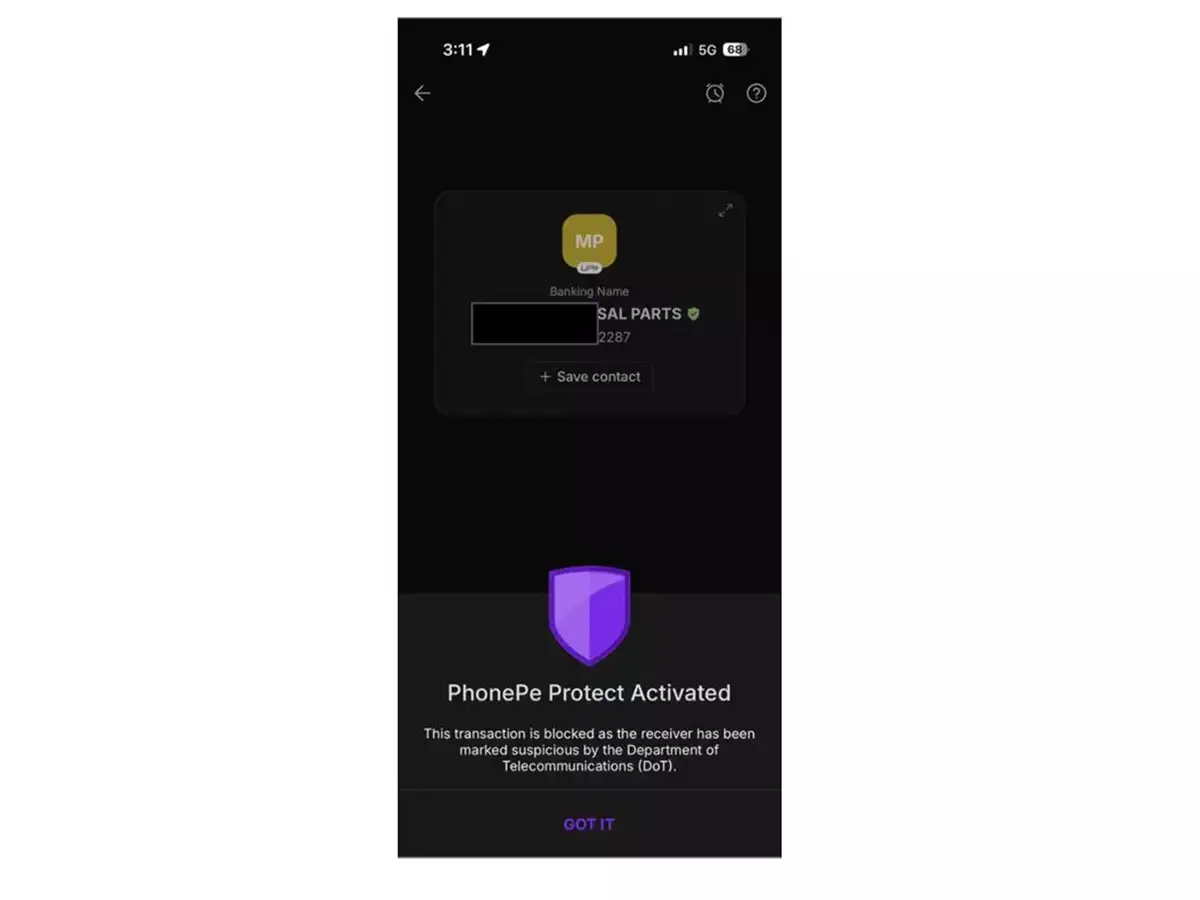
PhonePe has launched 'PhonePe Protect', an AI-powered security feature that identifies and blocks or warns users about suspicious transactions in real time. Integrating with India's Department of Telecommunications' Financial Fraud Risk Indicator, the system aims to prevent financial fraud and protect users from scams during digital payments.[AI generated]

Why's our monitor labelling this an incident or hazard?

The feature involves an AI system that analyzes transaction data and flags suspicious mobile numbers based on the Department of Telecommunications' AI-based Financial Fraud Risk Indicator. This AI system actively intervenes during payment processes to prevent fraud, which directly safeguards users from financial harm (a form of harm to persons). Since the AI system's use here directly prevents harm by blocking fraudulent transactions, this is a positive use of AI to mitigate harm rather than causing it. However, the event is about the deployment and use of an AI system that directly impacts user safety and prevents harm, which fits the definition of an AI Incident because the AI system's use is directly linked to preventing injury or harm to persons (fraud victims).[AI generated]

Industries
Financial and insurance services

Severity
AI incident

Business function:
ICT management and information security

AI system task:
Event/anomaly detection


Articles about this incident or hazard

Thumbnail Image

PhonePe rolls out feature that safeguards users from making fraudulent transactions - The Economic Times

2025-11-03
Economic Times
Why's our monitor labelling this an incident or hazard?
The feature involves an AI system that analyzes transaction data and flags suspicious mobile numbers based on the Department of Telecommunications' AI-based Financial Fraud Risk Indicator. This AI system actively intervenes during payment processes to prevent fraud, which directly safeguards users from financial harm (a form of harm to persons). Since the AI system's use here directly prevents harm by blocking fraudulent transactions, this is a positive use of AI to mitigate harm rather than causing it. However, the event is about the deployment and use of an AI system that directly impacts user safety and prevents harm, which fits the definition of an AI Incident because the AI system's use is directly linked to preventing injury or harm to persons (fraud victims).
Thumbnail Image

How fintechs are using AI and real-time tools to prevent digital payment fraud - CNBC TV18

2025-11-03
cnbctv18.com
Why's our monitor labelling this an incident or hazard?
The fintech companies' AI-powered fraud detection systems are directly involved in preventing harm by identifying and blocking fraudulent transactions. The use of AI to detect anomalies and suspicious behavior in real time is a clear example of AI system use aimed at mitigating harm. Since the article focuses on the active use of AI systems to prevent realized harm (fraud and scams), this qualifies as an AI Incident where the AI system's use is directly linked to preventing or mitigating harm to property and communities. The article does not merely discuss potential risks or future hazards, nor is it only about general AI developments or responses, but about AI systems actively engaged in harm prevention in a context where harm is occurring or imminent.
Thumbnail Image

PhonePe now warns you while sending money to suspicious numbers

2025-11-03
NewsBytes
Why's our monitor labelling this an incident or hazard?
The PhonePe Protect feature uses AI technology to identify suspicious numbers and intervene in real time to block or warn about risky transactions. This use of AI directly aims to prevent financial fraud, which is a form of harm to individuals (harm to persons through financial loss). Since the system is actively used to prevent harm and no harm has been reported as occurring, this event represents a proactive measure to reduce risk rather than an incident where harm has already occurred. Therefore, it qualifies as Complementary Information about societal and technical responses to AI to mitigate fraud risks, rather than an AI Incident or AI Hazard.
Thumbnail Image

PhonePe's new feature is amazing, now you'll get huge benefits - Times Bull

2025-11-05
Times Bull
Why's our monitor labelling this an incident or hazard?
The event involves the use of an AI system (PhonePe Protect) that analyzes transaction data and cross-references it with a fraud risk indicator database to prevent fraudulent transactions. The system's use directly aims to reduce harm to users by preventing financial fraud, which is a form of harm to persons. Since the article describes the deployment and use of this AI system to prevent harm rather than an incident of harm occurring, it is not an AI Incident. There is no indication of plausible future harm caused by the system itself, so it is not an AI Hazard. The article primarily provides information about a new AI-based security feature and its benefits, which fits the definition of Complementary Information.