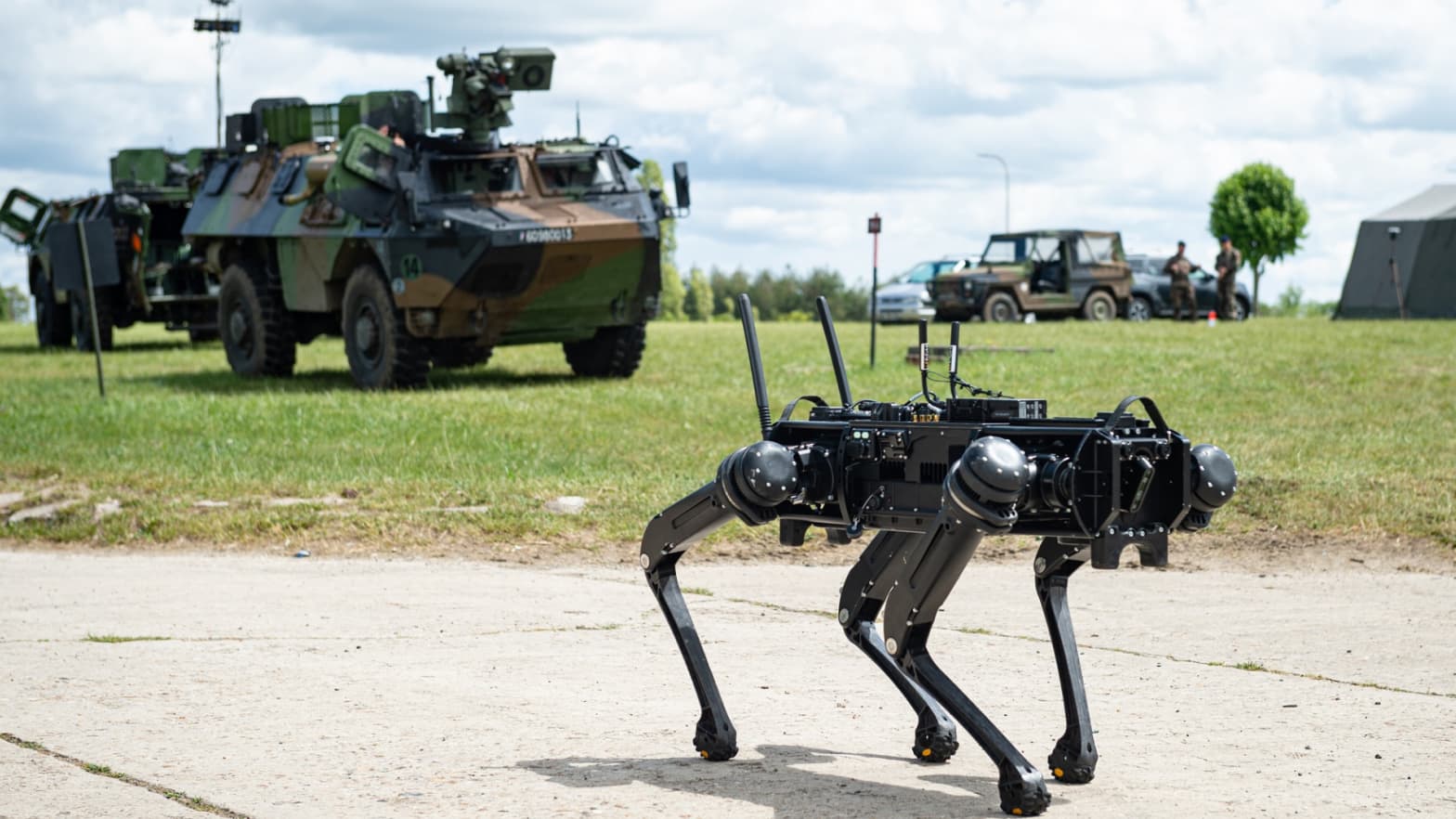
French Army Develops Autonomous AI Combat Robots, Raising Future Risks

Thumbnail Image

The information displayed in the AIM should not be reported as representing the official views of the OECD or of its member countries.

The French Army is investing heavily in developing autonomous combat robots and drones powered by artificial intelligence, aiming to deploy operational units within two years. While no harm has yet occurred, the planned use of AI for lethal autonomous military operations presents credible future risks of injury, death, and ethical concerns.[AI generated]

Why's our monitor labelling this an incident or hazard?

The event involves the development and intended use of AI systems (autonomous combat robots) that will have the capability to carry out destructive missions autonomously. Although no incident of harm has yet occurred, the article clearly indicates that these AI systems could plausibly lead to injury or harm to persons or groups, as well as harm to communities, through their use in military operations. Therefore, this qualifies as an AI Hazard under the framework, as it describes a credible future risk stemming from the AI system's deployment and use.[AI generated]
AI principles
SafetyAccountabilityRespect of human rightsDemocracy & human autonomyTransparency & explainabilityRobustness & digital security

Industries
Government, security, and defence

Affected stakeholders
General public

Harm types
Physical (injury)Physical (death)Human or fundamental rights

Severity
AI hazard

AI system task:
Recognition/object detectionGoal-driven organisation


Articles about this incident or hazard

Thumbnail Image

" La destruction fera partie des missions " : l'armée française mise 35 millions d'euros en 2026 sur une première unité de robots

2025-11-14
Le Parisien
Why's our monitor labelling this an incident or hazard?
The event involves the development and intended use of AI systems (autonomous combat robots) that will have the capability to carry out destructive missions autonomously. Although no incident of harm has yet occurred, the article clearly indicates that these AI systems could plausibly lead to injury or harm to persons or groups, as well as harm to communities, through their use in military operations. Therefore, this qualifies as an AI Hazard under the framework, as it describes a credible future risk stemming from the AI system's deployment and use.
Thumbnail Image

"Terminator ne défilera pas au 14-Juillet": l'armée française mise sur l'IA pour développer des unités de drones et de robots dotés d'un "cerveau collectif" (mais elle veut garder la main sur la décision de vie ou de mort)

2025-11-14
BFMTV
Why's our monitor labelling this an incident or hazard?
The article explicitly discusses AI systems being developed for autonomous combat robots and drones capable of coordinating and executing missions, including destruction. Although these systems are not yet operational and no harm has been reported, their intended use in lethal military applications presents a credible risk of injury or death to persons and harm to communities. The AI's role in autonomous decision-making and mission execution makes the hazard plausible. Since no actual harm has occurred yet, this is not an AI Incident but an AI Hazard. The article does not focus on responses or updates to past incidents, so it is not Complementary Information. It is clearly related to AI systems, so it is not Unrelated.
Thumbnail Image

L'armée française mise sur la "révolution culturelle" de la robotique terrestre

2025-11-14
TV5MONDE
Why's our monitor labelling this an incident or hazard?
The event involves the development and intended use of AI systems (autonomous combat robots and drones) by the French Army. While no harm has yet occurred, the deployment of autonomous robotic combat units with AI coordination capabilities could plausibly lead to harms such as injury or death in conflict, disruption, or violations of human rights if lethal force is applied autonomously or if control fails. The article explicitly states the intent to develop such systems and the challenges involved, but no incident or harm has materialized yet. Therefore, this qualifies as an AI Hazard due to the credible risk of future harm from autonomous military AI systems.
Thumbnail Image

Armement : la France passe du drone au robot de combat avec une grosse enveloppe - La Nouvelle Tribune

2025-11-14
La Nouvelle Tribune
Why's our monitor labelling this an incident or hazard?
The article explicitly mentions the development and planned deployment of AI-powered autonomous combat robots and drones, which qualify as AI systems. The event concerns the use and development of these AI systems in military operations. Although no incident of harm has yet occurred, the nature of autonomous combat robots inherently carries plausible risks of causing injury, ethical dilemmas, and operational harms. The article highlights the strategic and ethical considerations but does not report any realized harm. Hence, it fits the definition of an AI Hazard, as the AI systems could plausibly lead to significant harms in the future.
Thumbnail Image

À Bruz, l'armée française mise sur la " révolution culturelle " de la robotique terrestre

2025-11-14
Le Telegramme
Why's our monitor labelling this an incident or hazard?
The article explicitly mentions the use of AI in developing autonomous combat robots for the French Army, which are intended to operate in military contexts. Although the article does not report any actual harm or incidents, the development and prospective deployment of AI-enabled autonomous weapons systems inherently carry plausible risks of harm, including injury or death in combat scenarios, making this an AI Hazard. There is no indication of realized harm yet, so it does not qualify as an AI Incident. The article is not merely complementary information since it focuses on the development and strategic implications of AI in military robotics, which could plausibly lead to harm.
Thumbnail Image

Pendragon, l'unité de combat robotisée grâce à l'IA de l'armée française

2025-11-16
Le Point.fr
Why's our monitor labelling this an incident or hazard?
The project Pendragon involves AI systems controlling multiple drones and robots for combat purposes, which inherently carry risks of harm to people and communities if used in warfare. Although no harm has yet occurred, the development and testing of such AI-enabled autonomous combat units plausibly could lead to incidents involving injury, violation of human rights, or other significant harms. The article explicitly states that only humans will decide to fire weapons, but the AI's role in autonomous navigation and coordination of combat robots is central. Therefore, this event constitutes an AI Hazard due to the credible risk of future harm from the deployment of AI-powered robotic combat units.
Thumbnail Image

Comment l'armée française mise sur la robotique terrestre pour moderniser sa Défense

2025-11-16
SudOuest.fr
Why's our monitor labelling this an incident or hazard?
The article explicitly discusses AI-powered autonomous combat robots being developed for military use, including destruction missions. Although the unit is not yet operational and no harm has been reported, the intended use of AI in autonomous weapon systems inherently carries a plausible risk of causing injury or death, disruption, and other harms. Therefore, this event fits the definition of an AI Hazard, as the AI system's development and intended use could plausibly lead to an AI Incident in the future. There is no indication of realized harm yet, so it is not an AI Incident. The article is not merely complementary information or unrelated news, as it focuses on the development and deployment of AI-enabled autonomous combat robots with clear potential for harm.