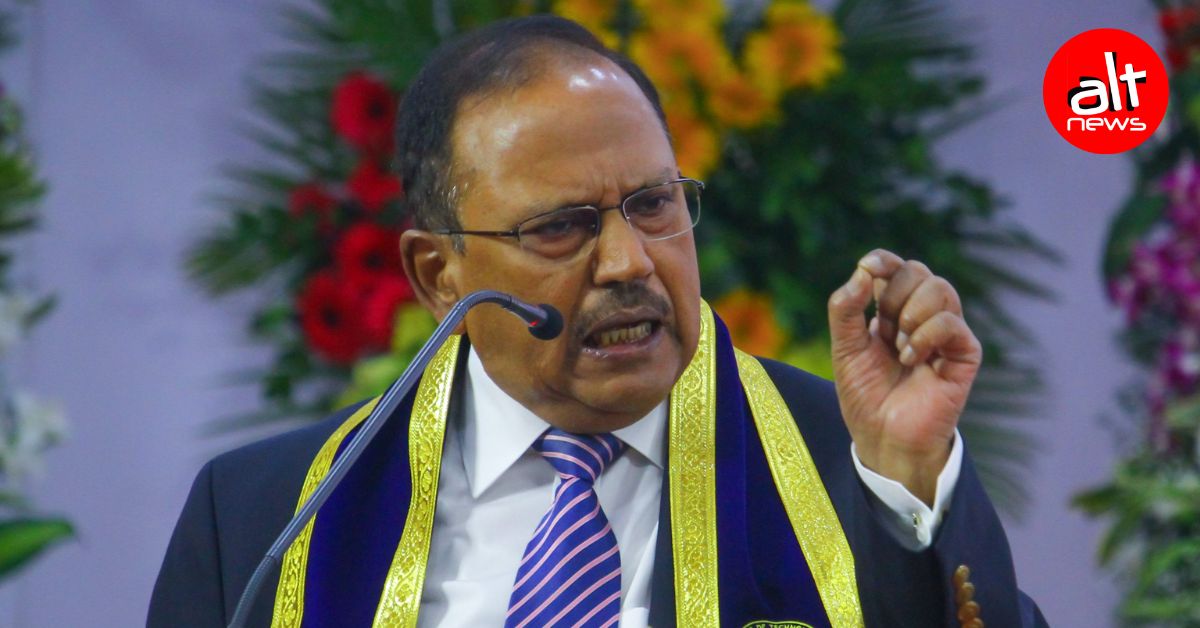
AI-Generated Deepfake Video Targets Indian National Security Adviser

Thumbnail Image

The information displayed in the AIM should not be reported as representing the official views of the OECD or of its member countries.

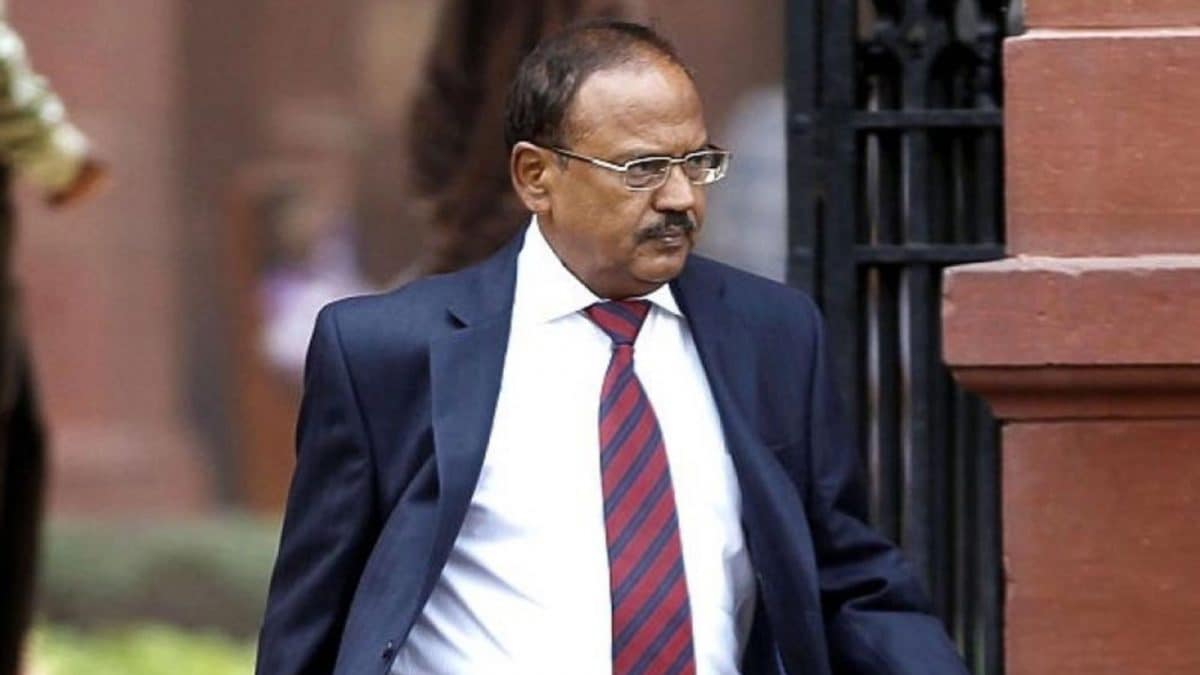
A deepfake video falsely depicting India's National Security Adviser Ajit Doval as making controversial remarks circulated widely on social media. Doval denied making the statement, warning that AI-driven misinformation poses significant risks to public trust, policy debates, and national security in India.[AI generated]

Why's our monitor labelling this an incident or hazard?

The event explicitly involves an AI system used to create a deepfake video, which is a clear example of AI-generated misinformation. The harm is realized in the form of social and political disruption, erosion of public trust, and potential threats to internal security, all of which fall under harm to communities and violation of rights. Since the AI system's use directly caused these harms, this qualifies as an AI Incident rather than a hazard or complementary information. The article does not merely warn of potential harm but describes an actual manipulated video circulating and causing disruption.[AI generated]
AI principles
AccountabilityTransparency & explainabilityDemocracy & human autonomySafety

Industries
Media, social platforms, and marketing

Affected stakeholders
GovernmentGeneral public

Harm types
Public interestReputational

Severity
AI incident

AI system task:
Content generation


Articles about this incident or hazard

Thumbnail Image

NSA Ajit Doval says 'more Hindus attracted to ISIS' video fake, raises 'AI threat' to national security

2025-11-17
MoneyControl
Why's our monitor labelling this an incident or hazard?
The event explicitly involves an AI system's use—deepfake technology—to create manipulated video content. The purpose of this AI-generated content is to distort information and potentially disrupt national security and social cohesion, which aligns with harm to communities and internal security. While the harm is not yet realized, the plausible future harm from such AI-driven misinformation is credible and significant, qualifying this as an AI Hazard rather than an AI Incident. The article focuses on the warning about the threat posed by AI deepfakes rather than reporting an actual incident of harm caused by the video.
Thumbnail Image

Ajit Doval Issues Denial After 'Hindus Attracted To ISIS' Video, Flags Deepfake Threat | Exclusive

2025-11-17
News18
Why's our monitor labelling this an incident or hazard?
The event explicitly involves an AI system used to create a deepfake video, which is a clear example of AI-generated misinformation. The harm is realized in the form of social and political disruption, erosion of public trust, and potential threats to internal security, all of which fall under harm to communities and violation of rights. Since the AI system's use directly caused these harms, this qualifies as an AI Incident rather than a hazard or complementary information. The article does not merely warn of potential harm but describes an actual manipulated video circulating and causing disruption.
Thumbnail Image

NSA Ajit Doval did say ISI recruited more Hindus than Muslims in India; his 'deepfake' claim is false - Alt News

2025-11-17
Alt News
Why's our monitor labelling this an incident or hazard?
The article clarifies that the viral video is not an AI-generated deepfake but a genuine recording from 2014. Although AI deepfake technology is mentioned, there is no actual AI system causing harm or plausible harm here. The event is about correcting misinformation regarding AI deepfakes and their misuse, which fits the definition of Complementary Information as it provides context and correction about AI-related claims without describing a new AI Incident or Hazard.