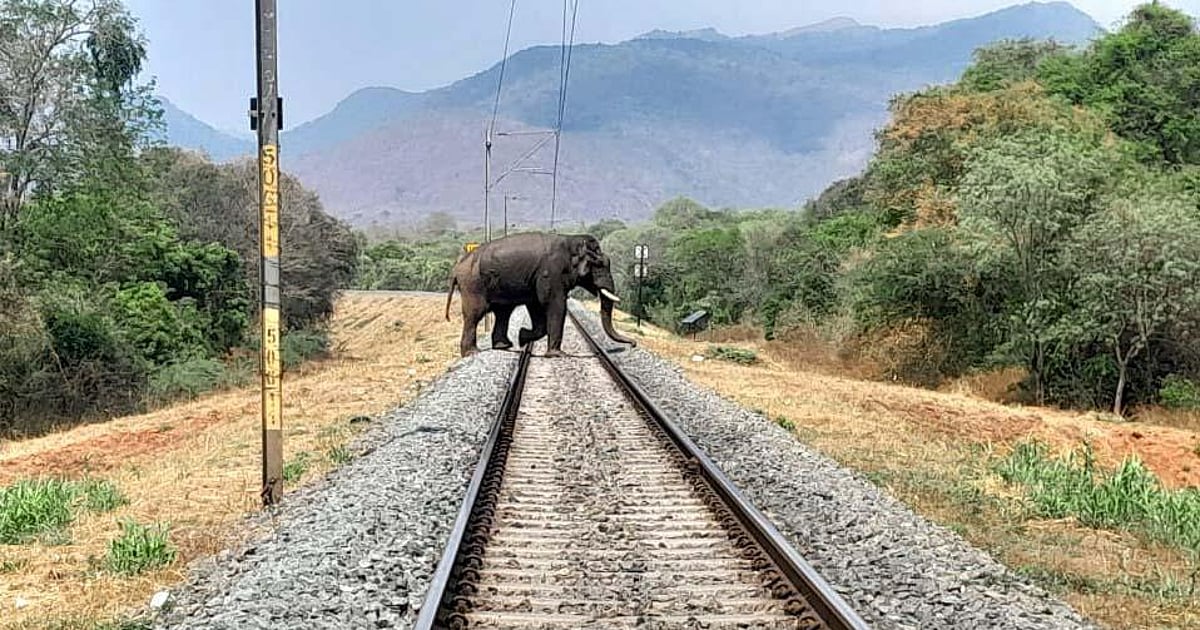
AI System Prevents Elephant Deaths on Railway Tracks in Tamil Nadu

Thumbnail Image

The information displayed in the AIM should not be reported as representing the official views of the OECD or of its member countries.

An AI-based early warning system deployed by the Tamil Nadu Forest Department in Madukkarai has prevented elephant deaths on railway tracks for 22 months, enabling nearly 6,000 safe crossings. The success led to the launch of a new AI-powered command centre for human-wildlife conflict management in Gudalur.[AI generated]

Why's our monitor labelling this an incident or hazard?

The AI system is explicitly described as detecting elephant movements and generating real-time alerts that have prevented elephant deaths on railway tracks, a direct harm to animal life. The system also supports proactive management of human-wildlife conflict, reducing injuries, casualties, and property damage. Since the AI system's use has directly led to the prevention of harm (injury and death to elephants and humans), this event meets the criteria for an AI Incident. The description includes concrete outcomes (zero elephant deaths) attributable to the AI system's deployment and operation, confirming realized harm prevention rather than just potential or future risk.[AI generated]
Industries
Government, security, and defenceEnvironmental servicesMobility and autonomous vehicles

Severity
AI incident

Business function:
Monitoring and quality control

AI system task:
Recognition/object detection


Articles about this incident or hazard

Thumbnail Image

Gudalur gets AI-powered centre to mitigate man-animal conflicts | Coimbatore News - The Times of India

2025-12-20
The Times of India
Why's our monitor labelling this an incident or hazard?
The article explicitly mentions AI-enabled surveillance cameras and AI-based monitoring systems that generate real-time alerts to prevent man-animal conflicts, which can cause injury or harm to humans and animals. The AI system is actively used to mitigate these risks, but no incident of harm is reported. Hence, this is a case where the AI system's use could plausibly lead to the prevention of harm, making it an AI Hazard rather than an AI Incident. The event is not merely general AI news or a response to a past incident, so it is not Complementary Information. The presence and use of AI systems for monitoring and alerting in a conflict-prone environment fits the definition of an AI Hazard.
Thumbnail Image

AI-based alerts prevent elephants'' deaths in TN''s Madukkarai, centre launched in Gudalur

2025-12-20
Hindustan Times
Why's our monitor labelling this an incident or hazard?
The AI system is explicitly described as detecting elephant movements and generating real-time alerts that have prevented elephant deaths on railway tracks, a direct harm to animal life. The system also supports proactive management of human-wildlife conflict, reducing injuries, casualties, and property damage. Since the AI system's use has directly led to the prevention of harm (injury and death to elephants and humans), this event meets the criteria for an AI Incident. The description includes concrete outcomes (zero elephant deaths) attributable to the AI system's deployment and operation, confirming realized harm prevention rather than just potential or future risk.
Thumbnail Image

Command and control centre inaugurated in the Nilgiris to mitigate human-elephant conflict

2025-12-20
The Hindu
Why's our monitor labelling this an incident or hazard?
The article explicitly mentions AI-enabled surveillance and monitoring systems used to generate real-time alerts to mitigate human-elephant conflict, indicating AI system involvement. However, there is no report of any harm caused or any malfunction of the AI systems. Instead, the AI is used to prevent harm and improve safety. The event is about the inauguration and deployment of these AI systems, which is informative and supportive of understanding AI applications in this field. Hence, it does not meet the criteria for AI Incident or AI Hazard but fits the definition of Complementary Information.
Thumbnail Image

AI Early Warning System has enabled 6000 safe elephant crossings in the last 22 months: Supriya Sahu

2025-12-20
The Hindu
Why's our monitor labelling this an incident or hazard?
The AI system (AI-based cameras and early warning system) is explicitly mentioned and has been used to prevent elephant deaths, which is a form of harm to the environment and wildlife. The system's use has directly led to the positive outcome of zero elephant deaths on the railway tracks over two years, indicating the AI system's role in harm prevention. Since the AI system's use has directly influenced harm reduction, this qualifies as an AI Incident under the framework, as it involves injury or harm to groups (elephants) that has been prevented through AI intervention.
Thumbnail Image

No elephant deaths on railway tracks in Madukkarai stretch in 22 months

2025-12-21
The New Indian Express
Why's our monitor labelling this an incident or hazard?
The AI system is explicitly mentioned as being used for early warning to prevent elephant deaths on railway tracks. The system's use has directly led to the avoidance of harm to elephants, which qualifies as harm to communities and the environment. Since the AI system's use has resulted in realized harm reduction (zero deaths), this is an AI Incident rather than a hazard or complementary information. The event focuses on the positive impact of the AI system in preventing harm, which fits the definition of an AI Incident involving harm to property, communities, or the environment.
Thumbnail Image

AI Harnessed To Manage Human-Wildlife Conflict

2025-12-20
Deccan Chronicle
Why's our monitor labelling this an incident or hazard?
The article explicitly mentions the use of an AI system for managing human-wildlife conflict, which involves real-time monitoring and predictive capabilities. While the system aims to reduce harm such as human casualties and property damage, no actual harm or incident involving the AI system is reported. Therefore, this event represents a plausible future risk mitigation scenario rather than a realized harm or incident. It is best classified as an AI Hazard because the AI system's use could plausibly lead to preventing or managing harm, but no direct or indirect harm from the AI system itself has occurred yet.
Thumbnail Image

AI-based alerts prevent elephants'' deaths in TN''s Madukkarai, centre launched in Gudalur

2025-12-20
NewsDrum
Why's our monitor labelling this an incident or hazard?
The AI system is explicitly described as detecting elephant movements and generating alerts that have prevented elephant deaths on railway tracks, which is a direct harm prevention outcome. The system is actively used in real-time to manage human-wildlife conflict, which involves risks of injury or death to animals and humans. Since the AI system's use has directly led to preventing harm, this qualifies as an AI Incident under the definition of harm to groups of people or animals. The article does not describe potential or future harm but actual realized harm prevention through AI use, so it is not a hazard or complementary information. It is not unrelated as the AI system is central to the event and its impact.
Thumbnail Image

AI in the jungle: TN's command centre in Gudalur to manage human-wildlife conflict

2025-12-21
dtnext.in
Why's our monitor labelling this an incident or hazard?
An AI system is explicitly involved as the command centre uses AI-enabled surveillance cameras and AI-based monitoring systems for detection and management. However, the article does not report any harm or incident caused by the AI system, nor does it indicate any plausible future harm arising from the AI system's use. Instead, it describes a proactive deployment aimed at improving management and prevention of human-wildlife conflict. Therefore, this event is best classified as Complementary Information, as it provides context and details about AI deployment in a specific domain without reporting harm or risk of harm.
Thumbnail Image

TN launches AI powered command centre for human-wildlife conflict management

2025-12-21
http://www.uniindia.com/fadnavis-orders-probe-into-mumbai-pub-fire/states/news/1090400.html
Why's our monitor labelling this an incident or hazard?
The article explicitly mentions the use of AI systems for surveillance, monitoring, and alert generation to manage human-wildlife conflict, which involves real-time data processing and predictive analytics. However, there is no indication that the AI system caused any harm or malfunctioned, nor is there a credible risk of harm stemming from the AI system itself. The AI is used as a tool to reduce harm and improve safety. The event focuses on the launch and capabilities of the AI-powered centre, representing a governance and technological advancement rather than an incident or hazard. Thus, it fits the definition of Complementary Information, providing supporting data and context about AI deployment in a societal and environmental application.