Hackers Exploit Smart Vacuum Cleaners to Access Home Networks and Personal Data in Russia

Thumbnail Image

The information displayed in the AIM should not be reported as representing the official views of the OECD or of its member countries.

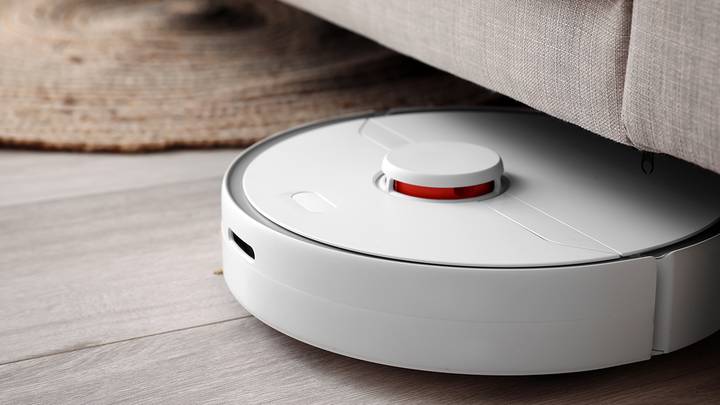
Cybersecurity experts report that hackers are actively exploiting vulnerabilities in AI-powered smart vacuum cleaners in Russia. By hacking these devices, attackers gain access to entire home networks and personal data, including images and audio from built-in cameras, leading to privacy violations and potential blackmail, while the devices continue to function normally.[AI generated]

Why's our monitor labelling this an incident or hazard?

The smart vacuum cleaners are AI systems as they perform autonomous tasks and are connected within a home network. The hackers' exploitation of these AI systems to access personal data and other devices represents a direct harm to users' privacy and security, which falls under violations of human rights and harm to communities. The article reports realized harm from the hacking incidents, not just potential risks, thus classifying it as an AI Incident rather than a hazard or complementary information.[AI generated]
AI principles
Privacy & data governanceRobustness & digital security

Industries
Consumer productsDigital security

Affected stakeholders
Consumers

Harm types
Human or fundamental rightsPsychological

Severity
AI incident

AI system task:
Recognition/object detectionGoal-driven organisation


Articles about this incident or hazard

Thumbnail Image

Хакеры начали взламывать умные пылесосы для доступа ко всем устройствам в доме

2026-02-20
Вечерняя Москва
Why's our monitor labelling this an incident or hazard?
The smart vacuum cleaners are AI systems as they perform autonomous tasks and are connected within a home network. The hackers' exploitation of these AI systems to access personal data and other devices represents a direct harm to users' privacy and security, which falls under violations of human rights and harm to communities. The article reports realized harm from the hacking incidents, not just potential risks, thus classifying it as an AI Incident rather than a hazard or complementary information.
Thumbnail Image

Хакеры начали взламывать умные пылесосы

2026-02-20
Рамблер
Why's our monitor labelling this an incident or hazard?
Smart vacuum cleaners with network connectivity and built-in cameras typically use AI systems for navigation and operation. The hacking and unauthorized access to these devices and the broader network represent misuse of AI systems leading to violations of privacy and potential harm to users. The article reports that this hacking is actively occurring, indicating realized harm rather than just potential risk. Therefore, this qualifies as an AI Incident due to the direct involvement of AI systems in the harm caused by unauthorized access and data theft.
Thumbnail Image

Хакеры через умные пылесосы получают доступ ко всем устройствам в доме

2026-02-20
РИА Новости Крым
Why's our monitor labelling this an incident or hazard?
The article explicitly mentions smart vacuum cleaners, which are AI systems due to their autonomous cleaning capabilities. The hackers exploit vulnerabilities to gain access to the home network and devices, leading to privacy violations and potential manipulation or blackmail, which are harms to persons and communities. The AI system's misuse directly leads to these harms, fulfilling the criteria for an AI Incident. The event is not merely a potential risk but describes actual exploitation and harm, so it is not an AI Hazard or Complementary Information.
Thumbnail Image

Хакеры взламывают умные пылесосы: вот что они делают после

2026-02-20
НОВОСТИ Mail.Ru
Why's our monitor labelling this an incident or hazard?
The article explicitly mentions the hacking of smart vacuum cleaners, which are AI systems due to their autonomous cleaning functions and data collection capabilities. The hackers' access to personal information via these AI systems directly leads to harm through privacy violations and potential blackmail, fitting the definition of an AI Incident. The harm is realized, not just potential, as the data is used for manipulation and blackmail. Hence, the event is classified as an AI Incident.
Thumbnail Image

Россиян предупредили об уязвимости умных пылесосов для хакеров

2026-02-20
"Холод"
Why's our monitor labelling this an incident or hazard?
Smart vacuum cleaners are AI systems due to their autonomous operation and sensor use. The hacking described involves exploitation of these AI systems' software, leading to unauthorized access to personal data and networks, which is a violation of users' rights and privacy. The harm is realized, not just potential, as attackers gain access and manipulate devices without users' knowledge. This fits the definition of an AI Incident because the AI system's use and malfunction (through hacking) directly lead to harm to individuals' privacy and security.