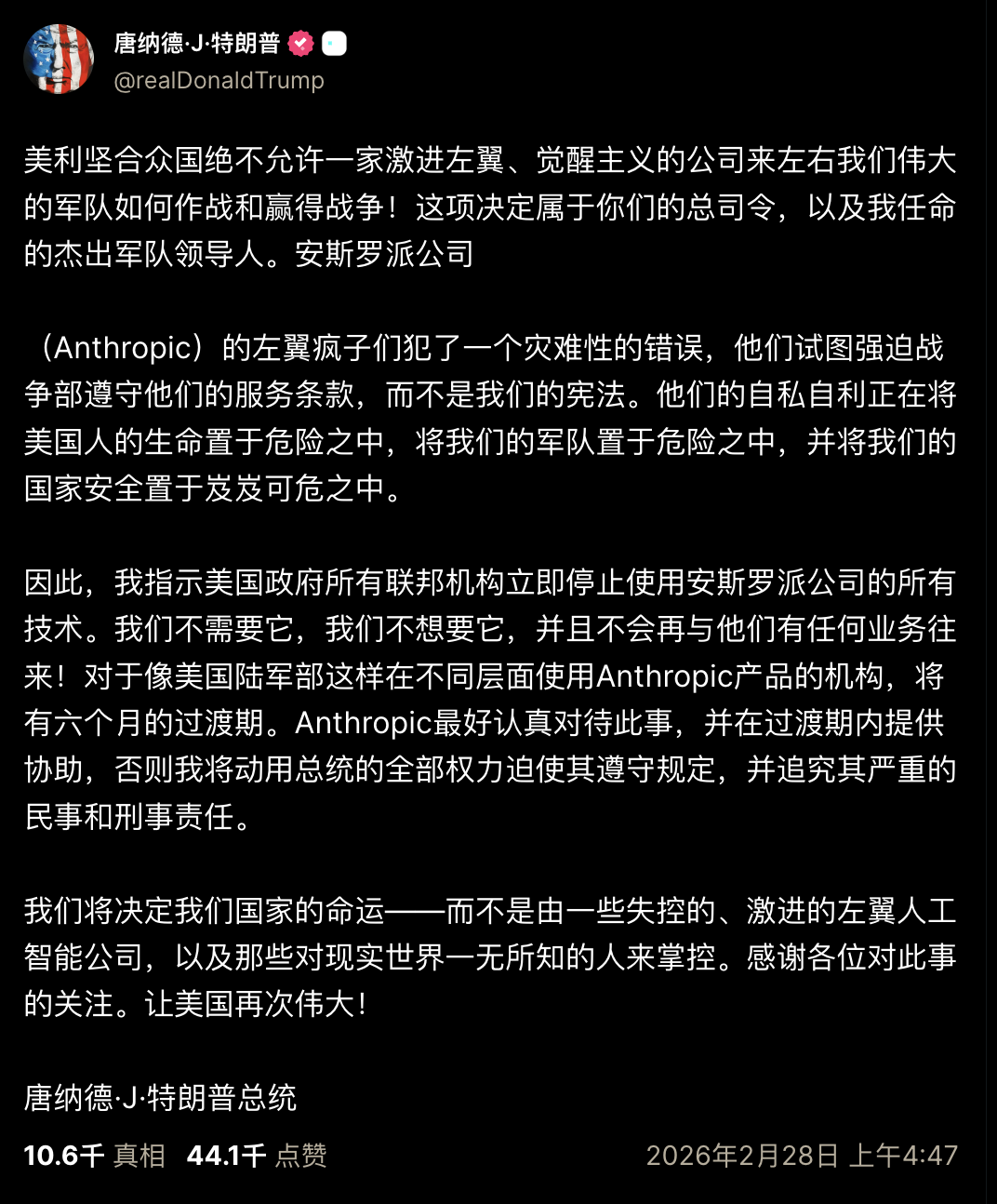
US Government Replaces Anthropic with OpenAI Amid Military AI Ethics Dispute

Thumbnail Image

The information displayed in the AIM should not be reported as representing the official views of the OECD or of its member countries.

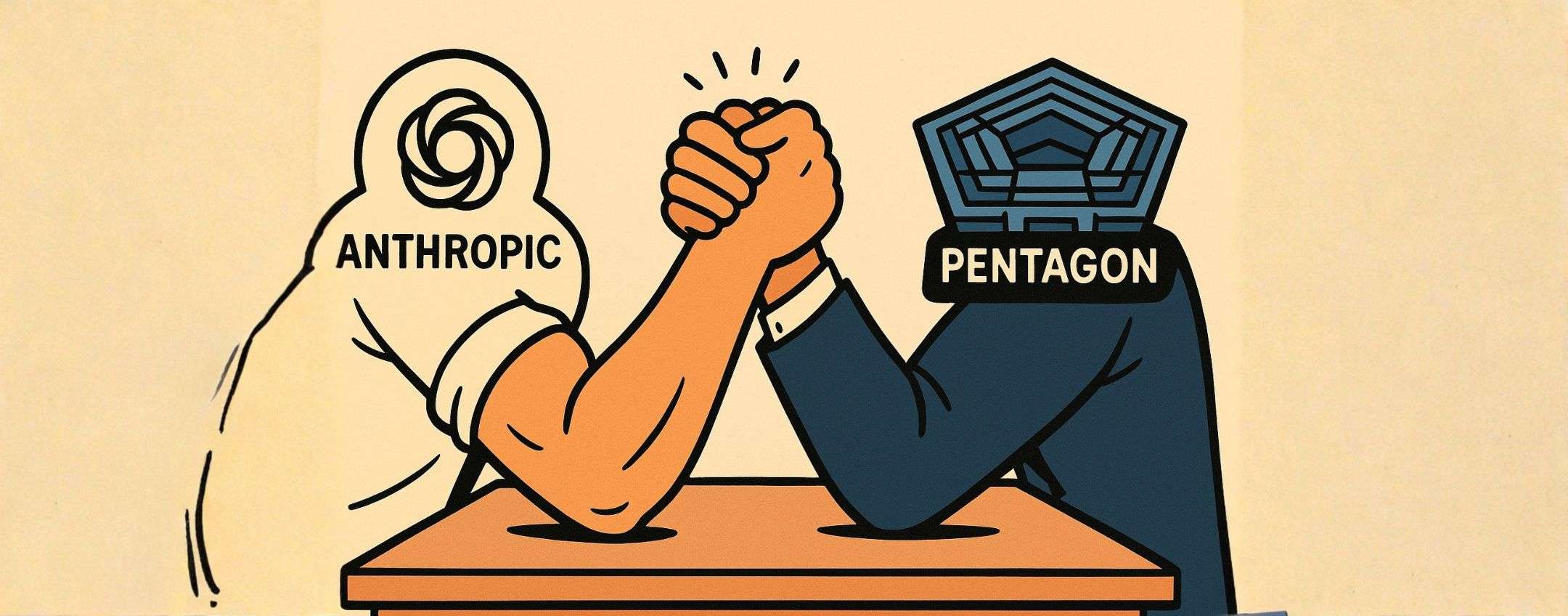
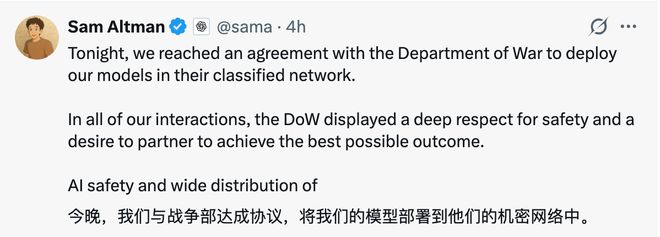
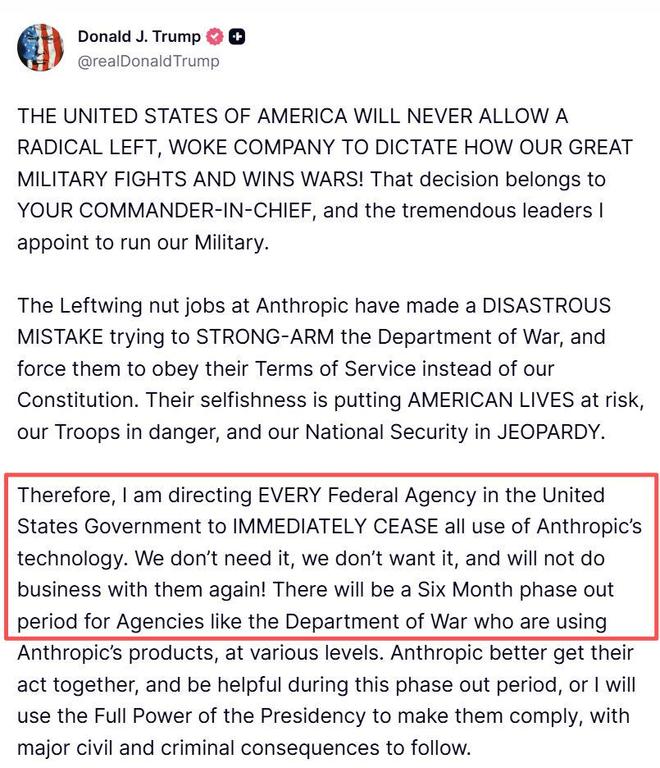
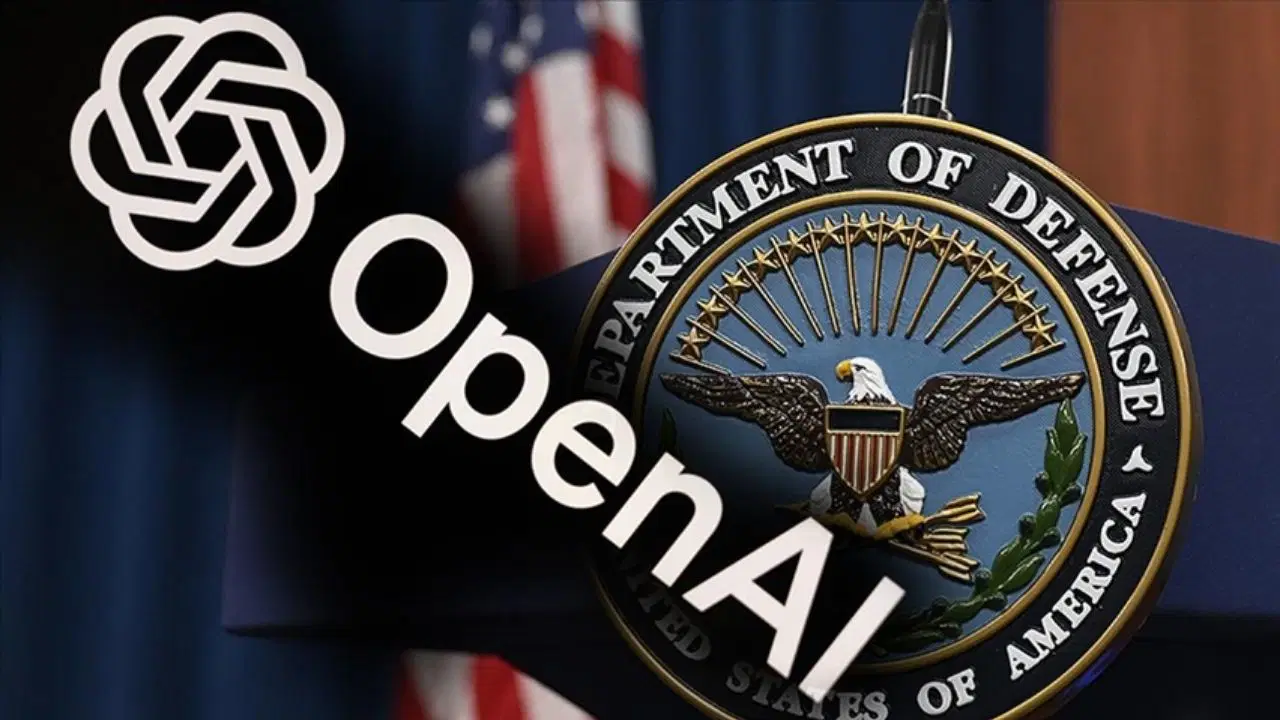
The US Department of Defense demanded unrestricted military use of Anthropic's AI, leading to a standoff over ethical constraints on autonomous weapons and surveillance. After Anthropic refused, the government banned its technology and partnered with OpenAI, which agreed to deploy its AI models with some safeguards in military networks.[AI generated]

Why's our monitor labelling this an incident or hazard?

The article explicitly discusses AI systems (Anthropic's Claude and OpenAI's models) being considered for use in autonomous weapons and missile defense systems, which are AI systems by definition. The event centers on the use and development of these AI systems for military purposes, including potentially lethal autonomous weapons and critical defense decisions. While no actual harm or incident has yet occurred, the article outlines credible scenarios where AI malfunction or misuse could lead to catastrophic harm, such as accidental nuclear war or lethal autonomous attacks without human oversight. The refusal of Anthropic to allow such use and the Pentagon's insistence on unrestricted AI control highlight the plausible risk of harm. Thus, the event is best classified as an AI Hazard due to the credible potential for severe harm stemming from the AI systems' military deployment and use.[AI generated]

AI principles
Respect of human rightsAccountability

Industries
Government, security, and defence

Affected stakeholders
General public

Harm types
Human or fundamental rightsPublic interest

Severity
AI hazard

AI system task:
Recognition/object detectionGoal-driven organisation


Articles about this incident or hazard

Thumbnail Image

Trump Ordered To Ban Anthropic, Later US Military Used Its Claude AI In Iran Strikes: Report

2026-03-01
News18
Why's our monitor labelling this an incident or hazard?
Anthropic's Claude AI system is explicitly mentioned as being used by the US military in operations that have caused harm (airstrikes, raids, capture of individuals). This constitutes direct involvement of an AI system in causing harm to persons and property, fulfilling the criteria for an AI Incident. The political directive to ban the technology and the ongoing use despite this order reflect the complexity but do not negate the realized harm. Therefore, this event is classified as an AI Incident due to the direct link between the AI system's use and harm in military operations.
Thumbnail Image

IA militare, nella guerra tra Anthropic e il Pentagono vince OpenAI

2026-02-28
La Repubblica.it
Why's our monitor labelling this an incident or hazard?
The article explicitly discusses AI systems (Anthropic's Claude and OpenAI's models) being considered for use in autonomous weapons and missile defense systems, which are AI systems by definition. The event centers on the use and development of these AI systems for military purposes, including potentially lethal autonomous weapons and critical defense decisions. While no actual harm or incident has yet occurred, the article outlines credible scenarios where AI malfunction or misuse could lead to catastrophic harm, such as accidental nuclear war or lethal autonomous attacks without human oversight. The refusal of Anthropic to allow such use and the Pentagon's insistence on unrestricted AI control highlight the plausible risk of harm. Thus, the event is best classified as an AI Hazard due to the credible potential for severe harm stemming from the AI systems' military deployment and use.

Thumbnail Image

Wenn zwei sich streiten, freut sich der Dritte

2026-02-28
WEB.DE
Why's our monitor labelling this an incident or hazard?
The article explicitly mentions AI systems (OpenAI's models) being agreed for use by the Pentagon, indicating AI system involvement. The event stems from the use and deployment of AI systems in military contexts. However, there is no indication of any direct or indirect harm caused by the AI systems so far, nor any plausible immediate risk of harm described. The focus is on the agreement, principles for safe use, and the Pentagon's strategic decisions regarding AI suppliers. This fits the definition of Complementary Information, as it provides updates on governance, policy, and strategic responses related to AI without describing an incident or hazard causing or plausibly leading to harm.
Thumbnail Image

Claude becomes most downloaded app in US after Anthropic-Pentagon row

2026-03-01
MoneyControl
Why's our monitor labelling this an incident or hazard?
The article centers on a political and regulatory dispute over Anthropic's AI models, highlighting concerns about their use in mass surveillance and autonomous weapons, which are potential sources of harm. However, no actual harm or incident is reported. The rapid adoption of Claude and the government response illustrate the evolving AI landscape and governance challenges, fitting the definition of Complementary Information. The event does not describe an AI Incident (no realized harm) or an AI Hazard (no explicit credible imminent risk detailed), but rather provides important context and updates on AI system deployment and societal/governance reactions.
Thumbnail Image

Trump moved to dump Anthropic, then used its Claude AI in the Iran strike: Report

2026-03-01
MoneyControl
Why's our monitor labelling this an incident or hazard?
The article explicitly mentions the use of Anthropic's Claude AI in military operations involving intelligence assessments, target identification, and battlefield simulations, which are critical to decisions that can cause physical harm or death. The AI system's outputs are integrated into real-world military actions, including an air strike against Iran and a raid in Venezuela, indicating direct involvement in events with potential or actual harm. The conflict over usage rights and ethical safeguards does not negate the fact that the AI system has been used operationally in contexts with significant risk of harm. Hence, this event meets the criteria for an AI Incident as the AI system's use has directly or indirectly led to harm or risk thereof.
Thumbnail Image

Streit mit Anthropic eskaliert: OpenAI-Chef verkündet KI-Deal mit Pentagon

2026-02-28
N-tv
Why's our monitor labelling this an incident or hazard?
The article explicitly involves AI systems developed by Anthropic and OpenAI and their intended use by the Pentagon. The dispute centers on the ethical and security implications of AI use in mass surveillance and autonomous weapons, which are areas with significant potential for harm to human rights and national security. Although no direct harm or incident is reported, the Pentagon's designation of Anthropic as a supply-chain risk and the negotiation of agreements with OpenAI highlight the credible risk of AI misuse or malfunction in military contexts. The event thus fits the definition of an AI Hazard, as it plausibly could lead to AI incidents involving violations of rights or harm to communities if AI is used improperly. It is not an AI Incident because no harm has yet occurred, nor is it Complementary Information or Unrelated since the focus is on the conflict and potential risks of AI deployment in defense.
Thumbnail Image

OpenAI anuncia un acuerdo con el Pentágono sobre los límites del uso militar de su inteligencia artificial

2026-02-28
EL MUNDO
Why's our monitor labelling this an incident or hazard?
The article centers on a governance agreement and policy commitments between OpenAI and the Pentagon to limit and regulate the military use of AI, particularly to prevent harmful uses such as mass surveillance and autonomous lethal weapons without human oversight. There is no description of an AI system causing harm or malfunctioning, nor is there a direct or indirect harm reported. The discussion is about setting principles and agreements to prevent potential harms, reflecting a governance response to AI risks. Therefore, this event fits the definition of Complementary Information, as it provides important context and updates on societal and governance responses to AI use in military applications, rather than reporting an AI Incident or AI Hazard.
Thumbnail Image

OpenAI cierra un acuerdo con el Pentágono horas después de que Trump ordenara romper con Anthropic

2026-02-28
EL PAÍS
Why's our monitor labelling this an incident or hazard?
The article explicitly involves AI systems (OpenAI's and Anthropic's AI models) being deployed or intended for deployment in military contexts, including management of classified information and potentially autonomous weapons systems. While no specific incident of harm is reported, the unrestricted use of AI in military operations poses a credible risk of harm, including violations of human rights and misuse of autonomous weapons. The refusal of Anthropic to remove safeguards and the subsequent government actions highlight the tension between ethical AI use and military demands. Since the event describes a situation where AI use could plausibly lead to significant harm but no harm has yet been reported, it fits the definition of an AI Hazard rather than an AI Incident. The article does not focus on responses or updates to past incidents, so it is not Complementary Information, nor is it unrelated to AI systems.
Thumbnail Image

U.S. Strikes in Middle East Use Anthropic, Hours After Trump Ban

2026-03-01
The Wall Street Journal
Why's our monitor labelling this an incident or hazard?
The article explicitly mentions the use of Anthropic's AI system in military operations that include target identification and battle scenario simulations, which are directly linked to a major air attack. This implies the AI system's outputs contributed to decisions causing harm (injury, death, or disruption). The involvement of AI in such high-stakes military actions meets the criteria for an AI Incident, as the AI system's use has directly led to harm. Although there is also mention of future plans to phase out the system, the current use and its consequences are the primary focus, not just potential future harm or governance responses.
Thumbnail Image

KI im Militär: OpenAI will Deal mit Pentagon gemacht haben - WELT

2026-02-28
DIE WELT
Why's our monitor labelling this an incident or hazard?
The article centers on policy and governance issues around AI use in military contexts, including ethical principles and company-government agreements. There is no description of an AI system causing direct or indirect harm, nor is there a specific event where AI use led to injury, rights violations, or other harms. The discussion of potential risks and company stances on autonomous weapons and surveillance is about preventing harm rather than describing an incident or imminent hazard. Therefore, this is best classified as Complementary Information, providing context on AI governance and responses in a sensitive domain.
Thumbnail Image

Künstliche Intelligenz: Pentagon setzt auf ChatGPT - OpenAI verdrängt KI-Rivalen Anthropic - WELT

2026-02-28
DIE WELT
Why's our monitor labelling this an incident or hazard?
The article involves AI systems (Anthropic's AI software and OpenAI's systems) and their use in military operations, which inherently carry risks of harm. However, no specific harm or incident resulting from the AI's development, use, or malfunction is reported. The focus is on policy decisions, company stances, and potential risks, including concerns about mass surveillance and autonomous weapons. Since no direct or indirect harm has occurred or is described as occurring, but plausible future harm related to AI in military use and national security is implied, this event fits the definition of an AI Hazard rather than an AI Incident or Complementary Information.
Thumbnail Image

OpenAI verkündet Vereinbarung mit US-Militär über KI-Einsatz

2026-02-28
newsORF.at
Why's our monitor labelling this an incident or hazard?
The event involves AI systems explicitly (OpenAI's AI models) and their intended use by the military, which is a sensitive and potentially high-risk domain. However, there is no indication that any harm has occurred or that the AI systems have malfunctioned or been misused to cause injury, rights violations, or other harms. The article focuses on agreements, security measures, and regulatory actions, which are governance and policy developments rather than incidents or hazards. Therefore, this is best classified as Complementary Information, providing context on AI governance and military collaboration without reporting an AI Incident or AI Hazard.
Thumbnail Image

Anthropic: Donald Trump verbannt "linksradikales, wokes" KI-Unternehmen aus US-Behörden

2026-02-28
Spiegel Online
Why's our monitor labelling this an incident or hazard?
The article explicitly involves an AI system (Anthropic's AI models) and discusses its intended use in military decision-making and autonomous weapons, which could plausibly lead to significant harm (e.g., harm to persons, violation of rights). However, no actual harm or incident is reported; the conflict is about potential future use and associated risks. Therefore, it fits the definition of an AI Hazard rather than an AI Incident. The political dispute and threats of sanctions are part of the governance context but do not themselves constitute harm or incident. Hence, the classification is AI Hazard.
Thumbnail Image

Trump banned Anthropic -- hours later, US military used its Claude AI in Iran strikes: Report | Mint

2026-03-01
mint
Why's our monitor labelling this an incident or hazard?
The event explicitly involves an AI system (Claude AI) used in military operations that have caused harm (airstrikes on Iran). The AI system's use in intelligence and targeting directly contributed to harm to persons and national security implications, fitting the definition of an AI Incident. The political controversy and phase-out announcement do not negate the realized harm caused by the AI's use. Therefore, this is classified as an AI Incident.
Thumbnail Image

"Une entreprise de gauche radicale et woke": Trump ordonne de "cesser immédiatement toute utilisation" de l'IA d'Anthropic après son refus de céder à l'armée américaine (qui choisit finalement OpenAI)

2026-02-28
BFMTV
Why's our monitor labelling this an incident or hazard?
The article explicitly involves AI systems (Anthropic's Claude and OpenAI's models) and their use by the U.S. military, which is a significant AI application. However, no harm has occurred or is described as occurring due to these AI systems. The refusal by Anthropic to provide unrestricted access and the subsequent political and administrative responses represent governance and ethical issues around AI deployment. Since no direct or indirect harm has materialized, and the article mainly reports on policy decisions, accusations, and company positions, it fits the definition of Complementary Information rather than an AI Incident or AI Hazard.
Thumbnail Image

OpenAI ha venduto l'anima al diavolo: darà la sua IA al Pentagono al posto di Anthropic

2026-02-28
Fanpage
Why's our monitor labelling this an incident or hazard?
The article explicitly mentions AI systems being provided to the Pentagon for military use, including concerns about autonomous weapons and mass surveillance, which are credible sources of future harm. Since no actual harm or incident has occurred yet, but the deployment could plausibly lead to significant harms such as violations of human rights or harm to communities, this situation fits the definition of an AI Hazard. The article's main focus is on the potential risks and ethical considerations rather than a realized incident, so it is not an AI Incident. It is more than general AI news or complementary information because it highlights a credible risk of harm from AI use in military contexts.
Thumbnail Image

La punizione esemplare di Trump a chi dice no: il caso Antropic e la nuova linea rossa dell'IA

2026-02-28
Fanpage
Why's our monitor labelling this an incident or hazard?
The article explicitly involves AI systems (Anthropic's large language models) and their potential military use, which could lead to harm if misused (e.g., mass surveillance, autonomous weapons). However, the article does not report any actual harm caused by these AI systems, nor does it describe a near miss or plausible imminent harm. Instead, it focuses on the ethical stance of Anthropic refusing certain uses, the political reaction, and the broader implications for AI governance and ethics. This fits the definition of Complementary Information, as it details governance and societal responses to AI-related ethical issues, rather than an AI Incident or AI Hazard.
Thumbnail Image

El ataque a Irán desata otra guerra: Trump vs. Silicon Valley. Y el desenlace es imprevisible

2026-02-28
El Confidencial
Why's our monitor labelling this an incident or hazard?
The article explicitly mentions the AI system Claude being integrated into military decision-making systems used in live operations, including targeting and attack decisions, which directly involves AI in potentially lethal actions. The refusal to remove safeguards to prevent fully autonomous weapons indicates a concern about AI systems causing harm without human intervention. The US government's veto and exclusion of Anthropic from contracts due to this refusal shows the AI system's development and use are central to the conflict and potential harms. The article describes real military operations where AI was used, implying actual or imminent harm linked to AI use. This fits the definition of an AI Incident, as the AI system's use has directly or indirectly led to harm or risk of harm to persons and violation of rights. The broader ideological and financial consequences are secondary but stem from this core incident. Hence, the classification is AI Incident.
Thumbnail Image

Las presiones del Pentágono a la industria de la IA horas antes de atacar Irán

2026-02-28
El Confidencial
Why's our monitor labelling this an incident or hazard?
The article explicitly involves an AI system (Anthropic's Claude) integrated into military command systems, whose removal by the Pentagon amid active conflict could disrupt critical military operations, constituting indirect harm to critical infrastructure. The AI's role in enabling autonomous or semi-autonomous military functions and the ethical concerns about its use in weapons and surveillance further underline the potential for harm. Although no direct harm is reported yet, the disruption and the high-stakes context imply plausible risk of harm. Given the ongoing military conflict and the AI's operational role, this qualifies as an AI Incident due to indirect harm to critical infrastructure and potential human rights concerns.
Thumbnail Image

Nakon Trumpove AI drame Pentagon potpisao ugovor s OpenAI-jem

2026-02-28
IndexHR
Why's our monitor labelling this an incident or hazard?
The article explicitly mentions the use of AI systems (OpenAI's tools) in confidential military systems, including autonomous weapons, which are known to carry significant risks. While no actual harm has been reported, the nature of the AI system's intended use in military applications plausibly leads to potential harms such as injury, violation of human rights, or other significant consequences. The event is about the agreement and conditions for AI use in the military, not about an incident causing harm yet. Hence, it fits the definition of an AI Hazard rather than an AI Incident or Complementary Information.
Thumbnail Image

AI militare: il Pentagono caccia Anthropic e sceglie OpenAI - Approfondimenti - Ansa.it

2026-02-28
ANSA.it
Why's our monitor labelling this an incident or hazard?
The event centers on the Pentagon's decision to exclude Anthropic due to ethical objections to AI use in autonomous weapons and mass surveillance, and the subsequent agreement with OpenAI to supply AI for military systems. The AI systems involved are intended for use in lethal autonomous weapons and surveillance, which inherently carry risks of injury, death, and human rights violations. Although no direct harm is reported yet, the deployment of such AI systems in military contexts without robust regulation or ethical safeguards represents a credible and plausible risk of significant harm. This fits the definition of an AI Hazard, as the AI system's development and intended use could plausibly lead to an AI Incident. The article does not describe realized harm or incidents but focuses on the potential and policy conflict, so it is not an AI Incident or Complementary Information. It is not unrelated because the event is clearly about AI systems and their military use with potential for harm.
Thumbnail Image

技術用於軍事 OpenAI與五角大廈達協議 | 聯合新聞網

2026-02-28
UDN
Why's our monitor labelling this an incident or hazard?
The article involves AI systems explicitly (OpenAI and Anthropic AI technologies) and their intended use in military contexts, which inherently carry risks of harm to people and national security. The ethical concerns about autonomous weapons and surveillance indicate plausible future harms. Since no actual harm or incident has been reported yet, but the potential for harm is credible and significant, this event fits the definition of an AI Hazard rather than an AI Incident. It is not merely complementary information because the main focus is on the potential risks and negotiations about military AI use, not on responses to past incidents or general AI ecosystem updates.
Thumbnail Image

Veliki potres u AI industriji: Trump izopćio jednog od lidera američke umjetne inteligencije

2026-02-28
Telegram.hr
Why's our monitor labelling this an incident or hazard?
The article explicitly involves AI systems developed by Anthropic and OpenAI, particularly in the context of national security and autonomous weapons, which are areas with high potential for harm. The U.S. government's designation of Anthropic as a supply chain risk and the threat of legal action indicate serious concerns about the AI technology's use and control. However, the article does not report any actual harm or incident caused by these AI systems so far. Instead, it highlights a governmental response to potential risks, including the possibility of misuse or malfunction of AI in defense applications. This fits the definition of an AI Hazard, where the development, use, or malfunction of AI systems could plausibly lead to significant harm, but no harm has yet materialized. The mention of OpenAI's cooperation with the Department of War further underscores the strategic importance and potential risks of AI in military contexts, reinforcing the hazard classification rather than an incident or complementary information.
Thumbnail Image

OpenAi, accordo col Pentagono. Sfida ad Anthropic sulla difesa

2026-02-28
Il Messaggero
Why's our monitor labelling this an incident or hazard?
The article involves AI systems explicitly (OpenAI and Anthropic's AI models) and their use in defense contexts, which could plausibly lead to harm. However, no actual harm or incident is reported. The focus is on agreements, ethical safeguards, legal disputes, and market implications, which are governance and ecosystem developments. This fits the definition of Complementary Information, as it enhances understanding of AI's societal and governance implications without describing a new AI Incident or Hazard.
Thumbnail Image

OpenAI, yapay zeka modellerini askeri sistemlerde kullanmak üzere Pentagon ile anlaşmaya vardı

2026-02-28
Haberler
Why's our monitor labelling this an incident or hazard?
The event involves the development and intended use of AI systems within military infrastructure, which could plausibly lead to significant harms such as injury, disruption, or violations of rights if misused or malfunctioning. Since no actual harm or incident is reported, but the integration of AI into military systems is a credible risk factor for future harm, this qualifies as an AI Hazard. The article's main focus is on the agreement and ethical considerations, not on any realized harm or incident, so it is not an AI Incident or Complementary Information. It is not unrelated because it clearly involves AI systems and their use in a sensitive domain with potential for harm.
Thumbnail Image

Künstliche Intelligenz: OpenAI trifft Vereinbarung mit Verteidigungsministerium zu KI-Nutzung

2026-02-28
ZEIT ONLINE
Why's our monitor labelling this an incident or hazard?
The article explicitly involves AI systems (OpenAI's models) and their use by the military, which is a sensitive and potentially high-risk application. However, it does not describe any actual harm or incident caused by the AI systems, nor does it report a near miss or credible immediate risk event. Instead, it focuses on the agreement, safety principles, and governance measures, which are responses and developments in the AI ecosystem. Therefore, it fits the definition of Complementary Information, as it provides supporting context and governance updates related to AI use in defense but does not describe an AI Incident or AI Hazard.
Thumbnail Image

El Pentágono busca declarar a Anthropic como un "riesgo para la cadena de suministro y la seguridad nacional"

2026-02-28
Ambito
Why's our monitor labelling this an incident or hazard?
The article does not describe any realized harm or incident caused by AI systems but focuses on the potential risks and ethical concerns related to AI use in surveillance and autonomous weapons. The dispute and government actions reflect concerns about plausible future harms that could arise if AI systems were used in these ways. Therefore, this situation fits the definition of an AI Hazard, as it involves credible concerns about AI systems potentially leading to harms related to national security and civil rights if misused, but no direct or indirect harm has yet occurred according to the article.
Thumbnail Image

Mientras que Anthropic pasa a la lista negra de EEUU, el Pentágono ya tiene quien le suceda: OpenAI

2026-02-28
Xataka
Why's our monitor labelling this an incident or hazard?
The article centers on the Pentagon's decision to blacklist Anthropic and partner with OpenAI for AI services, highlighting ethical and security principles guiding AI use in defense. There is no mention of any direct or indirect harm caused by AI systems, nor any incident or malfunction. The content is primarily about governance, policy decisions, and strategic shifts in AI deployment, which fits the definition of Complementary Information. It provides context and updates on AI ecosystem developments without describing a specific AI Incident or AI Hazard.
Thumbnail Image

Liveblog USA unter Trump: OpenAI verkündet Deal mit Pentagon

2026-02-28
Frankfurter Allgemeine
Why's our monitor labelling this an incident or hazard?
The article explicitly mentions AI systems (OpenAI's models) being deployed in the US military's classified networks, which is a clear AI system involvement. The use is in a sensitive context (military), where misuse or malfunction could lead to significant harms such as violations of human rights or harm to communities. However, no actual harm or incident is reported; the event is about the agreement and principles to prevent misuse. Thus, it is a credible potential risk (AI Hazard) rather than a realized harm (AI Incident). It is not Complementary Information because it is not an update or response to a prior incident but a new development with potential future implications. It is not Unrelated because AI systems and their use are central to the event.
Thumbnail Image

¿Qué es Anthropic? Trump veta esta herramienta de IA y opta por la de Elon Musk i OpenIA - ON ECONOMIA

2026-02-28
ElNacional.cat
Why's our monitor labelling this an incident or hazard?
The article explicitly involves an AI system (Anthropic's Claude) and its use in sensitive military and surveillance contexts. The veto and contract cancellations are responses to ethical concerns about potential misuse (mass surveillance and autonomous weapons), which could plausibly lead to harms such as violations of rights or escalation of conflict. However, no actual harm or incident has been reported; the conflict is about limiting or preventing such harms. Therefore, this event fits the definition of an AI Hazard, as it concerns plausible future harms related to the AI system's use and governance, rather than a realized AI Incident. It is not merely complementary information because the main focus is on the potential for harm and the veto as a preventive measure, not on updates or responses to past incidents.
Thumbnail Image

OpenAI si è accordata con il dipartimento della Difesa statunitense per l'uso delle sue tecnologie

2026-02-28
Il Post
Why's our monitor labelling this an incident or hazard?
The event involves AI systems as OpenAI's technologies are AI-based and intended for defense applications. However, there is no indication that the AI systems have caused any injury, rights violations, or other harms. The article highlights the potential uses and political tensions but does not report any actual harm or malfunction. Therefore, this is not an AI Incident. It also does not describe a specific plausible future harm event or credible risk scenario beyond general potential, so it is not an AI Hazard. The article provides contextual information about AI deployment in defense and related governance issues, fitting the definition of Complementary Information.
Thumbnail Image

donald trump entra a gamba tesa nello scazzo tra anthropic e il pentagono e annuncia di aver...

2026-02-28
DAGOSPIA
Why's our monitor labelling this an incident or hazard?
The article explicitly involves AI systems (Anthropic's Claude and OpenAI's models) and their use in military and federal contexts, which is relevant to AI governance and potential risks. However, no actual harm or incident resulting from the AI systems' use or malfunction is reported. The conflict and ban are political and legal actions reflecting concerns about AI control and ethical use, not an AI Incident or Hazard per se. The article mainly provides updates on the dispute, company positions, and government responses, fitting the definition of Complementary Information.
Thumbnail Image

Nach Streit mit Anthropic: KI im Militär: OpenAI will Deal mit Pentagon gemacht haben

2026-02-28
Der Tagesspiegel
Why's our monitor labelling this an incident or hazard?
The article explicitly involves AI systems (OpenAI's models) and their use in a sensitive context (military applications). However, it does not report any direct or indirect harm caused by these AI systems, nor does it describe a plausible imminent harm event. Instead, it focuses on the agreement, principles, and policy stances regarding AI use, including restrictions on mass surveillance and autonomous weapons. This fits the definition of Complementary Information, as it provides updates on governance, ethical principles, and strategic decisions related to AI deployment in the military, without describing an AI Incident or AI Hazard.
Thumbnail Image

OpenAI schliesst Deal mit US-Regierung zur Nutzung von KI ab

2026-02-28
Blick.ch
Why's our monitor labelling this an incident or hazard?
The article explicitly mentions AI systems (OpenAI's models) being deployed in a military network, which involves AI system use. However, there is no indication that any harm (physical, rights violations, disruption, or other significant harms) has occurred due to this deployment. The focus is on the agreement, principles, and governance measures, as well as the political and security dispute with Anthropic. Since the article does not report any realized harm or incident but rather a new development with potential future implications, it fits best as Complementary Information, providing context on AI governance and military use without describing an AI Incident or AI Hazard.
Thumbnail Image

Pentagon vs Anthropic: Who should control the AI weapon?

2026-03-01
Economic Times
Why's our monitor labelling this an incident or hazard?
The article centers on a dispute over access and control of AI technology with ethical constraints versus unrestricted military use, raising concerns about the plausible future misuse of AI in autonomous weapons and mass surveillance. However, no actual AI-related harm or incident has occurred yet; the discussion is about potential risks and governance issues. Therefore, this event qualifies as an AI Hazard because it plausibly could lead to significant harm if AI is used in fully autonomous weapons or mass surveillance without ethical constraints. It is not an AI Incident since no harm has materialized, nor is it Complementary Information or Unrelated as it directly addresses AI risks and governance.
Thumbnail Image

Trump zabranio Anthropic: Pao dogovor Pentagona i OpenAI-ja

2026-02-28
tportal.hr
Why's our monitor labelling this an incident or hazard?
The article centers on the use and regulation of AI systems in military and surveillance applications, highlighting concerns about potential misuse and risks to civil liberties. While no actual harm or incident has occurred, the government's ban and legal challenges reflect credible concerns that AI systems could plausibly lead to significant harms, such as violations of human rights or threats to national security. Therefore, this situation qualifies as an AI Hazard because it involves plausible future harm stemming from AI system use in sensitive contexts, but no direct or indirect harm has yet materialized as described.
Thumbnail Image

Il no di Anthropic al Pentagono: Come è nato lo scontro sull'IA e cosa può succedere ora

2026-02-28
Open
Why's our monitor labelling this an incident or hazard?
The article involves an AI system (Claude) and its use for military purposes, which could plausibly lead to significant harms such as development of autonomous weapons or surveillance misuse. However, no actual harm or incident has occurred yet; the conflict is about control and use restrictions. Therefore, this qualifies as an AI Hazard because the development and potential use of the AI system in unrestricted military contexts could plausibly lead to harms, but no harm has yet materialized. It is not Complementary Information because the main focus is not on responses or updates to a past incident, nor is it unrelated since AI is central to the dispute.
Thumbnail Image

Trump "Anthropic are left-wing fanatics; don't use Claude in government agencies"···Retaliation for rejecting an 'AI weapon'

2026-03-01
경향신문
Why's our monitor labelling this an incident or hazard?
The event involves an AI system (Claude) and its use within government agencies, specifically the military. The conflict centers on the refusal of Anthropic to allow certain military uses of its AI, which the government claims endangers national security. Although no actual harm (injury, rights violation, or disruption) has been reported as having occurred, the situation plausibly could lead to harm, such as disruption of critical infrastructure (military operations) or risks to national security if AI capabilities are restricted or misused. Therefore, this qualifies as an AI Hazard because it describes a credible risk scenario stemming from the development and use of an AI system, but no realized harm or incident is described.
Thumbnail Image

What to know about clash between Pentagon-Anthropic over military's AI use

2026-03-01
Business Standard
Why's our monitor labelling this an incident or hazard?
The event involves AI systems developed by Anthropic and their use in military contexts, which is explicitly discussed. The Pentagon's designation of Anthropic as a supply chain risk and the termination of contracts are actions taken due to concerns about AI's potential misuse in surveillance and autonomous weapons, which are plausible sources of harm. However, the article does not report any realized harm such as injury, rights violations, or operational disruption caused by the AI systems themselves. Instead, it focuses on the dispute, legal challenges, and implications for AI governance and military use. This fits the definition of an AI Hazard, as the situation could plausibly lead to AI incidents related to national security and military AI misuse, but no direct or indirect harm has yet materialized according to the article.
Thumbnail Image

Busca pelo Claude 'dispara' após Anthropic rejeitar uso militar da IA

2026-02-28
Olhar Digital - O futuro passa primeiro aqui
Why's our monitor labelling this an incident or hazard?
The article centers on the use and potential misuse of AI systems in military contexts, highlighting ethical and safety concerns. However, it does not describe any actual harm or incident caused by the AI system's use or malfunction. Instead, it focuses on a policy dispute and precautionary measures to prevent misuse. Therefore, it represents a plausible risk scenario related to AI use in military applications but no realized harm. This fits the definition of an AI Hazard, as the development and intended use of AI in military systems could plausibly lead to harms such as violations of human rights or harm to communities if misused, but no incident has yet occurred.
Thumbnail Image

Funcionários do Google, Amazon e Microsoft saem em defesa de startup atacada por Trump

2026-02-28
Olhar Digital - O futuro passa primeiro aqui
Why's our monitor labelling this an incident or hazard?
The article involves AI systems (from Anthropic and other tech companies) and their potential military use, which is a significant governance and ethical issue. However, no actual harm or incident resulting from AI use is reported. The conflict is about contract negotiations, ethical safeguards, and political reactions, with employee activism and corporate responses. This fits the definition of Complementary Information, as it informs about societal and governance responses and the evolving AI ecosystem rather than describing a specific AI Incident or AI Hazard.
Thumbnail Image

评论 1

2026-03-01
guancha.cn
Why's our monitor labelling this an incident or hazard?
The event explicitly involves AI systems developed by Anthropic and their use within critical government infrastructure, including defense. The conflict arises from the use and governance of these AI systems, with the government perceiving risks to national security and military effectiveness. Although no direct harm is reported as having occurred, the government's ban and classification of Anthropic as a supply chain risk reflect a credible concern that the AI systems could lead to significant harm if used without restrictions, especially in military or surveillance applications. Therefore, this event represents an AI Hazard, as it plausibly could lead to AI incidents involving harm to national security, military operations, or human rights through misuse or uncontrolled deployment of AI technology.
Thumbnail Image

CEO da OpenAI acorda com Pentágono utilização de modelos "com garantias"

2026-02-28
Notícias ao Minuto
Why's our monitor labelling this an incident or hazard?
The article does not report any harm caused by AI systems, nor does it describe a plausible imminent risk of harm. Instead, it details a governance and safety agreement between OpenAI and the Pentagon to ensure responsible AI use, reflecting ethical principles and technical safeguards. This fits the definition of Complementary Information, as it informs about societal and governance responses to AI deployment in sensitive areas, enhancing understanding of AI ecosystem developments without reporting an incident or hazard.
Thumbnail Image

OpenAI fecha acordo com Pentágono após Trump vetar rival Anthropic

2026-02-28
InfoMoney
Why's our monitor labelling this an incident or hazard?
The article explicitly involves AI systems (OpenAI's models) being integrated into the U.S. Department of Defense network, which is critical infrastructure. Although no direct harm or incident is reported, the use of AI in military applications carries plausible risks of harm, such as misuse in autonomous weapons or surveillance, which are acknowledged by the contract's safeguards. The decision to exclude Anthropic due to security concerns further underscores the potential risks. Since the event concerns the deployment and use of AI systems with credible potential for harm but no realized harm yet, it fits the definition of an AI Hazard rather than an AI Incident. It is not merely complementary information because the main focus is on the potential risks and deployment decisions, not on responses or updates to past incidents.
Thumbnail Image

Anthropic-CEO nennt Vorgehen des Pentagons "vergeltend und strafend"

2026-02-28
heise online
Why's our monitor labelling this an incident or hazard?
The article involves AI systems (Anthropic's Claude and OpenAI's systems) and their use in military contexts, which inherently carry potential risks. However, no direct or indirect harm has been reported as having occurred due to these AI systems. The conflict centers on policy, ethical stances, and contractual disputes, with no concrete incident of harm or malfunction described. The discussion of potential misuse (mass surveillance, autonomous weapons) is framed as a concern and company position, not as an event causing harm or a near miss. The article also reports on governance and company responses, fitting the definition of Complementary Information rather than an Incident or Hazard.
Thumbnail Image

Anthropic denuncia "precedente perigoso" criado por veto do Pentágono

2026-02-28
Notícias ao Minuto
Why's our monitor labelling this an incident or hazard?
The article centers on the negotiation and conflict over AI technology use in military applications, including concerns about mass surveillance and autonomous weapons. While these uses of AI could plausibly lead to significant harms (e.g., violations of human rights, use of autonomous lethal force), the article does not describe any actual harm or incident occurring yet. The focus is on the governance dispute, company positions, and agreements, which fits the definition of Complementary Information as it provides context and updates on AI governance and societal responses rather than reporting a specific AI Incident or Hazard. Therefore, the event is best classified as Complementary Information.
Thumbnail Image

Uso da IA para fins militares? Pentágono ameaça intervir na Anthropic

2026-02-28
Notícias ao Minuto
Why's our monitor labelling this an incident or hazard?
The article explicitly involves an AI system (Anthropic's Claude language model) and its potential use in military autonomous weapons and decision-making in conflict scenarios. While no direct harm has yet occurred, the Pentagon's concern and threat to intervene reflect the credible risk that the AI system could be used in ways that lead to injury, loss of life, or violations of legal and ethical standards. The event is about the plausible future harm from the AI system's use in military contexts, fitting the definition of an AI Hazard. There is no indication that harm has already occurred, so it is not an AI Incident. The article is not merely complementary information or unrelated news, as it centers on the potential for harm from AI use in military systems.
Thumbnail Image

OpenAI anuncia un acuerdo con el Pentágono sobre el uso de su inteligencia artificial

2026-02-28
Expansión
Why's our monitor labelling this an incident or hazard?
The event involves AI systems and their use in military applications, which is clearly AI-related. However, no direct or indirect harm has occurred as a result of AI system development or use; instead, the article centers on agreements and negotiations to prevent potential misuse and harm. Therefore, this is not an AI Incident or AI Hazard but rather a governance and policy development related to AI use. This fits the definition of Complementary Information, as it provides important context and updates on societal and governance responses to AI in defense without describing a specific incident or hazard.
Thumbnail Image

El Pentágono firma con OpenAI tras la orden de Trump de romper con los "locos de la izquierda de Anthropic"

2026-02-28
LaSexta
Why's our monitor labelling this an incident or hazard?
The article discusses the development and use of AI systems in military settings and the associated governance and ethical frameworks being negotiated. However, it does not report any actual harm, injury, rights violations, or incidents caused by AI systems. Instead, it centers on agreements, political disputes, and policy stances aimed at preventing misuse of AI in surveillance and autonomous weapons. Therefore, it constitutes Complementary Information as it provides important context and updates on societal and governance responses to AI use in defense, without describing a specific AI Incident or AI Hazard.
Thumbnail Image

Trump orders US government to end ties with Anthropic, Pentagon labels AI firm a supply-chain risk

2026-03-01
Firstpost
Why's our monitor labelling this an incident or hazard?
The article explicitly involves an AI system (Anthropic's Claude AI) used by the US Defense Department, indicating AI system involvement. The event stems from the use and governance of the AI system, with the government responding by ending ties and labeling the company a supply-chain risk due to concerns about AI deployment in weapons and surveillance. However, there is no report of direct or indirect harm caused by the AI system, nor a credible imminent risk of harm described. The focus is on policy, legal, and governance actions and disputes, which fits the definition of Complementary Information. It is not an AI Incident because no harm has occurred, nor an AI Hazard because the article does not describe a plausible future harm scenario from the AI system itself. It is not unrelated because it clearly concerns AI system use and governance.
Thumbnail Image

Anthropic Claude refuse de créer des robots tueurs et le paie au prix fort, OpenAI signe l'accord -- Frandroid

2026-02-28
Frandroid
Why's our monitor labelling this an incident or hazard?
The article explicitly involves AI systems (Anthropic's Claude and OpenAI's models) and their use in military and surveillance applications. The refusal to allow Claude's use for lethal autonomous weapons and mass surveillance directly relates to human rights and ethical concerns. The Pentagon's designation of Anthropic as a supply chain risk and banning it from contracts is a direct consequence of this refusal, showing the AI system's development and use leading to significant harm in terms of potential human rights violations and ethical breaches. The event is not merely a potential risk but an actual conflict with real consequences, qualifying it as an AI Incident rather than a hazard or complementary information.
Thumbnail Image

OpenAI, dona do chatGPT, confirma cooperação com o Pentágono

2026-02-28
Brasil 247
Why's our monitor labelling this an incident or hazard?
The event involves the use and development of AI systems for military purposes, which could plausibly lead to significant harms such as violations of human rights, harm to communities, or disruption of critical infrastructure if misused or malfunctioning. Since no actual harm has been reported yet, but the potential for serious future harm is credible and recognized, this situation fits the definition of an AI Hazard. It is not an AI Incident because no harm has occurred, nor is it Complementary Information since the article's main focus is on the potential risks and strategic implications of AI use in military settings. It is not Unrelated because AI systems and their deployment are central to the discussion.
Thumbnail Image

Exit Anthropic, le Pentagone choisit OpenAI

2026-02-28
France 24
Why's our monitor labelling this an incident or hazard?
The article explicitly mentions AI systems (OpenAI's models) being deployed in military networks, which involves AI system use. However, it does not report any actual harm or incident resulting from this deployment. The focus is on agreements, safeguards, and political disputes rather than realized harm. Given the military context and the involvement of AI in potentially lethal autonomous systems, there is a plausible risk of future harm, qualifying this as an AI Hazard. It is not Complementary Information because it is not an update or response to a prior incident, nor is it unrelated since AI systems and their use are central to the event.
Thumbnail Image

Trump vetou a Anthropic por ser "<em>woke</em>", Pentágono chegou a acordo com a OpenAI

2026-02-28
Publico
Why's our monitor labelling this an incident or hazard?
The article explicitly involves AI systems (Anthropic's Claude and OpenAI's models) and their potential military use. The conflict centers on the possible misuse of AI for mass surveillance and autonomous weapons, which could lead to violations of human rights and harm to communities. No actual harm has occurred yet, but the risk is credible and significant. The event is about negotiations, restrictions, and agreements to prevent such harms, indicating a plausible future risk rather than a realized incident. Thus, it fits the definition of an AI Hazard rather than an AI Incident or Complementary Information.
Thumbnail Image

核武攻擊假設看法分歧 美戰爭部與Anthropic陷僵局 | 國際 | 中央社 CNA

2026-02-28
Central News Agency
Why's our monitor labelling this an incident or hazard?
The article explicitly involves an AI system (Anthropic's Claude AI) and its potential use in military applications that could have lethal consequences. The dispute centers on whether the AI system should be used for missile defense and autonomous weapons, which inherently carry risks of harm to human life and rights. No actual harm has been reported yet, but the credible risk of future harm from deploying such AI systems in critical defense scenarios qualifies this as an AI Hazard. The article does not describe a realized incident but focuses on the potential dangers and governance challenges, fitting the definition of an AI Hazard rather than an Incident or Complementary Information.
Thumbnail Image

Un maremmano sfida Trump. Amodei e le radici massetane: "Niente AI senza valori democratici"

2026-03-01
La Nazione
Why's our monitor labelling this an incident or hazard?
The AI system 'Claude' is explicitly involved, and the event revolves around its potential military use, which could lead to significant harms such as violations of fundamental rights and possibly harm to communities or individuals if used in autonomous weapons or mass surveillance. However, no actual harm has occurred yet; the article focuses on the ethical stance and resistance to such use. This fits the definition of an AI Hazard, as the development and potential use of the AI system could plausibly lead to an AI Incident involving serious harms. There is no indication of an incident or complementary information about past harms or responses, nor is this unrelated news.
Thumbnail Image

Le Pentagone choisit OpenAI après s'être débarrassé du "traitre" Anthropic

2026-02-28
La Libre.be
Why's our monitor labelling this an incident or hazard?
The event involves AI systems (OpenAI's and Anthropic's AI models) and their potential military use, but the article does not describe any realized harm or incident resulting from AI system development, use, or malfunction. Instead, it focuses on policy decisions, ethical considerations, and disputes over AI deployment conditions. This fits the definition of Complementary Information, as it provides context on governance and societal responses to AI in military contexts without reporting an AI Incident or AI Hazard.
Thumbnail Image

OpenAI, yapay zeka modellerini askeri sistemlerde kullanmak üzere Pentagon ile anlaşmaya vardı

2026-02-28
Anadolu Ajansı
Why's our monitor labelling this an incident or hazard?
The article explicitly mentions AI systems (OpenAI's models and Anthropic's Claude) being integrated or used in military systems, which are high-risk environments. While no actual harm or incident is reported, the military use of AI inherently carries credible risks of harm (e.g., injury, disruption, rights violations). The event is about the agreement to integrate AI models and the surrounding ethical and security concerns, indicating a plausible future risk rather than a realized harm or a response to past harm. Thus, it fits the definition of an AI Hazard.
Thumbnail Image

Trump pidió que se deje de utilizar herramientas de IA de Anthropic; la empresa respondió

2026-02-28
Montevideo Portal / Montevideo COMM
Why's our monitor labelling this an incident or hazard?
The event explicitly involves an AI system (Anthropic's Claude model) and its use by government agencies. The decision to ban the AI technology and label it a supply chain risk stems from concerns about potential misuse related to mass surveillance and autonomous weapons, which could lead to significant harms including violations of human rights and risks to national security. Although no direct harm is reported as having occurred yet, the described situation clearly indicates a plausible risk of harm from the AI system's use, qualifying it as an AI Hazard. The article focuses on the conflict and potential risks rather than an actual incident of harm, so it is not an AI Incident. It is more than complementary information because it reports a significant governmental action and potential risk, not just an update or response to a past event.
Thumbnail Image

The trap Anthropic built for itself | TechCrunch

2026-03-01
TechCrunch
Why's our monitor labelling this an incident or hazard?
The article explicitly involves AI systems developed by Anthropic and their intended use or refusal to be used for autonomous lethal drones and mass surveillance, which are high-risk applications with potential for serious harm. Although no actual harm has occurred yet, the blacklisting and government actions stem from concerns about plausible future harms related to AI misuse in military and surveillance contexts. The discussion about the lack of binding regulation and the companies' resistance to it further underscores the credible risk of harm. Since the article does not describe a realized harm but focuses on the potential risks and regulatory vacuum, it fits the definition of an AI Hazard rather than an AI Incident. It is not merely complementary information because the main focus is on the risk and regulatory implications, not on updates or responses to past incidents. It is clearly related to AI systems and their societal impact, so it is not unrelated.
Thumbnail Image

What to know about the clash between the Pentagon and Anthropic over military's AI use

2026-02-28
Chicago Tribune
Why's our monitor labelling this an incident or hazard?
The article explicitly involves AI systems (Anthropic's Claude AI) and their use in military applications. The dispute arises from concerns about the AI's potential use in mass surveillance and autonomous weapons, which are recognized as serious risks that could lead to harm. However, the article does not report any realized harm or incident caused by the AI systems; rather, it focuses on the conflict over governance, contracts, and the potential for misuse. The designation of Anthropic as a supply chain risk and the legal and political battle reflect the plausible future harm that could arise from military AI use without proper safeguards. Thus, the event fits the definition of an AI Hazard rather than an AI Incident or Complementary Information.
Thumbnail Image

Trump ordena a su gobierno dejar de usar "inmediatamente" la IA de Anthropic

2026-02-28
RFI
Why's our monitor labelling this an incident or hazard?
The article involves an AI system (Anthropic's models) and its use by government agencies, specifically the Department of Defense. The dispute is about the conditions under which the AI can be used, particularly rejecting military uses involving surveillance and autonomous weapons. While this situation could plausibly lead to future harms if the AI were used in those ways, the article does not report any actual harm or incident caused by the AI system. Instead, it focuses on a government directive to stop using the AI system and the company's response. Therefore, this is best classified as Complementary Information, as it provides context on governance and policy responses related to AI use, rather than describing an AI Incident or AI Hazard.
Thumbnail Image

Trump ordena a su gobierno dejar de usar "inmediatamente" la IA de Anthropic

2026-02-28
PULZO
Why's our monitor labelling this an incident or hazard?
The article explicitly involves an AI system (Anthropic's technology) used by the U.S. government, particularly the Department of Defense, for surveillance and autonomous weapon systems. The concerns raised relate to potential misuse leading to violations of rights and harm (mass surveillance, autonomous killing). However, there is no indication that harm has already occurred; rather, the government is ordering cessation to prevent such risks. The dispute and policy action reflect a credible potential for harm, fitting the definition of an AI Hazard. Since no direct or indirect harm has been reported as having occurred, it cannot be classified as an AI Incident. The focus is on the potential risks and governance responses, not on a realized incident or complementary information about past incidents.
Thumbnail Image

Trump protiv AI-a Sama Altmana: "Kaznenim posljedicama natjerat ću ih da se pridržavaju propisa" - Novi list

2026-02-28
Novi list
Why's our monitor labelling this an incident or hazard?
The article explicitly involves AI systems (Anthropic's AI and OpenAI's models) and their use in national security contexts, which is a high-stakes domain. The U.S. government's threat to impose penalties and the Pentagon's designation of Anthropic as a supply chain risk indicate serious regulatory and governance actions. However, there is no description of actual harm, malfunction, or misuse of AI systems causing injury, rights violations, or other harms. The focus is on regulatory enforcement and legal disputes, which are societal and governance responses to AI risks. Hence, the event does not meet the criteria for an AI Incident or AI Hazard but fits the definition of Complementary Information, as it enhances understanding of AI governance and risk management in critical infrastructure and national security.
Thumbnail Image

OpenAI verkündet Vereinbarung mit US-Militär über KI-Einsatz

2026-02-28
Die Presse
Why's our monitor labelling this an incident or hazard?
The article involves AI systems explicitly (OpenAI's AI models) and their intended use by the military, which is a high-risk domain with potential for significant harm (e.g., autonomous weapons, surveillance). Although no actual harm or incident is reported, the nature of the AI system's deployment in classified military networks and the government's restrictive actions against Anthropic due to risk concerns indicate a credible potential for future harm. This aligns with the definition of an AI Hazard, as the event plausibly could lead to an AI Incident involving injury, rights violations, or other harms. Since no harm has yet occurred, and the focus is on agreements and regulatory actions, it is not an AI Incident or Complementary Information.
Thumbnail Image

OpenAI llega a un acuerdo con el Pentágono horas después de que el Gobierno de Trump prohibiera a Anthropic - WTOP News

2026-02-28
WTOP
Why's our monitor labelling this an incident or hazard?
The article does not report any realized harm or incident caused by AI systems; rather, it discusses agreements and restrictions aimed at preventing misuse or harm, as well as legal and policy disputes. The focus is on governance and safety commitments, which fits the definition of Complementary Information, as it provides context and updates on AI governance and responses without describing an AI Incident or AI Hazard.
Thumbnail Image

Trump ordena a su gobierno dejar de usar "inmediatamente" la IA de Anthropic

2026-02-28
EL DEBER
Why's our monitor labelling this an incident or hazard?
The article involves an AI system (Anthropic's AI models) and its use by government agencies, which is central to the event. However, the event does not describe any actual harm or incident caused by the AI system's development, use, or malfunction. Instead, it details a policy and legal dispute over the conditions of AI use, including ethical concerns about surveillance and autonomous weapons. Since no harm has occurred and the focus is on governance and legal responses, this fits the definition of Complementary Information rather than an AI Incident or AI Hazard.
Thumbnail Image

KI-Software Claude: Pentagon legt sich mit Anthropic an - OpenAI als lachender Dritter

2026-02-28
Wirtschafts Woche
Why's our monitor labelling this an incident or hazard?
While the article involves AI systems and their deployment in a sensitive government context, it does not describe any realized harm or incident caused by the AI systems. Nor does it indicate any plausible future harm or hazard arising from this deployment or conflict. The content focuses on a business and strategic dispute and a subsequent agreement, without detailing any direct or indirect harm or risk. Therefore, this is best classified as Complementary Information, as it provides context and updates on AI system deployment and governance but does not report an AI Incident or AI Hazard.
Thumbnail Image

OpenAI schließt Vertrag mit Pentagon - und sticht Anthropic aus

2026-02-28
Business Insider
Why's our monitor labelling this an incident or hazard?
The article does not report any realized harm or incident caused by AI systems, nor does it describe a plausible immediate risk of harm from AI use. Instead, it details contractual agreements, ethical commitments, and governmental classification of a company as a security risk, which are governance and strategic developments. These fall under Complementary Information as they provide important context and updates on AI ecosystem governance and responses but do not describe an AI Incident or AI Hazard.
Thumbnail Image

"Linksradikale Spinner" - Trump verbietet Technologie von Anthropic zu nutzen

2026-02-28
wallstreet:online
Why's our monitor labelling this an incident or hazard?
Anthropic develops AI technology, which is explicitly referenced as being used by US federal agencies including the Department of Defense. The ban and designation of Anthropic as a supply chain risk directly affect the use of this AI system by critical infrastructure (the military). This restriction and the legal conflict arise from concerns about national security, which relates to disruption of critical infrastructure management and operation. Although no direct harm such as injury or damage is reported, the event involves the use and governmental restriction of an AI system due to potential risks to national security, which is a significant harm category. Therefore, this event is best classified as an AI Hazard, as it plausibly relates to potential harm through the AI system's use in critical infrastructure and the government's response to mitigate such risks.
Thumbnail Image

Vereinbarung mit Pentagon zu KI-Verwendung

2026-02-28
wallstreet:online
Why's our monitor labelling this an incident or hazard?
The event involves the use of AI systems (OpenAI's models) in a military setting, which is a significant AI ecosystem development. However, the article does not report any actual harm, malfunction, or misuse of the AI systems. Instead, it focuses on the agreement and principles guiding AI use, which is a governance and policy development. Therefore, it qualifies as Complementary Information rather than an AI Incident or AI Hazard.
Thumbnail Image

El choque entre Anthropic y el Pentágono: implicaciones de la inteligencia artificial

2026-02-28
Cadena 3 Argentina
Why's our monitor labelling this an incident or hazard?
The article involves AI systems explicitly (Anthropic's AI models) and discusses their potential use by the military for surveillance and autonomous weapons, which could plausibly lead to harms such as violations of human rights or other significant harms. Although no incident of harm has yet occurred, the dispute and the Pentagon's insistence on unrestricted use create a credible risk scenario. This fits the definition of an AI Hazard, as the development and potential use of these AI systems could plausibly lead to an AI Incident in the future. There is no indication that harm has already occurred, so it is not an AI Incident. The article is not merely complementary information or unrelated news, as it focuses on the conflict and its implications for AI use and harm potential.
Thumbnail Image

OpenAI y el Pentágono: nuevo acuerdo con salvaguardias técnicas

2026-02-28
Cadena 3 Argentina
Why's our monitor labelling this an incident or hazard?
The article centers on a governance and safety agreement involving AI systems between OpenAI and the DoD, emphasizing safeguards and ethical principles to prevent misuse. There is no indication that any harm has occurred or that the AI systems have malfunctioned or been misused to cause injury, rights violations, or other harms. The event is about managing potential risks and establishing safeguards, which fits the definition of Complementary Information as it provides context and updates on AI governance and safety measures rather than reporting an incident or hazard.
Thumbnail Image

¡Qué bien, Anthropic! ¡Y qué mal!

2026-03-01
www.vanguardia.com
Why's our monitor labelling this an incident or hazard?
The article explicitly mentions AI systems (Anthropic's chatbot Claude) and their development and use. The unauthorized use of copyrighted books for training AI models is a clear violation of intellectual property rights, constituting harm under the AI Incident definition. The fraudulent use of accounts to generate training data by competitors also relates to misuse of AI systems. The refusal to comply with government demands for military use of AI models introduces potential national security risks, but since no harm from this refusal is yet realized, it is a complementary governance issue. Overall, the realized intellectual property violations and misuse of AI systems justify classification as an AI Incident.
Thumbnail Image

Anthropic mis dehors par Trump, OpenAI prend sa place avec les mêmes garanties - Numerama

2026-02-28
Numerama.com
Why's our monitor labelling this an incident or hazard?
The article explicitly involves AI systems developed by Anthropic and OpenAI used or intended for military applications. The refusal by Anthropic to lift ethical restrictions and the Pentagon's insistence on removing them, followed by the exclusion of Anthropic and replacement by OpenAI under similar guarantees, highlights a governance and ethical conflict around AI military use. While the event involves AI system development and use, no direct or indirect harm has yet occurred. The designation of Anthropic as a supply chain risk and the political decisions reflect concerns about plausible future harms related to AI in military contexts, such as autonomous weapons or mass surveillance. Hence, this event fits the definition of an AI Hazard rather than an Incident or Complementary Information.
Thumbnail Image

US-Israel strike on Iran relied on Anthropic AI despite Trump's ban: Report

2026-03-01
Digit
Why's our monitor labelling this an incident or hazard?
The event involves the use of an AI system (Anthropic's Claude model) in active military operations, which directly relates to the AI system's use leading to potential harm (e.g., injury or death in military strikes). The AI system's involvement is explicit and central to the event. The use of AI in target identification and battlefield simulations directly influences military actions that can cause harm, fulfilling the criteria for an AI Incident. Although the article also discusses governance and ethical disputes, the primary focus is on the actual deployment and use of AI in operations causing harm, not just potential or future risks or complementary information.
Thumbnail Image

川普下令聯邦機關禁用 Anthropic,列供應鏈風險企業拒合作

2026-02-28
TechNews 科技新報 | 市場和業內人士關心的趨勢、內幕與新聞
Why's our monitor labelling this an incident or hazard?
The event explicitly involves an AI system (Anthropic's Claude) used in military systems, which are critical infrastructure. The government's order to stop using the AI and designation of Anthropic as a supply chain risk is based on concerns about unrestricted military use, including autonomous weapon decisions and mass surveillance, which could lead to harm to persons and violations of rights. No actual harm is reported yet, but the credible risk of harm is clear and significant. Thus, it fits the definition of an AI Hazard rather than an AI Incident. The event is not merely complementary information or unrelated news, as it directly addresses the plausible risk of harm from AI use in military contexts.
Thumbnail Image

Dipendenti Google e OpenAI difendono Anthropic contro il Pentagono

2026-02-28
Punto Informatico
Why's our monitor labelling this an incident or hazard?
The article explicitly involves AI systems developed by Anthropic and OpenAI and their use or potential use by the Pentagon. The conflict centers on the use and control of AI technology for military purposes, including concerns about mass surveillance and autonomous weapons, which are recognized as significant potential harms. Although no direct harm has yet materialized, the Pentagon's threats and the executive order indicate a credible risk of future harm, such as misuse of AI for surveillance or autonomous weapons without human oversight. The involvement of AI systems in this geopolitical and ethical dispute, and the potential consequences for AI governance and deployment, fit the definition of an AI Hazard. It is not an AI Incident because no harm has yet occurred, nor is it Complementary Information since the main focus is the conflict and its implications rather than a response or update to a past incident. It is not Unrelated because AI systems and their use are central to the event.
Thumbnail Image

KI im Militär: OpenAI will Deal mit Pentagon gemacht haben

2026-02-28
Freie Presse
Why's our monitor labelling this an incident or hazard?
The article explicitly involves AI systems (OpenAI's models) and their intended use by the Pentagon, which is a significant development in AI deployment in military contexts. However, there is no description of any harm, malfunction, or misuse that has occurred or is imminent. The focus is on the agreement, ethical principles, and the competitive dynamics between AI firms regarding military contracts. This fits the definition of Complementary Information, as it provides important context and updates on AI governance and use but does not report an AI Incident or AI Hazard. There is no direct or indirect harm reported, nor a plausible future harm described as imminent or credible in this article.
Thumbnail Image

KI im Militär: OpenAI will Deal mit Pentagon gemacht haben

2026-02-28
Volksstimme.de
Why's our monitor labelling this an incident or hazard?
The event involves AI systems explicitly (OpenAI's AI models) being deployed in a military context, which is a high-risk domain with potential for significant harm (e.g., autonomous weapons, surveillance). Although the article discusses principles and agreements to prevent misuse, it does not report any actual harm or incident caused by the AI systems. The focus is on the potential risks and governance measures, making this an AI Hazard rather than an AI Incident. It is not Complementary Information because it is not an update or response to a past incident, nor is it unrelated as it clearly involves AI and potential harm.
Thumbnail Image

Claude overtakes ChatGPT on Apple App Store after Pentagon dispute

2026-03-01
The News International
Why's our monitor labelling this an incident or hazard?
The article involves an AI system (Claude) and discusses its use and political controversy, but does not describe any realized harm or plausible future harm caused by the AI system. The focus is on the company's stance against certain military uses and the resulting political and market reactions. This fits the definition of Complementary Information, as it provides updates and context about AI governance and societal responses without reporting an AI Incident or AI Hazard.
Thumbnail Image

What to know about the clash between the Pentagon and Anthropic over military's AI use

2026-03-01
Newsday
Why's our monitor labelling this an incident or hazard?
The article explicitly involves AI systems (Anthropic's AI chatbot Claude) and their use in military contexts, with concerns about mass surveillance and autonomous weapons, which are recognized potential harms. However, no actual harm or incident has occurred; the event is about a legal and policy dispute, designation as a supply chain risk, and the resulting business and governance implications. The AI system's development or use has not directly or indirectly led to injury, rights violations, or other harms yet. The focus is on the governance response, legal challenges, and strategic shifts in AI military use. Thus, it fits the definition of Complementary Information, as it updates on societal and governance responses to AI risks rather than reporting a new AI Incident or AI Hazard.
Thumbnail Image

Sam Altman: OpenAI-Deal mit US-Verteidigungsministerium steht

2026-02-28
futurezone.at
Why's our monitor labelling this an incident or hazard?
The article involves AI systems explicitly, particularly AI models developed by OpenAI and Anthropic, with a focus on their use in defense contexts. While no direct harm is reported, the involvement of AI in military applications and the government's restrictions on Anthropic due to national security risks indicate plausible future harms related to AI misuse or malfunction. Therefore, this event qualifies as an AI Hazard because it highlights credible risks associated with AI systems in defense and national security without describing an actual incident causing harm.
Thumbnail Image

Intelligence artificielle: Trump s'en prend à Anthropic , H24info

2026-02-28
H24info
Why's our monitor labelling this an incident or hazard?
The article explicitly involves an AI system (Anthropic's Claude) and its use by US federal agencies, particularly the military. The refusal by Anthropic to allow unrestricted military use is framed as a risk to national security and soldier safety by political and military leaders, indicating a plausible risk of harm if the AI were used in ways the company deems unethical. No actual harm or incident is reported; rather, the event is about the potential for harm and the resulting policy decision to cease use. This fits the definition of an AI Hazard, as the AI system's use could plausibly lead to harm, but no direct or indirect harm has yet occurred. It is not Complementary Information because the main focus is not on updates or responses to a past incident but on a current policy decision based on potential risks. It is not Unrelated because the AI system and its use are central to the event.
Thumbnail Image

Trump schmeißt "woke" KI aus dem Pentagon

2026-02-28
JUNGE FREIHEIT
Why's our monitor labelling this an incident or hazard?
The event explicitly involves an AI system (Anthropic's "Claude") used by critical government agencies for military and intelligence purposes. The dispute and subsequent ban on the AI system's use directly disrupt the management and operation of critical infrastructure (the military and intelligence operations). The harm is indirect but material, as the forced system change and loss of access to a key AI tool could impair national security and military effectiveness. The involvement of the AI system's use and the resulting operational disruption meet the criteria for an AI Incident rather than a mere hazard or complementary information. The political and legal conflict, while unusual, has direct consequences on the functioning of critical infrastructure, fulfilling the harm criteria (b).
Thumbnail Image

KI im Militär: OpenAI will Deal mit Pentagon gemacht haben

2026-02-28
Frankfurter Neue Presse
Why's our monitor labelling this an incident or hazard?
The event involves AI systems (OpenAI's models) and their use in a sensitive military context, which inherently carries potential risks. However, the article does not report any direct or indirect harm resulting from the AI's development, use, or malfunction. It mainly discusses policy, agreements, and ethical principles to prevent misuse, such as prohibiting mass surveillance and autonomous weapons. Since no harm has occurred and the focus is on the agreement and governance, this qualifies as Complementary Information, providing context and updates on AI governance and deployment in the military sector.
Thumbnail Image

表面聲援、背後簽約?OpenAI取代Anthropic與美國防部簽屬協議 | 科技 | Newtalk新聞

2026-02-28
新頭殼 Newtalk
Why's our monitor labelling this an incident or hazard?
The article explicitly discusses AI systems (Anthropic's Claude and OpenAI's AI) and their use in military contracts. The refusal by Anthropic to allow unrestricted military use and the subsequent government ban indicate concerns about potential misuse or harm. OpenAI's replacement of Anthropic and signing of a similar contract suggests ongoing risk. Although no actual harm has been reported, the potential for harm from military use of AI systems, including autonomous weapons and surveillance, is credible and significant. Thus, this event is best classified as an AI Hazard, as it plausibly could lead to AI incidents involving harm to people or violations of rights if the AI is used in harmful military applications.
Thumbnail Image

特朗普下令联邦政府停用Anthropic的AI技术 因后者拒绝AI监控民众和开发全自动武器

2026-02-28
caixin.com
Why's our monitor labelling this an incident or hazard?
The article explicitly mentions AI technology from Anthropic and concerns about its use for monitoring citizens and autonomous weapons, which are serious AI-related risks. However, no actual harm or incident is reported; instead, the focus is on the US government's preventive action to stop using this AI technology and restrict its use in national security supply chains. This is a governance response to potential AI risks, providing context and updates on AI ecosystem management rather than reporting a realized AI Incident or an immediate AI Hazard. Hence, it fits the definition of Complementary Information.
Thumbnail Image

Anthropic critica el 'peligroso precedente' del veto del Pentágono por pedir salvaguardas

2026-03-01
El Siglo de Torreón
Why's our monitor labelling this an incident or hazard?
The article explicitly involves an AI system (Anthropic's Claude model) and its potential use in military applications, including surveillance and autonomous weapons, which are areas with credible risks of harm. The dispute centers on safeguards to prevent harmful uses, and the Pentagon's veto and threat to label Anthropic as a supply chain risk reflect concerns about control and access. Since no actual harm or violation has been reported, but the situation clearly involves a credible risk of future harm from AI misuse or deployment without safeguards, this fits the definition of an AI Hazard. It is not Complementary Information because the main focus is not on responses or updates to a past incident, nor is it unrelated as AI systems and their governance are central to the event.
Thumbnail Image

Scontro sull'AI militare: Trump bandisce Anthropic, Altman firma con il Pentagono

2026-02-28
Hardware Upgrade - Il sito italiano sulla tecnologia
Why's our monitor labelling this an incident or hazard?
The article explicitly involves AI systems developed by Anthropic and OpenAI and their potential or intended use by the U.S. Department of Defense, including concerns about mass surveillance and autonomous weapons—both recognized as significant AI-related risks. No actual harm or incident has occurred yet; rather, the event centers on policy decisions, refusals, agreements, and internal industry debates about the ethical use of AI in military applications. The presence of credible concerns about future misuse or harm from AI in these contexts fits the definition of an AI Hazard, as the development and potential deployment of these AI systems in military settings could plausibly lead to incidents involving human rights violations or other harms. The event does not describe any realized harm or incident, nor is it merely complementary information or unrelated news.
Thumbnail Image

OpenAI potpisao sporazum s Pentagonom o korištenju AI sistema

2026-02-28
vijesti.ba
Why's our monitor labelling this an incident or hazard?
The article explicitly involves AI systems developed and used by OpenAI in classified military contexts, which inherently carry risks of harm, especially related to autonomous weapons and surveillance. Although the agreement includes safety restrictions and oversight, the deployment of AI in military systems could plausibly lead to incidents involving harm to persons or violations of rights. No actual harm or incident is reported yet, so it does not qualify as an AI Incident. The focus is on the agreement and safety measures, not on a response to a past incident, so it is not Complementary Information. Hence, the event is best classified as an AI Hazard due to the credible potential for future harm from AI military use.
Thumbnail Image

OpenAI-Deal mit Pentagon: KI-Modelle künftig im US-Militär-Netzwerk - Rivale Anthropic unter Druck

2026-02-28
finanzen.ch
Why's our monitor labelling this an incident or hazard?
The event involves AI systems (OpenAI's models) and their intended use by the military, but the article does not describe any realized harm or incident caused by these AI systems. The discussion centers on agreements, principles, and restrictions to prevent misuse, as well as political actions against a competitor. Since no direct or indirect harm has occurred or is described as plausible in the near term, and the main content is about policy and governance developments, this qualifies as Complementary Information rather than an Incident or Hazard.
Thumbnail Image

AP Business SummaryBrief at 4:31 p.m. EST

2026-02-28
Beckley Register-Herald
Why's our monitor labelling this an incident or hazard?
The article does not describe any realized harm or direct/indirect incident caused by an AI system. It also does not describe a plausible future harm from the AI system's use but rather a governance dispute and legal challenge. Therefore, it does not meet the criteria for an AI Incident or AI Hazard. Instead, it provides complementary information about societal and governance responses to AI use in the military sector, which is important context for understanding AI ecosystem developments.
Thumbnail Image

Nach Streit mit Anthropic: KI im Militär: OpenAI will Deal mit Pentagon gemacht haben - Netzwelt - Rhein-Zeitung

2026-02-28
Rhein-Zeitung
Why's our monitor labelling this an incident or hazard?
The event involves AI systems explicitly (OpenAI's AI models for military use) and discusses their intended use and governance principles. However, no direct or indirect harm has occurred or is reported. The article centers on the agreement and policy stance rather than any malfunction, misuse, or harm caused by AI. It also highlights the governance response to concerns about AI in military contexts. Thus, it fits the definition of Complementary Information, providing updates and context on AI deployment and governance rather than describing an AI Incident or AI Hazard.
Thumbnail Image

Nach Streit mit Anthropic: KI im Militär: OpenAI will Deal mit Pentagon gemacht haben

2026-02-28
Rhein-Neckar-Zeitung
Why's our monitor labelling this an incident or hazard?
The article explicitly involves AI systems (OpenAI's models) being deployed in a military context, which is a high-risk domain with potential for significant harm, including injury or death and violations of rights. Although the article does not report any realized harm or incident, the nature of the AI use (military applications, autonomous weapons, surveillance) plausibly could lead to serious harm. The article discusses the agreement and principles but does not describe any actual harm or malfunction. Therefore, it fits the definition of an AI Hazard rather than an AI Incident or Complementary Information. It is not unrelated because it clearly involves AI systems and their use with potential for harm.
Thumbnail Image

Trump orders US agencies to stop using Anthropic technology in clash over AI safety

2026-03-01
Jamaica Gleaner
Why's our monitor labelling this an incident or hazard?
The event explicitly involves an AI system (Anthropic's AI chatbot Claude) used by US government agencies and the military. The dispute arises from the use and deployment of this AI system and the refusal of the company to allow unrestricted military use that could violate safeguards. Although no direct harm (such as injury, rights violations, or operational disruption) is reported as having occurred, the government's concern about national security risks and the potential misuse of AI in surveillance or autonomous weapons indicates a plausible risk of significant harm. The event is primarily about the potential for harm stemming from the AI system's use and governance, not about an incident where harm has already occurred. Therefore, it fits the definition of an AI Hazard rather than an AI Incident or Complementary Information. It is not unrelated because the AI system and its use are central to the event.
Thumbnail Image

Lo scontro tra Pentagono e Silicon Valley: Anthropic finisce nella "Blacklist" di Trump

2026-02-28
ScenariEconomici.it
Why's our monitor labelling this an incident or hazard?
The event explicitly involves an AI system (Claude) used in critical defense infrastructure, and the government's action directly affects the operation and management of this infrastructure, which qualifies as harm under category (b) - disruption of critical infrastructure management and operation. The blacklisting and contract revocations are a direct consequence of the AI system's ethical safeguards limiting military use, leading to operational disruption. Therefore, this is an AI Incident because the AI system's use and associated policies have directly led to significant harm in terms of national security and defense operations.
Thumbnail Image

OpenAI llega a un acuerdo con el Departamento de Defensa, horas después de que el Pentágono rompiera su relación con Anthropic

2026-02-28
Business Insider
Why's our monitor labelling this an incident or hazard?
The article involves AI systems explicitly (OpenAI's AI models) and their use by the Department of Defense. While no direct harm is reported as having occurred, the context involves the deployment of AI in sensitive military environments with explicit safety and ethical considerations. The severing of ties with Anthropic and designation as a supply chain risk reflect governance and risk management responses to potential AI hazards. Since no actual harm or incident is described, but there is a clear focus on potential risks and governance measures related to AI use in defense, this event is best classified as Complementary Information. It provides important context on AI governance, safety principles, and government responses to AI risks, without reporting a realized AI Incident or an imminent AI Hazard.
Thumbnail Image

Dario Amodei sobre la disputa de Anthropic con el Pentágono: 'Estar en desacuerdo con el gobierno es lo más estadounidense del mundo'

2026-02-28
Business Insider
Why's our monitor labelling this an incident or hazard?
The article involves an AI system (Claude) and its development and use, but the core issue is a disagreement over ethical and contractual terms rather than an incident causing harm. There is no evidence of injury, rights violations, disruption, or other harms resulting from the AI system's use or malfunction. The event is about governance, company-government relations, and potential future legal disputes, which fits the category of Complementary Information as it provides context and updates on AI governance and societal responses without describing a new incident or hazard.
Thumbnail Image

OpenAI firma acordo com Pentágono para uso de modelos de IA com 'salvaguardas técnicas'

2026-02-28
Folha - PE
Why's our monitor labelling this an incident or hazard?
The article does not report any realized harm or incident caused by the AI systems. Instead, it reports a policy agreement with safety principles and safeguards to govern AI use in a sensitive environment. This fits the definition of Complementary Information, as it provides context on governance and safety measures related to AI deployment, without describing an AI Incident or AI Hazard. The mention of prohibitions and human accountability indicates risk awareness but does not describe an event where harm has occurred or is imminent.
Thumbnail Image

KI im Militär: OpenAI will Deal mit Pentagon gemacht haben - Netzwelt - Zeitungsverlag Waiblingen

2026-02-28
Zeitungsverlag Waiblingen
Why's our monitor labelling this an incident or hazard?
The event involves the use of AI systems in a military context, which inherently carries plausible risks of harm such as misuse in autonomous weapons or other defense applications. Although no specific harm has been reported yet, the development and deployment of AI in military settings could plausibly lead to AI Incidents involving injury, violations of rights, or harm to communities. Since the article does not describe any realized harm but highlights a significant agreement for AI use in the military, this constitutes an AI Hazard rather than an Incident or Complementary Information.
Thumbnail Image

Trump ordena a su gobierno dejar de usar "inmediatamente" la IA de Anthropic

2026-02-28
eju.tv
Why's our monitor labelling this an incident or hazard?
The article explicitly involves AI systems (Anthropic's AI technology) and their use by government agencies. The conflict centers on concerns about potential misuse of AI for mass surveillance and autonomous weapons, which could plausibly lead to harms such as violations of rights or physical harm. However, no actual harm or incident has been reported yet; the event is about orders to cease use and legal disputes. Thus, it fits the definition of an AI Hazard, as it plausibly could lead to an AI Incident if the AI were used in the contested ways. It is not an AI Incident because no harm has occurred, nor is it Complementary Information or Unrelated.
Thumbnail Image

美國防部封殺Anthropic後轉向OpenAI!AI自主武器與大規模監控爭議全面升級 | 鉅亨網 - 美股雷達

2026-02-28
Anue鉅亨
Why's our monitor labelling this an incident or hazard?
The event explicitly involves AI systems developed by Anthropic and OpenAI being used or intended for use by the U.S. Department of Defense, including deployment in classified networks and potential use in autonomous weapons systems. The controversy centers on the use of AI for large-scale domestic surveillance and autonomous weapons, which implicates violations of human rights and ethical concerns. The DoD's designation of Anthropic as a supply chain risk and the replacement by OpenAI reflect direct consequences of AI system deployment decisions. OpenAI's agreement includes safeguards but the deployment itself in military contexts with autonomous weapon potential and surveillance risks means harm or risk of harm is realized or imminent. Therefore, this event meets the criteria for an AI Incident rather than a mere hazard or complementary information, as the AI systems' use has direct implications for human rights and potential harm.
Thumbnail Image

¿Qué significa la designación de Anthropic como un riesgo de la cadena de suministro para la seguridad nacional? - La Opinión

2026-03-01
La Opinión Digital
Why's our monitor labelling this an incident or hazard?
Anthropic's AI system Claude is explicitly involved, and the dispute centers on its use and restrictions, which relate to national security concerns. Although no direct harm has been reported, the designation implies a credible risk that the AI system's use could lead to harms such as violations of rights (surveillance) or harm to people (autonomous weapons). The event is about the potential risks and governance challenges posed by the AI system's deployment in sensitive contexts, making it an AI Hazard rather than an Incident. The article does not report any realized harm but highlights plausible future harm and systemic risk, fitting the definition of an AI Hazard.
Thumbnail Image

Pentagon Claude'u istedi, Anthropic "hayır" dedi

2026-02-28
CHIP Online
Why's our monitor labelling this an incident or hazard?
The article explicitly involves an AI system (Anthropic's Claude model) and its potential military use, which could lead to serious harms such as injury or death from autonomous weapons or violations of human rights through mass surveillance. However, the article does not describe any realized harm or incident resulting from the AI's use. The focus is on the refusal to allow military use and the ethical debate surrounding it, indicating a credible risk of future harm rather than an actual incident. Thus, the event fits the definition of an AI Hazard rather than an AI Incident or Complementary Information.
Thumbnail Image

OpenAI kooperiert mit Pentagon - Trump-Regierung stoppt Anthropic-Nutzung

2026-02-28
finanzen.at
Why's our monitor labelling this an incident or hazard?
The article explicitly involves AI systems (OpenAI and Anthropic's AI software) and their use in military settings, which is a sensitive domain with potential for harm. However, the article does not report any actual harm or incident caused by AI systems. Instead, it discusses agreements, principles, and regulatory actions (such as banning Anthropic's technology) aimed at managing AI risks. These are governance and policy developments that provide context and updates on AI ecosystem responses. Since no harm has occurred and no immediate plausible harm is described, it does not qualify as an AI Incident or AI Hazard. Hence, it fits the definition of Complementary Information.
Thumbnail Image

Ban di Claude negli USA: Anthropic denuncia il governo

2026-02-28
Punto Informatico
Why's our monitor labelling this an incident or hazard?
The article centers on a governmental designation and legal dispute involving an AI company and its system's military use restrictions. While the AI system Claude is involved, there is no indication that its development, use, or malfunction has directly or indirectly caused harm or disruption. The designation as a 'supply chain risk' and the ensuing legal conflict represent governance and societal responses to AI deployment risks rather than an AI Incident or Hazard. Therefore, this event fits the definition of Complementary Information, as it provides important context on governance and legal challenges related to AI but does not describe a specific AI Incident or Hazard.
Thumbnail Image

KI im Militär: OpenAI will Deal mit Pentagon gemacht haben

2026-02-28
Gießener Allgemeine
Why's our monitor labelling this an incident or hazard?
The article involves AI systems explicitly (OpenAI's AI models) and their intended use in military operations, which inherently carry potential risks. However, no direct or indirect harm has occurred yet, nor is there a described incident or malfunction causing harm. The focus is on the agreement, principles, and governance measures to prevent misuse, especially regarding mass surveillance and autonomous weapons. This aligns with the definition of Complementary Information, as it informs about governance responses and strategic decisions related to AI use in a sensitive domain without reporting an AI Incident or AI Hazard.
Thumbnail Image

OpenAI sklapa sporazum s Pentagonom, Anthropic proglašen sigurnosnim rizikom - Monitor.hr

2026-02-28
Monitor.hr
Why's our monitor labelling this an incident or hazard?
The involvement of AI in classified military systems and autonomous weapons clearly relates to AI systems with potential for significant harm. The ban on Anthropic's AI tools due to supply chain security risks and refusal to remove autonomous weapon restrictions indicates a recognized hazard. However, the article does not report any realized harm or incident resulting from these AI systems, only potential risks and governance actions. Therefore, this event is best classified as an AI Hazard, reflecting plausible future harm from AI use in military applications and autonomous weapons, rather than an AI Incident or Complementary Information.
Thumbnail Image

What to know about the clash between the Pentagon and Anthropic over military's AI use

2026-02-28
Yahoo
Why's our monitor labelling this an incident or hazard?
The article explicitly involves AI systems developed and used by Anthropic, particularly their AI chatbot Claude, which is embedded in military platforms. The Pentagon's designation of Anthropic as a supply chain risk is a direct response to concerns about the potential misuse of AI for mass surveillance and autonomous weapons, which could plausibly lead to significant harms to human life and national security. Although no actual harm has been reported yet, the event reflects a credible risk and preventive action taken by the government. Therefore, this situation fits the definition of an AI Hazard, as it involves plausible future harm stemming from the use of AI in military contexts and the governance measures to prevent such harm. It is not an AI Incident because no realized harm has occurred, nor is it merely Complementary Information or Unrelated.
Thumbnail Image

美國停用Anthropic OpenAI秒卡位

2026-02-28
Yahoo!奇摩股市
Why's our monitor labelling this an incident or hazard?
The event involves AI systems developed by Anthropic and OpenAI, specifically AI models intended for or used in military contexts. The refusal by Anthropic to allow unrestricted military use and the subsequent government action to stop using their AI technology directly impacts the deployment and use of AI systems. The potential for AI technology to be used in military applications, including autonomous weapons or surveillance, represents a significant risk of harm (to human rights, security, and possibly physical harm). The event also includes government enforcement actions and corporate responses, indicating direct involvement of AI systems in a context with high stakes for harm. Although no specific harm has yet occurred, the situation clearly involves the use and restriction of AI systems with plausible potential for significant harm, and the government intervention reflects the seriousness of these risks. Therefore, this event is best classified as an AI Hazard, as it describes a credible risk scenario involving AI systems with military applications and associated ethical and security concerns, but does not report a realized harm incident at this time.
Thumbnail Image

La batalla de la inteligencia artificial

2026-02-28
DineroenImagen
Why's our monitor labelling this an incident or hazard?
The article explicitly mentions the use of an AI system (Anthropic's Claude) in a military operation, indicating AI system involvement. The use of this AI system in warfare and intelligence analysis directly relates to the use of AI systems. Although no specific harm event (such as injury or violation) is detailed as having occurred, the article discusses the potential for significant harm through military use, surveillance, and autonomous weapons, and the ethical concerns raised by the AI developer. The political directive to cease use and the ethical stance of the founder indicate ongoing controversy and risk. Since the article does not report a realized harm incident but focuses on the potential for harm and the strategic risks of AI in military contexts, this qualifies as an AI Hazard rather than an AI Incident. It is not merely complementary information because the main focus is on the potential and actual use of AI in military operations and the associated risks, not on responses or updates to past incidents.
Thumbnail Image

OpenAI firma acordo com Pentágono para uso de modelos de IA com 'salvaguardas técnicas'

2026-02-28
Jornal Diário do Grande ABC
Why's our monitor labelling this an incident or hazard?
The article does not describe any realized harm or incident caused by the AI systems; rather, it reports on a governance and safety agreement regarding AI use in a sensitive context. The presence of AI systems is explicit, and the context involves potential risks due to military applications, but no direct or indirect harm has occurred yet. Therefore, this event is best classified as Complementary Information, as it provides important context on governance and safety measures related to AI deployment in defense, without reporting an AI Incident or AI Hazard.
Thumbnail Image

Trump naredio zabranu saradnje sa Anthopicom: Pentagon i OpenAI postigli dogovor | 6yka

2026-02-28
BUKA
Why's our monitor labelling this an incident or hazard?
The article does not report any realized harm caused by AI systems, nor does it describe an event where AI use or malfunction led to injury, rights violations, or other harms. Instead, it reports on a political decision to ban a specific AI company's tools from federal use due to perceived risks, and a concurrent agreement with another AI company. This fits the definition of Complementary Information, as it provides context on governance and policy responses to AI risks, rather than describing a new AI Incident or AI Hazard. The focus is on the administrative and political measures taken, not on an AI system causing or plausibly causing harm.
Thumbnail Image

Anthropic contra la Administración Trump y viceversa: un pulso decisivo sobre el uso militar de la IA

2026-02-28
Acento
Why's our monitor labelling this an incident or hazard?
The article involves AI systems explicitly (Anthropic's Claude chatbot) and discusses their use and potential misuse in military contexts. While the article does not report a realized harm or incident, it details credible concerns and risks about the AI's use for surveillance and autonomous weapons, which could plausibly lead to harms such as violations of privacy, human rights, and physical harm or death. The conflict and government pressure illustrate the potential for future harm stemming from AI deployment in military operations. Since no actual harm has yet occurred or been reported, but the risk is credible and significant, the event is best classified as an AI Hazard rather than an AI Incident. It is not merely complementary information because the main focus is on the potential for harm and the ethical/legal conflict, not on responses or updates to past incidents. It is not unrelated because AI systems and their military use are central to the article.
Thumbnail Image

États-Unis : le Pentagone confie son réseau classifié à ce géant de l'IA après le retrait de son rival

2026-02-28
Senego.com - Actualité au Sénégal, toute actualité du jour
Why's our monitor labelling this an incident or hazard?
The event involves AI systems (OpenAI and Anthropic's AI) used in military infrastructure, but the article does not report any direct or indirect harm caused by these AI systems. The restrictions on AI use and the ethical concerns raised are about potential misuse or hazards, but no specific incident or harm has occurred or is imminent as per the article. The main focus is on the change of provider, ethical stances, and policy decisions, which fits the definition of Complementary Information rather than an Incident or Hazard.
Thumbnail Image

皮特*赫格塞斯:Maga在五角大楼的代言人 - FT中文网

2026-02-28
英国金融时报中文版
Why's our monitor labelling this an incident or hazard?
The event involves an AI system (Anthropic's technology) and its potential use by the military, which could plausibly lead to significant harms such as lethal autonomous weapons deployment or mass surveillance, both of which fall under potential violations of human rights and harm to communities. Although no direct harm has yet occurred, the article highlights a credible risk and conflict over the use of AI in sensitive and potentially harmful applications. Therefore, this situation qualifies as an AI Hazard because it plausibly could lead to an AI Incident if the technology is used as feared.
Thumbnail Image

奇客Solidot | 特朗普命令联邦机构立即停用 Anthropic 的 AI 技术

2026-02-28
Lighthouse @ Newquay
Why's our monitor labelling this an incident or hazard?
The event explicitly involves an AI system (Anthropic's Claude model) and its use in military operations. The disagreement over safety restrictions and the potential for AI hallucinations causing misjudgments that could escalate conflict indicate a plausible risk of harm. The immediate cessation order and the designation of the company as a security risk underscore the seriousness of the potential threat. Since no actual harm has been reported yet, but the risk is credible and significant, this event fits the definition of an AI Hazard rather than an AI Incident.
Thumbnail Image

奇客Solidot | OpenAI 与五角大楼达成合作,用户纷纷取消 ChatGPT 订阅

2026-02-28
Lighthouse @ Newquay
Why's our monitor labelling this an incident or hazard?
The article details a cooperation agreement between OpenAI and the Pentagon involving AI system deployment, which has caused public controversy and user cancellations. There is no indication of any realized harm, injury, rights violation, or disruption caused by the AI system itself. The main focus is on the societal reaction and ethical debate, which fits the definition of Complementary Information as it provides context and updates on AI governance and public response without describing a new AI Incident or Hazard.
Thumbnail Image

特朗普封杀Anthropic,OpenAI先声援后"背刺",这中间究竟发生了什么?-钛媒体官方网站

2026-03-01
tmtpost.com
Why's our monitor labelling this an incident or hazard?
The event explicitly involves AI systems developed by Anthropic, OpenAI, and others, with the DoW's contracts governing their use in sensitive areas. The conflict arises from the use and development of AI systems under terms that Anthropic finds ethically unacceptable, leading to its exclusion and blacklisting by the DoW. This exclusion causes direct harm to Anthropic's business operations and reputation, which is a significant harm to property and community (the company and its stakeholders). The involvement of government blacklisting and contract termination based on AI ethical disagreements constitutes a breach of rights and harms the company. The event is not merely a potential risk but a realized incident with direct consequences. Hence, it is classified as an AI Incident.
Thumbnail Image

Los hermanos Amodei, que crearon Claude y ahora plantan cara al Pentágono

2026-03-01
Cinco Días
Why's our monitor labelling this an incident or hazard?
The article explicitly involves an AI system (Claude) and discusses its potential use by the military in ways that could cause harm, including autonomous lethal weapons and mass surveillance. The company’s refusal to remove ethical safeguards is to prevent these harms. Since no actual harm or incident has occurred yet, but the potential for serious harm is credible and directly linked to the AI system’s use, this qualifies as an AI Hazard rather than an AI Incident. The article focuses on the potential risks and the company’s stance rather than reporting a realized harm or incident.
Thumbnail Image

核武攻擊假設看法分歧 美戰爭部與Anthropic陷僵局 | 國際焦點 | 國際 | 經濟日報

2026-02-28
Udnemoney聯合理財網
Why's our monitor labelling this an incident or hazard?
The article explicitly mentions the use of an AI system (Claude AI) in a high-stakes military context involving nuclear missile defense and autonomous weapons. The disagreement and potential forced use of AI technology by the military indicate a credible risk of harm, including injury or violation of rights, if AI is deployed in lethal autonomous weapons or mass surveillance without sufficient reliability or legal frameworks. Since no actual harm has occurred yet but the risk is clearly plausible and significant, this event fits the definition of an AI Hazard rather than an AI Incident. It is not merely complementary information because the main focus is on the potential for harm and the conflict over AI use in military lethal systems.
Thumbnail Image

AI Rift: Anthropic vs. Pentagon Sparks Major Showdown | Technology

2026-02-28
Devdiscourse
Why's our monitor labelling this an incident or hazard?
The article centers on the termination of Anthropic's AI contracts with the Pentagon over national security concerns, which relates to the use and governance of AI systems in military contexts. However, it does not report any realized harm (such as injury, rights violations, or disruption) caused by the AI systems, nor does it describe a specific plausible future harm event. Instead, it discusses legal and policy responses and the broader impact on AI governance and industry dynamics. This fits the definition of Complementary Information, as it provides context and updates on AI governance without describing a new AI Incident or AI Hazard.
Thumbnail Image

AI界的"冰火两重天":Anthropic刚被封杀 OpenAI就拿下了五角大楼

2026-02-28
东方财富网
Why's our monitor labelling this an incident or hazard?
The article explicitly involves AI systems (OpenAI's and Anthropic's models) and their use in a critical infrastructure context (the U.S. Department of Defense). However, no direct or indirect harm has occurred yet; the blacklisting and contract decisions are preventive and regulatory measures addressing potential risks. The event is primarily about the governance and strategic decisions around AI deployment in defense, including security principles and safeguards. This fits the definition of Complementary Information, as it updates on societal and governance responses to AI-related risks without describing a realized AI Incident or a plausible AI Hazard.
Thumbnail Image

Anthropic硬刚五角大楼:"供应链风险"认定缺乏法律依据 将提起诉讼

2026-02-28
东方财富网
Why's our monitor labelling this an incident or hazard?
The event involves an AI system (Anthropic's AI models) and concerns its use and regulation by a government entity (the DoD). However, there is no indication that any harm has occurred or that the AI system has malfunctioned or been misused to cause injury, rights violations, or other harms. Instead, the event focuses on a legal and policy dispute about the designation of supply chain risk and restrictions on commercial activities with the military. This is a governance and legal challenge related to AI but does not describe an AI Incident or an immediate AI Hazard. It also is not merely general AI news or product announcement, as it involves a significant legal dispute and government action. Therefore, it fits best as Complementary Information, providing context on societal and governance responses to AI-related risks and controls.
Thumbnail Image

指责DeepSeek抄袭的Anthropic遭美国封杀:联邦政府立即停止使用

2026-03-01
驱动之家
Why's our monitor labelling this an incident or hazard?
The article centers on a governmental ban and national security risk assessment related to an AI system's use, reflecting a plausible risk of harm if the AI were used without restrictions, especially in military applications. There is no indication that the AI system has directly or indirectly caused harm yet, but the concerns and actions taken indicate a credible potential for harm. Therefore, this qualifies as an AI Hazard, as the event involves plausible future harm stemming from the AI system's use and governance issues, but no actual incident has occurred.
Thumbnail Image

神反转!特朗普刚封杀Claude,转头就合作OpenAI?上亿政治献金被扒出

2026-02-28
凤凰网(凤凰新媒体)
Why's our monitor labelling this an incident or hazard?
The article explicitly involves AI systems (Anthropic's Claude and OpenAI's models) and their use in military contexts, which fits the definition of AI systems. The event stems from the use and deployment decisions of these AI systems. However, no direct or indirect harm has been reported; no injury, rights violation, or operational disruption has occurred. The article focuses on political decisions, company-government relations, ethical debates, and potential legal compliance concerns, which are governance and societal responses to AI. These aspects fall under Complementary Information as they provide important context and updates but do not describe a new AI Incident or AI Hazard. Hence, the classification is Complimentary Info.
Thumbnail Image

Anthropic遭"封杀"后,OpenAI与美国国防部达成协议

2026-03-01
凤凰网(凤凰新媒体)
Why's our monitor labelling this an incident or hazard?
The article involves AI systems explicitly (OpenAI's AI models) and their use by a government defense entity, but it does not report any actual harm or incident caused by these AI systems. Instead, it discusses agreements, principles, and governance measures to prevent misuse and ensure safety. The tensions and sanctions against Anthropic are part of the broader governance context. Since no direct or indirect harm has occurred or is described as occurring, and the main focus is on governance, policy, and company responses, this event fits the definition of Complementary Information rather than an AI Incident or AI Hazard.
Thumbnail Image

特朗普封杀Anthropic,OpenAI先声援后"背刺",这中间究竟发生了什么?

2026-03-01
凤凰网(凤凰新媒体)
Why's our monitor labelling this an incident or hazard?
The article explicitly involves AI systems developed by Anthropic, OpenAI, and xAI, and their contracts with the DoW concerning military and confidential uses. The conflict centers on ethical limits (no large-scale surveillance or autonomous weapons) that Anthropic insists on, which the DoW rejects, leading to blacklisting. This situation involves the development and use of AI systems with potential for significant harm if misused (e.g., autonomous weapons). However, no actual harm or incident is reported; the dispute is about contract terms and potential future applications. Thus, it fits the definition of an AI Hazard, as the event plausibly could lead to AI incidents involving harm if the AI systems are used in ways Anthropic opposes. It is not Complementary Information because the article focuses on the dispute itself, not on responses or updates to a prior incident. It is not an AI Incident because no harm has yet occurred. It is not Unrelated because AI systems and their use are central to the event.
Thumbnail Image

What to know about the clash between the Pentagon and Anthropic over military's AI use

2026-02-28
goSkagit
Why's our monitor labelling this an incident or hazard?
The article focuses on a governmental and corporate conflict over the use and potential misuse of AI technology in military contexts, highlighting concerns about future risks such as mass surveillance and autonomous weapons. No realized harm or incident is described, only the plausible risk and resulting policy action. Therefore, this qualifies as an AI Hazard because the AI system's development and intended use could plausibly lead to harm, but no direct or indirect harm has yet occurred.
Thumbnail Image

ChatGPT: empresa fecha acordo com governo dos EUA - 28/02/2026 - Economia - Folha

2026-02-28
Folha de S.Paulo
Why's our monitor labelling this an incident or hazard?
The event involves AI systems (OpenAI's technologies) being contracted for use by the Pentagon, which is a clear AI system involvement. The use is in a sensitive and potentially high-risk domain (defense and confidential systems), which could plausibly lead to harms such as violations of human rights or other significant harms if misused. However, the article does not report any actual harm or incident caused by the AI systems so far. The focus is on the agreement and safeguards, not on any malfunction, misuse, or harm. Thus, it fits the definition of an AI Hazard, as it plausibly could lead to an AI Incident in the future but has not yet done so.
Thumbnail Image

Pentagono: 'stop AI di Anthropic, rischio per la sicurezza nazionale' * Imola Oggi

2026-02-28
Imola Oggi
Why's our monitor labelling this an incident or hazard?
The article involves an AI system (Anthropic's AI models) and concerns about its use in national defense, which implies AI system involvement. However, the event centers on the refusal to provide full access and the resulting political and security response, not on an AI system causing direct or indirect harm. The designation of Anthropic as a security risk and the ban on its technology use reflect a credible potential for harm if the AI were misused or uncontrolled, but no actual incident of harm has occurred. Therefore, this qualifies as an AI Hazard, as it plausibly could lead to harm related to national security but does not describe a realized AI Incident.
Thumbnail Image

CEO da OpenAI acorda com Pentágono utilização dos seus modelos "com garantias"

2026-02-28
ECO
Why's our monitor labelling this an incident or hazard?
The article explicitly mentions AI systems (OpenAI's models) and their intended use by the Pentagon, which involves potential risks related to autonomous weapons and surveillance. However, no harm has occurred or is described as imminent. The focus is on agreements and safeguards to prevent misuse and ensure safety. This fits the definition of Complementary Information, as it details governance and safety responses to AI use in defense, enhancing understanding of AI ecosystem developments without reporting an incident or hazard.
Thumbnail Image

Trump ordena às agências dos EUA que "cessem imediatamente" o uso da IA da Anthropic

2026-02-28
Pplware
Why's our monitor labelling this an incident or hazard?
The article involves AI systems (Anthropic's and OpenAI's AI models) and their use by U.S. federal agencies, but the main focus is on administrative orders, contract terminations, and security classifications rather than any realized or potential harm caused by the AI systems themselves. There is no report of injury, rights violations, or disruption caused by the AI systems. The event documents a governance and policy response to perceived risks and ethical disagreements, which fits the definition of Complementary Information rather than an AI Incident or AI Hazard.
Thumbnail Image

¿Quién debe apretar el gatillo? Washington abre una guerra por el uso de la IA aplicada a las armas autónomas

2026-02-28
Diario de Avisos
Why's our monitor labelling this an incident or hazard?
The article involves AI systems in the context of military autonomous weapons and decision-making, which clearly falls under AI systems capable of influencing physical environments. However, no actual harm or incident caused by AI has occurred yet; rather, the article focuses on the potential for harm and the ethical debate surrounding the use of AI in lethal autonomous weapons. This fits the definition of an AI Hazard, as the development and potential use of AI in autonomous weapons could plausibly lead to significant harm, but no direct or indirect harm has been reported as having occurred. Therefore, the event is best classified as an AI Hazard.
Thumbnail Image

Trump rompe con Anthropic y desata una crisis histórica en la IA militar

2026-02-28
Teknófilo
Why's our monitor labelling this an incident or hazard?
The article centers on the U.S. government's decision to stop using Anthropic's AI products in federal agencies, especially defense, due to concerns about the ethical use of AI in surveillance and autonomous weapons. This involves AI systems and their potential misuse or controversial applications, which could plausibly lead to harms such as violations of human rights or security risks. However, no actual harm or incident has been reported; the focus is on preventing potential future harms and managing risks. The event is thus an AI Hazard, reflecting credible concerns about AI's role in military applications and the steps taken to address them before harm occurs.
Thumbnail Image

OpenAI firma acordo com Pentágono para uso de IA sob salvaguardas técnicas

2026-02-28
Tribuna do Sertão
Why's our monitor labelling this an incident or hazard?
The article does not report any realized harm or incident caused by AI systems. Instead, it details a governance and safety framework agreement aimed at preventing harm. This fits the definition of Complementary Information, as it provides context on societal and governance responses to AI use in sensitive areas like defense, without describing an AI Incident or AI Hazard.
Thumbnail Image

華府封殺Anthropic 列國安「供應鏈風險」 OpenAI同日與五角大樓簽約 AI模型供機密網絡使用 - 20260301 - 國際

2026-02-28
明報新聞網 - 即時新聞 instant news
Why's our monitor labelling this an incident or hazard?
The event explicitly involves AI systems (Anthropic's Claude and OpenAI's models) and their use in military and surveillance contexts. The refusal by Anthropic to allow unrestricted military use of its AI system, especially for autonomous weapons and large-scale surveillance, raises concerns about potential human rights violations and harm to persons if such uses were permitted. The U.S. government's designation of Anthropic as a supply chain risk and the ban on its technology use by federal agencies is a governance action responding to these concerns. No actual harm or incident has been reported; rather, the event centers on preventing potential harms related to AI-enabled surveillance and autonomous weapons. Therefore, it fits the definition of an AI Hazard, as it plausibly could lead to AI incidents involving harm to persons or violations of rights if the AI systems were used as the government fears. The concurrent agreement with OpenAI to provide AI models with safeguards further underscores the focus on managing AI risks. Hence, the classification is AI Hazard.
Thumbnail Image

AI企业Anthropic遭美政府全面封杀 坚持道德底线

2026-03-01
中华网科技公司
Why's our monitor labelling this an incident or hazard?
The article centers on the U.S. government's sanctions and political actions against Anthropic due to its ethical stance on AI use, particularly in military contexts. While Anthropic's AI system Claude is used in military intelligence and planning, there is no indication that the AI system has caused any direct or indirect harm as defined by the AI Incident criteria. Nor does the article describe a plausible future harm from Anthropic's AI system itself that would qualify as an AI Hazard. Instead, the main focus is on regulatory and political responses, ethical debates, and strategic positioning in AI governance. This fits the definition of Complementary Information, as it provides context and updates on societal and governance responses to AI without reporting new harm or imminent risk.
Thumbnail Image

美政府罕见封杀本国AI企业Anthropic 特朗普怒斥灾难性错误

2026-03-01
中华网科技公司
Why's our monitor labelling this an incident or hazard?
Anthropic's AI large model Claude is explicitly mentioned as being used by the military, and the refusal to allow unrestricted use has led to a government ban citing risks to life and national security. The involvement of the AI system in military operations and the resulting governmental action due to perceived harm or risk to people and national security fits the definition of an AI Incident. The event describes realized conflict and harm concerns, not just potential future harm or general information, thus it is not an AI Hazard or Complementary Information. The direct link between AI use and governmental intervention due to safety concerns justifies classification as an AI Incident.
Thumbnail Image

OpenAI anuncia un acuerdo con el Pentágono sobre el uso de su inteligencia artificial - Proceso Digital

2026-02-28
Proceso Hn
Why's our monitor labelling this an incident or hazard?
The article does not report any actual harm or incident caused by AI systems; rather, it discusses agreements, negotiations, and policy stances aimed at preventing misuse of AI in military applications. The event is about governance and ethical frameworks being established to guide AI use in defense, which is a societal and governance response to AI risks. Therefore, it fits the definition of Complementary Information, as it provides important context and updates on AI governance and risk management without describing a specific AI Incident or AI Hazard.
Thumbnail Image

Anthropic才遭川普禁用 OpenAI宣布與五角大廈合作│TVBS新聞網

2026-02-28
TVBS
Why's our monitor labelling this an incident or hazard?
The article describes the deployment and use of AI systems (OpenAI and Anthropic models) in military settings, which involves AI system use and development. The Trump administration's ban on Anthropic's technology due to ethical concerns about surveillance and autonomous weapons indicates a governance response to potential risks. No actual harm or incident is reported; the focus is on agreements, ethical safeguards, and policy decisions to prevent misuse. Therefore, this is best classified as Complementary Information, as it provides important context on AI governance, ethical considerations, and government responses related to AI in defense, without describing a realized AI Incident or a direct AI Hazard event.
Thumbnail Image

Donald Trump ordonne d'arrêter l'usage de l'IA d'Anthropic dans son administration

2026-02-28
KultureGeek
Why's our monitor labelling this an incident or hazard?
The article explicitly involves an AI system (Anthropic's chatbot Claude) and discusses its use within U.S. federal agencies, specifically the Department of Defense. The refusal of Anthropic to grant unrestricted access to the Pentagon and the subsequent ban indicate concerns about potential misuse or risks associated with the AI system. However, there is no mention of any actual harm or incident caused by the AI system's malfunction or use. The focus is on the potential risks and the political/legal measures taken to mitigate those risks. Hence, the event fits the definition of an AI Hazard, as it plausibly could lead to harm (e.g., misuse in military or surveillance applications) but no harm has yet materialized.
Thumbnail Image

Kraj za Anthropic? Trump naredio američkoj vladi da više ne koristi AI modele te tvrtke

2026-02-28
Zimo.co
Why's our monitor labelling this an incident or hazard?
The event involves the use and development of AI systems by Anthropic, which are integral to U.S. defense and national security operations. The government's action to stop using these AI models and label the company a risk directly affects the deployment and use of AI systems in critical infrastructure (defense). However, the article does not report any actual harm or incident caused by the AI systems; rather, it describes a governmental policy decision and a dispute over risk and compliance. There is no indication of realized injury, rights violations, or disruption caused by the AI systems themselves. The situation reflects a governance and policy response to perceived risks associated with AI systems, which fits the definition of Complementary Information rather than an AI Incident or AI Hazard.
Thumbnail Image

KI im Militär: OpenAI will Deal mit Pentagon gemacht haben

2026-02-28
Main-Spitze
Why's our monitor labelling this an incident or hazard?
The event involves AI systems being integrated into military use, which is a context with plausible risks of significant harm (e.g., injury, violation of rights, disruption of critical infrastructure). Since no actual harm or incident has been reported yet, but the development and use of AI in military applications could plausibly lead to serious harms, this qualifies as an AI Hazard. The article does not provide details of any realized harm or incident, so it cannot be classified as an AI Incident. It is not merely complementary information because the focus is on the deal and its implications, not on updates or responses to past incidents. Therefore, the appropriate classification is AI Hazard.
Thumbnail Image

特朗普下令禁用Anthropic技術 揭示AI倫理與國安角力

2026-02-28
hkcna.hk
Why's our monitor labelling this an incident or hazard?
The event involves an AI system (Anthropic's Claude AI) and its use in government and military contexts. However, the article does not report any actual harm caused by the AI system's use or malfunction. Instead, it focuses on a policy decision to ban the AI technology due to ethical concerns and disagreements over its deployment, which could plausibly lead to future harms if unrestricted use were allowed. Since no direct or indirect harm has occurred yet, but there is a credible risk related to the AI system's potential military and surveillance applications, this qualifies as an AI Hazard. The article also discusses broader governance and ethical issues, but the primary focus is on the plausible future harm from unrestricted AI use in high-risk applications.
Thumbnail Image

特朗普下令禁用Anthropic技術 揭示AI倫理與國安角...  16:13

2026-02-28
hkcna.hk
Why's our monitor labelling this an incident or hazard?
Anthropic's AI system is explicitly mentioned and is at the center of a dispute involving its use in potentially harmful applications (autonomous weapons and mass surveillance). The U.S. government's order to cease use and the warnings of civil and criminal liability underscore the seriousness of the potential harms. No actual harm is described as having occurred yet, but the plausible future harm from unrestricted military and surveillance use of AI is clear. The event does not describe a realized incident but a credible risk and governance conflict, fitting the definition of an AI Hazard rather than an AI Incident or Complementary Information.
Thumbnail Image

OpenAI legt gestaffelte Schutzmaßnahmen im Vertrag mit US-Verteidigungsministerium offen

2026-02-28
de.marketscreener.com
Why's our monitor labelling this an incident or hazard?
The article primarily discusses governance and contractual safeguards around AI use in defense, including OpenAI's protective measures and the Pentagon's approach. There is no indication of realized harm or direct/indirect AI-related incidents. The content is about risk management and policy responses rather than an AI Incident or Hazard. Therefore, it fits the definition of Complementary Information, as it provides context and updates on AI governance and risk mitigation without describing a specific AI Incident or Hazard.
Thumbnail Image

三场风暴中的Anthropic:五角大楼的"眼中钉",软件业的"AI灭霸",出版业的"小偷

2026-02-28
app.myzaker.com
Why's our monitor labelling this an incident or hazard?
Anthropic's AI systems are central to the events described, involving their use and refusal to permit military applications, which led to a government ban citing national security risks. While this indicates a credible potential for harm (e.g., risks to national security if AI is misused or uncontrolled), the article does not document any actual harm or incident caused by the AI systems. The market disruptions and intellectual property disputes, while significant, do not constitute direct AI harm under the definitions. Therefore, the situation represents an AI Hazard, reflecting plausible future harm from the AI system's deployment and use context, rather than an AI Incident or Complementary Information.
Thumbnail Image

不做战争工具!OpenAI、谷歌员工以公开信反对五角大楼"技术收编"

2026-02-27
新浪财经
Why's our monitor labelling this an incident or hazard?
The article does not report any realized harm caused by AI systems but discusses the potential coercion of AI companies to supply AI models for military use, which could plausibly lead to harms such as autonomous weapons deployment or mass surveillance. The involvement of AI systems is explicit, and the potential for harm is credible and significant. Since no actual harm or incident has occurred yet, but the risk is clearly articulated, this fits the definition of an AI Hazard rather than an AI Incident or Complementary Information. It is not unrelated because the article centers on AI systems and their potential military use.
Thumbnail Image

先声援后截胡,OpenAI踩着Anthropic拿下美国军方大单

2026-02-28
k.sina.com.cn
Why's our monitor labelling this an incident or hazard?
The event involves the use and deployment of AI systems (large language models) by the U.S. military, which directly relates to potential harms such as the use of AI in autonomous weapons and large-scale surveillance—both of which are recognized as significant AI-related risks. However, the article does not report any actual harm or incident resulting from the deployment; rather, it focuses on negotiations, ethical stances, contract awards, and political controversies. The concerns about AI misuse and ethical boundaries are present but remain potential risks rather than realized harms. Therefore, this event is best classified as an AI Hazard, as it plausibly could lead to AI incidents involving harm to people or violations of rights if the AI is used in fully autonomous weapons or mass surveillance, but no such harm has yet occurred or been reported in this article.
Thumbnail Image

AI界的"冰火两重天":Anthropic刚被封杀 OpenAI就拿下了五角大楼

2026-02-28
k.sina.com.cn
Why's our monitor labelling this an incident or hazard?
The article explicitly involves AI systems (OpenAI's and Anthropic's models) and their use in the U.S. Department of Defense. There is no indication that any harm has occurred due to these AI systems; rather, the event is about contract negotiations, security concerns, and policy decisions. The blacklisting of Anthropic reflects a plausible risk (AI Hazard) but is not itself an incident. The agreement with OpenAI includes safety measures to prevent misuse. Since no harm has materialized, and the main focus is on governance and risk management, this event is best classified as Complementary Information, providing context on AI deployment and governance responses in a sensitive sector.
Thumbnail Image

三场风暴中的Anthropic:五角大楼的"眼中钉",软件业的"AI灭霸",出版业的"小偷"

2026-02-28
新浪财经
Why's our monitor labelling this an incident or hazard?
The article explicitly involves AI systems developed and used by Anthropic. The refusal to allow military use of AI technology and the resulting government ban and supply chain risk designation relate to the use and development of AI systems with national security implications. The $1.5 billion settlement for unauthorized use of copyrighted books to train AI models constitutes a violation of intellectual property rights, a recognized AI Incident harm category. The market disruptions caused by new AI products, while significant economically, do not directly cause harm as defined (e.g., injury, rights violations) and thus are not incidents. The accusations of model stealing via distillation are common practice and do not constitute harm. Therefore, the event is best classified as an AI Incident due to realized intellectual property rights violations and the direct conflict with government use policies posing national security risks.
Thumbnail Image

特朗普叫停联邦机构与Anthropic合作OpenAI称与美国防部达成协议

2026-02-28
k.sina.com.cn
Why's our monitor labelling this an incident or hazard?
The article focuses on political and corporate decisions about AI use in federal and military contexts, including a presidential order and company statements about AI safety and legal actions. No actual harm or incident caused by AI systems is described, nor is there a clear imminent risk of harm detailed. The content is primarily about governance, policy, and strategic positioning, which fits the definition of Complementary Information as it provides context and updates on AI ecosystem developments and responses without reporting a new incident or hazard.
Thumbnail Image

AI企业不配合五角大楼,特朗普下令报复

2026-02-28
新浪财经
Why's our monitor labelling this an incident or hazard?
The article involves an AI system (Anthropic's chatbot Claude) and its use in military contexts, with the government imposing restrictions and warnings. However, there is no indication that the AI system has caused any direct or indirect harm (such as injury, rights violations, or disruption) or that harm is imminent. The event is primarily about regulatory and political measures taken in response to concerns about AI use, making it a governance-related update. Therefore, it fits the definition of Complementary Information, as it provides context and updates on societal and governance responses to AI without describing a new AI Incident or AI Hazard.
Thumbnail Image

美国政府禁用Anthropic后仅数小时,OpenAI与五角大楼达成协议

2026-02-28
新浪财经
Why's our monitor labelling this an incident or hazard?
The article explicitly discusses AI systems (Anthropic's Claude and OpenAI's models) and their use or potential use by the U.S. Department of Defense. The concerns about autonomous weapons and mass surveillance relate to potential violations of human rights and significant harms. No actual harm is reported as having occurred yet, but the negotiations and restrictions indicate a credible risk of future harm. The event is not merely general AI news or a product launch; it centers on the potential military use of AI with significant ethical and safety implications. Hence, it fits the definition of an AI Hazard rather than an AI Incident or Complementary Information.
Thumbnail Image

白宫突然宣布封杀Anthropic,OpenAI前脚声援后脚火速接盘

2026-02-28
新浪财经
Why's our monitor labelling this an incident or hazard?
The article explicitly discusses AI systems (Anthropic's Claude and OpenAI's models) being used or intended for use by the U.S. military, with debates over restrictions on large-scale surveillance and autonomous weapons. The DoD's insistence on unrestricted use and the blacklisting of Anthropic for refusing to comply indicate a high-risk scenario where AI could be used in ways that violate human rights and democratic principles. Although no direct harm is reported yet, the plausible future misuse of AI in these contexts (mass surveillance, autonomous lethal weapons) fits the definition of an AI Hazard. The event is not an AI Incident because the article does not describe realized harm but rather a credible risk of harm. It is not Complementary Information because the main focus is on the conflict and potential risks, not on responses or updates to past incidents. It is not Unrelated because AI systems and their military use are central to the event.
Thumbnail Image

美AI公司槓戰爭部 堅守2紅線 南韓開放高精準地圖 - 民視新聞網

2026-02-28
民視新聞網
Why's our monitor labelling this an incident or hazard?
The article describes a conflict between an AI company and the U.S. government over ethical limits on AI use, specifically prohibiting AI use for mass surveillance and autonomous weapons. The U.S. government’s response to restrict use and business with the company reflects concerns about national security risks. Although no direct harm has been reported, the potential misuse of AI in surveillance and autonomous weapons is a credible risk that could lead to significant harms, including violations of rights and physical harm. Thus, the event fits the definition of an AI Hazard. The South Korean map data export issue is complementary context but does not itself constitute an AI incident or hazard.
Thumbnail Image

Anthropic dice "no" al Pentagono: scelta etica contro l'uso indiscriminato della IA in contesti militari

2026-02-28
MRW.it
Why's our monitor labelling this an incident or hazard?
The event involves AI systems (Anthropic's Claude) and their potential military use, which could plausibly lead to harms such as violations of privacy and risks from autonomous weapons. However, the article centers on the refusal to supply such AI capabilities, emphasizing ethical considerations and future implications rather than any realized harm or incident. Therefore, it constitutes Complementary Information about societal and governance responses to AI use in military contexts, rather than an AI Incident or AI Hazard.
Thumbnail Image

Quem é o CEO da Anthropic que gerou tensão com Trump e o Pentágono

2026-02-28
Jornal Correio de Santa Maria
Why's our monitor labelling this an incident or hazard?
The article centers on Anthropic's leadership stance and policy decisions regarding AI use, especially military restrictions, and the resulting political tensions. There is no description of realized harm or a plausible immediate risk caused by the AI system itself. The content fits the definition of Complementary Information as it provides context and updates on governance and societal responses to AI, rather than reporting an AI Incident or AI Hazard.
Thumbnail Image

Pentagon setzt auf OpenAI: Neuer Vertrag trotz Bedenken

2026-02-28
IT BOLTWISE® x Artificial Intelligence
Why's our monitor labelling this an incident or hazard?
The event involves the use of AI systems (OpenAI's models) in military networks, which can be reasonably inferred to include autonomous or semi-autonomous decision-making capabilities. The article discusses the ethical concerns about mass surveillance and autonomous weapons, which are known to pose significant risks of harm to human life and rights. Although no direct harm is reported yet, the deployment of AI in these contexts could plausibly lead to injury, violations of rights, or other significant harms. Hence, this situation fits the definition of an AI Hazard rather than an AI Incident, as the harm is potential and not yet realized.
Thumbnail Image

OpenAI llega a un acuerdo con el Pentágono horas después de que el Gobierno de Trump prohibiera a Anthropic

2026-02-28
Local3News.com
Why's our monitor labelling this an incident or hazard?
The article involves AI systems (OpenAI's AI tools) and their use in military applications, which could plausibly lead to significant harms if misused (e.g., autonomous weapons, surveillance). However, the event describes an agreement with safeguards and restrictions, with no indication that harm has occurred or that there was a malfunction. The focus is on governance, policy, and risk management rather than an incident or immediate hazard. Therefore, this is best classified as Complementary Information, as it provides important context on AI governance and risk mitigation in a sensitive domain but does not report an AI Incident or AI Hazard.
Thumbnail Image

Trump ordena eliminar todos los contratos federales con la IA de "los locos izquierdistas de Anthropic" y abre la puerta al Grok de Elon Musk

2026-03-01
elDiarioAR.com
Why's our monitor labelling this an incident or hazard?
The event explicitly involves AI systems (Anthropic's AI technology) used by the U.S. military, which is critical infrastructure. The decision to end contracts is based on the AI system's ethical constraints and operational policies, which the administration views as incompatible with military needs. This directly affects the use and deployment of AI in defense, implicating potential harm to national security and military effectiveness. Although no specific harm event (like injury or failure) is described, the termination and political conflict around AI use in the military context constitute a direct impact on critical infrastructure management and operation, qualifying as an AI Incident under the framework. The event is not merely a policy announcement or general AI news but involves concrete actions affecting AI system use in a critical domain with potential harm implications.
Thumbnail Image

史无前例的封杀令:特朗普拉黑 3800 亿 AI 巨头,Anthropic 遭全网"断供"_手机网易网

2026-02-28
m.163.com
Why's our monitor labelling this an incident or hazard?
The event involves an AI system (Anthropic's AI models, including Claude) and concerns its use and development. The U.S. government's ban and supply chain risk designation directly impact the company's ability to operate and supply AI technology to federal and military clients. While no direct physical harm or violation of rights is described as having occurred, the ban is a governmental response to the company's ethical stance against certain military uses of AI, reflecting a conflict over AI's role in national security. The event does not describe an AI Incident (no harm caused by AI system use or malfunction) nor an AI Hazard (no plausible future harm from AI system use is described). Instead, it is a significant governance and political development related to AI, providing complementary information about the evolving AI ecosystem and its geopolitical tensions.
Thumbnail Image

Why is Anthropic fighting the Pentagon?

2026-03-01
AllToc
Why's our monitor labelling this an incident or hazard?
The article explicitly involves AI systems (Anthropic's AI models) and their potential military uses that could lead to harm, such as mass surveillance and autonomous weapons deployment. However, the conflict is currently about the terms of use and ethical/legal stances, with no actual harm reported. The Pentagon's designation and the company's resistance highlight a credible risk of future harm if the AI were used as the Pentagon desires. Thus, this is an AI Hazard because it plausibly could lead to an AI Incident if the AI systems were used in harmful ways, but no direct or indirect harm has yet materialized.
Thumbnail Image

Anthropic "bannata" da Trump. Il Pentagono sigla accordo con OpenAI

2026-03-01
MRW.it
Why's our monitor labelling this an incident or hazard?
The article involves AI systems explicitly, particularly their use in defense and military applications, which are highly sensitive and potentially harmful domains. The exclusion of Anthropic and the Pentagon's agreement with OpenAI reflect concerns about AI's role in national security and ethical considerations. However, the article does not report any realized harm or incidents caused by AI systems; rather, it discusses potential risks, ethical stances, and policy decisions. Therefore, this event is best classified as Complementary Information, as it provides important context and updates on governance, ethical debates, and strategic decisions in the AI ecosystem without describing an AI Incident or AI Hazard.
Thumbnail Image

谁也没想到!特朗普亲手斩杀自家巨头,有人偷着乐坏了_手机网易网

2026-02-28
m.163.com
Why's our monitor labelling this an incident or hazard?
The article explicitly involves an AI system (Anthropic's Claude) used in military applications. The government's forced cessation of cooperation and labeling of Anthropic as a supply chain risk directly disrupts military operations and national security infrastructure, which fits the definition of harm to critical infrastructure. The AI system's development and use are central to the event, and the conflict has already caused operational disruption. Hence, this is an AI Incident rather than a hazard or complementary information.
Thumbnail Image

特朗普怒斥:疯子

2026-02-28
news.bjd.com.cn
Why's our monitor labelling this an incident or hazard?
The article describes a conflict over the use of an AI system (Anthropic's Claude) in military operations, with the company refusing to allow unrestricted use for autonomous weapons or surveillance, and the US government threatening to force compliance. No actual harm or incident is reported as having occurred yet, but the potential for harm is credible and significant given the military context and the nature of the AI system. This fits the definition of an AI Hazard, as the AI system's use could plausibly lead to harms such as violations of human rights or harm to communities if deployed as an autonomous weapon or for mass surveillance. The event does not describe realized harm, so it is not an AI Incident, nor is it merely complementary information or unrelated news.
Thumbnail Image

Google与OpenAI员工发表公开信 支持Anthropic在五角大楼事件中的立场 - cnBeta.COM 移动版

2026-02-28
cnBeta.COM
Why's our monitor labelling this an incident or hazard?
The article does not describe a specific AI Incident or AI Hazard occurring or imminent, but rather a collective advocacy by AI company employees urging their leadership to maintain ethical limits on AI applications. This is a governance and societal response to potential AI harms, aiming to prevent misuse. Therefore, it fits the definition of Complementary Information, as it provides context and insight into ongoing governance and ethical debates around AI, without reporting a direct or plausible harm event.
Thumbnail Image

Anthropic回应被美政府封杀:未收到通知 将诉诸法院 - cnBeta.COM 移动版

2026-02-28
cnBeta.COM
Why's our monitor labelling this an incident or hazard?
An AI system (Anthropic's Claude chatbot) is explicitly involved. The event concerns the use and restrictions of this AI system by a government entity, with potential implications for human rights (surveillance) and autonomous weapons (which could cause harm). Although no direct harm is reported yet, the government's ban and the dispute indicate a credible risk of harm or misuse. However, since no actual harm has occurred yet, and the main issue is the potential for misuse and the legal dispute, this qualifies as an AI Hazard rather than an AI Incident. The event is not merely general news or a complementary update but highlights a credible risk of harm related to AI use and governance.
Thumbnail Image

Pentagon setzt künftig auf OpenAI nach Streit mit Anthropic

2026-02-28
newstime.joyn.de
Why's our monitor labelling this an incident or hazard?
The article does not describe any realized harm or incident caused by the AI system's development, use, or malfunction. It reports a strategic partnership and governance commitments aimed at preventing misuse, particularly regarding autonomous weapons and surveillance. Since no harm has occurred and the focus is on the agreement and safety principles, this qualifies as Complementary Information, providing context on governance and societal response to AI in military applications rather than an AI Incident or Hazard.
Thumbnail Image

2026-02-28
next.ink
Why's our monitor labelling this an incident or hazard?
The article centers on a political and contractual dispute over the use of AI systems from Anthropic in U.S. defense, highlighting ethical and governance issues. While AI systems are involved, there is no report of actual harm, malfunction, or misuse causing injury, rights violations, or other harms. The event focuses on policy decisions, sanctions, and agreements shaping AI deployment in military contexts, which fits the definition of Complementary Information. It updates on governance responses and industry positions rather than describing an AI Incident or AI Hazard.
Thumbnail Image

Trump Da La Orden: Fin A Los Contratos Militares Con Anthropic

2026-02-28
ElPeriodico.digital
Why's our monitor labelling this an incident or hazard?
The article centers on a policy decision by the Trump administration to halt contracts with Anthropic because of ethical restrictions imposed by the company on AI use in military applications. There is no indication of realized harm or malfunction of AI systems, nor a direct or indirect causal link to injury, rights violations, or other harms. The event is about the tension between ethical AI development and military demands, reflecting governance and industry dynamics rather than an AI Incident or Hazard. Therefore, it fits best as Complementary Information, providing context and insight into AI governance and ethical considerations in defense.
Thumbnail Image

特朗普刚封杀Claude 转头就合作OpenAI?上亿政治献金被扒出 - cnBeta.COM 移动版

2026-02-28
cnBeta.COM
Why's our monitor labelling this an incident or hazard?
The article explicitly involves AI systems (Anthropic's Claude and OpenAI's models) and their use in military contexts, which is a sensitive and potentially high-risk domain. However, the content mainly covers political decisions, contract disputes, ethical debates, and governance issues rather than any realized harm or malfunction caused by the AI systems. There is no report of injury, rights violations, infrastructure disruption, or environmental harm directly caused by the AI systems. Nor is there a clear imminent risk of such harm described. Instead, the article provides detailed complementary information about the evolving AI ecosystem, government policies, corporate strategies, and public discourse. Hence, it fits the definition of Complementary Information rather than AI Incident or AI Hazard.
Thumbnail Image

美国防部施压Anthropic!谷歌、OpenAI 200余名员工联名声援Anthropic_手机网易网

2026-02-28
m.163.com
Why's our monitor labelling this an incident or hazard?
The article explicitly involves AI systems (Anthropic's Claude, xAI's Grok, Google and OpenAI models) used or intended for use in classified military systems. The dispute centers on the terms of use and ethical constraints, with the DoD pushing for unrestricted military use and Anthropic resisting uses that could lead to mass surveillance or autonomous weapons. The DoD's threats and the potential forced use of AI without constraints create a credible risk of future harms including violations of human rights and misuse in military applications. However, no direct harm or incident has been reported yet; the article focuses on negotiation, pressure, and potential consequences. Thus, it fits the definition of an AI Hazard rather than an AI Incident. It is not Complementary Information because it is not an update or response to a past incident but a current conflict with plausible future harm. It is not Unrelated because AI systems and their use are central to the event.
Thumbnail Image

Vinod Khosla soutient les armes autonomes à intelligence artificielle malgré l'affrontement entre l'Anthropic et le Pentagone : "Poutine ne se battra pas loyalement"

2026-02-28
Benzinga France
Why's our monitor labelling this an incident or hazard?
The event explicitly involves AI systems designed for autonomous weapons, which are AI systems capable of making lethal decisions without human intervention. The development and deployment of such systems pose a credible and significant risk of causing harm to human life and communities, fulfilling the criteria for an AI Hazard. Although no specific incident of harm has been reported yet, the discussion centers on the potential for these AI systems to cause injury or death and violate ethical and legal norms. Therefore, this event is best classified as an AI Hazard due to the plausible future harm from the development and use of AI autonomous weapons.
Thumbnail Image

IA: Le Pentagone choisit OpenAI après s'être débarrassé d'Anthropic

2026-02-28
infos.rtl.lu
Why's our monitor labelling this an incident or hazard?
The article explicitly involves AI systems (OpenAI's and Anthropic's models) and their intended use in military applications, which inherently carry potential risks. However, the article does not report any realized harm or incident caused by these AI systems. Instead, it discusses agreements, safeguards, ethical stances, and political decisions related to AI deployment. This fits the definition of Complementary Information, as it provides context and updates on governance and ethical frameworks around AI use in defense, without describing a specific AI Incident or AI Hazard.
Thumbnail Image

Las probabilidades de Polymarket aumentan un 30% después de que Claude rechace las demandas de vigilancia del Pentágono

2026-02-28
The Coin Republic
Why's our monitor labelling this an incident or hazard?
The article explicitly involves an AI system (Claude) and discusses its development and use in contexts that could lead to serious harms, such as mass surveillance and autonomous lethal weapons deployment. The CEO's refusal to comply with Pentagon demands prevents these harms from materializing currently, but the event highlights a credible risk of future harm if the demands were accepted or enforced. The market's probability shifts reflect this plausible risk. Since no actual harm has yet occurred, this is an AI Hazard rather than an AI Incident. The article is not just a governance or societal response update, so it is not Complementary Information. Therefore, the classification is AI Hazard.
Thumbnail Image

IA, Anthropic dice no al Pentagono. Amodei: no all'uso senza limiti

2026-02-28
thedotcultura
Why's our monitor labelling this an incident or hazard?
The article explicitly involves AI systems and their potential military applications, which could lead to significant harms such as mass surveillance and autonomous weapons without human control. However, no actual harm or incident has occurred; the refusal to supply AI for unrestricted military use is a preventive ethical stance. The discussion centers on potential future risks, ethical frameworks, and governance strategies rather than a specific AI incident or hazard event. Thus, it fits the definition of Complementary Information, as it informs about societal and governance responses and ethical considerations related to AI risks, rather than reporting a direct or plausible AI harm event.
Thumbnail Image

Πεντάγωνο: Επέλεξε τα μοντέλα AI της OpenAI, μετά τη διακοπή της συνεργασίας με την Anthropic

2026-02-28
ΣΚΑΪ
Why's our monitor labelling this an incident or hazard?
The article involves AI systems explicitly (OpenAI and Anthropic AI models) and their use by the U.S. military. However, it does not describe any actual harm or incident caused by these AI systems. The focus is on the Pentagon's decision, company stances on ethical AI use, and government actions restricting or enabling AI deployment. This fits the definition of Complementary Information, as it provides important context and updates on AI governance and policy responses related to AI in defense, but does not report an AI Incident or AI Hazard. There is no direct or indirect harm reported, nor a specific credible risk event described that could plausibly lead to harm imminently.
Thumbnail Image

Το Πεντάγωνο "γυρίζει σελίδα": Επιλέγει OpenAI μετά το τελεσίγραφο Τραμπ στην Anthropic

2026-02-28
Newsbeast.gr
Why's our monitor labelling this an incident or hazard?
The event involves the use and deployment of AI systems by the U.S. military, specifically AI models from OpenAI, with explicit references to autonomous weapons systems and mass surveillance, which are high-risk applications. The dispute with Anthropic over ethical constraints and access highlights the potential for harm if AI is used without proper safeguards. Although no actual harm is reported, the nature of the AI system's use in military operations plausibly could lead to injury, harm to national security, or violations of rights, fitting the definition of an AI Hazard. The article does not report realized harm, so it is not an AI Incident. It is more than complementary information because it reports a significant decision and conflict with implications for AI risk. Therefore, the classification is AI Hazard.
Thumbnail Image

Η OpenAI συνάπτει συμφωνία με το Πεντάγωνο μετά το τέλος της Anthropic

2026-02-28
newsbomb.gr
Why's our monitor labelling this an incident or hazard?
The article involves AI systems (OpenAI and Anthropic models) and their use by the U.S. Department of Defense, which is a significant context for AI governance and safety. However, it does not report any direct or indirect harm caused by these AI systems, nor does it describe a plausible future harm event. Instead, it details a change in contractual relationships, safety commitments, and policy alignment, which are governance and strategic developments. Such information fits the definition of Complementary Information, as it enhances understanding of AI ecosystem developments and responses without reporting a new incident or hazard.
Thumbnail Image

"Κόβει" το AI Antropic ο Τραμπ: "Δεν τους χρειαζόμαστε, δεν ξανακάνουμε δουλειές μαζί τους"

2026-02-28
newsbomb.gr
Why's our monitor labelling this an incident or hazard?
The article involves an AI system (Anthropic's AI tools, including the chatbot Claude) and its use by the US government and military. However, the event is about the political and legal conflict over access and control, not about any realized or imminent harm caused by the AI system. There is no indication that the AI system malfunctioned, was misused, or caused injury, rights violations, or disruption. The concerns raised are about potential future uses (mass surveillance, autonomous weapons), but these are not described as imminent or occurring harms. The main focus is on the dispute, government decisions, and company responses, which fits the definition of Complementary Information as it provides context and updates on governance and societal responses to AI without reporting a new incident or hazard.
Thumbnail Image

ΗΠΑ: Στη "μαύρη" λίστα Τραμπ τα μοντέλα τεχνητής νοημοσύνης της Anthropic Πηγή: Euronews

2026-02-28
Investing.com Ελληνικά
Why's our monitor labelling this an incident or hazard?
The article explicitly involves AI systems developed by Anthropic and their potential use in military contexts, which inherently carry risks of harm to national security, human rights, and ethical standards. Although no actual harm has been reported yet, the U.S. government's ban and the company's refusal to allow unrestricted military use indicate a credible risk of future harm if such AI systems were used without proper controls. The event is primarily about the potential for harm and governance challenges rather than a realized incident, fitting the definition of an AI Hazard rather than an AI Incident or Complementary Information. The focus is on plausible future harm and ethical concerns related to AI use in autonomous weapons and mass surveillance, which are significant AI-related risks.
Thumbnail Image

OpenAI: Κατέληξε σε συμφωνία με το Πεντάγωνο μετά το "ναυάγιο" της συνεργασίας με την Anthropic

2026-02-28
Η Ναυτεμπορική
Why's our monitor labelling this an incident or hazard?
The article involves AI systems explicitly (OpenAI's AI models) being developed and deployed for military use, including potential use in autonomous weapons systems. This clearly involves AI system development and intended use. However, the article does not report any actual harm or incident caused by these AI systems. Instead, it discusses agreements, safeguards, and ethical considerations to prevent misuse and harm. The potential for harm exists given the military context and the use of AI in lethal systems, but no direct or indirect harm has yet occurred. Thus, the event fits the definition of an AI Hazard, as it plausibly could lead to harm in the future if safeguards fail or policies change, but it is not an AI Incident or Complementary Information about a past incident.
Thumbnail Image

Το αμερικανικό Πεντάγωνο, η Anthropic και η "μάχη" για το ποιος εγγυάται τη σωστή χρήση του ΑΙ

2026-02-28
CNN.gr
Why's our monitor labelling this an incident or hazard?
The event involves AI systems (Anthropic's AI models) and their potential use in military applications, which could plausibly lead to significant harms such as violations of human rights or harm from autonomous weapons. However, the article does not describe any realized harm or incident caused by the AI systems. Instead, it centers on the negotiation and ethical considerations about AI deployment in defense, representing a credible risk scenario. Therefore, this qualifies as an AI Hazard, reflecting plausible future harm from AI use in military contexts, but not an AI Incident or Complementary Information since no harm has occurred and the article is not primarily about responses or updates to past incidents.
Thumbnail Image

ΗΠΑ: Στη "μαύρη" λίστα Τραμπ τα μοντέλα τεχνητής νοημοσύνης της Anthropic

2026-02-28
euronews
Why's our monitor labelling this an incident or hazard?
The article involves AI systems explicitly (Anthropic's AI models and their potential military use) and discusses their development and intended use. However, there is no indication that these AI systems have directly or indirectly caused harm or that harm is imminent. The focus is on the political and ethical dispute, government actions, and company responses, which are governance and societal responses to AI. This fits the definition of Complementary Information, as it enhances understanding of AI governance and ethical challenges without reporting a new incident or hazard.
Thumbnail Image

ΗΠΑ: Το Πεντάγωνο επέλεξε τα μοντέλα τεχνητής νοημοσύνης της Open AI, αφού ο Τραμπ ζήτησε τη διακοπή της συνεργασίας με την Anthropic - Real.gr

2026-02-28
Real.gr
Why's our monitor labelling this an incident or hazard?
The article involves AI systems explicitly (OpenAI and Anthropic AI models) intended for military use, including autonomous weapons systems, which are high-risk AI applications. The event centers on the U.S. government's decision to use OpenAI's models and reject Anthropic's due to ethical and security concerns, highlighting the potential for harm to human life and national security. No actual harm or incident is reported; rather, the article discusses the potential risks, governance challenges, and policy decisions surrounding AI in defense. Therefore, this constitutes an AI Hazard, as the development and use of these AI systems could plausibly lead to significant harm, but no direct or indirect harm has yet materialized according to the article.
Thumbnail Image

Τραμπ: Τέλος στην Anthropic από το Δημόσιο με απειλές για ποινικές κυρώσεις

2026-02-28
Aftodioikisi.gr
Why's our monitor labelling this an incident or hazard?
The article explicitly involves AI systems (Anthropic's Claude models) and discusses their use and potential misuse in defense applications. The company's refusal to provide unrestricted access is based on concerns about possible harmful uses such as autonomous weapons and mass surveillance. The U.S. government's reaction and threats indicate a high-stakes scenario with plausible future harms. However, no actual harm or incident has been reported; the situation is about potential risks and governance disputes. Thus, it fits the definition of an AI Hazard rather than an AI Incident or Complementary Information. It is not unrelated because AI systems and their use are central to the event.
Thumbnail Image

Κλιμακώνεται η σύγκρουση ΗΠΑ-Anthropic για στρατιωτική πρόσβαση στα εργαλεία AI

2026-02-28
Insomnia.gr
Why's our monitor labelling this an incident or hazard?
The article explicitly involves AI systems (Anthropic's AI tools) and their use in military contexts. The conflict centers on the refusal to allow unrestricted military access due to ethical and safety concerns, particularly regarding autonomous weapons and mass surveillance, which are recognized potential harms under the AI harms framework. Since no actual harm has been reported yet, but the situation clearly presents a credible risk of future harm if the AI tools are used as the military desires, this fits the definition of an AI Hazard. The event is not merely general AI news or a response to a past incident, so it is not Complementary Information. It is also not unrelated, as AI systems and their potential misuse are central to the event.
Thumbnail Image

Ο Τραμπ διέταξε άμεση διακοπή χρήσης της Anthropic από το Δημόσιο | Protagon.gr

2026-02-28
Protagon.gr
Why's our monitor labelling this an incident or hazard?
The article explicitly discusses AI systems (Anthropic's and OpenAI's AI models) and their use by the U.S. military. The refusal by Anthropic to provide unrestricted access due to ethical concerns about mass surveillance and autonomous weapons indicates a recognition of potential harm. The U.S. government's reaction, including banning Anthropic's AI and favoring OpenAI's under specific terms, underscores the risk of harm to national security and human lives if AI is misused or deployed without safeguards. No actual harm or incident has been reported yet, but the event clearly involves plausible future harm related to AI use in critical military infrastructure and autonomous weapons systems. Hence, it fits the definition of an AI Hazard rather than an AI Incident or Complementary Information.
Thumbnail Image

Ο Τραμπ "απαγορεύει" την τεχνητή νοημοσύνη της Anthropic από τις ομοσπονδιακές υπηρεσίες των ΗΠΑ

2026-02-28
Thestival
Why's our monitor labelling this an incident or hazard?
The article explicitly involves an AI system (Anthropic's AI models) and discusses its use by federal agencies and the Pentagon. The ban is a preventive measure due to concerns about potential misuse of AI technology for harmful purposes such as mass surveillance and autonomous weapons, which could threaten lives and national security. No actual harm or incident is reported; the focus is on the plausible future risk and regulatory response. Thus, the event fits the definition of an AI Hazard, as it plausibly could lead to an AI Incident if the AI were used in the contested ways. It is not Complementary Information because the main focus is not on updates or responses to a past incident but on a current preventive action. It is not Unrelated because AI systems and their governance are central to the event.
Thumbnail Image

ΗΠΑ: Το Πεντάγωνο επέλεξε τα μοντέλα τεχνητής νοημοσύνης της Open AI

2026-02-28
Typosthes
Why's our monitor labelling this an incident or hazard?
The article explicitly involves AI systems (OpenAI and Anthropic models) and their intended use by the U.S. military, which is a significant AI ecosystem development. However, there is no indication that the AI systems have caused or directly contributed to any harm or incident. The concerns raised about autonomous weapons and surveillance are about potential risks and governance, not about an actual AI Incident or Hazard occurring. The political dispute and legal threats are governance and policy responses to AI use in defense. Thus, the article fits the definition of Complementary Information, providing updates and context on AI system deployment and governance without reporting a new AI Incident or Hazard.
Thumbnail Image

ΗΠΑ: Το Πεντάγωνο κήρυξε τον πόλεμο σε εταιρεία AI

2026-02-28
Newpost.gr
Why's our monitor labelling this an incident or hazard?
The article explicitly involves AI systems (Anthropic's and OpenAI's AI models) and their use in military contexts, which is a high-risk domain. The Department of Defense's ban on Anthropic's AI and selection of OpenAI indicates concerns about AI system use and control. Although no direct harm or incident is reported, the deployment of AI in defense systems carries plausible risks of harm (e.g., injury, disruption, or rights violations). The event is about the potential for harm and governance responses rather than an actual incident or realized harm. Hence, it fits the definition of an AI Hazard rather than an AI Incident or Complementary Information.
Thumbnail Image

O Τραμπ διατάσσει άμεση διακοπή της χρήσης του AI "Anthropic" από το αμερικανικό δημόσιο - Εμπλοκή με τις ένοπλες δυνάμεις

2026-02-28
HuffPost Greece
Why's our monitor labelling this an incident or hazard?
The article explicitly involves an AI system (Anthropic's AI technology) and its use by government agencies, including the military. The conflict arises from the potential use of this AI in ethically problematic applications such as autonomous weapons and mass surveillance, which could lead to significant harms including violations of human rights. Although no actual harm has been reported yet, the government's decision to halt use and the associated legal and political tensions indicate a credible risk of future harm. Hence, this is an AI Hazard rather than an AI Incident, as the harm is plausible but not realized. The event is not merely complementary information because it centers on the potential risks and government action, nor is it unrelated as it directly concerns AI system use and its implications.
Thumbnail Image

Το Πεντάγωνο επέλεξε τα μοντέλα τεχνητής νοημοσύνης της Open AI

2026-02-28
ΠΟΛΙΤΗΣ
Why's our monitor labelling this an incident or hazard?
The article explicitly involves AI systems (OpenAI and Anthropic models) intended for military use, including autonomous weapons systems, which are known to carry significant risks. The Pentagon's selection of OpenAI's models under strict conditions and the banning of Anthropic's models due to refusal to allow unrestricted military use indicate concerns about potential harms such as misuse, loss of human control, or mass surveillance. However, the article does not report any actual harm or incident resulting from AI use; rather, it focuses on policy decisions, restrictions, and negotiations to mitigate risks. Therefore, the event is best classified as an AI Hazard, reflecting plausible future harm from AI deployment in military contexts, rather than an AI Incident or Complementary Information.
Thumbnail Image

Συμφωνία OpenAI με το Πεντάγωνο - Στη "μαύρη λίστα" του Τραμπ η Anthropic

2026-02-28
SofokleousIn.GR
Why's our monitor labelling this an incident or hazard?
The article involves AI systems explicitly, as it discusses AI models developed by OpenAI and Anthropic for military use. However, the event centers on agreements, exclusions, and political decisions rather than any direct or indirect harm caused by AI system development, use, or malfunction. There is no report of injury, rights violations, infrastructure disruption, or other harms. The potential for future harm exists given the military context and concerns about autonomous weapons, but the article does not describe a specific event where such harm occurred or was narrowly avoided. Therefore, this is best classified as Complementary Information, providing context on governance, policy, and strategic developments in AI use in defense, rather than an AI Incident or AI Hazard.
Thumbnail Image

Το Πεντάγωνο επιλέγει OpenAI μετά τη ρήξη με Anthropic λόγω πρόσβασης

2026-02-28
Business Daily
Why's our monitor labelling this an incident or hazard?
The event involves the deployment and use of AI systems by the U.S. Department of Defense, which is an AI system involvement in a high-stakes context. Although the article does not report any realized harm (injury, rights violations, or disruption), the use of AI in military applications inherently carries plausible risks of harm, including misuse or malfunction leading to injury or violations of rights. The dispute and conditions around access and ethical safeguards underscore the potential for future harm. Therefore, this event fits the definition of an AI Hazard, as it plausibly could lead to an AI Incident if safeguards fail or misuse occurs. It is not an AI Incident because no harm has yet materialized, nor is it merely Complementary Information or Unrelated, as the focus is on the potential risks and governance of AI in defense.
Thumbnail Image

Ο Trump φέρνει την OpenAI στο Πεντάγωνο και αποκλείει την Anthropic

2026-02-28
Techgear.gr
Why's our monitor labelling this an incident or hazard?
The article explicitly involves AI systems (OpenAI's language models) being integrated into U.S. military infrastructure, which is a critical infrastructure domain. While no direct harm or incident is reported, the use of AI in military operational planning and data analysis carries plausible risks of harm, including misuse or escalation in military contexts. The exclusion of Anthropic due to its safety constraints highlights the tension between operational utility and AI safety, underscoring potential future harms. Since the article does not report any realized harm but discusses credible risks and strategic shifts that could lead to harm, the event fits the definition of an AI Hazard.
Thumbnail Image

ΗΠΑ: "Μαύρη λίστα" για την Anthropic - Ρήξη με Πεντάγωνο, κέρδος για OpenAI | Pagenews.gr

2026-02-28
Pagenews.gr
Why's our monitor labelling this an incident or hazard?
The event involves AI systems (Anthropic's Claude model) and their use in military applications, which is explicitly discussed. The conflict arises from the company's refusal to permit certain uses of its AI (autonomous weapons and mass surveillance), which the Pentagon demands. This directly relates to the development and use of AI systems with potential for significant harm. Although no actual harm is reported, the plausible future harm from autonomous weapons and surveillance is well recognized. The government's blacklisting and the ensuing legal and political dispute represent a governance response but do not themselves constitute harm. Thus, the event is best classified as an AI Hazard due to the credible risk of harm from the AI systems' military use and the tensions around their control and deployment.
Thumbnail Image

Το Πεντάγωνο επέλεξε τα μοντέλα ΤΝ της Open AI, μετά τη διακοπή της συνεργασίας με την Anthropic - BusinessNews.gr

2026-02-28
businessnews.gr
Why's our monitor labelling this an incident or hazard?
The article involves AI systems explicitly (AI models from Anthropic and OpenAI) used by the U.S. military. The dispute centers on the use and control of AI in military applications, including autonomous weapons and surveillance, which are critical infrastructure and national security concerns. Although no actual harm or incident is reported, the potential for harm is credible and significant, given the context of lethal autonomous weapons and mass surveillance. The article does not describe any realized injury, violation, or disruption but focuses on the potential risks and governance challenges. Therefore, it fits the definition of an AI Hazard, as the AI systems' development and use could plausibly lead to significant harms if mismanaged or misused.
Thumbnail Image

OpenAI: Κατέληξε σε συμφωνία με το Πεντάγωνο μετά το "ναυάγιο" της συνεργασίας με την Anthropic

2026-02-28
sofokleous10.gr
Why's our monitor labelling this an incident or hazard?
The article involves AI systems explicitly (OpenAI's AI models) being developed and deployed for military use, which inherently carries risks of harm (e.g., use in lethal autonomous weapons). Although no actual harm or incident is reported, the context of AI deployment in defense and the ethical safeguards discussed indicate a credible potential for future harm. The event does not describe a realized harm or incident, nor is it merely a general update or response to a past incident. Hence, it fits the definition of an AI Hazard, as the AI system's use could plausibly lead to an AI Incident in the future.
Thumbnail Image

ΗΠΑ: Το Πεντάγωνο επέλεξε τα μοντέλα τεχνητής νοημοσύνης της Open Ai - Newshub.gr

2026-02-28
newshub.gr
Why's our monitor labelling this an incident or hazard?
The article explicitly involves AI systems (OpenAI and Anthropic models) and their use by the U.S. Department of Defense, which is a critical infrastructure sector. However, no direct or indirect harm has occurred or is described as imminent. The focus is on policy decisions, access restrictions, and governance commitments rather than any incident or hazard. The mention of safeguards and human responsibility further supports that no malfunction or misuse has been reported. Thus, the event does not meet the criteria for AI Incident or AI Hazard but fits the definition of Complementary Information as it informs about governance and strategic AI deployment developments.
Thumbnail Image

Το Πεντάγωνο επέλεξε τα μοντέλα τεχνητής νοημοσύνης της Open AI | Cyprus Times

2026-02-28
Cyprus Times
Why's our monitor labelling this an incident or hazard?
The article explicitly involves AI systems (OpenAI and Anthropic models) being developed and used by the U.S. military, which fits the definition of AI systems. The event concerns the use and development of these AI systems in defense, with potential implications for human rights, national security, and ethical use of autonomous weapons. Although there is no report of actual harm or incident caused by these AI systems, the concerns and disagreements highlight plausible future risks of harm, such as misuse in autonomous weapons or mass surveillance. The article focuses on policy decisions, company stances, and government actions rather than reporting a realized harm or incident. Therefore, it fits the definition of an AI Hazard rather than an AI Incident or Complementary Information.
Thumbnail Image

Τεχνητή νοημοσύνη: Η διαμάχη Τραμπ - Πενταγώνου με την Anthropic και οι φόβοι για μαζική παρακολούθηση - iAxia

2026-02-28
iAxia
Why's our monitor labelling this an incident or hazard?
The article explicitly involves an AI system (Anthropic's AI chatbot Claude) and discusses the use and access to it by the Pentagon. The company refuses to grant unrestricted access due to fears that the AI could be used for mass surveillance and fully autonomous weapons, both of which represent significant potential harms. No actual harm has been reported yet, but the credible risk of such harms occurring in the future is clearly articulated. Hence, this event fits the definition of an AI Hazard, as it plausibly could lead to an AI Incident involving violations of rights and harm to people.
Thumbnail Image

Τεχνητή νοημοσύνη: Η διαμάχη Τραμπ - Πενταγώνου με την Anthropic και οι φόβοι για μαζική παρακολούθηση

2026-02-28
ertnews.gr
Why's our monitor labelling this an incident or hazard?
The article explicitly involves an AI system (Anthropic's AI chatbot Claude) and discusses the use and potential misuse of this AI system by the Pentagon. The concerns about mass internal surveillance and fully autonomous offensive weapons represent plausible future harms that could arise from the AI system's use. Since no actual harm or incident has been reported yet, but the risk is credible and significant, the event fits the definition of an AI Hazard. The article does not describe realized harm or an incident but highlights a credible risk and dispute over AI use with potential for serious consequences.
Thumbnail Image

OpenAI negociază cu Pentagonul implementarea tehnologiei sale

2026-02-27
Digi24
Why's our monitor labelling this an incident or hazard?
The event involves the development and potential use of AI systems in military applications, which could plausibly lead to significant harms if misused (e.g., autonomous weapons). However, since no deployment or harm has yet occurred and the negotiations are ongoing, this situation represents a credible future risk rather than an incident. Therefore, it fits the definition of an AI Hazard, as the development and intended use of AI in classified defense environments could plausibly lead to harms such as violations of human rights or harm to communities if ethical safeguards fail or are insufficient.
Thumbnail Image

OpenAI a s-a înțeles cu Pentagonul la câteva ore după ce Administrația Trump a interzis Anthropic / "Un precedent periculos" - HotNews.ro

2026-02-28
HotNews.ro
Why's our monitor labelling this an incident or hazard?
The article involves AI systems explicitly (OpenAI's and Anthropic's AI tools) and their use in military classified systems, which fits the AI System definition. However, the event centers on agreements, restrictions, and political decisions rather than any direct or indirect harm caused by AI. There is no indication that the AI systems have malfunctioned or been misused to cause injury, rights violations, or other harms. The designation of Anthropic as a risk and the Pentagon's policies represent governance and strategic responses to AI risks rather than an AI Incident or Hazard. Thus, the article is Complementary Information, providing updates on AI governance and policy in a sensitive domain without reporting actual or imminent harm.
Thumbnail Image

Trump cere agențiilor federale să oprească IA Anthropic. OpenAI intră în sistemele armatei

2026-02-28
Puterea.ro
Why's our monitor labelling this an incident or hazard?
The article explicitly involves AI systems (OpenAI's models and Anthropic's AI tools) in military use, which is a high-stakes domain. However, it does not describe any realized harm or malfunction caused by these AI systems. Instead, it reports on agreements, restrictions, and regulatory actions, including the designation of Anthropic as a supply chain risk and the transition away from its tools. These actions reflect governance and risk management responses to potential AI-related harms rather than actual incidents or imminent hazards. The presence of clear principles restricting autonomous weapons and mass surveillance, and the ongoing transition period, further support that harm is not yet realized but is being managed. Thus, the article fits the definition of Complementary Information, providing updates on societal and governance responses to AI in defense, rather than describing an AI Incident or AI Hazard.
Thumbnail Image

OpenAI va colabora cu Pentagonul, după ce Anthropic a fost exclusă de administrația Trump

2026-02-28
Libertatea
Why's our monitor labelling this an incident or hazard?
The article explicitly involves AI systems (OpenAI's and Anthropic's technologies) and their intended use in defense. The discussion centers on agreements and refusals related to ethical use, specifically prohibiting mass surveillance and autonomous weapons, which are significant governance and safety considerations. However, no actual harm or incident resulting from AI use is reported, nor is there a plausible imminent risk of harm described. The focus is on policy, company stances, and government decisions, which enrich understanding of AI governance and safety but do not constitute an incident or hazard. Hence, the event fits the definition of Complementary Information.
Thumbnail Image

Sam Altman anunță acordul OpenAI cu Pentagonul pentru AI militară, cu interdicții privind supravegherea în masă și arme autonome

2026-02-28
ziarulnational.md
Why's our monitor labelling this an incident or hazard?
The event involves AI systems explicitly (OpenAI's AI models) and their intended use in military contexts, which inherently carry risks. However, the article does not describe any actual harm or malfunction caused by these AI systems. Instead, it reports on an agreement that includes safeguards to prevent harms such as mass surveillance and autonomous weapon use. The focus is on policy, governance, and company-government negotiations, which are complementary information that help understand the evolving AI ecosystem and risk management but do not constitute an AI Incident or AI Hazard. There is no indication that harm has occurred or that there is a credible imminent risk of harm from the AI systems as per the article's content. Thus, the classification is Complementary Information.
Thumbnail Image

Donald Trump interzice tehnologia Anthropic în Guvernul Federal, după ce compania a refuzat folosirea sistemului Claude în "toate scopurile legale"

2026-02-28
CursDeGuvernare
Why's our monitor labelling this an incident or hazard?
The article explicitly involves an AI system (Anthropic's Claude) and its potential use by the Department of Defense. The conflict centers on the refusal of Anthropic to allow the AI system's use for mass surveillance or autonomous lethal weapons, which are plausible sources of significant harm (violations of rights, harm to communities). Although no direct harm has yet occurred, the government's threats and the company's resistance indicate a credible risk of future harm if the AI system were used as the government desires. Thus, this is an AI Hazard rather than an AI Incident. The event is not merely complementary information because it focuses on the conflict and potential misuse rather than responses or updates to past incidents. It is not unrelated because it clearly involves AI systems and their potential harms.
Thumbnail Image

Directorul OpenAI susţine compania Anthropic în disputa cu Departamentul american al Apărării

2026-02-27
rador.ro
Why's our monitor labelling this an incident or hazard?
The article highlights concerns about the potential use of AI by the military for surveillance and autonomous weapons, which could plausibly lead to harms such as violations of human rights and harm to communities. However, no actual harm or incident is reported as having occurred yet. The focus is on the potential risks and the public stance of AI leaders against certain uses, indicating a credible risk of future harm rather than a realized incident. Therefore, this qualifies as an AI Hazard.
Thumbnail Image

Pentagonul a încheiat un acord cu OpenAI la câteva ore după ce Trump a interzis compania rivală Anthropic

2026-02-28
Observator News
Why's our monitor labelling this an incident or hazard?
The article focuses on governance and policy responses regarding AI systems, specifically the Pentagon's agreements and restrictions on AI companies for military use. There is no direct or indirect harm reported from the AI systems themselves, nor is there a plausible future harm event described beyond the policy context. The event is about regulatory and contractual measures to manage AI risks, not about an incident or hazard caused by AI. Therefore, it fits the definition of Complementary Information as it provides important context and updates on AI governance and safety measures without describing a new AI Incident or AI Hazard.
Thumbnail Image

Washington permite OpenAI să implementeze AI-ul său în armata americană

2026-02-28
Informaţia Zilei
Why's our monitor labelling this an incident or hazard?
The article explicitly involves AI systems (OpenAI's models) being deployed in a military context, which is a high-stakes environment. However, there is no indication that any harm has occurred or that the AI systems have malfunctioned or been misused to cause harm. The focus is on the agreement, safety principles, and oversight mechanisms to prevent misuse. Although the potential for future harm exists given the military application, the article does not present this as a credible or imminent risk but rather as a managed deployment with safeguards. Thus, it is best classified as Complementary Information, providing context on AI governance and deployment in a sensitive sector without reporting an incident or hazard.
Thumbnail Image

Președintele SUA interzice tehnologia Anthropic în toate agențiile federale

2026-02-28
Financiarul.ro
Why's our monitor labelling this an incident or hazard?
The article involves an AI system (Anthropic's Claude) and its use in federal agencies, specifically in military and surveillance contexts. The refusal to allow the AI system's use for lethal autonomous weapons and mass surveillance highlights the potential for serious harm, including violations of human rights and ethical concerns. The presidential ban and legal threats indicate recognition of these risks. However, the article does not report any actual harm or incident caused by the AI system to date, only the potential for such harm if the system were used as requested. Thus, the event fits the definition of an AI Hazard, as it plausibly could lead to an AI Incident if the AI were used for the prohibited purposes.
Thumbnail Image

OpenAI negociază cu Pentagonul implementarea tehnologiei AI

2026-02-27
B1TV.ro
Why's our monitor labelling this an incident or hazard?
The event involves AI systems (OpenAI's AI technology) and their potential use by the military, which could plausibly lead to harms such as violations of human rights (surveillance) or harm from autonomous weapons. However, no actual harm or incident has occurred yet; the article discusses negotiations and conditions to prevent misuse. Therefore, this is an AI Hazard, as the development and potential use of AI in military applications could plausibly lead to significant harms if misused.
Thumbnail Image

OpenAI semnează un acord cu Pentagonul, la câteva ore după ce administrația Trump a interzis Anthropic în agențiile federale

2026-02-28
spotmedia.ro
Why's our monitor labelling this an incident or hazard?
The article explicitly involves AI systems (OpenAI's AI tools) and their intended use in military applications, which could plausibly lead to harm if misused. However, no actual harm or malfunction is reported. The focus is on the agreement's safety principles and the political context of AI use in defense, including contrasting regulatory decisions. This fits the definition of Complementary Information, as it informs about governance and safety responses related to AI without describing a specific incident or hazard causing or imminently threatening harm.
Thumbnail Image

Sam Altman a încheiat un acord cu Departamentul de Război SUA

2026-02-28
Economedia.ro
Why's our monitor labelling this an incident or hazard?
The article describes the deployment and use of AI systems by a government department for classified purposes, with explicit mention of safeguards against certain harmful uses (internal surveillance, autonomous weapons). While the AI systems are being used in a high-stakes context, the article does not report any actual harm or incidents resulting from this deployment. Instead, it focuses on the agreement terms, negotiations, and policy positions. Therefore, this event does not describe an AI Incident (no realized harm) nor an AI Hazard (no explicit credible risk of future harm described). It is primarily about governance, policy, and strategic agreements regarding AI use, which fits the definition of Complementary Information as it provides important context and updates on AI deployment and governance without reporting new harm or hazard.
Thumbnail Image

İsrail ve ABD destekçisi GPT'ye tepki gösteren vatandaşlar Claude'a abone oldu

2026-02-28
Haber7.com
Why's our monitor labelling this an incident or hazard?
The article explicitly mentions AI systems (ChatGPT and Claude) and their potential use in defense contexts, which is relevant to AI governance and ethical considerations. However, no actual harm or incident resulting from AI use or malfunction is described. The focus is on user reactions, ethical decisions by companies, and market responses, which enrich understanding of the AI ecosystem and societal implications. This fits the definition of Complementary Information rather than an AI Incident or AI Hazard.
Thumbnail Image

OpenAI teknolojisini Pentagon'la paylaştı, kullanıcılar abonelik iptalleriyle tepki gösterdi

2026-02-28
Haberler
Why's our monitor labelling this an incident or hazard?
The event involves the use of AI systems (OpenAI's models) in a defense context, which inherently carries risks of harm such as violations of rights or harm to communities. Although no actual harm has been reported, the article highlights credible concerns and public reactions indicating plausible future harm. The refusal of Anthropic to comply with certain uses and the Pentagon's ultimatum further underscore the potential for misuse. Since the harm is not yet realized but plausibly could occur, this fits the definition of an AI Hazard rather than an Incident or Complementary Information.
Thumbnail Image

Yapay zeka şirketi OpenAI (ChatGPT), ABD Savaş Bakanlığı'na tam hizmet vermeye başladı - Son Dakika

2026-02-28
Son Dakika
Why's our monitor labelling this an incident or hazard?
The article details the use of AI systems (OpenAI's models) by a critical government infrastructure (the Pentagon). While this involves AI system use, there is no indication of any harm, malfunction, or incident occurring as a result. The dispute with Anthropic and the subsequent agreement with OpenAI suggest potential future risks related to AI use in defense, but no harm has yet materialized. Therefore, this event is best classified as Complementary Information, as it provides important context about AI deployment in sensitive government settings without reporting an AI Incident or Hazard.
Thumbnail Image

OpenAI'ın Pentagon Anlaşmasına Tepki: Claude'a Abone Olanlar Arttı - Son Dakika

2026-02-28
Son Dakika
Why's our monitor labelling this an incident or hazard?
The article involves AI systems (OpenAI's ChatGPT and Anthropic's Claude) and their use in military contexts, which raises ethical and societal concerns. However, no actual harm or incident resulting from the AI systems' deployment or malfunction is reported. The main content is about user reactions, boycotts, and public discourse, which fits the definition of Complementary Information as it provides context and societal response to AI developments rather than describing a new AI Incident or Hazard.
Thumbnail Image

OpenAI teknolojisini Pentagon'la paylaştı: Kullanıcılar aboneliklerini iptal etmeye başladı

2026-02-28
Cumhuriyet
Why's our monitor labelling this an incident or hazard?
The article explicitly involves AI systems (OpenAI's ChatGPT and Anthropic's Claude) and their deployment in the Pentagon's network, which is a significant use case with potential for harm. However, no direct or indirect harm has occurred yet, nor is there a described near-miss or credible immediate risk event. The main focus is on the ethical debate, user reactions, and corporate decisions, which are societal and governance responses to AI deployment. This fits the definition of Complementary Information, as it enhances understanding of AI's societal impact and governance challenges without reporting a new AI Incident or AI Hazard.
Thumbnail Image

OpenAI'ın Pentagon ile anlaşmasına kullanıcılar tepki gösterdi

2026-02-28
BloombergHT
Why's our monitor labelling this an incident or hazard?
The article centers on the announcement of an AI integration agreement and the public's reaction, including a protest campaign and user subscription changes. There is no evidence of realized harm or plausible imminent harm caused by the AI system's deployment or malfunction. The involvement of AI is clear, but the event does not describe an AI Incident or AI Hazard. Instead, it provides context on societal and market responses to AI governance decisions, fitting the definition of Complementary Information.
Thumbnail Image

OpenAI teknolojisini Pentagon'la paylaştı, kullanıcılar abonelik iptalleriyle tepki gösterdi

2026-02-28
Anadolu Ajansı
Why's our monitor labelling this an incident or hazard?
The article explicitly mentions AI systems (ChatGPT and Claude) and their intended use in defense contexts, which involves AI system use. However, no direct or indirect harm has occurred or is described as occurring. The user backlash and boycott are reactions to the ethical implications of AI use in military settings, not harms caused by the AI systems themselves. The event centers on governance, ethical stances, and societal responses, fitting the definition of Complementary Information rather than an Incident or Hazard.
Thumbnail Image

OpenAI kullanıcılarından Pentagon tepkisi

2026-02-28
bigpara.hurriyet.com.tr
Why's our monitor labelling this an incident or hazard?
The article centers on the announcement and societal reaction to the Pentagon's integration of AI systems from OpenAI and the refusal by Anthropic to participate under certain conditions. While the AI systems are intended for critical applications in national security, no direct or indirect harm has been reported yet. The concerns raised and the boycott campaign reflect ethical and governance issues rather than realized harm. Therefore, this event is best classified as Complementary Information, as it provides important context on societal and governance responses to AI deployment in sensitive areas without describing an AI Incident or AI Hazard.
Thumbnail Image

OpenAI teknolojisini Pentagon'la paylaştı, kullanıcılar abonelik iptalleriyle tepki gösterdi

2026-02-28
Yenimeram.com.tr
Why's our monitor labelling this an incident or hazard?
The event involves the development and intended use of AI systems (OpenAI's models) in military applications, which could plausibly lead to harms such as violations of human rights or harm to communities if used for autonomous weapons or mass surveillance. Although no harm has materialized yet, the credible risk of such harm justifies classification as an AI Hazard. The article's focus on user reactions and ethical stances supports this, but these reactions themselves do not constitute an AI Incident or Complementary Information. Therefore, the event is best classified as an AI Hazard due to the plausible future harm from military AI integration.
Thumbnail Image

Pentagon'la anlaştılar: ChatGPT, ABD Savaş Bakanlığı'na 'tam hizmet' verecek

2026-02-28
Sputnik Türkiye
Why's our monitor labelling this an incident or hazard?
The event involves the use of AI systems (OpenAI's models) in a critical infrastructure context (Pentagon's classified network). Although no direct harm or incident is reported, the deployment of AI in military defense inherently carries plausible risks of harm, including injury, disruption, or rights violations. The article focuses on the agreement and potential implications rather than any actual harm, so it fits the definition of an AI Hazard rather than an AI Incident or Complementary Information.
Thumbnail Image

Pentagon'la anlaştılar: ChatGPT, ABD Savaş Bakanlığı'na 'tam hizmet' verecek

2026-02-28
OGÜN Haber - Günün Önemli Gelişmeleri, Son Dakika Haberler
Why's our monitor labelling this an incident or hazard?
The event involves the use of AI systems (OpenAI's ChatGPT models) in a sensitive and critical infrastructure context (Pentagon's classified network). While no direct or indirect harm has been reported, the deployment of AI in military applications inherently carries plausible risks of harm, such as misuse, malfunction, or escalation of conflict. The article focuses on the agreement and strategic implications rather than any actual incident or harm. Thus, it fits the definition of an AI Hazard, as the AI system's use could plausibly lead to an AI Incident in the future.
Thumbnail Image

Masowa inwigilacja i "roboty-zabójcy". Firma odrzuca ultimatum Pentagonu

2026-02-27
TVN24
Why's our monitor labelling this an incident or hazard?
The article explicitly discusses AI systems (Anthropic's Claude model) and their potential use in mass surveillance and autonomous weapons, both of which are areas associated with serious harms such as violations of human rights and lethal harm. The refusal of Anthropic to remove safeguards and the Pentagon's threats indicate a conflict over the use and control of AI with significant ethical and safety implications. No actual harm is reported as having occurred yet, but the credible threat of misuse and the potential for serious harm (mass surveillance infringing on rights, autonomous weapons causing injury or death) clearly meet the criteria for an AI Hazard. The event does not describe realized harm but focuses on the plausible future harm and governance challenges, so it is not an AI Incident. It is also not merely complementary information or unrelated, as the core issue is the credible risk of AI misuse leading to harm.
Thumbnail Image

Anthropic odmawia Pentagonowi dostępu do AI Claude. Grożą surowe sankcje

2026-02-27
Business Insider
Why's our monitor labelling this an incident or hazard?
The article explicitly involves an AI system (Claude) used in defense and autonomous systems, with a dispute over access and control between Anthropic and the Pentagon. The concerns about autonomous weapons not meeting safety standards and the need for oversight indicate potential risks of harm. The Pentagon's threats of sanctions and forced compliance reflect the high stakes and governance challenges. No actual harm or incident is reported, but the plausible future harm from misuse or uncontrolled deployment of AI in military contexts is clear. Thus, this is best classified as an AI Hazard rather than an AI Incident or Complementary Information.
Thumbnail Image

Pentagon nakłada sankcje na amerykańską firmę AI | Niezalezna.pl

2026-02-28
NIEZALEZNA.PL
Why's our monitor labelling this an incident or hazard?
The article involves an AI system (Anthropic's AI models) and its use in defense contexts, but the main event is a governmental sanction and restriction on business dealings with the company. There is no indication that the AI system caused or contributed to any harm, nor that a harm is plausibly expected from the AI system's development or use. The focus is on policy and governance responses to AI use, making this a case of Complementary Information rather than an Incident or Hazard.
Thumbnail Image

USA: Anthropic odrzucił ultimatum Pentagonu ws. porzucenia restrykcji użycia AI do inwigilacji

2026-02-27
wnp.pl
Why's our monitor labelling this an incident or hazard?
The article explicitly involves AI systems developed by Anthropic and their potential use by the Pentagon for mass surveillance and autonomous weapons. These uses are associated with significant potential harms, including violations of rights and lethal harm. The refusal of Anthropic to remove safeguards and the Pentagon's threats indicate a high-stakes dispute over the control and safe use of AI. However, there is no indication that these AI systems have already caused harm or been used in a way that led to an incident. The event is about the plausible future risk of harm if AI is used without restrictions, fitting the definition of an AI Hazard rather than an AI Incident. It is not merely complementary information because the core of the article is about the potential for harm and the conflict over safeguards, not just updates or responses to past incidents.
Thumbnail Image

USA: Rząd nakłada sankcje na firmę Anthropic; nazywa ją "zagrożeniem dla łańcucha dostaw"

2026-02-28
wnp.pl
Why's our monitor labelling this an incident or hazard?
The article explicitly involves AI systems (Anthropic's AI models) and their use in defense. The sanctions and restrictions are a governance response to concerns about AI use in military applications, including potential misuse for mass surveillance and autonomous weapons. However, there is no indication that the AI systems have caused direct or indirect harm yet, nor that there is a credible imminent risk of harm from their current use described in the article. The focus is on policy decisions, corporate-government conflict, and strategic implications, which fits the definition of Complementary Information rather than an Incident or Hazard.
Thumbnail Image

USA: Anthropic zapowiedział zaskarżenie sankcji Pentagonu do sądu

2026-02-28
wnp.pl
Why's our monitor labelling this an incident or hazard?
The event involves an AI system (Anthropic's Claude) and concerns about its potential use for mass surveillance and autonomous weapons, which could plausibly lead to harms such as violations of rights and harm to communities. The sanctions and legal dispute reflect governance and control issues around AI deployment in defense contexts. Since no actual harm or incident has been reported, and the focus is on the potential risks and regulatory responses, this qualifies as an AI Hazard rather than an AI Incident or Complementary Information.
Thumbnail Image

USA: Trump zakazał instytucjom państwowym korzystania z modeli AI Anthropic

2026-03-01
wnp.pl
Why's our monitor labelling this an incident or hazard?
The article explicitly involves an AI system (Anthropic's Claude model) and its use by government agencies, fulfilling the AI system involvement criterion. However, there is no direct or indirect harm reported as having occurred due to the AI system's development, use, or malfunction. The dispute is about contractual terms and ethical use conditions, reflecting governance and policy challenges rather than an incident or hazard. The event does not describe a plausible future harm from the AI system itself but rather a political decision to ban its use. This aligns with the definition of Complementary Information, which includes societal and governance responses to AI issues. Hence, the classification is Complementary Information.
Thumbnail Image

Pentagon nakłada sankcje na firmę z USA. Pierwszy taki przypadek

2026-02-28
Interia.pl - Biznes
Why's our monitor labelling this an incident or hazard?
Anthropic's AI system Claude is explicitly mentioned and is used in sensitive government and military contexts, indicating AI system involvement. The sanctions stem from the company's conditions on how its AI can be used, particularly prohibiting use in mass surveillance and autonomous weapons, which the Pentagon views as a threat to operational control and supply chain security. Although no direct harm has been reported, the dispute and sanctions reflect credible concerns about potential misuse or restricted access to AI capabilities critical for defense, which could plausibly lead to harm in national security or military operations. Since no realized harm is described, but plausible future harm is evident, this event fits the definition of an AI Hazard rather than an AI Incident. It is not Complementary Information because the article focuses on the sanctions and their implications, not on updates or responses to prior incidents, nor is it unrelated as it centrally involves an AI system and its governance with potential harm.
Thumbnail Image

Anthropic kontra Pentagon. "Nie cofniemy się"

2026-02-28
Spider's Web
Why's our monitor labelling this an incident or hazard?
The article explicitly involves an AI system (Anthropic's Claude) and discusses its potential use in fully autonomous weapons and mass surveillance, both of which are recognized as high-risk applications that could lead to serious harms such as injury, violation of rights, and harm to communities. Anthropic's refusal to cooperate and the Pentagon's blacklisting represent a conflict over these potential uses. Since no actual harm or incident has been reported, but the potential for harm is credible and central to the dispute, the event fits the definition of an AI Hazard. It is not Complementary Information because the main focus is not on updates or responses to a past incident but on the ongoing dispute and its implications. It is not an AI Incident because no realized harm has occurred. It is not Unrelated because the event is clearly about AI systems and their potential harmful applications.
Thumbnail Image

USA: Anthropic odrzucił ultimatum Pentagonu

2026-03-01
gosc.pl
Why's our monitor labelling this an incident or hazard?
The article explicitly involves AI systems (Anthropic's Claude model) and their potential use in mass surveillance and autonomous weapons, both of which are recognized as serious harms under the framework (violations of rights and harm to persons). While no actual harm has been reported yet, the Pentagon's demand and threats indicate a credible risk that these AI systems could be used in harmful ways. Anthropic's refusal to comply and the ongoing dispute highlight the potential for these harms to materialize. Since the harms are plausible but not yet realized, this event is best classified as an AI Hazard rather than an AI Incident. It is not Complementary Information because the main focus is on the potential misuse and conflict, not on updates or responses to past incidents. It is not Unrelated because AI systems and their potential harms are central to the event.
Thumbnail Image

米アンソロピック社のAI、トランプ氏が連邦政府全体で使用停止を命令へ 国防総省の使用めぐり対立

2026-02-28
BBC
Why's our monitor labelling this an incident or hazard?
The article explicitly involves AI systems (Anthropic's AI tools) and their use in government and defense. The conflict and governmental orders relate to the use and potential misuse of these AI systems, particularly concerning surveillance and autonomous weapons, which are areas with high potential for harm. However, the article does not report any realized harm, injury, rights violations, or disruptions caused by the AI systems so far. Instead, it focuses on the political and regulatory dispute and the potential risks associated with the AI's deployment. Hence, it fits the definition of an AI Hazard, where the AI system's use could plausibly lead to harm but has not yet done so.
Thumbnail Image

トランプ氏、アンソロピックのAI「連邦政府全体で使用停止」

2026-02-27
日本経済新聞
Why's our monitor labelling this an incident or hazard?
The article reports a governmental directive to cease use of a specific AI company's technology due to concerns about military applications. There is no mention of any realized harm or incident caused by the AI system, nor is there a direct or indirect link to injury, rights violations, or other harms. The event is about a governance response to potential risks, not about an incident or hazard itself. Therefore, it fits best as Complementary Information, providing context on societal and governance responses to AI-related concerns.
Thumbnail Image

米政府のアンソロピック排除 専門家「企業存続の危機も」

2026-02-28
日本経済新聞
Why's our monitor labelling this an incident or hazard?
The event involves the use and development of an AI system by Anthropic. The government's designation of the company as a supply chain risk and the resulting ban on its technology's use in federal agencies and military procurement is a governance and regulatory response to perceived risks. There is no indication that the AI technology has caused direct harm or malfunctioned, nor that harm has occurred or is imminent. Instead, this is a policy action addressing potential risks and impacts on the AI ecosystem and military use. Therefore, this event is best classified as Complementary Information, as it provides important context and updates on governance and regulatory responses related to AI without describing a specific AI Incident or AI Hazard.
Thumbnail Image

アンソロピックに関する最新ニュース・コラム

2026-02-28
日本経済新聞
Why's our monitor labelling this an incident or hazard?
The event involves AI systems (Anthropic and OpenAI) and their use or exclusion in government and military contexts, which is a governance and policy matter. There is no indication of any injury, rights violation, disruption, or other harm caused or occurring due to the AI systems' development, use, or malfunction. The article focuses on the government's decision and its ethical and policy implications, which is a form of complementary information about AI governance rather than an incident or hazard. Therefore, it is best classified as Complementary Information.
Thumbnail Image

アンソロピック「法廷で争う」提訴表明 国防総省の供給網排除に

2026-02-28
日本経済新聞
Why's our monitor labelling this an incident or hazard?
The article centers on a legal and regulatory conflict involving an AI company's technology and government decisions about its use due to perceived supply chain risks. There is no indication of actual harm, malfunction, or misuse of the AI system leading to injury, rights violations, or other harms. The potential risks are implied but not detailed as realized incidents. Therefore, this event is best classified as Complementary Information, as it provides context on governance and societal responses to AI-related concerns without describing a direct or plausible harm event.
Thumbnail Image

トランプ政権、AI企業選別に危うさ アンソロピックを排除

2026-02-28
日本経済新聞
Why's our monitor labelling this an incident or hazard?
The event involves AI systems (Anthropic and OpenAI's AI technologies) and their use or exclusion in government and military contexts, which is relevant to AI system use. However, there is no indication that any harm has occurred or that the AI systems have malfunctioned or been misused to cause harm. The article focuses on policy decisions and ethical concerns rather than an incident or hazard involving AI causing or plausibly leading to harm. Therefore, this is best classified as Complementary Information, as it provides context and updates on governance and policy responses related to AI but does not describe an AI Incident or AI Hazard.
Thumbnail Image

OpenAI、国防総省とAIモデル提供合意 アンソロピック決裂後に表明

2026-02-28
日本経済新聞
Why's our monitor labelling this an incident or hazard?
The event involves the use and development of AI systems for military purposes, which could plausibly lead to harms such as injury, violation of rights, or disruption if the AI is used in autonomous weapons or other critical systems. Although OpenAI has imposed safety constraints, the deployment of AI in defense inherently carries risks. Since no actual harm has occurred yet, and the article focuses on the agreement and safety measures rather than an incident, this qualifies as an AI Hazard rather than an AI Incident.
Thumbnail Image

米国防長官、Anthropicを「サプライチェーンリスク」に指定へ 同社は法廷闘争を宣言

2026-02-28
ITmedia
Why's our monitor labelling this an incident or hazard?
The article explicitly discusses AI systems (Anthropic's AI models) and their potential military use, which involves critical infrastructure. However, no direct or indirect harm has occurred yet; the designation as a supply chain risk is a preventive and political measure. The legal dispute and policy debate are responses to perceived risks but do not describe an AI incident or a hazard event causing or plausibly leading to harm. The article mainly provides context on governance, legal, and corporate responses to AI safety concerns, fitting the definition of Complementary Information.
Thumbnail Image

OpenAI、米国防総省とAI導入で合意 Anthropicへの強硬措置の沈静化を要請

2026-02-28
ITmedia
Why's our monitor labelling this an incident or hazard?
The article explicitly involves AI systems (OpenAI's AI models) being deployed in a sensitive government environment with strict safety controls to prevent misuse such as autonomous weapons or domestic surveillance, which are significant potential harms. However, the article does not report any actual harm, malfunction, or incident caused by the AI systems. Instead, it details governance arrangements, safety protocols, and political negotiations aimed at preventing harm and resolving conflicts between AI companies and the government. This aligns with the definition of Complementary Information, as it provides updates and context on AI ecosystem governance and responses rather than describing a new AI Incident or AI Hazard.
Thumbnail Image

AIの軍事利用、米政権の要求をアンソロピック社が拒否...トランプ氏「急進左派企業」「二度と取引しない」

2026-02-28
読売新聞オンライン
Why's our monitor labelling this an incident or hazard?
The article involves an AI system (Anthropic's Claude) and its use in military contexts, which is a sensitive and potentially hazardous application. However, the article does not report any realized harm, injury, violation of rights, or disruption caused by the AI system. The conflict and refusal to comply with military demands represent a situation where the AI system's development and use could plausibly lead to harm in the future if military use expands without restrictions. Therefore, this event fits the definition of an AI Hazard, as it plausibly could lead to an AI Incident but no incident has yet occurred.
Thumbnail Image

トランプ氏、AI企業アンソロピックを調達から排除 軍事利用で溝:朝日新聞

2026-02-28
朝日新聞デジタル
Why's our monitor labelling this an incident or hazard?
The article details a conflict between a government (the US federal government under Trump) and an AI company (Anthropic) over the ethical use of AI technology, specifically military applications. While the AI system is central to the dispute, no actual harm or incident caused by the AI system is reported. Nor is there a direct or indirect indication that the AI system's use or malfunction has led or could plausibly lead to harm. The event is primarily about policy and ethical governance responses to AI use, making it Complementary Information rather than an Incident or Hazard.
Thumbnail Image

トランプ米政権:AI軍事利用 米、企業排除 アンソロピック 制限撤廃拒否され

2026-02-28
毎日新聞
Why's our monitor labelling this an incident or hazard?
The event involves the use of AI systems (Anthropic's AI services) in a military setting, specifically within the Department of Defense's classified communication network. The decision to terminate the contract due to refusal to allow unlimited military use indicates concerns about potential misuse or risks associated with AI in military applications. Although no direct harm is reported, the situation clearly involves the development and use of AI systems with significant potential for harm if unrestricted military use were allowed. Therefore, this event represents an AI Hazard, as the AI system's use could plausibly lead to significant harm, but no actual harm is described as having occurred yet.
Thumbnail Image

トランプ政権、国防総省のAI契約先を変更 無制限の軍事利用求め対立

2026-02-28
毎日新聞
Why's our monitor labelling this an incident or hazard?
The article explicitly describes the use of an AI system (Anthropic's Claude) in military secret communication networks and its involvement in a military operation causing deaths, which is a direct harm to people. The refusal to allow unrestricted military use, including autonomous weapons, and the government's insistence on such use, highlights the AI system's role in potential and actual harm. The contract termination and designation as a supply chain risk further indicate serious concerns about the AI system's deployment and governance. These factors meet the criteria for an AI Incident, as the AI system's use has directly or indirectly led to harm (military casualties) and raises human rights and ethical issues.
Thumbnail Image

トランプ氏、国防総省の要請拒否した「急進左派AI企業」の技術利用禁止 政府機関に指示

2026-02-27
産経ニュース
Why's our monitor labelling this an incident or hazard?
The event explicitly involves an AI system ('Claude' by Anthropic) and its use by a critical government agency (the Department of Defense). The refusal by Anthropic to comply with the DoD's request and the subsequent government ban on the AI technology's use in federal agencies indicate a significant operational and governance issue. However, the article does not report any actual harm caused by the AI system's use or malfunction. The concerns are about potential risks related to AI use in autonomous weapons and surveillance, which are plausible future harms. Therefore, this event is best classified as an AI Hazard, as it describes a credible risk scenario and a governance response to prevent potential harm, but no direct or indirect harm has yet occurred.
Thumbnail Image

安全策維持で契約模索 オープンAI、国防総省と

2026-02-28
産経ニュース
Why's our monitor labelling this an incident or hazard?
The article involves AI systems (generative AI by OpenAI and Anthropic) and their potential use by the DoD, which could plausibly lead to harms such as mass surveillance or autonomous weapons deployment. Since no harm has yet occurred and the parties are negotiating safeguards to prevent misuse, this is a credible potential risk rather than a realized incident. The discussion of safety measures and contract terms indicates an ongoing effort to manage this risk. Hence, the event fits the definition of an AI Hazard due to the plausible future harm from AI use in military and surveillance contexts.
Thumbnail Image

国防総省と機密利用合意 米オープンAI、安全原則に同意 アンソロピック揺さぶりか

2026-02-28
産経ニュース
Why's our monitor labelling this an incident or hazard?
The article explicitly involves AI systems (OpenAI's AI) and their use in classified defense systems, which is a high-stakes context. However, it does not report any harm, malfunction, or misuse resulting from the AI systems. Instead, it focuses on the agreement on safety principles and governance measures to prevent harm, as well as political maneuvers affecting AI companies. Since no direct or indirect harm has occurred or is described as imminent, and the main focus is on governance, agreements, and policy responses, the event fits the definition of Complementary Information rather than an Incident or Hazard.
Thumbnail Image

アンソロピック利用中止命令 AIの軍事制限に反発 -- トランプ氏:時事ドットコム

2026-02-28
時事ドットコム
Why's our monitor labelling this an incident or hazard?
The event explicitly involves an AI system (Anthropic's AI) and its use, specifically in a military context. The U.S. President's order to halt its use across federal agencies is a governance action responding to a refusal by the company to lift military use restrictions. There is no indication of actual harm occurring or imminent harm caused by the AI system. The situation reflects a regulatory and political dispute over AI use policies rather than an incident or a hazard with direct or plausible harm. Therefore, this is best classified as Complementary Information, as it provides important context on governance and societal responses to AI military use issues without describing an AI Incident or AI Hazard.
Thumbnail Image

トランプ氏、アンソロピック技術の使用停止を指示 全連邦政府機関に

2026-02-27
ニューズウィーク日本版 オフィシャルサイト
Why's our monitor labelling this an incident or hazard?
The event involves an AI system (Anthropic's AI technology) and its use by government agencies. However, the article does not describe any realized harm or incident caused by the AI system. Instead, it reports a political decision to halt use due to concerns about the AI's applications and safety. This is a governance response and policy measure, providing complementary information about societal and governmental reactions to AI deployment risks. Therefore, it fits the definition of Complementary Information rather than an AI Incident or AI Hazard.
Thumbnail Image

トランプ米政権、アンソロピックを禁止 オープンAIが国防総省と契約

2026-03-01
CNN.co.jp
Why's our monitor labelling this an incident or hazard?
The event involves AI systems (OpenAI's AI tools) and their use in military contexts, but it primarily concerns governance decisions, contractual arrangements, and safety principles to prevent misuse (e.g., autonomous weapons, mass surveillance). There is no report of any harm occurring or any malfunction leading to harm. The article mainly provides complementary information about AI governance, risk management, and policy responses in the defense sector. Therefore, it fits the definition of Complementary Information rather than an AI Incident or AI Hazard.
Thumbnail Image

米国防総省と機密利用で合意 オープンAI、安全原則

2026-02-28
神戸新聞
Why's our monitor labelling this an incident or hazard?
The event involves the use of AI systems (OpenAI's AI) in a sensitive government context (Department of Defense classified systems), indicating AI system involvement. However, there is no indication that any harm has occurred or that the AI system has malfunctioned or been misused leading to harm. The article centers on the establishment of safety principles and agreements to prevent harm, not on an incident or hazard. Therefore, this is best classified as Complementary Information, as it provides important context on governance and safety measures related to AI use in defense but does not describe an AI Incident or AI Hazard.
Thumbnail Image

米AI企業の技術利用禁止を指示 トランプ氏「二度と取引しない」

2026-02-27
神戸新聞
Why's our monitor labelling this an incident or hazard?
The article focuses on a political and policy decision to prohibit the use of a specific AI system due to national security concerns. There is no indication that the AI system has caused any direct or indirect harm yet, nor that any incident has occurred. The event is about restricting AI technology use to prevent potential risks, which aligns with a governance response or complementary information rather than an incident or hazard. Therefore, it is best classified as Complementary Information, as it provides context on societal and governance responses to AI-related risks.
Thumbnail Image

米AI企業の技術利用禁止を指示 | 中国新聞デジタル

2026-02-27
�����V���f�W�^��
Why's our monitor labelling this an incident or hazard?
The article involves an AI system (Anthropic's AI model 'Claude') and its use within the U.S. Department of Defense. However, the event is about a political directive banning the use of this AI technology due to national security concerns, rather than an incident where the AI system caused harm or malfunctioned. There is no direct or indirect harm reported as having occurred, nor is there a plausible future harm described beyond the policy concern. Therefore, this is a governance response or policy decision related to AI, which fits the definition of Complementary Information rather than an AI Incident or AI Hazard.
Thumbnail Image

米国防総省と機密利用で合意|埼玉新聞|埼玉の最新ニュース・スポーツ・地域の話題

2026-02-28
��ʐV���b��ʂ̍ŐV�j���[�X�E�X�|�[�c�E�n��̘b��
Why's our monitor labelling this an incident or hazard?
The article involves the use of AI systems (OpenAI's AI) in a sensitive and potentially high-risk context (U.S. Department of Defense classified systems). However, it only reports the agreement to use AI under certain safety principles and does not describe any realized harm or incident resulting from this use. The focus is on the agreement and safety commitments, indicating a development in AI governance and deployment rather than an incident or hazard. Therefore, this is best classified as Complementary Information, as it provides important context about AI use in defense but does not report an AI Incident or AI Hazard.
Thumbnail Image

米AI企業の技術利用禁止を指示|埼玉新聞|埼玉の最新ニュース・スポーツ・地域の話題

2026-02-27
��ʐV���b��ʂ̍ŐV�j���[�X�E�X�|�[�c�E�n��̘b��
Why's our monitor labelling this an incident or hazard?
The article does not report any realized harm caused by the AI system, nor does it describe an incident where harm occurred. Instead, it reports a governmental decision to prohibit use of certain AI technology due to concerns about its military applications and associated risks. This constitutes a governance response and a precautionary measure addressing plausible future harm rather than an actual incident. Therefore, it fits the definition of Complementary Information, as it provides context on societal and governance responses to AI-related risks without describing a new AI Incident or AI Hazard.
Thumbnail Image

トランプ氏、政府機関にアンソロピックのAI使用停止を指示

2026-02-28
afpbb.com
Why's our monitor labelling this an incident or hazard?
The article explicitly involves an AI system (Anthropic's Claude model) and its intended military use, which raises concerns about potential harms such as large-scale surveillance and autonomous weapons deployment. The refusal by Anthropic and the government's response indicate a conflict over the use of AI with significant risk implications. However, there is no report of actual harm or incident resulting from the AI's use. The event is about the potential for harm and government actions to prevent or enforce use, fitting the definition of an AI Hazard rather than an AI Incident or Complementary Information. It is not unrelated because AI systems and their use are central to the event.
Thumbnail Image

米AI企業の技術利用禁止を指示 トランプ氏「二度と取引しない」 | 上毛新聞電子版|群馬県のニュース・スポーツ情報

2026-02-27
上毛新聞
Why's our monitor labelling this an incident or hazard?
The article focuses on a political and governance decision to prohibit the use of a specific AI technology due to concerns about national security and the company's stance on military use. There is no indication that the AI system has caused any direct or indirect harm yet. The event is about a preventive measure and policy stance rather than an incident or hazard involving realized or imminent harm. Therefore, it fits the category of Complementary Information as it provides context on societal and governance responses to AI-related risks without describing an AI Incident or AI Hazard.
Thumbnail Image

米国防総省がAnthropicをサプライチェーンリスクに指定、法廷闘争に発展か

2026-03-01
WIRED.jp
Why's our monitor labelling this an incident or hazard?
The event involves AI systems (Anthropic's AI models) and their use in military contexts, with the Department of Defense imposing a supply chain risk designation that restricts their use. This is a governance and regulatory action reflecting concerns about AI system use and security risks. Since no actual harm or incident has occurred, and the designation is a preventive measure with potential future implications, this fits the definition of an AI Hazard rather than an AI Incident. It is not merely complementary information because the designation itself is a significant event indicating plausible future harm or operational risk. Therefore, the classification is AI Hazard.
Thumbnail Image

【茨城新聞】トランプ氏、AI新興企業を排除

2026-02-28
茨城新聞社
Why's our monitor labelling this an incident or hazard?
The event involves the use and development of an AI system (Anthropic's generative AI) and concerns about its potential military applications. However, the article does not report any actual harm or incident caused by the AI system itself. Instead, it focuses on a governance and security response to the company's policies and the perceived risks. Since no direct or indirect harm has occurred, but there is a clear concern about plausible future risks related to AI use in military contexts, this qualifies as an AI Hazard. The event is about the potential for harm and the preventive measures taken, not about realized harm or incident.
Thumbnail Image

米国防総省と機密利用で合意/オープンAI、安全原則 | 四国新聞社

2026-02-28
四国新聞社
Why's our monitor labelling this an incident or hazard?
The article does not report any actual harm or incident caused by the AI system's use or malfunction. Instead, it details a governance and safety agreement between OpenAI and the U.S. Department of Defense, emphasizing safety principles and technical safeguards to prevent misuse. This is a development in AI governance and deployment context, without direct or indirect harm occurring or plausible harm imminently arising from the event itself. Therefore, it fits the definition of Complementary Information, as it provides important context and updates on AI use and governance but does not describe an AI Incident or AI Hazard.
Thumbnail Image

トランプ大統領 AI開発企業アンソロピックの技術使用しないよう指示 連邦政府の全機関に(2026年2月28日掲載)|日テレNEWS NNN

2026-02-28
日テレNEWS NNN
Why's our monitor labelling this an incident or hazard?
The article involves an AI system developed by Anthropic, explicitly mentioned as the subject of the directive. The concerns relate to potential misuse of the AI for mass surveillance and autonomous weapons, which could plausibly lead to harms such as violations of human rights or disruption of critical infrastructure. However, no actual harm or incident has occurred yet; the government is acting to prevent such outcomes. This fits the definition of an AI Hazard, as it is an event where the use or development of AI systems could plausibly lead to harm, but no direct or indirect harm has yet materialized.
Thumbnail Image

トランプ氏、AI企業アンソロピックとの関係断絶を指示

2026-02-28
KWP News/九州と世界のニュース
Why's our monitor labelling this an incident or hazard?
The article explicitly involves an AI system (Anthropic's Claude) and its use in government/military contexts, fulfilling the AI system involvement criterion. However, no actual harm or incident caused by the AI system is reported. The dispute concerns ethical restrictions and contractual disagreements, which are governance and policy issues. Although there is a plausible risk of future harm if military AI use is unrestricted or misused, the article does not describe a concrete AI Hazard event where harm could plausibly occur imminently. Instead, it reports on a political decision and ongoing negotiations, which are governance responses and ecosystem developments. Thus, the event fits the definition of Complementary Information rather than AI Incident or AI Hazard.
Thumbnail Image

"Drohungen verändern unsere Position nicht": Tech-Boss legt sich mit Hegseth an

2026-02-28
T-online.de
Why's our monitor labelling this an incident or hazard?
The article involves an AI system (Anthropic's chatbot Claude) and its use by a critical institution (the US military). However, there is no indication that any harm has occurred or that the AI system malfunctioned or was misused to cause harm. The event centers on a policy and governance dispute about the use of AI technology, not on an incident or hazard involving realized or plausible harm. Therefore, this is best classified as Complementary Information, as it provides context on societal and governance responses to AI use in sensitive domains.
Thumbnail Image

Anthropic: Trump klebt ein Preisschild auf den Widerstand

2026-02-28
ZEIT ONLINE
Why's our monitor labelling this an incident or hazard?
The article focuses on a political and legal dispute over access to AI technology for military purposes, involving AI systems but without any described harm or malfunction. There is no indication that the AI system's development, use, or malfunction has directly or indirectly caused injury, rights violations, or other harms. The conflict and legal actions are about control and access, not about an AI incident or hazard. Therefore, this is best classified as Complementary Information, as it provides context on governance and strategic responses related to AI but does not report an AI Incident or AI Hazard.
Thumbnail Image

Trotz Ultimatum: KI-Firma Anthropic will Pentagon uneingeschränkte Nutzung verweigern

2026-02-27
stern.de
Why's our monitor labelling this an incident or hazard?
Anthropic's AI technology is explicitly involved, and the refusal to allow unrestricted military use is due to concerns about potential harm to soldiers and civilians. No realized harm or incident is reported, only a credible risk of harm if the technology were used militarily without restrictions. The event centers on the potential for harm and the company's ethical decision, fitting the definition of an AI Hazard rather than an Incident or Complementary Information. It is not unrelated because it directly concerns AI technology and its use.
Thumbnail Image

Trotz Ultimatum: KI-Firma Anthropic will Pentagon uneingeschränkte Nutzung verweigern

2026-02-27
unternehmen-heute.de
Why's our monitor labelling this an incident or hazard?
The article involves an AI system (Anthropic's AI technology) and its potential military use, which could lead to significant harms such as autonomous weapons deployment or mass surveillance. The refusal by Anthropic and the Pentagon's threats create a credible risk scenario. However, since no actual harm or incident has been reported yet, and the situation is about potential future misuse and legal/governance conflict, this qualifies as an AI Hazard rather than an AI Incident. It is not merely complementary information because the main focus is on the plausible future harm from military use of AI and the conflict over it.
Thumbnail Image

Streit Nutzung von KI für US-Militär: Trump verbannt Anthropic aus Bundesbehörden

2026-02-28
unternehmen-heute.de
Why's our monitor labelling this an incident or hazard?
The event involves an AI system (Anthropic's AI chatbot Claude) and its use in military applications. Although no direct harm has occurred yet, the dispute centers on the potential use of AI for mass surveillance and autonomous weapons, which could plausibly lead to significant harms including violations of human rights and harm to persons. The refusal of Anthropic to allow such uses and the government's reaction highlight a credible risk scenario. Since no actual harm has been reported but there is a clear credible risk of harm from the intended or potential use of the AI system, this event qualifies as an AI Hazard rather than an AI Incident. The article does not focus on mitigation or governance responses alone, but on the potential for harm and the conflict over AI use in military contexts.
Thumbnail Image

Streit um KI fürs Pentagon: Trump verbannt Anthropic aus US-Behörden

2026-02-27
science.lu
Why's our monitor labelling this an incident or hazard?
The article explicitly involves an AI system (Anthropic's chatbot Claude) and its intended military use, which is being blocked due to ethical concerns. The event involves the use and development of AI systems and government policy decisions. However, no direct or indirect harm has occurred, nor is there a credible immediate risk of harm described. The focus is on the political and ethical dispute and the government's response, which fits the definition of Complementary Information as it relates to governance and societal responses to AI. There is no report of injury, rights violations, disruption, or other harms caused by the AI system, nor a plausible imminent hazard. Hence, the classification is Complimentary Info.
Thumbnail Image

Streit um Nutzung von KI für US-Militär: Trump verbannt Anthropic aus Bundesbehörden

2026-02-28
science.lu
Why's our monitor labelling this an incident or hazard?
The article explicitly involves AI systems (Anthropic's AI chatbot Claude) and their intended or potential use in military applications, including mass surveillance and autonomous weapons, which are known to pose significant risks. The refusal to allow such uses and the government's reaction indicate a credible risk of future harm if such AI systems were used as intended by the military. However, no actual harm or incident has occurred yet; the dispute is about potential uses and policy restrictions. Hence, it fits the definition of an AI Hazard rather than an AI Incident or Complementary Information.
Thumbnail Image

Polymarkt-Quoten steigen um 30%, nachdem Claude die Überwachungsforderungen des Pentagons abgelehnt hat

2026-02-28
The Coin Republic
Why's our monitor labelling this an incident or hazard?
The article explicitly involves an AI system (Claude) and its use in sensitive contexts (national security, autonomous weapons). The Pentagon's demands and threats, and Anthropic's refusal, create a credible risk scenario where AI could be misused or restricted, potentially leading to harms such as misuse in autonomous weapons or mass surveillance. However, no actual harm or incident has occurred yet; the article focuses on market predictions and political standoff. Hence, it fits the definition of an AI Hazard, as it plausibly could lead to an AI Incident but has not yet done so.
Thumbnail Image

US-Regierung verbietet Anthropic: Ein Wendepunkt für KI-Ethik

2026-02-28
IT BOLTWISE® x Artificial Intelligence
Why's our monitor labelling this an incident or hazard?
The event explicitly involves an AI system developed by Anthropic and its use within US government networks. The government's ban is a direct response to the company's ethical restrictions on military use, which the government views as a security risk. This situation involves the use and governance of an AI system with implications for national security, which falls under disruption or risk to critical infrastructure and security interests. Although no direct harm such as injury or property damage is reported, the government's action is based on the potential threat to national security, which is a recognized form of harm under the framework. Therefore, this event qualifies as an AI Incident because the AI system's use and governance have directly led to a significant governmental action due to perceived security harm.
Thumbnail Image

Anthropics Claude erreicht Platz 2 im App Store nach Pentagon-Streit

2026-02-28
IT BOLTWISE® x Artificial Intelligence
Why's our monitor labelling this an incident or hazard?
While the article involves an AI system (Claude) and discusses ethical concerns and restrictions related to its use, it does not describe any direct or indirect harm caused by the AI system. The focus is on the ethical debate, company policies, and public perception, which are contextual and governance-related developments. Therefore, this is Complementary Information as it provides updates and context about AI ecosystem responses and ethical considerations without reporting an AI Incident or Hazard.
Thumbnail Image

Pentagon beendet Zusammenarbeit mit KI-Unternehmen Anthropic

2026-03-01
IT BOLTWISE® x Artificial Intelligence
Why's our monitor labelling this an incident or hazard?
The article involves an AI system (Anthropic's AI model Claude) and its potential military applications, which are central to the dispute. However, the event is about contract termination and ethical disagreements rather than an AI Incident or Hazard. There is no indication that the AI system caused or led to any realized harm or that a plausible harm event occurred. The focus is on governance, ethics, and policy decisions, making this a case of Complementary Information that informs about societal and governance responses to AI-related ethical challenges in military contexts.
Thumbnail Image

Le Pentagone choisit Open AI après avoir cessé sa collaboration avec Anthropic

2026-02-28
Le Figaro.fr
Why's our monitor labelling this an incident or hazard?
The article involves AI systems explicitly (OpenAI and Anthropic models) and their use by the U.S. military, which is a significant AI application domain. However, no actual harm or incident caused by these AI systems is described. The discussion centers on ethical constraints, agreements, and political/legal disputes, which are governance and societal responses to AI deployment. There is no indication that the AI systems have malfunctioned, caused injury, violated rights, or disrupted infrastructure. Nor is there a direct or plausible imminent risk of harm described that would qualify as an AI Hazard. Thus, the event fits the definition of Complementary Information, as it updates on AI governance and policy developments related to military AI use.
Thumbnail Image

Le Pentagone autorisé à utiliser l'intelligence artificielle d'OpenAI

2026-02-28
20minutes
Why's our monitor labelling this an incident or hazard?
The event involves the development and intended use of AI systems by the military, which could plausibly lead to significant harms given the nature of military applications of AI, especially in autonomous weapons or decision-making contexts. However, the article does not report any realized harm or incident but focuses on the agreement and safeguards to prevent misuse. Therefore, this constitutes an AI Hazard, as the use of AI in military contexts could plausibly lead to harms such as violations of human rights or harm to communities if misused or malfunctioning, even though no harm has yet occurred.
Thumbnail Image

Le patron d'OpenAI annonce que le Pentagone pourra utiliser ses modèles avec des "garanties"

2026-02-28
CNEWS
Why's our monitor labelling this an incident or hazard?
The article explicitly mentions the use of AI models by the Pentagon and the safety and ethical guarantees integrated into the agreement. However, it does not report any incident of harm, malfunction, or misuse resulting from the AI system's deployment. Instead, it focuses on the governance framework, safety assurances, and collaboration between OpenAI and the Pentagon. This fits the definition of Complementary Information, which includes governance responses and updates that enhance understanding of AI's societal and technical implications without describing a new incident or hazard.
Thumbnail Image

Le patron d'OpenAI dit que le Pentagone pourra utiliser ses modèles avec des garanties

2026-02-28
DH.be
Why's our monitor labelling this an incident or hazard?
The article does not report any realized harm or incident caused by AI systems, nor does it describe a specific event where AI use led or could lead to harm. Instead, it focuses on the establishment of principles and safeguards for AI deployment by the Pentagon, which is a governance and policy development. Therefore, it is Complementary Information as it provides context and updates on AI governance and safety measures rather than describing an AI Incident or Hazard.
Thumbnail Image

OpenAI conclut un accord avec le Pentagone pour déployer l'IA dans des systèmes militaires classifiés

2026-02-28
Anadolu Ajansı
Why's our monitor labelling this an incident or hazard?
The article explicitly mentions the deployment of AI models by OpenAI in classified military systems, which are AI systems by definition. The use of AI in military systems, especially those involving autonomous weapons or surveillance, carries a credible risk of harm (human rights violations, harm to communities, or other significant harms). Although the article emphasizes security principles and safeguards, it does not report any actual harm occurring yet. The event is about the agreement and deployment plans, which plausibly could lead to AI incidents in the future. Hence, it fits the definition of an AI Hazard rather than an AI Incident or Complementary Information.
Thumbnail Image

IA: Le Pentagone choisit OpenAI après s'être débarrassé d'Anthropic

2026-02-28
Le Matin
Why's our monitor labelling this an incident or hazard?
The article explicitly mentions AI systems (OpenAI's models) being chosen for use by the Pentagon, indicating AI system involvement. The decision to deploy AI in a classified military network suggests potential for significant future harm, such as misuse in defense operations or ethical issues, but no direct or indirect harm has occurred yet as per the article. Thus, this event fits the definition of an AI Hazard, as it plausibly could lead to an AI Incident in the future, but no incident has occurred at this time.
Thumbnail Image

États-Unis : Donald Trump bannit un géant de l'IA, le Pentagone signe un accord classifié avec son grand rival.

2026-02-28
Senego.com - Actualité au Sénégal, toute actualité du jour
Why's our monitor labelling this an incident or hazard?
The article explicitly involves AI systems (OpenAI and Anthropic models) used or intended for military applications, including autonomous weapons and surveillance, which are high-risk AI uses. The ban on Anthropic and the classified agreement with OpenAI reflect governance and risk management actions addressing potential AI hazards. However, no actual harm or incident is reported; the concerns are about potential risks and supply chain security. The legal challenge by Anthropic and the deployment of safeguards by OpenAI further indicate ongoing management rather than realized harm. Thus, the event is best classified as Complementary Information, providing updates on AI governance and strategic decisions in a sensitive sector, rather than an AI Incident or AI Hazard.
Thumbnail Image

Pour l'IA, le Pentagone choisit OpenAI après avoir abandonné Anthropic

2026-02-28
KultureGeek
Why's our monitor labelling this an incident or hazard?
The article clearly involves AI systems (OpenAI's models) being deployed in a sensitive environment (military classified networks), which is relevant to AI governance and potential risks. However, no direct or indirect harm has occurred or is described as occurring. The focus is on the agreement terms, ethical safeguards, and the legal dispute with Anthropic, which are governance and policy developments. This fits the definition of Complementary Information, as it enhances understanding of AI ecosystem developments and governance responses without reporting an AI Incident or AI Hazard.
Thumbnail Image

OpenAI: "Accordo con il Pentagono per l'uso dei nostri modelli di IA"

2026-02-28
www.Bluewin.ch
Why's our monitor labelling this an incident or hazard?
The event involves the use of AI systems (OpenAI's models) in a sensitive government context (Pentagon networks). However, the article does not describe any realized harm or incident resulting from this use, nor does it report any malfunction or misuse. Instead, it focuses on the agreement, safety principles, and safeguards to prevent harm. Therefore, this is a development in AI deployment and governance, providing complementary information about AI use and safety measures in a critical context, but without any direct or indirect harm or plausible immediate hazard described.
Thumbnail Image

OpenAI: "Accordo con il Pentagono per l'uso dei nostri modelli di Ia"

2026-02-28
Tgcom24
Why's our monitor labelling this an incident or hazard?
The event involves AI system use (OpenAI's models) in a sensitive environment (Pentagon's classified networks), which is clearly AI-related. However, there is no indication of any harm, malfunction, or misuse occurring or imminent. The article focuses on the agreement and the safety guarantees accompanying it, which is a governance and deployment update. Thus, it fits the definition of Complementary Information rather than an AI Incident or AI Hazard.
Thumbnail Image

OpenAI, accordo con il Pentagono sull'utilizzo dell'intelligenza artificiale

2026-02-28
La Repubblica.it
Why's our monitor labelling this an incident or hazard?
The event involves the use of an AI system (OpenAI's AI) in a military context, which is a high-risk domain. The agreement to supply AI to classified military networks implies potential future use in autonomous weapons or decision-making systems related to defense. While no direct harm is reported, the nature of the application and the context suggest a credible risk of future harm, qualifying this as an AI Hazard. The article does not describe any realized harm or incident, but highlights the potential for harm inherent in military AI deployment.
Thumbnail Image

OpenAI e Pentagono: nuovo accordo per l'uso dell'IA

2026-02-28
Il Fatto Quotidiano
Why's our monitor labelling this an incident or hazard?
The event involves AI systems (OpenAI's models) and their use in a sensitive military context, but no harm or malfunction has occurred or is described. The article centers on the agreement and safety principles to prevent misuse, reflecting governance and societal response to AI deployment in defense. There is no indication of direct or indirect harm, nor a plausible imminent risk of harm from the described agreement itself. Hence, it does not meet the criteria for AI Incident or AI Hazard but fits the definition of Complementary Information, providing updates on AI governance and safety measures in a critical sector.
Thumbnail Image

OpenAI: "Accordo con il Pentagono per l'uso dei nostri modelli di Ia"

2026-02-28
Il Sole 24 ORE
Why's our monitor labelling this an incident or hazard?
The article describes the use of AI models by the Pentagon but does not report any realized harm or incident resulting from this use. It focuses on the agreement and the safety guarantees accompanying the deployment, indicating a governance and safety approach rather than an incident or hazard. There is no indication of direct or indirect harm or plausible future harm occurring or imminent from this agreement. Therefore, this is best classified as Complementary Information, providing context on AI deployment and governance measures.
Thumbnail Image

OpenAI verkündet Vereinbarung mit US-Militär über KI-Einsatz

2026-02-28
Vienna Online
Why's our monitor labelling this an incident or hazard?
The event explicitly involves AI systems (OpenAI's models) being deployed in classified military networks, which implies use of AI in high-stakes environments. The article does not report any realized harm but highlights the potential for harm through military applications, including autonomous weapons and mass surveillance, which are known risks. The political and regulatory pressure on Anthropic to remove usage restrictions further underscores the potential for misuse or harmful deployment. Since the harms are plausible but not yet realized, the event fits the definition of an AI Hazard rather than an AI Incident. It is not merely complementary information because the core of the article is about the potential risks and strategic implications of AI deployment in military contexts, not just updates or responses to past incidents.