Meta Criticized for Inadequate AI Deepfake Moderation During Iran-Israel Conflict

Thumbnail Image

The information displayed in the AIM should not be reported as representing the official views of the OECD or of its member countries.

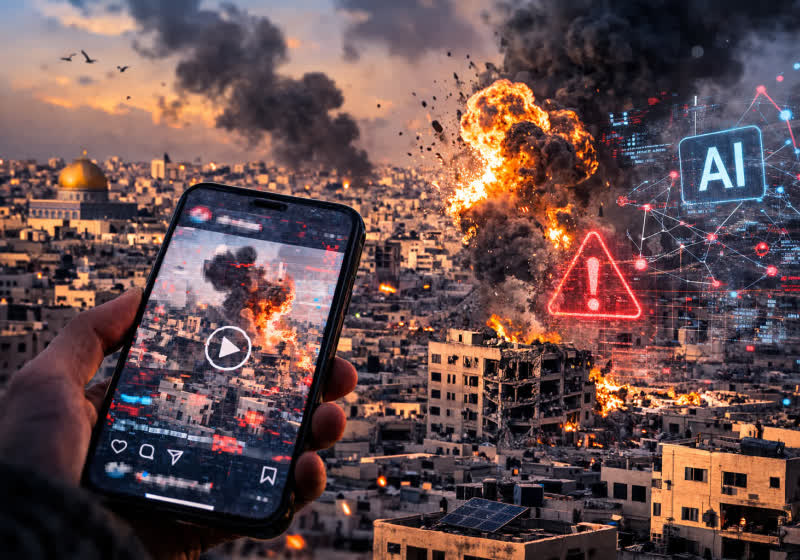
Meta's AI systems failed to adequately detect and label deepfake videos depicting false damage in Israel during the Iran-Israel conflict, leading to the spread of misinformation. The Meta Oversight Board criticized the company's weak moderation and called for stronger safeguards and transparency to prevent harm to public perception during conflicts.[AI generated]

Why's our monitor labelling this an incident or hazard?

The event explicitly involves AI-generated content (AI system involvement) that has been used to spread false information about a military conflict, which has been viewed millions of times, causing harm to communities by undermining trust in information. The AI system's use (generation of fake videos) directly led to harm through misinformation dissemination. Meta's failure to label or remove the content promptly constitutes a failure in use and moderation of the AI system's outputs, contributing to the harm. The Oversight Board's critique and Meta's delayed response confirm the harm is realized, not just potential. Hence, this is an AI Incident rather than a hazard or complementary information.[AI generated]

AI principles
Robustness & digital securityTransparency & explainability

Industries
Media, social platforms, and marketing

Affected stakeholders
General public

Harm types
Public interest

Severity
AI incident

Business function:
Monitoring and quality control

AI system task:
Recognition/object detection


Articles about this incident or hazard

Thumbnail Image

Meta urged to boost oversight of fake AI videos

2026-03-10
BBC
Why's our monitor labelling this an incident or hazard?
The event explicitly involves AI-generated content (AI system involvement) that has been used to spread false information about a military conflict, which has been viewed millions of times, causing harm to communities by undermining trust in information. The AI system's use (generation of fake videos) directly led to harm through misinformation dissemination. Meta's failure to label or remove the content promptly constitutes a failure in use and moderation of the AI system's outputs, contributing to the harm. The Oversight Board's critique and Meta's delayed response confirm the harm is realized, not just potential. Hence, this is an AI Incident rather than a hazard or complementary information.
Thumbnail Image

AI deepfakes during war: Why Meta's Oversight Board wants company to rethink approach

2026-03-10
The Indian Express
Why's our monitor labelling this an incident or hazard?
The article centers on the Oversight Board's recommendations and critiques of Meta's handling of AI-generated deepfakes and misinformation. It references a past incident of AI-generated misleading content but does not report new harm or an incident caused by AI. Instead, it focuses on governance, policy, and detection improvements to prevent or mitigate harm. Therefore, it is Complementary Information as it provides updates and responses related to AI-generated misinformation and its societal impact, rather than describing a new AI Incident or AI Hazard.
Thumbnail Image

Meta's deepfake moderation isn't good enough, says Oversight Board

2026-03-10
The Verge
Why's our monitor labelling this an incident or hazard?
The article discusses the use and moderation of AI-generated deepfake content on Meta's platforms, which involves AI systems generating synthetic media. The harm relates to misinformation spreading during armed conflicts, which can harm communities by spreading false information that affects public safety and trust. However, the article focuses on the Oversight Board's recommendations and critiques of Meta's current moderation system rather than describing a specific incident where AI-generated misinformation caused direct harm. It highlights ongoing challenges and calls for better detection and labeling, indicating a risk of harm but not a concrete incident of harm occurring as described. Therefore, this is best classified as Complementary Information, as it provides context and governance-related responses to AI-related risks without reporting a new AI Incident or AI Hazard.
Thumbnail Image

The Oversight Board says Meta needs new rules for AI-generated content

2026-03-10
engadget
Why's our monitor labelling this an incident or hazard?
The article explicitly involves AI-generated content that has been used to spread false information about a conflict, which has been viewed by hundreds of thousands, indicating harm to communities through misinformation. The AI system's outputs (the generated video) directly contributed to this harm. Meta's failure to properly label or remove the content exacerbated the issue. The Oversight Board's recommendations and criticisms are responses to this realized harm, not just potential harm. Hence, this is an AI Incident, as the AI system's use has directly led to harm through misinformation dissemination.
Thumbnail Image

Oversight Board urges Meta to toughen rules on AI-generated content and deepfakes

2026-03-10
TechSpot
Why's our monitor labelling this an incident or hazard?
The article explicitly involves AI systems in the form of AI-generated deepfake content that was shared on Meta's platforms and was not adequately detected or labeled, leading to misinformation spreading. This misinformation constitutes harm to communities and potentially violates rights to accurate information. The incident of the fake video slipping through moderation and fact-checking processes is a realized harm caused indirectly by the AI system's outputs and the platform's insufficient handling of such content. Therefore, this qualifies as an AI Incident. The article focuses on the incident and the Oversight Board's recommendations to address the harm, rather than just providing background or general AI news, so it is not merely Complementary Information.
Thumbnail Image

Meta under fire as fake AI war video gains over 700K views

2026-03-10
Digit
Why's our monitor labelling this an incident or hazard?
The event involves an AI system generating misleading video content that was widely disseminated, causing harm by spreading false information about a conflict. The AI-generated content's role is pivotal in the harm, as it misled viewers and was not properly labeled or removed by Meta. The harm is realized (not just potential), as the video gained significant views and spread misinformation. The failure of Meta to act appropriately constitutes a failure in the use and management of the AI system, leading to harm to communities. Hence, this is an AI Incident.
Thumbnail Image

Meta's AI Deepfake Detection Fails the Test: Oversight Board Demands Major Overhaul

2026-03-10
Android Headlines
Why's our monitor labelling this an incident or hazard?
The article explicitly involves an AI system (deepfake detection AI) and discusses harm related to AI-generated misinformation (harm to communities). However, the main focus is on the Oversight Board's evaluation and recommendations for improving Meta's AI detection systems rather than reporting a new or ongoing AI Incident where harm is directly caused or an AI Hazard where harm is plausible but not realized. The described deepfake video incident is background context to the Oversight Board's critique and not the central new event. The article thus fits the definition of Complementary Information, as it provides governance and societal response updates to an AI-related harm issue, enhancing understanding and future risk management without reporting a new primary harm event.
Thumbnail Image

Meta told by Oversight Board better moderation is needed for AI-generated deepfakes - SiliconANGLE

2026-03-11
SiliconANGLE
Why's our monitor labelling this an incident or hazard?
The article explicitly involves AI-generated deepfake videos, which are outputs of AI systems. The sharing and slow moderation of such content during a conflict have led to misinformation spreading to a large audience, constituting harm to communities and societal stability. The Oversight Board's critique and Meta's response relate to the use and moderation of these AI systems. Since the harm (misinformation and manipulation during conflict) has already occurred and is linked to AI-generated content, this event meets the criteria for an AI Incident rather than a hazard or complementary information. The mention of future tool rollouts by YouTube is complementary but does not change the primary classification.
Thumbnail Image

Meta's Oversight Board Slams the Company's AI Content Moderation Policy as Inconsistent and Opaque

2026-03-11
WebProNews
Why's our monitor labelling this an incident or hazard?
The article explicitly discusses AI systems used by Meta for content moderation and the resulting harms to users, including wrongful content removal and suppression of speech, which are violations of rights and harm to communities. The Oversight Board's critique focuses on the inconsistent and opaque application of AI moderation policies, which have real negative impacts on individuals and groups. Since the AI system's use has directly led to these harms, this is an AI Incident rather than a hazard or complementary information. The event is not merely about policy or governance responses but about actual harms caused by AI system use.
Thumbnail Image

Meta's Deepfake Dilemma: Oversight Board Calls for Stronger Moderation Measures - Internewscast Journal

2026-03-10
Internewscast Journal
Why's our monitor labelling this an incident or hazard?
The article focuses on the Oversight Board's recommendations and critique regarding Meta's AI content moderation practices. It does not report a specific incident of harm caused by AI systems, nor does it describe a plausible future harm event. Instead, it details a governance response aimed at improving AI system oversight and mitigating misinformation risks. Therefore, it fits the category of Complementary Information.
Thumbnail Image

Meta's Oversight Board warns tech giant isn't doing enough to combat deepfakes

2026-03-10
MS NOW
Why's our monitor labelling this an incident or hazard?
The presence of AI systems is clear, as the content involves AI-generated deepfakes on Meta's platform. The Oversight Board's ruling points to shortcomings in Meta's policies and tools to manage such content, which could lead to harm if unaddressed. However, the article does not describe a realized harm event but rather a governance critique and recommendations for improvement. Therefore, this qualifies as Complementary Information, providing context and updates on societal and governance responses to AI-related risks, rather than reporting a new AI Incident or AI Hazard.
Thumbnail Image

Meta Pulled Up By Oversight Board For Weak AI Deepfake Labels On Iran War

2026-03-11
NDTV
Why's our monitor labelling this an incident or hazard?
The article discusses concerns about AI-generated deepfakes and misinformation risks during geopolitical crises, which could plausibly lead to harm if not managed properly. However, it does not describe a specific AI Incident where harm has occurred, nor does it report a near miss or imminent hazard event. The main focus is on the Oversight Board's recommendations and Meta's policy shortcomings, which constitute a governance and societal response to AI-related risks. Therefore, this is best classified as Complementary Information, as it provides important context and updates on AI governance and mitigation efforts rather than reporting a new AI Incident or AI Hazard.
Thumbnail Image

Oversight Board slams Meta's 'inadequate' deepfake rules -- calls for a total AI overhaul

2026-03-11
Tom's Guide
Why's our monitor labelling this an incident or hazard?
The article explicitly involves AI systems generating deepfake videos that are spreading misinformation, which is a harm to communities. The Oversight Board's review of a specific AI-generated fake video depicting destruction in Israel indicates that such AI-generated content has already caused harm by misleading users. The event concerns the use and moderation of AI-generated content and the failure of current systems to adequately manage this harm. Therefore, this qualifies as an AI Incident because the AI system's use has directly led to harm through misinformation dissemination. The article focuses on the incident and the need for improved responses, rather than just future risks or general information, so it is not merely a hazard or complementary information.
Thumbnail Image

Meta faces backlash over fake AI videos

2026-03-11
The News International
Why's our monitor labelling this an incident or hazard?
The event involves AI systems generating fake videos that have been widely viewed and have misled users about a military conflict, which constitutes harm to communities (a form of societal harm). The AI-generated content's presence and Meta's failure to adequately label or remove it has directly contributed to this harm. Therefore, this qualifies as an AI Incident because the AI system's use has directly led to significant harm through misinformation dissemination. The article focuses on the harm caused by AI-generated fake content and the inadequate response, not just on policy or governance responses, so it is not merely Complementary Information.
Thumbnail Image

Meta urged to boost oversight of fake AI videos

2026-03-11
Capital FM Kenya
Why's our monitor labelling this an incident or hazard?
The event involves an AI system generating fake video content that was disseminated widely on Meta's platforms without proper labeling, leading to misinformation about a military conflict. This misinformation harms communities by undermining trust and spreading false narratives, which fits the definition of harm to communities. The Oversight Board's criticism and Meta's delayed response confirm the AI system's role in causing this harm. Hence, the event meets the criteria for an AI Incident rather than a hazard or complementary information.
Thumbnail Image

Oversight Board Says Meta Deepfake Moderation Falls Short

2026-03-11
WinBuzzer
Why's our monitor labelling this an incident or hazard?
The article explicitly involves AI-generated synthetic media (deepfakes) spreading misinformation during a conflict, which is a direct harm to communities (harm category d). The failure of Meta's AI content moderation system to timely detect and label such content constitutes a malfunction or ineffective use of AI systems, leading to the harm. The Oversight Board's findings and the described case of a widely viewed fake AI video demonstrate realized harm, not just potential harm. The regulatory pressure and recommendations are responses to this incident, not the primary event. Hence, the event meets the criteria for an AI Incident rather than an AI Hazard or Complementary Information.
Thumbnail Image

Oversight Board Slams Meta for Overlooking Fake AI Posts About Iran Conflict

2026-03-11
Digit
Why's our monitor labelling this an incident or hazard?
The event explicitly involves AI-generated content (an AI system) that has been used to create fake videos about a conflict, which have been left up on Meta's platforms, leading to misinformation and disinformation spreading. This misinformation harms communities by undermining trust and potentially escalating conflict tensions, which fits the harm to communities category. The Oversight Board's criticism and Meta's partial response confirm the AI system's role in causing harm. Hence, this is an AI Incident rather than a hazard or complementary information, as the harm is ongoing and directly linked to the AI-generated content.
Thumbnail Image

Digest: Anthropic Sues US Defence Department; Meta's Deepfake Moderation Falling Short; Barb Adds Pre-Campaign Functionality - ExchangeWire.com

2026-03-11
exchangewire.com
Why's our monitor labelling this an incident or hazard?
Anthropic's lawsuit concerns the use and control of AI systems with potential implications for surveillance and autonomous weapons, but no direct or indirect harm has been reported; thus, it does not qualify as an AI Incident or AI Hazard. Meta's Oversight Board critique points to deficiencies in AI content moderation that could lead to misinformation spread, but the article does not document actual harm occurring, making it complementary information about governance and response. Barb's new functionality is a product update unrelated to AI harm. Hence, the article fits best as Complementary Information, providing context and updates on AI governance and moderation without describing a specific incident or hazard.
Thumbnail Image

Meta Oversight Board urges stronger deepfake detection as AI misinformation risks grow during conflicts

2026-03-11
storyboard18.com
Why's our monitor labelling this an incident or hazard?
The event involves an AI system (deepfake generation and detection tools) and discusses a past AI-generated misinformation incident that caused harm by spreading false information during a conflict, which can affect public perception and safety (harm to communities). However, the article focuses mainly on the Board's recommendations and the need for improved safeguards rather than detailing new harm or a new incident. The original AI-generated misinformation incident is referenced as background context. Therefore, this article is best classified as Complementary Information, providing updates and governance responses related to a prior AI Incident rather than reporting a new AI Incident or AI Hazard.
Thumbnail Image

Meta Criticised By Oversight Board Citing Lax AI Deepfake Labelling On Iran War Posts

2026-03-11
NDTV Profit
Why's our monitor labelling this an incident or hazard?
The article explicitly mentions AI deepfakes (AI-generated manipulated media) that are being shared and not adequately flagged, leading to misinformation during an ongoing conflict. This misinformation can harm communities by distorting public understanding and perception, which fits the definition of harm to communities under AI Incident. The Oversight Board's criticism and call for better labeling and detection indicate that the AI system's outputs have already caused harm, not just a potential risk. Therefore, this qualifies as an AI Incident due to realized harm from AI-generated content.
Thumbnail Image

Meta Urged to Strengthen Oversight of AI-Generated Fake Videos

2026-03-11
The European Business Review
Why's our monitor labelling this an incident or hazard?
The event involves an AI system generating synthetic video content that was misleading and falsely depicted damage in a conflict area, which constitutes harm to communities through misinformation. The AI-generated video was circulated and gained significant attention before moderation, indicating realized harm. The Meta Oversight Board's critique and call for stronger policies further confirm the incident's significance. The AI system's role in creating the misleading content is pivotal, and the harm is materialized, not just potential. Hence, this is classified as an AI Incident.
Thumbnail Image

Enschittification 2.0: How X and Meta are normalising AI porn and deepfakes

2026-03-13
The Hindu
Why's our monitor labelling this an incident or hazard?
The presence of AI systems is explicit: generative AI video tools and AI assistants capable of creating synthetic videos and deepfakes. The harms described include non-consensual sexualized deepfake content involving real people and minors, which constitutes violations of human rights and harms to communities. The article states these harms are occurring currently and spreading on platforms, indicating direct or indirect causation by the AI systems' use. The failure of moderation to prevent or quickly remove such content further supports the classification as an AI Incident. The article also calls for governance and safety measures, underscoring the severity and reality of the harms.
Thumbnail Image

AI's war on reality: what now when you can't even trust your own eyes?

2026-03-12
The Irish Times
Why's our monitor labelling this an incident or hazard?
The article clearly involves AI systems: generative AI creating realistic fake images and videos, and AI detection systems failing to identify such fakes. The harms described include the spread of disinformation and erosion of trust in authentic information, which constitute harm to communities and societal well-being. The AI systems' malfunction (detection tools failing) and use (creation and dissemination of AI-generated disinformation) have directly or indirectly led to these harms. Hence, this qualifies as an AI Incident under the framework, as the harm is realized and ongoing, not merely potential.
Thumbnail Image

AI content and deepfakes are spreading online: Here's how streaming platforms are tackling them

2026-03-12
Digit
Why's our monitor labelling this an incident or hazard?
The content focuses on the platforms' strategies and technologies to detect and label AI-generated content, aiming to mitigate risks such as misinformation, fraud, and loss of trust. While it acknowledges the potential harms of synthetic media, it does not describe any realized harm or a specific event where AI caused injury, rights violations, or disruption. Therefore, it does not meet the criteria for an AI Incident or AI Hazard. Instead, it qualifies as Complementary Information because it provides detailed context on societal and technical responses to AI-related challenges in content authenticity and trust.