Trust Wallet Launches AI-Powered Real-Time Scam Address Protection

Thumbnail Image

The information displayed in the AIM should not be reported as representing the official views of the OECD or of its member countries.

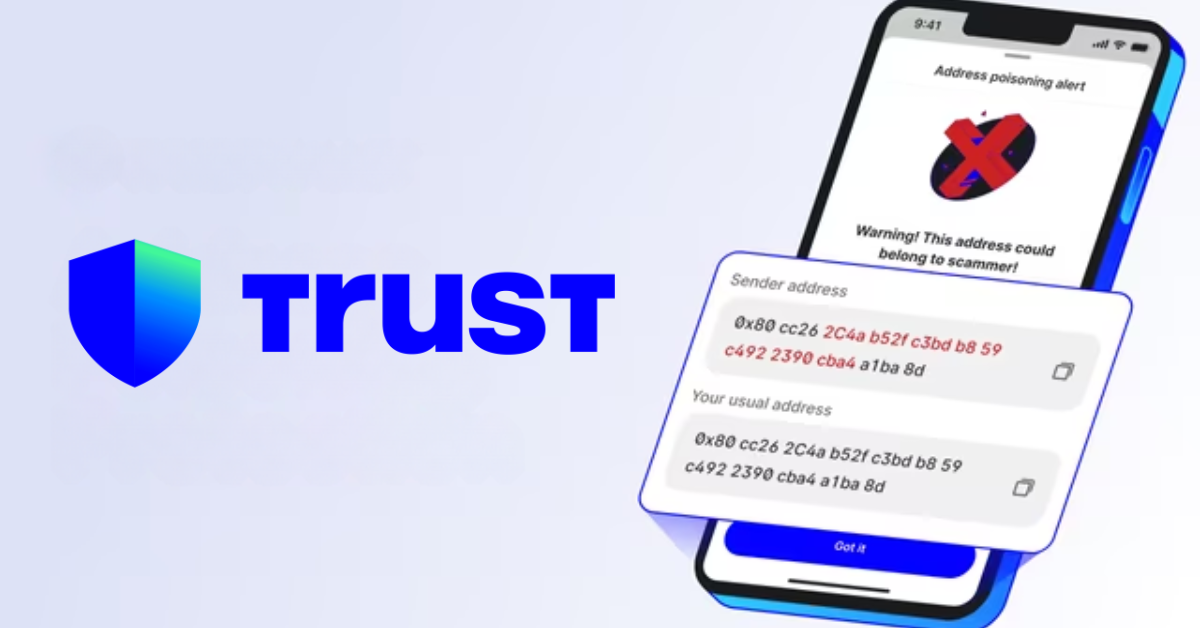
Trust Wallet has deployed an AI-driven security feature that scans and compares transaction addresses in real time to detect and warn users about address poisoning scams. This proactive system aims to prevent financial losses, addressing a threat responsible for over $500 million in damages across 32 EVM-compatible blockchain networks.[AI generated]

Why's our monitor labelling this an incident or hazard?

The event involves the use of an AI system or algorithmic screening tool that automatically checks destination addresses against a scam database to prevent fraudulent transactions. This is an AI system used in the wallet's operation to enhance security. The event includes a past AI Incident (the compromised extension causing financial loss) and the deployment of a mitigation measure (address poisoning protection) to prevent future harm. The main focus is on the security feature rollout and the prior incident's remediation. Since the article discusses a realized harm (the $7 million loss due to the compromised extension) and the AI system's role in preventing further harm, this qualifies as an AI Incident. The new protection feature is a response to prior harm and ongoing threats, but the incident of the compromised extension and losses is a direct AI Incident involving harm to property (financial loss).[AI generated]

Industries
Digital securityFinancial and insurance services

Severity
AI incident

Business function:
ICT management and information security

AI system task:
Event/anomaly detection


Articles about this incident or hazard

Thumbnail Image

Trust Wallet Adds Address Poisoning Protection Across 32 EVM Chains

2026-03-10
Cointelegraph
Why's our monitor labelling this an incident or hazard?
The event involves the use of an AI system or algorithmic screening tool that automatically checks destination addresses against a scam database to prevent fraudulent transactions. This is an AI system used in the wallet's operation to enhance security. The event includes a past AI Incident (the compromised extension causing financial loss) and the deployment of a mitigation measure (address poisoning protection) to prevent future harm. The main focus is on the security feature rollout and the prior incident's remediation. Since the article discusses a realized harm (the $7 million loss due to the compromised extension) and the AI system's role in preventing further harm, this qualifies as an AI Incident. The new protection feature is a response to prior harm and ongoing threats, but the incident of the compromised extension and losses is a direct AI Incident involving harm to property (financial loss).
Thumbnail Image

Trust Wallet Launches Address Poisoning Protection Across 32 Chains | ABC Money

2026-03-10
ABC Money
Why's our monitor labelling this an incident or hazard?
The event involves the use of an AI system (automatic scam screening likely powered by AI or algorithmic detection) in the use phase to prevent harm by blocking transactions to known scam addresses. The system's deployment directly prevents financial harm to users by stopping transactions to malicious addresses, which is a form of harm to property (user funds). Since the system is actively preventing harm and the article describes realized losses from such scams, this qualifies as an AI Incident. The event is not merely a potential risk (hazard) or a general update (complementary information), but a concrete deployment of an AI system that directly mitigates harm. Therefore, the classification is AI Incident.
Thumbnail Image

Trust Wallet launches automatic Address Poisoning Protection to help prevent increasingly common attack

2026-03-10
The Block
Why's our monitor labelling this an incident or hazard?
The article explicitly mentions an AI-enabled feature (Address Poisoning Protection) that scans transactions and alerts users to potential scams, indicating AI system involvement. However, it does not describe any realized harm caused by the AI system or its malfunction. Instead, it focuses on the deployment of a protective AI tool to prevent harm from crypto scams. There is no indication that the AI system itself has caused or could plausibly cause harm; rather, it aims to reduce harm. Thus, the event does not meet the criteria for an AI Incident or AI Hazard but fits the definition of Complementary Information as it updates on societal and technical responses to AI-related risks.
Thumbnail Image

Trust Wallet Rolls Out Automated Defense Against Address Poisoning Scams

2026-03-10
COINTURK NEWS
Why's our monitor labelling this an incident or hazard?
The article explicitly mentions an automated system integrated into Trust Wallet that scans and compares blockchain addresses to detect scams. This system involves AI-like pattern recognition and real-time decision-making to prevent users from sending funds to malicious addresses. The harm addressed is financial loss to users due to scams, which is a direct harm to property. Since the AI system's use directly prevents harm, this qualifies as an AI Incident involving the use of an AI system to mitigate harm. The event is not merely a product launch but describes a security feature actively protecting users from ongoing scams, thus fitting the AI Incident category.
Thumbnail Image

Trust Wallet Rolls Out Automatic Address Poisoning Protection Across 32 EVM Chains - Crypto Economy

2026-03-10
Crypto Economy
Why's our monitor labelling this an incident or hazard?
The described Address Poisoning Protection system involves AI or AI-like pattern recognition capabilities to analyze transaction addresses and detect scams. The system's use directly aims to prevent harm (financial loss) to users by intercepting malicious transactions. However, the article does not report any actual harm occurring due to the AI system's malfunction or misuse; rather, it describes a proactive security measure to reduce risk. Therefore, this event does not describe an AI Incident (harm realized) but rather a development that addresses a known threat. It is not merely general AI news or product launch because it focuses on a security response to a specific AI-related threat. Hence, it qualifies as Complementary Information, providing context on societal and technical responses to AI-related threats in the crypto ecosystem.
Thumbnail Image

Trust Wallet Adds Real-Time Scam Address Checks for Crypto Users

2026-03-10
Crypto Breaking News
Why's our monitor labelling this an incident or hazard?
The event involves the use of an AI system (automated screening against a live database of scam addresses) in the use phase to prevent harm. The harm in question is financial loss due to scams (harm to property). Since the system's deployment directly prevents realized harm by blocking transactions to scam addresses, this constitutes an AI Incident because the AI system's use is directly linked to preventing harm that has occurred extensively in the past and continues to be a significant threat. The article does not merely discuss potential future harm or general AI developments but focuses on a concrete AI system actively mitigating ongoing harm. Therefore, the classification is AI Incident.
Thumbnail Image

Trust Wallet Deploys Vital Real-Time Scam Address Screening to Thwart $500M Crypto Threat

2026-03-10
BitcoinWorld
Why's our monitor labelling this an incident or hazard?
The article explicitly describes an AI-powered system integrated into Trust Wallet that analyzes transaction details in real-time to detect and warn users about scam addresses, directly addressing a significant harm (financial loss due to scams) that has already occurred extensively. The AI system's use in preventing these losses qualifies this event as an AI Incident because the AI system's deployment and use directly relate to harm prevention in a context where harm is well-documented and ongoing. Although the system aims to prevent harm, the harm from address poisoning is real and ongoing, and the AI system's role is pivotal in mitigating it. Therefore, this is an AI Incident rather than a hazard or complementary information.
Thumbnail Image

Trust Wallet Deploys AI Scanner After $8.5 Million Security Breach

2026-03-10
Coindoo
Why's our monitor labelling this an incident or hazard?
The compromised extension update led directly to financial harm to users, fulfilling the criteria for an AI Incident because the harm (the $8.5 million theft) was directly linked to the use and malfunction of software that Trust Wallet now addresses with an AI system. The AI scanner is designed to detect malicious transactions and prevent further harm, indicating AI involvement in the use phase to mitigate harm. Although the breach was not caused by the AI system itself, the event centers on harm related to the AI system's deployment in response to the incident. The article does not describe the AI system causing harm but rather being used to prevent it after a significant incident. Since the harm has occurred and AI is involved in the response, this qualifies as an AI Incident rather than a hazard or complementary information.
Thumbnail Image

Trust Wallet rolls out poisoning protection on 32 EVM chains

2026-03-10
Coincu
Why's our monitor labelling this an incident or hazard?
The event involves the use of an AI system integrated into Trust Wallet to detect and warn about address poisoning, a form of social engineering attack that has caused significant financial harm ($500 million in losses). The AI system's use here is to prevent harm by alerting users to potential scams before transactions are confirmed. Since the event describes a security feature deployment aimed at reducing harm from AI-related scams and does not report an actual harm incident or a near miss, it is best classified as Complementary Information. It provides context on societal and technical responses to AI-related threats rather than describing a new AI Incident or AI Hazard.
Thumbnail Image

Trust Wallet Rolls Out Real-Time Scam Address Detection Tool

2026-03-11
coininsider.com
Why's our monitor labelling this an incident or hazard?
The event involves the use of an AI system (automated threat detection technology integrated into the wallet) in its use phase to prevent harm by detecting scam addresses in real time. The harm addressed is financial loss due to scams, which is harm to property. Since the tool is actively preventing harm and the article describes the context of ongoing scam losses, the event is about an AI system's use directly linked to preventing an AI Incident (financial harm). However, the article does not report a specific realized harm caused by the AI system malfunction or misuse but rather the deployment of a protective AI tool to mitigate existing harms. Therefore, this is best classified as Complementary Information, as it provides an update on societal and technical responses to AI-related fraud risks, enhancing understanding of AI's role in reducing crypto fraud.
Thumbnail Image

Trust Wallet Debuts Real-Time Scam Protection

2026-03-11
UseTheBitcoin
Why's our monitor labelling this an incident or hazard?
The event involves the use of an AI system (automated screening of addresses using a large database and pattern recognition to detect scam addresses) in the use phase to prevent scams that have caused significant financial harm (e.g., $50 million lost in a single transaction). The AI system's deployment directly aims to prevent injury to persons' financial health by stopping scams. Since the harm is ongoing and the AI system is actively preventing it, this qualifies as an AI Incident. The article describes realized harm from scams and the AI system's role in mitigating it, not just a potential future risk or a general update.
Thumbnail Image

Etherscan warns over surge in Ethereum address-poisoning

2026-03-12
Cryptopolitan
Why's our monitor labelling this an incident or hazard?
The event involves automated systems that generate lookalike addresses and conduct high-volume dust transfers to deceive users, which is indicative of AI or advanced algorithmic systems. The harm is direct and materialized, with confirmed multi-million dollar losses to users. The AI system's role in enabling the scale and automation of these attacks is pivotal to the incident. The article details realized harm (financial theft) caused by the AI-enabled address-poisoning attacks, meeting the criteria for an AI Incident rather than a hazard or complementary information.