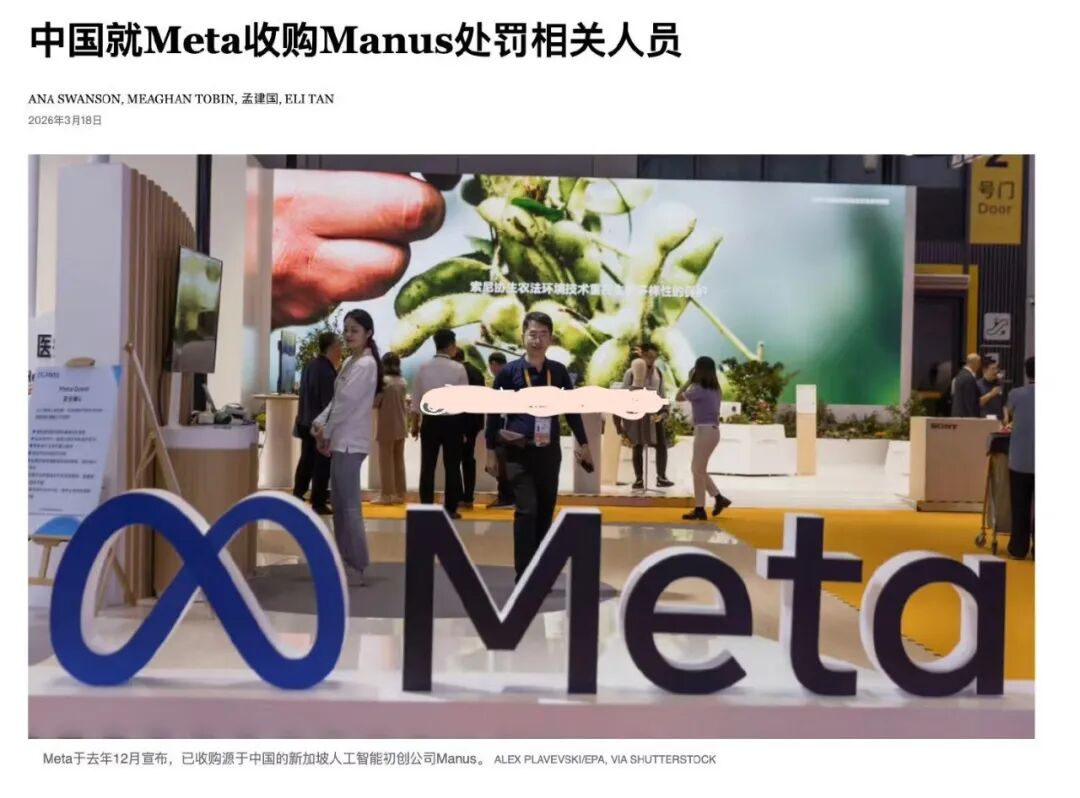
China Intervenes in Meta's Acquisition of AI Startup Manus to Prevent Talent and Technology Outflow

Thumbnail Image

The information displayed in the AIM should not be reported as representing the official views of the OECD or of its member countries.

The Chinese government has taken regulatory action against personnel involved in Meta's $2 billion acquisition of AI startup Manus, aiming to prevent the outflow of AI talent and technology. Measures include restricting Manus executives' travel and investigating compliance with technology export laws. The event highlights China's strategic concerns over AI industry competitiveness.[AI generated]

Why's our monitor labelling this an incident or hazard?

The article explicitly involves an AI system (Manus) and its acquisition by Meta, which is a significant event in AI development and deployment. The Chinese government's regulatory response and warnings indicate concerns about potential future harms related to technology transfer and national security. However, there is no indication that the AI system has caused any direct or indirect harm yet. The event centers on the plausible risk of harm due to geopolitical tensions and control over AI technology, fitting the definition of an AI Hazard rather than an AI Incident. It is not merely complementary information because the main focus is on the potential risks and regulatory actions, not on updates or responses to past harms. It is not unrelated because the AI system and its implications are central to the event.[AI generated]

Industries
IT infrastructure and hostingGovernment, security, and defence

Severity
AI hazard


Articles about this incident or hazard

Thumbnail Image

China Ramps Up Scrutiny of Meta's Acquisition of Manus

2026-03-17
The New York Times
Why's our monitor labelling this an incident or hazard?
The article details a government inquiry and regulatory scrutiny related to an AI company's acquisition but does not report any harm caused by the AI system or its use. There is no evidence of injury, rights violations, or disruption caused by the AI system or its malfunction. The event is about governance and political responses to AI business activities, which fits the definition of Complementary Information as it provides context and updates on AI ecosystem governance without describing a new AI Incident or AI Hazard.
Thumbnail Image

Chinese Authorities Restrict Travel of Meta-Acquired Manus Executives

2026-03-18
Chosun.com
Why's our monitor labelling this an incident or hazard?
The article involves an AI system (Manus' AI agents) and describes government actions related to export controls and travel restrictions following a major acquisition. These actions are preventive and regulatory, aiming to control technology transfer and compliance with laws. There is no report of actual harm caused by the AI system or its malfunction, nor a clear imminent risk of harm described. The focus is on governance and policy responses to AI technology movement between countries. Hence, it fits the definition of Complementary Information, as it updates on societal and governance responses to AI developments without describing a specific AI Incident or AI Hazard.
Thumbnail Image

'De-China' AI Manus, acquired by Meta, to become a U.S.-China agenda item? ... "Chinese authorities summoned those involved and issued a warning"

2026-03-18
경향신문
Why's our monitor labelling this an incident or hazard?
The article explicitly involves an AI system (Manus) and its acquisition by Meta, which is a significant event in AI development and deployment. The Chinese government's regulatory response and warnings indicate concerns about potential future harms related to technology transfer and national security. However, there is no indication that the AI system has caused any direct or indirect harm yet. The event centers on the plausible risk of harm due to geopolitical tensions and control over AI technology, fitting the definition of an AI Hazard rather than an AI Incident. It is not merely complementary information because the main focus is on the potential risks and regulatory actions, not on updates or responses to past harms. It is not unrelated because the AI system and its implications are central to the event.
Thumbnail Image

Manus: AI Platform Launches 'My Computer' To Turn Local Machines Into Autonomous Agents

2026-03-18
Pulse 2.0
Why's our monitor labelling this an incident or hazard?
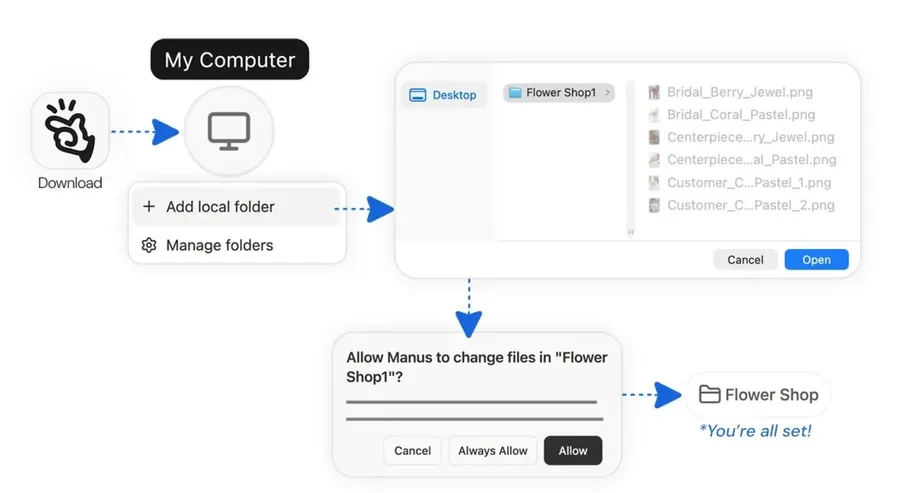
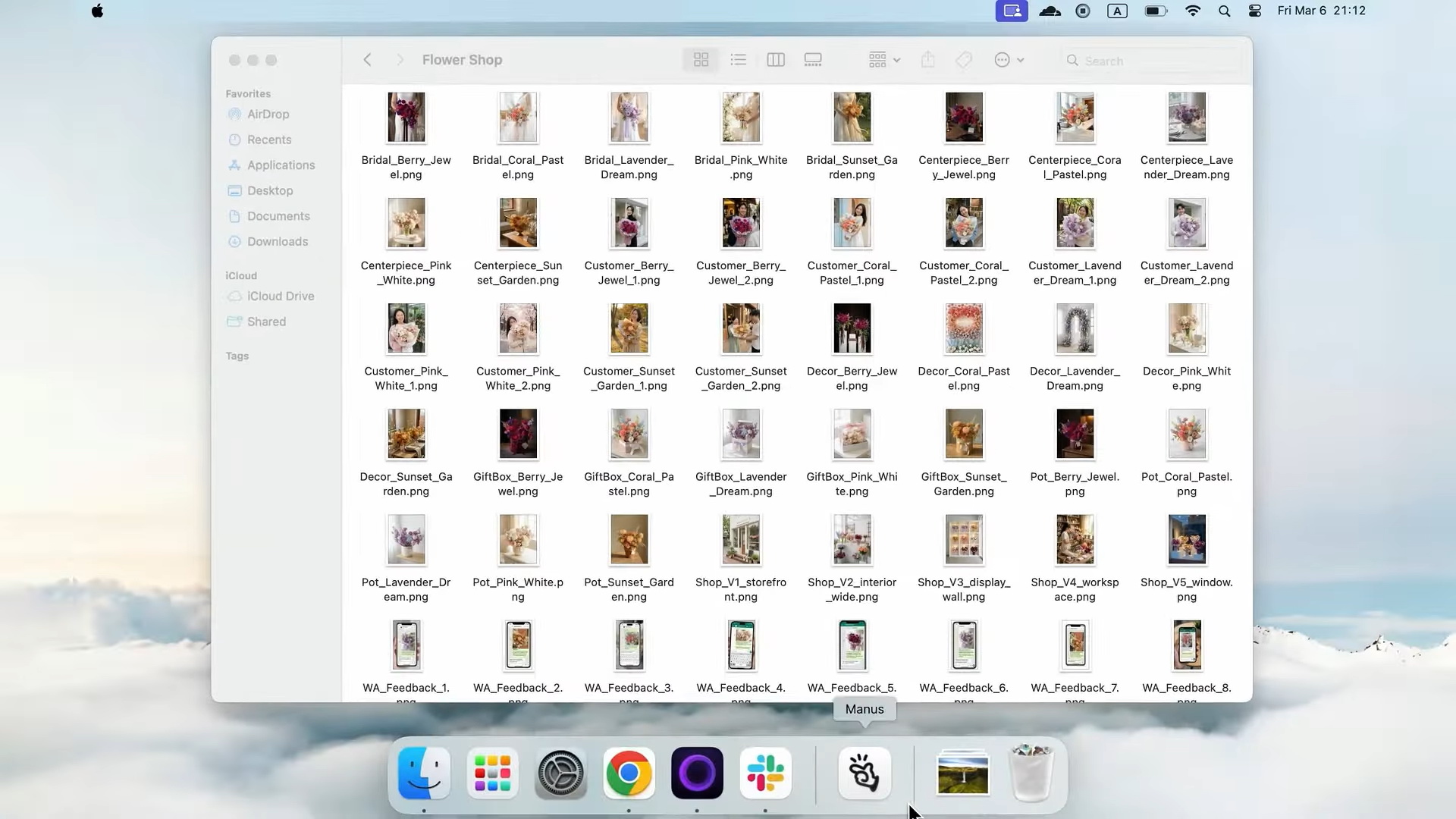
The article details a new AI system with autonomous capabilities on local machines, which clearly involves AI system use. No direct or indirect harm is reported, so it is not an AI Incident. However, the nature of the system—autonomous AI agents controlling local files and applications—poses credible risks that could plausibly lead to harms such as privacy violations or security breaches. Therefore, this event fits the definition of an AI Hazard, as it could plausibly lead to an AI Incident in the future if misused or if security controls fail.
Thumbnail Image

Meta's AI startup Manus launches desktop app that lets agents control your computer - Tech Startups

2026-03-18
Tech News | Startups News
Why's our monitor labelling this an incident or hazard?
The article explicitly mentions an AI system (Manus AI agent) that now operates locally on users' machines with significant control over files and applications, indicating AI system involvement. The event stems from the use and deployment of this AI system. Although no direct or indirect harm has been reported, the article highlights potential security and privacy risks inherent in granting such access, which could plausibly lead to AI incidents in the future. Since no actual harm has materialized yet, but credible risks exist, the event fits the definition of an AI Hazard rather than an AI Incident or Complementary Information. It is not unrelated because the AI system and its implications are central to the article.
Thumbnail Image

AI Agents: China Imposes Exit Bans Over Meta's $2B Manus Deal

2026-03-18
WinBuzzer
Why's our monitor labelling this an incident or hazard?
The event involves an AI system (agentic AI technology developed by Manus) and its use and transfer through acquisition by Meta. The imposition of exit bans and export-control investigations by China indicate a credible risk that the AI technology transfer could lead to harms such as disruption of operations, restrictions on AI talent mobility, and geopolitical conflict over AI capabilities. Although no direct harm (such as injury, rights violations, or property damage) is reported, the regulatory actions and geopolitical standoff plausibly could lead to significant harms in the future. Hence, the event fits the definition of an AI Hazard rather than an AI Incident or Complementary Information. It is not unrelated because it clearly involves AI systems and their geopolitical implications.
Thumbnail Image

AI角力防技術外流 陸阻Meta收購Manus

2026-03-19
UDN
Why's our monitor labelling this an incident or hazard?
The article focuses on regulatory actions and geopolitical concerns surrounding the transfer of AI technology and talent via a corporate acquisition. It involves AI systems as Manus develops AI applications capable of complex autonomous tasks. However, the event does not describe any realized harm such as injury, rights violations, or disruption caused by the AI system's malfunction or misuse. Instead, it concerns the plausible risk of AI technology and talent outflow that could weaken national AI competitiveness and security. Therefore, it fits the definition of an AI Hazard, as the development and transfer of AI technology could plausibly lead to significant harms in the future, but no direct harm has yet materialized.
Thumbnail Image

Meta收購陸AI新秀Manus!紐時曝北京要出手了

2026-03-18
中時新聞網
Why's our monitor labelling this an incident or hazard?
The article does not report any direct or indirect harm caused by the AI system developed by Manus or Meta. The Chinese government's actions are regulatory and political measures in response to the acquisition, not a response to an AI incident or hazard. There is no mention of malfunction, misuse, or potential harm from the AI system itself. Therefore, this event is best classified as Complementary Information, as it provides context on governance and regulatory responses related to AI company acquisitions but does not describe an AI Incident or AI Hazard.
Thumbnail Image

中國就Meta收購Manus處罰相關人員

2026-03-18
New York Times (Chinese)
Why's our monitor labelling this an incident or hazard?
The article involves an AI-related business acquisition and government regulatory actions targeting personnel involved. However, there is no indication that the AI system's development, use, or malfunction has caused or could plausibly cause harm as defined by the framework. The event is primarily about governmental control and economic planning related to AI talent and business, which fits the category of Complementary Information as it provides context on societal and governance responses to AI developments without describing an AI Incident or Hazard.
Thumbnail Image

中国就Meta收购Manus处罚相关人员

2026-03-18
New York Times (Chinese)
Why's our monitor labelling this an incident or hazard?
The article involves an AI system context (an AI startup acquired by Meta) and government actions related to AI talent and business migration. However, there is no indication of direct or indirect harm caused by the AI system's development, use, or malfunction. The focus is on regulatory and punitive measures, which are societal/governance responses to AI ecosystem developments. Hence, it fits the definition of Complementary Information rather than an Incident or Hazard.
Thumbnail Image

防AI人才與技術外流 紐時:中國干預Meta收購Manus | 兩岸 | 中央社 CNA

2026-03-18
Central News Agency
Why's our monitor labelling this an incident or hazard?
The event involves AI systems as Manus is an AI startup developing autonomous AI applications. The Chinese government's intervention is aimed at preventing the outflow of AI talent and technology, which could plausibly lead to harm to China's AI industry competitiveness and strategic position. No direct harm has occurred yet, but the regulatory actions reflect concerns about potential future harm. Hence, this qualifies as an AI Hazard rather than an AI Incident or Complementary Information. It is not unrelated because the event centers on AI technology and talent flow issues with potential significant impact.
Thumbnail Image

防AI技術外流 中國就Meta收購Manus進行處罰據報包括高管出境禁令

2026-03-18
RFI
Why's our monitor labelling this an incident or hazard?
The article explicitly involves an AI system (Manus's AI applications) and discusses regulatory actions taken due to concerns about AI technology export and compliance. While the AI system's development and use are central, there is no indication that any harm (such as injury, rights violations, or disruption) has occurred. The Chinese government's investigation and travel restrictions represent preventive measures addressing plausible future risks associated with AI technology transfer. Hence, the event fits the definition of an AI Hazard rather than an AI Incident or Complementary Information.
Thumbnail Image

防AI技术外流 中国就Meta收购Manus进行处罚据报包括高管出境禁令

2026-03-18
RFI
Why's our monitor labelling this an incident or hazard?
The article explicitly involves an AI system (Manus's AI application) and its acquisition by Meta, with Chinese authorities investigating potential violations related to AI technology export controls. The government's actions, including exit bans and possible data retrieval, indicate concern about the misuse or unauthorized transfer of AI technology, which could plausibly lead to harms such as intellectual property violations or economic harm. However, no direct or indirect harm has yet materialized according to the report. The event is about regulatory scrutiny and potential future consequences, fitting the definition of an AI Hazard rather than an Incident or Complementary Information.
Thumbnail Image

傳中國處罰Meta收購Manus交易相關人員

2026-03-18
AAStocks.com
Why's our monitor labelling this an incident or hazard?
The article centers on regulatory penalties and investigations related to the acquisition of an AI startup, Manus, by Meta. While the AI system is involved as part of the startup's technology, there is no indication of harm caused or plausible harm from the AI system's development or use. The event is about legal and regulatory scrutiny and enforcement actions, which fits the definition of Complementary Information as it provides context and updates on governance responses to AI-related activities. There is no direct or indirect harm reported, nor a credible risk of future harm described, so it is not an AI Incident or AI Hazard.
Thumbnail Image

Meta旗下Manus推AI桌面應用 強化在地互動與效率

2026-03-18
Yahoo!奇摩股市
Why's our monitor labelling this an incident or hazard?
The event involves an AI system (the Manus AI agent) that now operates locally on user devices with access to sensitive data and applications, which plausibly could lead to harm such as data breaches or operational errors. However, the article does not report any actual harm or incidents resulting from this deployment. Instead, it discusses the company's efforts to address privacy and security concerns through user controls. This fits the definition of Complementary Information, as it informs about AI system capabilities, potential risks, and governance measures without describing an AI Incident or AI Hazard.
Thumbnail Image

被Meta收购 据报北京可能限制Manus部份高管出境

2026-03-18
早报
Why's our monitor labelling this an incident or hazard?
The article centers on regulatory scrutiny and potential travel restrictions related to an AI startup's acquisition, reflecting concerns about AI technology transfer and control. There is no indication that the AI system's development, use, or malfunction has directly or indirectly caused harm yet. The focus is on possible future risks and government actions to mitigate them. Hence, this fits the definition of an AI Hazard, as it plausibly could lead to incidents involving AI technology misuse, data export violations, or rights infringements, but no incident has materialized at this point.
Thumbnail Image

【AI】中國據報處罰Meta收購Manus交易相關人員

2026-03-18
ET Net
Why's our monitor labelling this an incident or hazard?
The article involves an AI system because Manus is an AI startup acquired by Meta. The government's actions relate to the development and use of AI technology through this acquisition. However, the article does not report any actual harm caused by the AI system or its malfunction. Instead, it reports on regulatory scrutiny and restrictions, which are governance responses. Therefore, this event is best classified as Complementary Information, as it provides context on societal and governance responses to AI developments without describing an AI Incident or Hazard.
Thumbnail Image

離開雲端沙盒!Manus推桌面App「我的電腦」:AI Agent直連本機,還能解放閒置GPU算力

2026-03-17
數位時代
Why's our monitor labelling this an incident or hazard?
The article explicitly describes an AI system (Manus AI Agent) and its new desktop application that extends AI capabilities to local machines. While the system can execute commands and access files, it includes user confirmation safeguards to prevent unauthorized actions. There is no mention of any harm, malfunction, or misuse leading to injury, rights violations, or other harms. The article focuses on the announcement and features of the AI system, which fits the definition of Complementary Information rather than an Incident or Hazard. It informs about AI ecosystem developments and potential uses but does not describe any realized or plausible harm.
Thumbnail Image

Meta Manus AI進駐桌面應用 搶攻AI代理人戰場

2026-03-18
Yahoo!奇摩股市
Why's our monitor labelling this an incident or hazard?
The event involves an AI system (Meta's Manus AI agent) and its deployment on desktop platforms, which can be reasonably inferred to involve AI systems with autonomous capabilities. However, the article does not report any actual harm, malfunction, or violation caused by the AI system. It highlights potential risks and strategic positioning but does not describe any incident or plausible immediate hazard. Therefore, it is best classified as Complementary Information, providing context and updates on AI ecosystem developments without reporting an AI Incident or AI Hazard.
Thumbnail Image

Meta Manus發表「我的電腦」桌面應用程式 Mac化身AI代理革新個人運算

2026-03-18
Yahoo!奇摩股市
Why's our monitor labelling this an incident or hazard?
The article explicitly involves AI systems (AI personal agents operating on local computers) and discusses their development and use. While no actual harm or incident is reported, the article details credible security risks and vulnerabilities that could plausibly lead to harms such as data breaches, unauthorized access, or operational errors. These risks stem from the AI system's capabilities to access and control local files and applications, combined with network connectivity and potential for hacking. The discussion of companies banning the software to prevent data leaks and the introduction of identity verification technologies further supports the recognition of these risks. Since the harm is potential and plausible but not realized, the event fits the definition of an AI Hazard rather than an AI Incident or Complementary Information. It is not unrelated because the focus is on AI systems and their associated risks.
Thumbnail Image

傳中國對Meta收購Manus相關人士採取懲罰措施,防堵AI企業外移

2026-03-18
Yahoo!奇摩股市
Why's our monitor labelling this an incident or hazard?
The article involves AI systems as Manus is an AI startup acquired by Meta, and the Chinese government's actions relate to this AI business transaction. However, the event does not describe any actual harm caused by AI systems, nor does it indicate a plausible future harm directly linked to AI system malfunction or misuse. The government's punitive measures are about controlling AI enterprise relocation, which is a governance and regulatory issue rather than an AI Incident or Hazard. Therefore, this event is best classified as Complementary Information, as it provides context on governance responses and regulatory actions related to AI business activities without describing a specific AI Incident or Hazard.
Thumbnail Image

防AI人才與技術外流 紐時:中國干預Meta收購Manus | 國際焦點 | 國際 | 經濟日報

2026-03-18
Udnemoney聯合理財網
Why's our monitor labelling this an incident or hazard?
The event involves AI systems and talent, specifically an AI startup with advanced AI applications. The Chinese government's intervention is aimed at preventing the outflow of AI technology and talent, which could plausibly lead to harm in terms of weakening China's AI industry competitiveness. However, the article does not report any realized harm or incident caused by AI system malfunction or misuse. Instead, it describes regulatory actions and concerns about potential future risks. Therefore, this event is best classified as Complementary Information, as it provides context on governance and societal responses to AI-related strategic issues, rather than describing an AI Incident or AI Hazard.
Thumbnail Image

防AI人才與技術外流 紐時:陸干預Meta收購Manus | 大陸政經 | 兩岸 | 經濟日報

2026-03-18
Udnemoney聯合理財網
Why's our monitor labelling this an incident or hazard?
The event involves AI systems and technology (Manus is an AI startup), and the government's intervention relates to the development and transfer of AI technology and talent. However, the article does not describe any realized harm such as injury, rights violations, or operational disruption caused by the AI system or its malfunction. Instead, it describes regulatory actions and potential restrictions to prevent future harm related to AI talent and technology outflow. Therefore, this is a plausible risk scenario where harm could occur if such transfers continue unchecked, making it an AI Hazard rather than an Incident. It is not Complementary Information because the article's main focus is not on updates or responses to a past AI Incident or Hazard, but on the current regulatory intervention and its implications. It is not Unrelated because AI systems and their development/use are central to the event.
Thumbnail Image

Meta 收購 Manus 踩到陸紅線 | 大陸政經 | 兩岸 | 經濟日報

2026-03-18
Udnemoney聯合理財網
Why's our monitor labelling this an incident or hazard?
The article describes regulatory actions and investigations related to the acquisition of an AI company, focusing on compliance with export controls and capital flow rules. While AI systems and talent are involved, the event centers on governance and legal compliance rather than an AI system causing harm or malfunction. There is no report of injury, rights violations, infrastructure disruption, or other harms caused by the AI system's use or malfunction. The event plausibly aims to prevent future harm related to AI technology transfer, but no direct or indirect harm has materialized yet. Therefore, this is best classified as Complementary Information, as it provides important context on AI governance and regulatory responses without describing an AI Incident or Hazard.
Thumbnail Image

傳北京對Meta收購Manus相關人員採取處罰措施

2026-03-18
香港經濟日報 hket.com
Why's our monitor labelling this an incident or hazard?
While the event involves an AI-related company (Manus) and concerns about technology export controls related to AI, there is no indication that any harm has occurred or that the AI system's development, use, or malfunction has directly or indirectly led to harm. The government's actions are precautionary and regulatory in nature, assessing compliance with laws. Therefore, this event does not describe an AI Incident or AI Hazard but rather a governance and legal response, fitting the category of Complementary Information.
Thumbnail Image

《紐時》:中國干預Meta收購Manus 防AI人才與技術外流│TVBS新聞網

2026-03-18
TVBS
Why's our monitor labelling this an incident or hazard?
The article involves an AI system context, as Manus is an AI startup with advanced AI applications. The Chinese government's actions are regulatory interventions to prevent the transfer of AI talent and technology abroad, which could plausibly lead to harm such as weakening China's AI industry and strategic position. However, no direct or indirect harm has yet occurred as a result of the AI system's development, use, or malfunction. The event is about potential future harm and regulatory measures to mitigate it, fitting the definition of an AI Hazard rather than an AI Incident or Complementary Information. It is not unrelated because it concerns AI technology and its strategic implications.
Thumbnail Image

紐時:中國干預 Meta 收購 Manus,防 AI 人才與技術外流

2026-03-18
TechNews 科技新報 | 市場和業內人士關心的趨勢、內幕與新聞
Why's our monitor labelling this an incident or hazard?
The article does not describe any realized harm caused by an AI system, nor does it describe a plausible immediate risk of harm caused by AI system malfunction or misuse. The focus is on government regulatory actions to control AI talent and technology export, which is a governance and geopolitical issue rather than an AI Incident or Hazard. It does not report on an AI system causing injury, rights violations, infrastructure disruption, or other harms. Nor does it describe a credible future harm directly linked to AI system development or use. Therefore, this event is best classified as Complementary Information, as it provides context on AI ecosystem governance and strategic responses without describing a specific AI Incident or Hazard.
Thumbnail Image

中國干預Meta併購AI新創 人才外流與科技監管風險升溫?

2026-03-18
蕃新聞
Why's our monitor labelling this an incident or hazard?
The event involves the use and development of AI technology through the acquisition of an AI startup. The Chinese government's intervention, including restricting key personnel's exit and heightened scrutiny, does not describe an actual realized harm but plausibly could lead to harms such as disruption of AI talent flow, increased regulatory risks, and fragmentation of the AI ecosystem. These outcomes align with the definition of an AI Hazard, as the event could plausibly lead to significant harms related to AI development and deployment, but no direct or indirect harm has yet materialized according to the article.
Thumbnail Image

Manus新功能|自動編輯電腦檔案 - EJ Tech

2026-03-18
EJ Tech
Why's our monitor labelling this an incident or hazard?
The event involves the use of an AI system with new capabilities that could plausibly lead to harm if misused or if security is compromised, such as unauthorized data access or manipulation. However, the article does not report any actual harm or incidents resulting from this feature. Therefore, it fits the definition of an AI Hazard, as the development and deployment of this AI capability could plausibly lead to incidents involving privacy breaches or data harm in the future.
Thumbnail Image

美媒:中國政府調查Meta收購Manus 傳限制高管出境 | am730

2026-03-19
am730
Why's our monitor labelling this an incident or hazard?
The event involves AI systems as Manus is an AI startup developing autonomous AI applications. The Chinese government's investigation and restrictions relate to the development and transfer of AI technology and talent, which could plausibly lead to harm such as loss of competitive advantage or unauthorized technology transfer. However, the article does not report any realized harm or incident caused by the AI system itself. The main focus is on regulatory actions and potential future risks, making this a case of Complementary Information rather than an AI Incident or AI Hazard.
Thumbnail Image

铂程斋--【喷嚏图卦20260319】什么世面我没见过,什么话我没曰过

2026-03-19
dapenti.com
Why's our monitor labelling this an incident or hazard?
The event involves an AI system (Manus AI startup) and its executives, with government restrictions on their movement to prevent business transfer overseas. This is related to the use and development of AI systems but does not describe any direct or indirect harm caused by the AI system, nor does it describe a plausible future harm scenario. The main focus is on governance and control measures, which fits the definition of Complementary Information rather than an Incident or Hazard.
Thumbnail Image

突发!Meta收购AI独角兽Manus引发中国重拳处罚,核心高管或被限制出境

2026-03-20
k.sina.com.cn
Why's our monitor labelling this an incident or hazard?
The article focuses on the regulatory crackdown on the Meta-Manus AI acquisition due to concerns about data security and technology transfer risks inherent in AI systems. The involvement of AI is clear as Manus is an AI startup, and the acquisition concerns core AI technology. However, the event does not describe any realized harm such as injury, rights violations, or disruption caused by the AI system itself. Instead, it details the enforcement actions and penalties imposed by regulators, which are societal and governance responses to perceived AI risks. This aligns with the definition of Complementary Information, as it updates on regulatory responses and the evolving governance landscape around AI technology transfers, rather than reporting a new AI Incident or AI Hazard.
Thumbnail Image

메타에 흡수된 '탈중국' 스타트업... "中, 경영진 출국 막을 듯

2026-03-18
Chosun.com
Why's our monitor labelling this an incident or hazard?
The event involves an AI system (Manus's autonomous AI agents) and concerns regulatory actions by the Chinese government that could plausibly lead to harms such as legal violations and operational disruptions. Although no direct harm has been reported yet, the government's investigation and travel restrictions on executives indicate a credible risk of future harm related to the AI system's use and transfer. This fits the definition of an AI Hazard rather than an AI Incident or Complementary Information, as the article does not report realized harm but highlights plausible future risks stemming from the AI system's development and use.
Thumbnail Image

메타 품에 안긴 '탈중국' AI 마누스, 미·중 의제되나..."중 당국, 관계자 불러 경고"

2026-03-18
경향신문
Why's our monitor labelling this an incident or hazard?
The article explicitly involves an AI system (Manus, a general-purpose AI agent) and discusses the development and transfer of this AI system across borders. The Chinese government's intervention and warnings indicate concerns about potential future harms related to technology transfer and national security. However, there is no mention of actual harm caused by the AI system's use or malfunction. The focus is on the plausible risk of harm due to geopolitical tensions and regulatory actions. Hence, the event is best classified as an AI Hazard, as it plausibly could lead to AI-related harms in the future but does not describe any realized harm or incident.
Thumbnail Image

메타의 마누스 인수, 미·중 기술 패권 경쟁의 새로운 전선

2026-03-18
Head Topics
Why's our monitor labelling this an incident or hazard?
The event involves an AI system (Manus) and its acquisition by Meta, with Chinese authorities investigating and potentially sanctioning involved parties. While no direct harm has yet occurred, the investigation reflects credible concerns about technology transfer and national security risks associated with AI development and deployment. The geopolitical tensions and regulatory scrutiny could plausibly lead to harms such as disruption of AI innovation, economic impacts on AI companies, or escalation of technology conflicts between major powers. Since the article does not describe any realized harm but focuses on potential risks and regulatory actions, the event fits the definition of an AI Hazard rather than an AI Incident or Complementary Information.
Thumbnail Image

중국, 메타의 마누스 인수 막아서나..."출국금지 고려중"

2026-03-19
뉴스핌
Why's our monitor labelling this an incident or hazard?
The article involves an AI system (Manus's AI agents) and concerns the use and transfer of AI technology. The Chinese government's intervention and investigation could plausibly lead to harms such as disruption of AI technology transfer, potential economic or operational impacts on the startup and Meta, or broader geopolitical tensions affecting AI development and deployment. However, since no direct or indirect harm has yet materialized, and the focus is on potential regulatory and geopolitical risks, this event fits the definition of an AI Hazard rather than an AI Incident or Complementary Information.
Thumbnail Image

[헬로티 HelloT] 메타-마누스, AI 에이전트 PC 상륙...로컬 파일·앱 직접 제어 시대 열리나

2026-03-20
hellot.net
Why's our monitor labelling this an incident or hazard?
The event involves an AI system (the Manus AI agent) that now can access and control local files and applications on personal computers, which is a significant expansion of AI capabilities. Although the system requires explicit user permission to operate, the potential for misuse or malfunction that could lead to privacy breaches or unauthorized control exists. Since no actual harm or incident is reported, but plausible future harm is credible given the AI system's capabilities and access, the event fits the definition of an AI Hazard rather than an AI Incident. The article also mentions regulatory scrutiny, but this relates to compliance rather than realized harm. Thus, the classification is AI Hazard.