Autonomous Delivery Robots Crash Into Bus Shelters, Causing Property Damage

Thumbnail Image

The information displayed in the AIM should not be reported as representing the official views of the OECD or of its member countries.

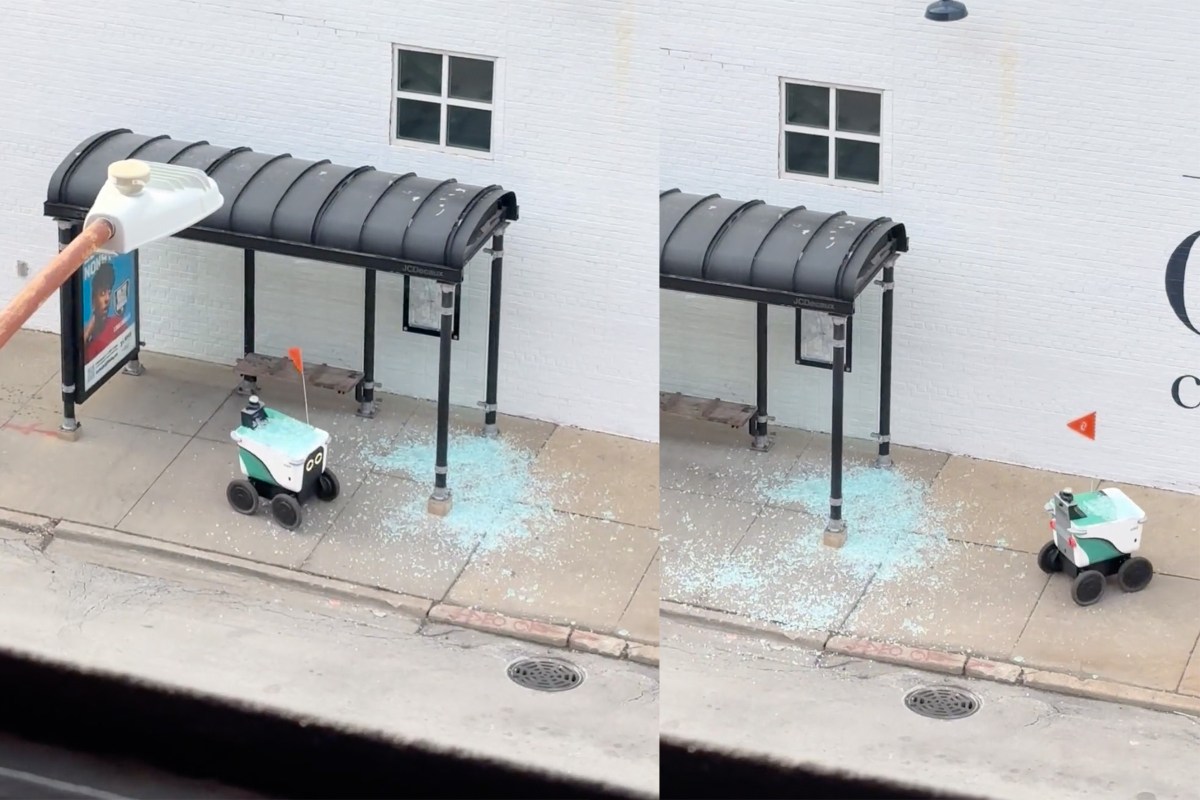
Autonomous delivery robots in cities like Chicago and Valence have crashed into bus stop shelters, shattering glass panels and damaging public infrastructure. These incidents, caused by failures in the robots' AI navigation systems, highlight safety and reliability concerns as such robots become more common in urban environments. No injuries were reported.[AI generated]

Why's our monitor labelling this an incident or hazard?

Delivery robots rely on AI systems for autonomous navigation and obstacle avoidance. The robot's alleged collision with the bus stop window and subsequent behavior indicate a malfunction or failure in the AI system's operation, directly causing property damage. This fits the definition of an AI Incident as the AI system's use and malfunction have directly led to harm to property and public infrastructure.[AI generated]
AI principles
SafetyRobustness & digital security

Industries
Logistics, wholesale, and retailMobility and autonomous vehicles

Affected stakeholders
Government

Harm types
Economic/Property

Severity
AI incident

Business function:
Logistics

AI system task:
Recognition/object detectionReasoning with knowledge structures/planning


Articles about this incident or hazard

Thumbnail Image

Delivery Robot Allegedly Smashes Through Bus Stop Window, Keeps Driving Covered in Broken Glass

2026-03-24
Futurism
Why's our monitor labelling this an incident or hazard?
Delivery robots rely on AI systems for autonomous navigation and obstacle avoidance. The robot's alleged collision with the bus stop window and subsequent behavior indicate a malfunction or failure in the AI system's operation, directly causing property damage. This fits the definition of an AI Incident as the AI system's use and malfunction have directly led to harm to property and public infrastructure.
Thumbnail Image

Delivery Robots Have a Mapping Problem

2026-03-25
PC Magazine
Why's our monitor labelling this an incident or hazard?
The delivery robots are AI systems as they autonomously navigate and perceive their environment using sensors like LiDAR. The article details their operational challenges and some incidents (e.g., theft attempt, collisions causing delivery failures), but these have not resulted in injury, rights violations, or significant harm to people or communities. The risks described are inherent to the technology and its deployment environment, but no realized harm meeting the AI Incident criteria is reported. The article does not primarily focus on potential future harm either, but rather on current operational realities and business strategy. Thus, the event is best classified as Complementary Information, providing context and updates on AI system deployment and challenges without describing an AI Incident or AI Hazard.
Thumbnail Image

Chicago Delivery Robot Obliterates Glass Panel After Crashing Into Bus Stop Shelter (Video)

2026-03-23
BroBible
Why's our monitor labelling this an incident or hazard?
The event explicitly involves an autonomous delivery robot, which qualifies as an AI system due to its autonomous navigation and task execution. The robot's collision with the bus shelter caused physical damage, constituting harm to property. This harm directly resulted from the AI system's malfunction or failure to navigate safely, meeting the criteria for an AI Incident. The incident is not merely a potential risk but a realized harm, so it is not an AI Hazard. It is not complementary information or unrelated because the focus is on the harm caused by the AI system's malfunction.
Thumbnail Image

Delivery Robots Have a Mapping Problem

2026-03-25
PCMag Australia
Why's our monitor labelling this an incident or hazard?
The delivery robots are AI systems as they autonomously navigate and perceive their environment. The article mentions incidents like theft attempts and collisions with cars, but these are described as rare and without resulting harm to people or property. There is no indication that the AI systems have directly or indirectly caused injury, rights violations, or other harms. The challenges with mapping and sidewalk conditions represent operational difficulties but do not constitute plausible future harm leading to an AI Incident. The article mainly provides background and operational context, fitting the definition of Complementary Information rather than an Incident or Hazard.
Thumbnail Image

A Delivery Robot Just Plowed Through a Bus Station -- and the Industry's Credibility Problem Is Getting Harder to Ignore

2026-03-24
WebProNews
Why's our monitor labelling this an incident or hazard?
The event involves an AI system (an autonomous delivery robot) whose malfunction directly caused harm to property (the bus station). The robot's failure to slow down or correct its course indicates a malfunction or error in the AI system's operation. Although no physical injuries occurred, the damage to public infrastructure and the potential risk to pedestrians constitute harm under the framework. Therefore, this qualifies as an AI Incident due to the realized harm caused by the AI system's malfunction.