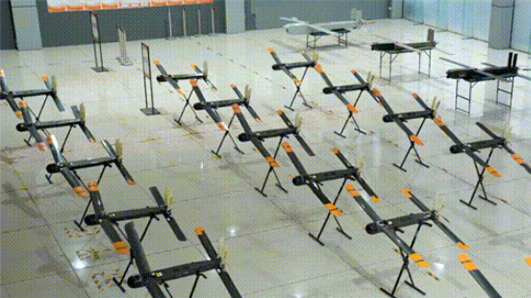
China Demonstrates Autonomous AI Drone Swarm for Military Operations

Thumbnail Image

The information displayed in the AIM should not be reported as representing the official views of the OECD or of its member countries.

China's CETC unveiled the "Atlas" autonomous drone swarm system, capable of launching up to 96 drones in minutes, with one operator controlling the swarm. Using advanced AI algorithms, drones autonomously coordinate, communicate, and execute reconnaissance, jamming, and attack missions, highlighting significant future risks if deployed in conflict.[AI generated]

Why's our monitor labelling this an incident or hazard?

The event involves an AI system explicitly described as an autonomous drone swarm with advanced AI capabilities for combat operations. The system's use in military applications with autonomous targeting and coordination capabilities inherently carries a credible risk of causing injury, death, or other serious harms if deployed in conflict. Since the article only reports a demonstration without any actual harm occurring, it does not meet the criteria for an AI Incident. However, the potential for harm is clear and plausible, making it an AI Hazard. The description of the system's autonomous operation and combat role aligns with the definition of an AI Hazard due to the plausible future harm from its use.[AI generated]
AI principles
SafetyRespect of human rights

Industries
Government, security, and defence

Affected stakeholders
General public

Harm types
Physical (death)Physical (injury)

Severity
AI hazard

AI system task:
Goal-driven organisationReasoning with knowledge structures/planning


Articles about this incident or hazard

Thumbnail Image

3秒一架!中国无人机蜂群铺天盖地饱和突击

2026-04-01
凤凰网(凤凰新媒体)
Why's our monitor labelling this an incident or hazard?
The event involves an AI system explicitly described as an autonomous drone swarm with advanced AI capabilities for combat operations. The system's use in military applications with autonomous targeting and coordination capabilities inherently carries a credible risk of causing injury, death, or other serious harms if deployed in conflict. Since the article only reports a demonstration without any actual harm occurring, it does not meet the criteria for an AI Incident. However, the potential for harm is clear and plausible, making it an AI Hazard. The description of the system's autonomous operation and combat role aligns with the definition of an AI Hazard due to the plausible future harm from its use.
Thumbnail Image

3秒一架!中国无人机蜂群突击铺天盖地,战力硬核盘点→

2026-04-01
南方网
Why's our monitor labelling this an incident or hazard?
The event involves an AI system explicitly described as a fully autonomous drone swarm with intelligent coordination and navigation capabilities. The system is designed for military use, including attack and interference tasks, which inherently carry risks of harm. Although no harm has yet occurred or been reported, the technology's capabilities and intended use imply a credible potential for future harm, such as injury, disruption, or violations of human rights. This fits the definition of an AI Hazard, as the development and deployment of such autonomous weaponized AI systems could plausibly lead to AI Incidents. There is no indication of realized harm or incident in the article, so it is not an AI Incident. The article is not merely complementary information or unrelated news, as it focuses on the demonstration of a potentially hazardous AI system.
Thumbnail Image

韩国国防部举办"2026先进国防技术推介日"活动

2026-03-31
KBS WORLD Radio
Why's our monitor labelling this an incident or hazard?
The article details a government event showcasing AI-enabled drone and counter-drone technologies and discussing their military applications. While these systems involve AI and have potential for significant impact, no actual harm or incident has occurred. The event highlights future possibilities and policy initiatives, which aligns with the definition of an AI Hazard if harm were plausible. However, since no specific risk or credible threat is described as imminent or demonstrated, and the event is primarily informational and promotional, it fits best as Complementary Information, providing context on AI developments and governance in defense technology.
Thumbnail Image

中国无人机蜂群突击铺天盖地 无人作战新纪元

2026-04-01
中华网军事频道
Why's our monitor labelling this an incident or hazard?
The event involves the use of an AI system (the autonomous drone swarm) in a military context, where the AI system's autonomous operation directly enables offensive combat actions that could cause harm to people, property, and communities. The system's design to autonomously identify, coordinate, and attack targets without human intervention indicates a direct link to potential harm. Although the article does not describe a specific incident of harm occurring, the deployment and operational capability of such a system inherently pose a credible and significant risk of harm. Therefore, this qualifies as an AI Hazard, as the system's use could plausibly lead to AI Incidents involving injury, property damage, or violations of rights in armed conflict.
Thumbnail Image

3秒一架!中国无人机蜂群突击铺天盖地 智能化战争重大突破

2026-03-31
中华网科技公司
Why's our monitor labelling this an incident or hazard?
The event involves the development and use of an AI system (the autonomous drone swarm with cluster control algorithms) designed for military combat operations. While the article does not report any actual harm or incidents caused by the system, the deployment of such AI-enabled autonomous weapon systems plausibly poses significant risks of harm, including injury, disruption, or violations of human rights in future conflicts. Therefore, this event qualifies as an AI Hazard due to the credible potential for future harm stemming from the AI system's use in warfare.
Thumbnail Image

台媒热议:无人、无人还是无人

2026-03-29
金羊网
Why's our monitor labelling this an incident or hazard?
The article explicitly discusses AI systems in the form of autonomous unmanned combat vehicles and drone swarms with intelligent capabilities. While it highlights their operational capabilities and strategic advantages, it does not report any actual harm or incidents caused by these systems. However, the nature of these AI systems—autonomous weapons capable of lethal force—means their deployment plausibly could lead to injury, loss of life, or violations of human rights, fitting the definition of an AI Hazard. Since no specific harm has yet occurred or been reported, this event is best classified as an AI Hazard rather than an AI Incident.
Thumbnail Image

台媒热议:无人、无人还是无人

2026-03-29
Baidu.com
Why's our monitor labelling this an incident or hazard?
The event involves AI systems in the form of unmanned combat equipment that likely use AI for autonomous functions. While the development and deployment of such systems carry potential risks (e.g., escalation of conflict, unintended harm), the article does not report any actual harm or incident caused by these AI systems. Therefore, it does not meet the criteria for an AI Incident. It also does not explicitly warn of a credible imminent risk or hazard event, so it is not classified as an AI Hazard. The article primarily provides contextual information about military AI advancements and their strategic implications, which fits the definition of Complementary Information.
Thumbnail Image

3秒一架!中国无人机蜂群突击铺天盖地令对手破防。_風月

2026-03-31
k.sina.com.cn
Why's our monitor labelling this an incident or hazard?
The event involves an AI system explicitly described as a drone swarm with autonomous capabilities such as self-communication, perception, and decision-making, controlled by a single operator. The system is used to conduct coordinated attacks that can destroy enemy military assets and defenses, which constitutes harm to property, communities, and potentially human life. The article highlights the system's ability to bypass traditional defense mechanisms and cause destruction, indicating direct harm resulting from the AI system's use. Hence, it meets the criteria for an AI Incident as the AI system's use has directly led to harm.
Thumbnail Image

3月25日央视军事突然放出一段"过于先进"的画面_手机网易网

2026-03-29
m.163.com
Why's our monitor labelling this an incident or hazard?
The event involves an AI system explicitly described as using AI for autonomous swarm coordination and attack in military operations. The use of this AI system directly relates to potential harm in the form of military conflict escalation and lethal force application, which falls under harm to persons and communities. The article reports on the system's operational demonstration and its strategic military impact, indicating realized or imminent harm potential. Therefore, this qualifies as an AI Incident due to the direct involvement of AI in a system that causes or enables harm through autonomous lethal military action.
Thumbnail Image

看完中国的无人军团,印军大受刺激,放弃与美合作,一口气全国产_手机网易网

2026-03-30
m.163.com
Why's our monitor labelling this an incident or hazard?
The article explicitly involves AI systems in the form of autonomous unmanned military vehicles and drone swarms. However, it does not report any direct or indirect harm caused by these AI systems, nor does it describe any incident or malfunction leading to harm. Instead, it focuses on India's strategic response to China's AI military advancements, including the cessation of cooperation with the US and a push for domestic AI military technology development. This constitutes an update on the AI ecosystem and governance responses rather than a new incident or hazard. Hence, the classification as Complementary Information is appropriate.
Thumbnail Image

3秒一架 中国无人机蜂群演示饱和突击 - cnBeta.COM 移动版

2026-04-01
cnBeta.COM
Why's our monitor labelling this an incident or hazard?
The described drone swarm system clearly involves AI systems, as it uses advanced cluster control algorithms and autonomous decision-making for formation, communication, and task execution. The system is designed for military applications including attack and suppression of air defenses, which inherently carry risks of harm to people, property, and communities if used in conflict. Although the article describes a demonstration rather than an actual incident causing harm, the development and deployment of such autonomous weaponized drone swarms plausibly could lead to significant harm, including injury, disruption, or violations of rights. Therefore, this event qualifies as an AI Hazard due to the credible potential for future harm from the use of AI-enabled autonomous weapon systems.
Thumbnail Image

Atlas Drone Swarm Demonstrates 3-Second 48-Drone Launches

2026-03-26
Chosun.com
Why's our monitor labelling this an incident or hazard?
The Atlas Drone Swarm Operation System is an AI system as it uses swarm intelligence and real-time autonomous coordination among multiple drones for military purposes. The event involves the development and demonstration of this AI system, but no actual incident of harm is reported. However, the system's intended use in reconnaissance and attack missions, including saturation attacks to overwhelm defenses and precision strikes, plausibly could lead to injury, loss of life, or other harms. The AI system's role is pivotal in enabling these capabilities. Thus, the event fits the definition of an AI Hazard, as it could plausibly lead to an AI Incident involving harm to people and property in the future.
Thumbnail Image

96 Drones, One Operator -- China Demonstrates Massive Drone AI Swarm in Precision Strike Test

2026-03-27
Latest Asian, Middle-East, EurAsian, Indian News
Why's our monitor labelling this an incident or hazard?
The event involves an AI system explicitly described as coordinating a large swarm of drones autonomously for military strikes. While the article does not report actual harm from the demonstration, the AI system's development and deployment in a military context with lethal capabilities plausibly could lead to significant harm, including injury, disruption of critical infrastructure, and harm to communities. The AI system's role is pivotal in enabling swarm coordination and precision strikes. Therefore, this event qualifies as an AI Hazard due to the credible risk of future harm from the AI-driven drone swarm technology.
Thumbnail Image

China unveils Atlas drone swarm system

2026-03-25
Anadolu Ajansı
Why's our monitor labelling this an incident or hazard?
The described drone swarm system clearly involves AI systems, as it autonomously manages large numbers of drones for complex military tasks including target recognition and route planning. The event focuses on the system's capabilities and potential battlefield uses, which inherently carry risks of harm. Since no actual harm is reported but the system's deployment could plausibly lead to significant harm, this qualifies as an AI Hazard under the framework, reflecting credible future risks from AI-enabled autonomous weapons.
Thumbnail Image

96 Drones Simultaneously: China Unveils New Military System

2026-03-26
Vorarlberg Online
Why's our monitor labelling this an incident or hazard?
The event involves an AI system explicitly described as using algorithms for swarm coordination and control of multiple drones with reconnaissance and attack capabilities. The system has been tested successfully but has not yet caused direct harm. However, the nature of the system as an AI-enabled military weapon with autonomous swarm capabilities plausibly leads to significant harm in future use, including injury or death, disruption of critical infrastructure, and harm to communities. Since no actual harm has been reported yet, but the risk is credible and significant, the event fits the definition of an AI Hazard rather than an AI Incident. It is not merely complementary information because the focus is on the unveiling and testing of a new AI-enabled weapon system with inherent risks, not on responses or governance. It is not unrelated because the AI system and its potential harms are central to the report.
Thumbnail Image

China's New Atlas Drone Swarm System Demonstrates How Algorithm-Driven Warfare Becomes Operational

2026-03-25
Army Recognition
Why's our monitor labelling this an incident or hazard?
The event involves the use of AI systems (autonomous drone swarms with embedded algorithms for coordination and control) in a military context. The development and deployment of such AI-enabled weapon systems directly relate to potential harm through their use in warfare, including injury or harm to persons, disruption of critical infrastructure, and harm to communities and environments. Although the article describes a demonstration rather than an actual combat incident, the operational maturity and intended use of the system imply a credible and plausible risk of significant harm if deployed in conflict. Therefore, this event qualifies as an AI Hazard because it plausibly could lead to AI Incidents involving injury, disruption, or other harms in warfare, but no actual harm is reported as having occurred yet.
Thumbnail Image

China unveils full-process demonstration of Atlas drone swarm operations system, expert highlights algorithm-enabled combat upgrades

2026-03-25
Global Times 环球时报英文版
Why's our monitor labelling this an incident or hazard?
The article explicitly describes an AI system (the Atlas drone swarm operations system) that uses AI algorithms for autonomous coordination and combat functions. The system is demonstrated in a military test scenario and is intended for battlefield use, which inherently carries risks of harm to people and communities. Although no actual harm is reported, the system's capabilities plausibly could lead to AI Incidents in the future, such as injury, destruction, or escalation of conflict. The event is not just an update or governance response but a demonstration of a potentially hazardous AI system. Hence, it fits the definition of an AI Hazard rather than an AI Incident or Complementary Information.
Thumbnail Image

96 Drones Simultaneously: China Unveils New Military System

2026-03-26
Vienna Online
Why's our monitor labelling this an incident or hazard?
The event involves an AI system explicitly described as controlling drone swarms via algorithms enabling communication and coordinated action. The use of AI in military drones capable of attack and electronic warfare directly relates to potential harm to persons and communities, fulfilling the criteria for harm under the AI Incident definition. Since the system has been tested and demonstrated successful deployment with precise hits on targets, the harm is not just potential but realized in a military test context, indicating direct involvement of AI in harm-related activities. Therefore, this qualifies as an AI Incident rather than a hazard or complementary information.
Thumbnail Image

China unveils full-process demonstration of Atlas drone swarm operations system, expert highlights algorithm-enabled combat upgrades

2026-03-25
GlobalSecurity.org
Why's our monitor labelling this an incident or hazard?
The event involves the use of AI systems explicitly described as enabling autonomous drone swarm coordination, target identification, and precision engagement in military operations. The deployment of such AI-enabled autonomous weapon systems directly relates to potential harm in terms of injury or harm to persons (a), harm to communities (d), and violations of human rights or international law (c). The demonstration of these capabilities and the expert commentary on their battlefield applications indicate that the AI system's use is intended for lethal military purposes, which inherently carry significant risks of harm. Therefore, this event qualifies as an AI Hazard because it plausibly leads to AI incidents involving harm, but the article does not report any actual harm or incident occurring yet. It is a credible risk scenario of AI-enabled autonomous weapons with potential for significant harm in warfare.
Thumbnail Image

China unveils swarm drone launcher, can fire 96 deep-strike drones in sync with central AI command: Report

2026-03-25
Zee News
Why's our monitor labelling this an incident or hazard?
The described system is an AI system as it uses AI-enabled operating software for autonomous target identification, coordination, and control of multiple drones. The event concerns the development and use of this AI system with clear military strike capabilities. While no actual harm is reported in the article, the system's autonomous strike potential and swarm intelligence capabilities could plausibly lead to injury, harm to communities, or disruption of critical infrastructure in conflict scenarios. Therefore, this event qualifies as an AI Hazard due to the credible risk of future harm from the AI-enabled autonomous weapon system.
Thumbnail Image

China tests THIS 'air defence killer', can fire 96 deep-strike drones in sync with central AI command

2026-03-27
News24
Why's our monitor labelling this an incident or hazard?
The article explicitly describes an AI system (the drone swarm controlled by sophisticated algorithms and centralized AI command) being tested for military use with autonomous coordination and precise strike capabilities. While no actual harm has been reported yet, the system's intended use in combat and its ability to conduct deep-strike missions with high-density attacks plausibly could lead to injury, disruption, and harm in future conflicts. The event is not a realized incident but a credible potential threat, fitting the definition of an AI Hazard. It is not Complementary Information because the main focus is on the debut and capabilities of the system, not on responses or updates to prior incidents. It is not Unrelated because AI involvement and plausible harm are central to the report.