AI-Based Dam Safety Management System Deployed Across South Korea

Thumbnail Image

The information displayed in the AIM should not be reported as representing the official views of the OECD or of its member countries.

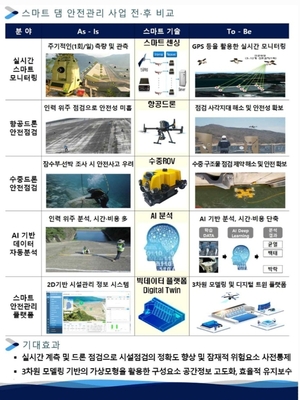
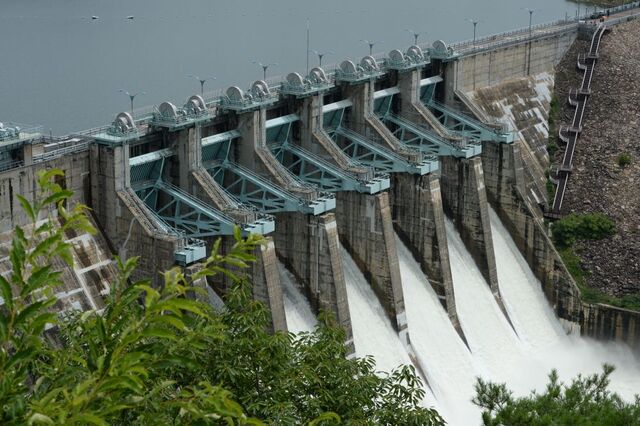
South Korea's Ministry of Climate, Energy, and Environment has completed and launched AI-powered smart dam safety management systems at 37 national dams. The system uses real-time monitoring, drones, and big data analytics to detect anomalies and recommend responses, aiming to enhance safety and efficiency amid increasing extreme weather events.[AI generated]

Why's our monitor labelling this an incident or hazard?

The event involves the use of an AI system for real-time safety monitoring and management of critical infrastructure (dams). The AI system's development and use directly contribute to preventing harm to people and property by improving flood response and dam safety. Since the AI system is actively deployed and operational with the goal of preventing harm, this qualifies as an AI Incident under the definition of harm to critical infrastructure management and operation.[AI generated]
AI principles
SafetyRobustness & digital security

Industries
Energy, raw materials, and utilities

Severity
AI incident

Business function:
Monitoring and quality control

AI system task:
Event/anomaly detectionOrganisation/recommenders


Articles about this incident or hazard

Thumbnail Image

울산, 스마트댐 안전관리 시스템 본격 가동...홍수기 대응 강화

2026-04-08
������
Why's our monitor labelling this an incident or hazard?
The event involves the use of an AI system for real-time safety monitoring and management of critical infrastructure (dams). The AI system's development and use directly contribute to preventing harm to people and property by improving flood response and dam safety. Since the AI system is actively deployed and operational with the goal of preventing harm, this qualifies as an AI Incident under the definition of harm to critical infrastructure management and operation.
Thumbnail Image

기후부, 댐 안전관리 시스템 37곳 구축 완료...AI 기반 전환 - 경제 | 기사 - 더팩트

2026-04-08
더팩트
Why's our monitor labelling this an incident or hazard?
The event involves the use of an AI system for dam safety management, which is clearly an AI system by definition. The AI system is being used to monitor and manage dam safety to prevent harm. Since no harm has occurred yet, but the system is intended to reduce risks and prevent incidents, this qualifies as an AI Hazard. The article does not describe any realized harm or malfunction, so it is not an AI Incident. It is also not merely complementary information because the main focus is on the deployment of the AI system with potential to prevent harm, thus fitting the AI Hazard category.
Thumbnail Image

점검 시간 100일→10일로 단축...전국 37개 댐 '스마트 안전관리' 본격 가동 | 아주경제

2026-04-08
아주경제
Why's our monitor labelling this an incident or hazard?
The event involves the use of an AI system in the operation and safety management of critical infrastructure (dams). While the AI system is actively used and plays a pivotal role in monitoring and preventing potential harms, there is no indication that any harm has occurred or that the AI system malfunctioned or caused an incident. The article focuses on the deployment and benefits of the AI system, which is a proactive safety measure. Therefore, this qualifies as Complementary Information, providing context and updates on AI deployment in critical infrastructure safety management without describing an AI Incident or Hazard.
Thumbnail Image

전국 37개 댐 '스마트 안전관리' 본격 가동...AX로 홍수 대응 강화

2026-04-08
미디어펜
Why's our monitor labelling this an incident or hazard?
The event involves the use of an AI system for real-time monitoring and decision-making in dam safety management, which is critical infrastructure. The AI system's role in detecting anomalies and suggesting optimal responses directly relates to preventing harm such as flooding or dam failure. The article describes the system as operational and actively used, not just a future possibility, indicating realized AI involvement in harm prevention. Therefore, it meets the criteria for an AI Incident as the AI system's use directly impacts critical infrastructure safety and harm prevention.
Thumbnail Image

전국 37곳 댐 '스마트댐 안전관리 시스템' 구축 마무리

2026-04-08
국토일보
Why's our monitor labelling this an incident or hazard?
The event involves the use of an AI system for real-time safety monitoring and management of critical infrastructure (dams). The AI system's role is in analyzing data and providing alerts and recommendations to prevent safety incidents. Since no harm or incident has been reported, but the system could plausibly prevent or lead to harm if malfunctioning or misused, this qualifies as an AI Hazard. It is not an AI Incident because no harm has occurred, nor is it Complementary Information since the article focuses on the deployment and operation of the AI system itself rather than updates or responses to prior incidents. It is not unrelated because the AI system is explicitly involved in a safety-critical context.
Thumbnail Image

'AI로 깨어나는 노후 댐'...국책댐 AX 전환, 수자원 관리 '골든타임' 확보할까

2026-04-08
쿠키뉴스
Why's our monitor labelling this an incident or hazard?
The article clearly involves AI systems integrated into dam safety management, including real-time monitoring, drone inspections, and AI-based anomaly detection and decision support. However, it reports on the system's deployment and operational status without any mention of incidents, malfunctions, or harms caused by the AI. The AI system is used to prevent harm rather than causing it. There is also no explicit or implied credible risk of imminent harm from the AI system itself. Thus, the event is best classified as Complementary Information, providing context and updates on AI deployment in critical infrastructure management without reporting an AI Incident or Hazard.