AI Data Centers Drive Water Scarcity in Southeast Asia

Thumbnail Image

The information displayed in the AIM should not be reported as representing the official views of the OECD or of its member countries.

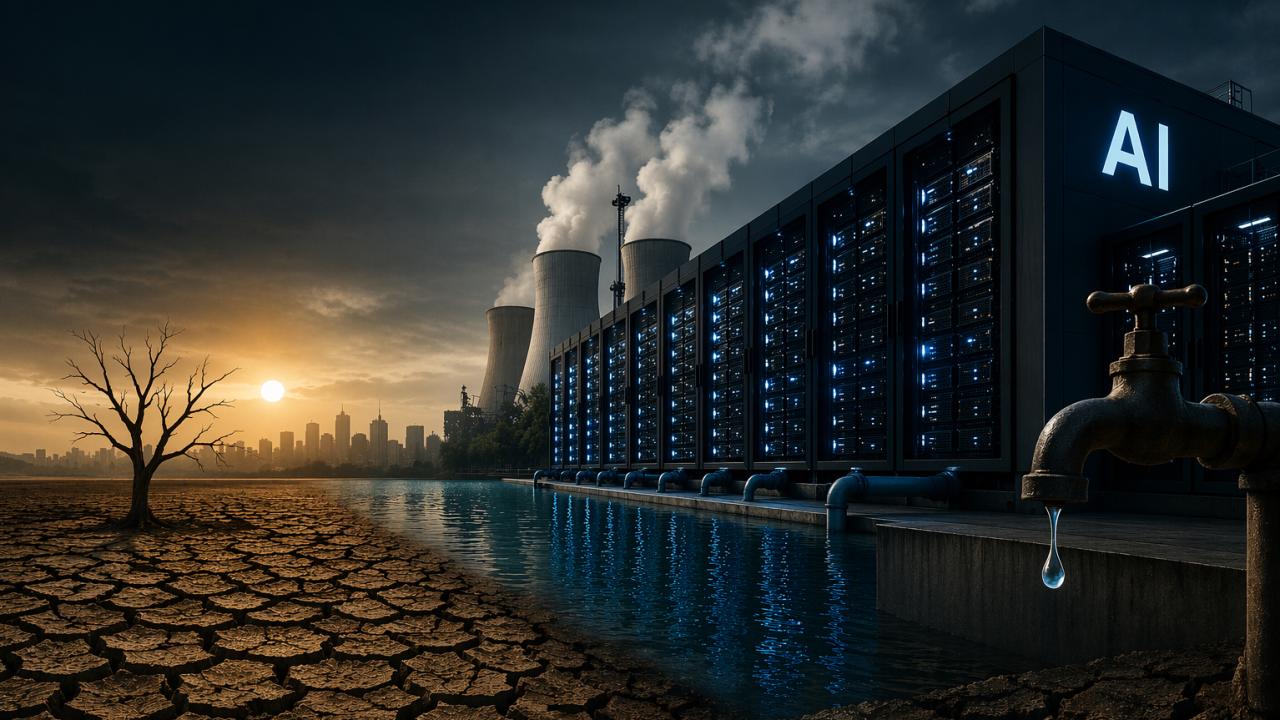
The rapid expansion of AI-driven data centers in Southeast Asia by global tech companies is causing significant strain on local water resources due to intensive cooling needs. This has led to environmental harm, with communities facing water shortages and increased regulatory scrutiny as water demand surges alongside AI infrastructure growth.[AI generated]

Why's our monitor labelling this an incident or hazard?

The article clearly involves AI systems through the discussion of AI-driven data centers and their resource consumption. While no direct harm has yet occurred, the article warns of potential environmental harm (water scarcity) caused by the growth of AI infrastructure. This fits the definition of an AI Hazard, as the AI systems' use could plausibly lead to harm to communities and the environment. There is no indication of a realized incident or harm, so it is not an AI Incident. The article is not merely complementary information since it focuses on the risk and impact of AI system use on natural resources, not on responses or updates. Hence, AI Hazard is the appropriate classification.[AI generated]
AI principles
SustainabilityHuman wellbeing

Industries
IT infrastructure and hostingEnvironmental services

Affected stakeholders
General public

Harm types
Environmental

Severity
AI hazard


Articles about this incident or hazard

Thumbnail Image

Yapay Zeka Devrimi Güneydoğu Asya'da Su Krizini Tetikliyor - Son Dakika

2026-04-13
Son Dakika
Why's our monitor labelling this an incident or hazard?
The article explicitly links AI systems (data centers running AI workloads) to increased water consumption, which has led to critical water scarcity ('digital drought') in Southeast Asia. This has caused local protests and regulatory responses, indicating realized harm to communities and the environment. The AI systems' use is a direct contributing factor to these harms. Hence, this qualifies as an AI Incident under the framework, as the AI system's use has directly led to harm to communities and the environment.
Thumbnail Image

Veri merkezleri su havzalarını zorluyor

2026-04-13
Memurlar.Net
Why's our monitor labelling this an incident or hazard?
The article clearly involves AI systems through the discussion of AI-driven data centers and their resource consumption. While no direct harm has yet occurred, the article warns of potential environmental harm (water scarcity) caused by the growth of AI infrastructure. This fits the definition of an AI Hazard, as the AI systems' use could plausibly lead to harm to communities and the environment. There is no indication of a realized incident or harm, so it is not an AI Incident. The article is not merely complementary information since it focuses on the risk and impact of AI system use on natural resources, not on responses or updates. Hence, AI Hazard is the appropriate classification.
Thumbnail Image

Yapay zeka yarışı Güneydoğu Asya'yı "susuzluk" riskiyle karşı karşıya bırakıyor

2026-04-13
Anadolu Ajansı
Why's our monitor labelling this an incident or hazard?
The article clearly involves AI systems as it discusses data centers supporting AI workloads and their resource consumption. The harm described is environmental (water scarcity), which fits the harm to property, communities, or the environment category. However, the harm is not yet realized but is a plausible future risk due to AI system use and expansion. Therefore, this qualifies as an AI Hazard rather than an AI Incident. The article also includes discussion of governance responses (regulations) but the main focus is on the potential environmental harm from AI system deployment, not on responses alone, so it is not Complementary Information.
Thumbnail Image

Veri merkezleri su havzalarını zorluyor

2026-04-13
TRT haber
Why's our monitor labelling this an incident or hazard?
The event involves AI systems indirectly through their role in driving increased data center capacity and cooling needs, which in turn stress local water resources. While no direct harm (such as injury or rights violations) caused by AI system malfunction or misuse is reported, the article clearly identifies a credible risk of environmental harm and community impact due to AI-related water consumption. This fits the definition of an AI Hazard, as the development and use of AI systems could plausibly lead to significant harm to communities and the environment if water use is not managed sustainably. The article also mentions regulatory and community responses, but these serve to address the hazard rather than describe a resolved incident. Therefore, the classification is AI Hazard.
Thumbnail Image

Yapay zeka yarışı Asya'yı kurutuyor: Dijital devrim su canavarına dönüştü

2026-04-13
Star.com.tr
Why's our monitor labelling this an incident or hazard?
The event involves AI systems explicitly through the operation of AI-driven data centers requiring extensive cooling and water use. The harm is environmental—depletion of water resources in Southeast Asia—which affects local communities and ecosystems. The article reports that this harm is already occurring, with protests and regulatory responses, indicating realized harm rather than just potential. The AI systems' development and use are directly linked to this harm, fulfilling the criteria for an AI Incident. It is not merely a potential risk (AI Hazard) or a governance or research update (Complementary Information), nor is it unrelated to AI.
Thumbnail Image

Yapay zekanın gizli bedeli "Dijital Susuzluk": Teknoloji yerel kaynakları kurutuyor mu?

2026-04-13
ekonomist.com.tr
Why's our monitor labelling this an incident or hazard?
The article clearly involves AI systems through the data centers supporting AI workloads, which require intensive cooling and thus large water consumption. The environmental harm (water resource depletion) is a plausible future risk linked to the use of AI systems, especially given the projected growth in data center capacity and water demand. No direct or realized harm is described, only potential harm and regulatory responses. Hence, it fits the definition of an AI Hazard rather than an AI Incident or Complementary Information.