South Korea Launches AI-Based Space Situational Awareness System Development

Thumbnail Image

The information displayed in the AIM should not be reported as representing the official views of the OECD or of its member countries.

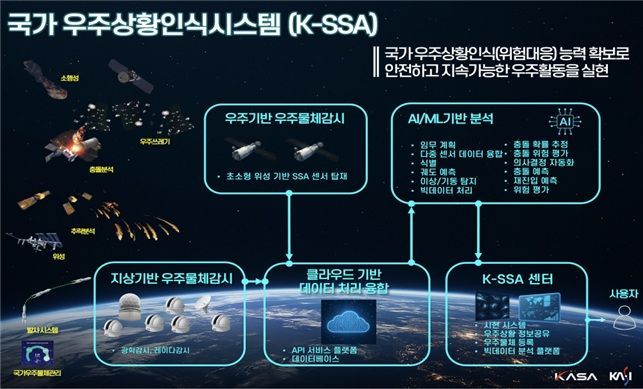
South Korea's Aerospace Administration has initiated the development of the K-SSA, a national space situational awareness system using AI and machine learning to predict and monitor space object collisions. The project aims to enhance space safety and asset protection, with two surveillance satellites planned for launch by 2029.[AI generated]

Why's our monitor labelling this an incident or hazard?

The article explicitly mentions the use of AI/ML-based algorithms for space object orbit determination and risk analysis, which qualifies as an AI system. The event concerns the development and planned deployment of these AI systems to enhance space situational awareness and safety. No current harm or violation is reported; rather, the AI system is intended to predict and prevent potential harms related to space debris and collisions. This fits the definition of an AI Hazard, as the AI system's use could plausibly lead to preventing or managing incidents involving harm to national space assets or public safety in the future. It is not Complementary Information because the article focuses on the initiation of the project and its potential impact, not on updates or responses to past incidents.[AI generated]
Industries
Government, security, and defence

Severity
AI hazard

Business function:
Research and development

AI system task:
Forecasting/predictionEvent/anomaly detection


Articles about this incident or hazard

Thumbnail Image

한국판 '우주 교통관제탑' 첫 시동...AI가 충돌 위험 먼저 읽는다

2026-04-16
아시아경제
Why's our monitor labelling this an incident or hazard?
The event involves the use of AI systems for predicting and monitoring space object collisions, which is a clear AI system involvement. However, the article focuses on the initiation and development of this system rather than any realized harm or malfunction. There is no indication that the AI system has caused injury, disruption, rights violations, or other harms yet. The system's role is to prevent such harms in the future. Therefore, this event represents a plausible future risk mitigation capability rather than an incident or hazard. It is best classified as Complementary Information because it provides context on AI development and its potential impact on space safety and industry without describing an AI Incident or AI Hazard.
Thumbnail Image

'우주상황인식' 역량 키운다···우주청, 2029년 SSA 위성 2기 발사

2026-04-16
이뉴스투데이
Why's our monitor labelling this an incident or hazard?
The article explicitly mentions the use of AI/ML-based algorithms for space object orbit determination and risk analysis, which qualifies as an AI system. The event concerns the development and planned deployment of these AI systems to enhance space situational awareness and safety. No current harm or violation is reported; rather, the AI system is intended to predict and prevent potential harms related to space debris and collisions. This fits the definition of an AI Hazard, as the AI system's use could plausibly lead to preventing or managing incidents involving harm to national space assets or public safety in the future. It is not Complementary Information because the article focuses on the initiation of the project and its potential impact, not on updates or responses to past incidents.
Thumbnail Image

[Gov & Now] K-SSA 개발 본격화...한국형 우주감시 체계 구축 시동 - 이비엔(EBN)뉴스센터

2026-04-16
이비엔(EBN)뉴스센터
Why's our monitor labelling this an incident or hazard?
The event involves the development and planned use of AI systems for space situational awareness and risk analysis, which could plausibly lead to AI-related incidents if failures or misuse occur in the future. However, as the system is currently under development and no harm or malfunction has been reported, this constitutes a potential risk rather than an actual incident. Therefore, it fits the definition of an AI Hazard, as the AI system's use could plausibly lead to harm related to space object collisions or security breaches in the future.
Thumbnail Image

우주청 '국가 우주상황인식 시스템(K-SSA)' 개발 본격 착수

2026-04-16
데일리안
Why's our monitor labelling this an incident or hazard?
The event involves the development and planned use of AI systems for space situational awareness and risk prediction, which could plausibly lead to preventing or mitigating harms related to space object collisions and national space asset protection. Since no actual harm or incident has occurred yet, and the AI system is still under development, this qualifies as an AI Hazard. The article does not report any realized harm or incident caused by AI, nor does it focus on responses to past incidents, so it is not an AI Incident or Complementary Information.
Thumbnail Image

우주 충돌·추락 막는다...정부, 'K-SSA' 개발 착수

2026-04-16
디지털데일리
Why's our monitor labelling this an incident or hazard?
The event involves the development and planned use of an AI system (machine learning for orbit prediction and collision risk analysis) as part of a national space situational awareness system. There is no indication that any harm has occurred due to the AI system's malfunction or misuse. Instead, the AI is intended to reduce uncertainty and improve early detection of space hazards, which could plausibly prevent harm in the future. Thus, it fits the definition of an AI Hazard, as it describes a circumstance where AI use could plausibly lead to preventing or managing harm related to space object collisions. It is not an AI Incident because no harm has occurred, nor is it Complementary Information or Unrelated since the AI system and its potential impact are central to the event.