US Labor Leaders Warn of AI's Potential Threat to Jobs and Society

Thumbnail Image

The information displayed in the AIM should not be reported as representing the official views of the OECD or of its member countries.

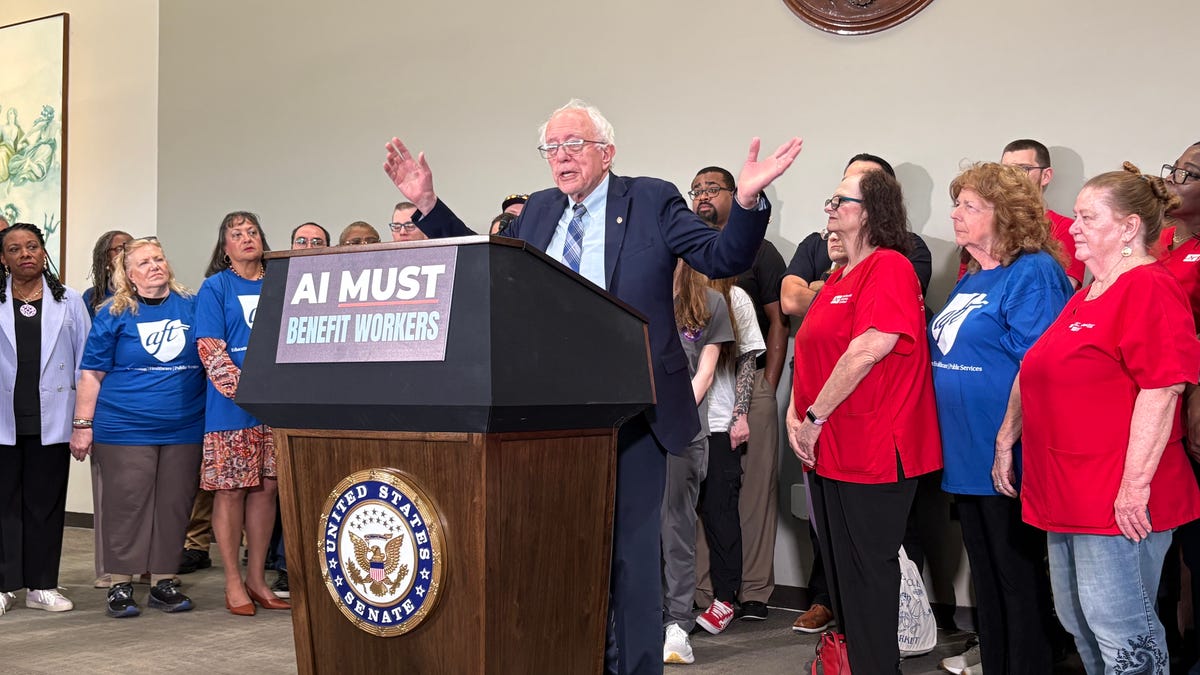
US Senator Bernie Sanders, UAW President Shawn Fain, and other labor leaders publicly warned that artificial intelligence could threaten American jobs, worker safety, and economic stability. They called for regulatory safeguards and a moratorium on AI data centers, highlighting concerns about job loss and societal impact if AI is not properly managed.[AI generated]

Why's our monitor labelling this an incident or hazard?

The event involves AI systems in the context of their potential economic and social impact, specifically the plausible risk of widespread job displacement. No actual harm or incident caused by AI is reported; rather, the article centers on warnings and advocacy for safeguards. Therefore, this qualifies as an AI Hazard because it plausibly could lead to harm (job losses and economic disruption) but no incident has yet occurred. It is not Complementary Information since it is not updating or responding to a past incident, nor is it unrelated as it directly concerns AI's societal risks.[AI generated]
AI principles
AccountabilitySafety

Industries
IT infrastructure and hosting

Affected stakeholders
WorkersGeneral public

Harm types
Economic/PropertyPhysical (injury)

Severity
AI hazard


Articles about this incident or hazard

Thumbnail Image

Sanders and Fain warn that AI, like NAFTA, could kill American jobs

2026-04-16
The Detroit News
Why's our monitor labelling this an incident or hazard?
The event involves AI systems in the context of their potential economic and social impact, specifically the plausible risk of widespread job displacement. No actual harm or incident caused by AI is reported; rather, the article centers on warnings and advocacy for safeguards. Therefore, this qualifies as an AI Hazard because it plausibly could lead to harm (job losses and economic disruption) but no incident has yet occurred. It is not Complementary Information since it is not updating or responding to a past incident, nor is it unrelated as it directly concerns AI's societal risks.
Thumbnail Image

Bernie Sanders, labor leaders warn of AI risks for workers

2026-04-16
The Hill
Why's our monitor labelling this an incident or hazard?
The article discusses the potential negative consequences of AI on employment and workers' rights, which could plausibly lead to harm such as job displacement and economic disruption. However, it does not describe any actual incident where AI has directly or indirectly caused harm. The focus is on warnings and advocacy for safeguards, making this a credible AI Hazard rather than an AI Incident or Complementary Information. There is no mention of a specific AI system causing harm or malfunctioning, nor is the article primarily about responses or updates to past incidents.
Thumbnail Image

Unions bash AI as opposition grows: "We believe in human beings"

2026-04-16
Axios
Why's our monitor labelling this an incident or hazard?
The article centers on the labor movement's reaction to AI and its potential effects on jobs and society, including calls for regulation and protections. There is no description of an AI system causing actual harm or an event where AI use or malfunction has led to injury, rights violations, or other harms. The focus is on advocacy, warnings, and policy proposals regarding AI's future impact, which fits the definition of Complementary Information as it provides context and societal response to AI developments without reporting a new incident or hazard.
Thumbnail Image

UAW's Shawn Fain joins Bernie Sanders calling for safeguards on AI

2026-04-16
Detroit Free Press
Why's our monitor labelling this an incident or hazard?
The article focuses on warnings and calls for regulation regarding AI's potential future impact on jobs and society, but does not describe any actual incident where AI has caused harm or disruption. The involvement of AI is in the context of its development and potential use, with concerns about plausible future harms. Therefore, this qualifies as an AI Hazard, as it discusses credible risks and the need for safeguards to prevent possible harms, but no realized harm or incident is reported.
Thumbnail Image

AI Harmful To U.S. Manufacturing Industry, Claim UAW, Bernie Sanders

2026-04-16
GM Authority
Why's our monitor labelling this an incident or hazard?
The article focuses on warnings and calls for regulation regarding AI's future impact on manufacturing jobs, worker safety, the environment, and economic disparities. While AI systems are involved or planned for use in manufacturing (e.g., at GM), no direct or indirect harm has been reported as having occurred. The concerns about job loss, environmental impact, and mental health are plausible future harms linked to AI development and deployment. Therefore, this event fits the definition of an AI Hazard rather than an AI Incident or Complementary Information.
Thumbnail Image

Sanders and Fain warn that AI, like NAFTA, could kill American jobs

2026-04-16
Eagle-Tribune
Why's our monitor labelling this an incident or hazard?
The article focuses on the potential future harm AI could cause to employment, which is a plausible risk but no actual harm or incident has occurred yet. The involvement of AI is clear as the discussion centers on AI's impact on jobs, but since no realized harm or incident is described, this qualifies as an AI Hazard rather than an AI Incident or Complementary Information.