Gyeongju Establishes Radiation Environment Robot Verification Center for Nuclear Decommissioning

Thumbnail Image

The information displayed in the AIM should not be reported as representing the official views of the OECD or of its member countries.

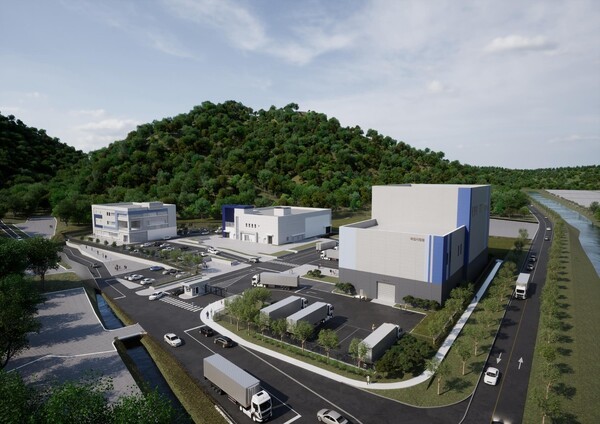
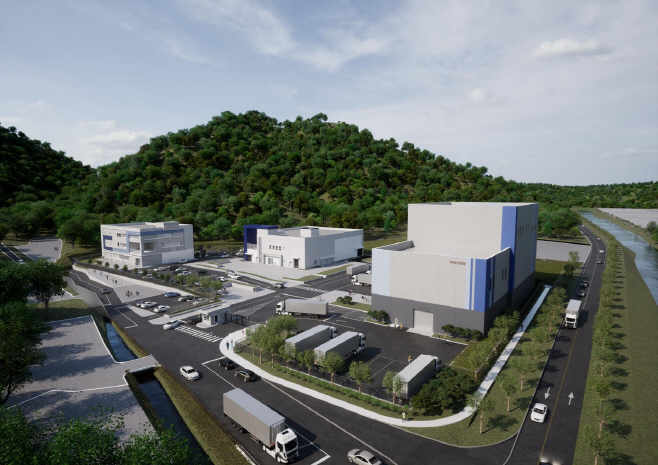
Gyeongju, South Korea, is establishing a Radiation Environment Robot Verification Center to test and ensure the reliability of AI-enabled robots used in nuclear decommissioning. The center aims to prevent safety incidents from robot malfunctions in high-radiation environments, supporting safer and more efficient nuclear facility dismantling.[AI generated]

Why's our monitor labelling this an incident or hazard?

The event involves the development and use of robotic systems that likely incorporate AI for autonomous or semi-autonomous operation in hazardous radiation environments. The center aims to verify and improve the reliability of these AI-enabled robots to prevent malfunctions that could cause safety incidents during nuclear decommissioning, which is critical infrastructure. Although no harm has yet occurred, the potential for harm (e.g., safety accidents due to robot malfunction) is explicitly recognized and the center's purpose is to mitigate such risks. Therefore, this event represents an AI Hazard, as it plausibly could lead to an AI Incident if the robots malfunctioned during operation in radiation environments, but currently it is a proactive measure to prevent such harm.[AI generated]
Industries
Robots, sensors, and IT hardwareGovernment, security, and defence

Severity
AI hazard

AI system task:
Reasoning with knowledge structures/planning


Articles about this incident or hazard

Thumbnail Image

경주시, 방사선환경 로봇실증센터 구축...원전해체 산업 거점화 속도

2026-04-28
아시아투데이
Why's our monitor labelling this an incident or hazard?
The article involves AI-related robotic systems intended for use in nuclear decommissioning, which implies AI system involvement. However, there is no mention of any realized harm, malfunction, or misuse of these AI systems. The focus is on building infrastructure to test and improve robot reliability to prevent future harm. This aligns with Complementary Information, as it supports understanding of AI system development and safety measures but does not describe an incident or hazard with realized or plausible harm at this stage.
Thumbnail Image

경주에 '방사선환경 로봇실증센터' 들어선다

2026-04-28
pressian.com
Why's our monitor labelling this an incident or hazard?
The event involves the development and use of robotic systems that likely incorporate AI for autonomous or semi-autonomous operation in hazardous radiation environments. The center aims to verify and improve the reliability of these AI-enabled robots to prevent malfunctions that could cause safety incidents during nuclear decommissioning, which is critical infrastructure. Although no harm has yet occurred, the potential for harm (e.g., safety accidents due to robot malfunction) is explicitly recognized and the center's purpose is to mitigate such risks. Therefore, this event represents an AI Hazard, as it plausibly could lead to an AI Incident if the robots malfunctioned during operation in radiation environments, but currently it is a proactive measure to prevent such harm.
Thumbnail Image

경주시, " 방사선환경 실증기반 구축 " 공모사업에 최종 선정돼 !! - 내외일보

2026-04-29
내외일보
Why's our monitor labelling this an incident or hazard?
The event involves the development and planned use of AI-enabled robotic systems for nuclear decommissioning tasks in radiation environments. While the article does not describe any actual harm or incidents caused by these AI systems, it clearly involves the development and use of AI systems (robots with autonomous or semi-autonomous capabilities) in a high-risk environment. The article emphasizes the goal of preventing malfunctions and accidents, indicating a focus on safety and risk mitigation. Since no harm has occurred yet but the AI systems' use could plausibly lead to harm if not properly verified, this qualifies as an AI Hazard rather than an Incident. The article does not describe a response to a past incident or broader governance measures, so it is not Complementary Information. It is not unrelated because it clearly involves AI systems in a safety-critical context.