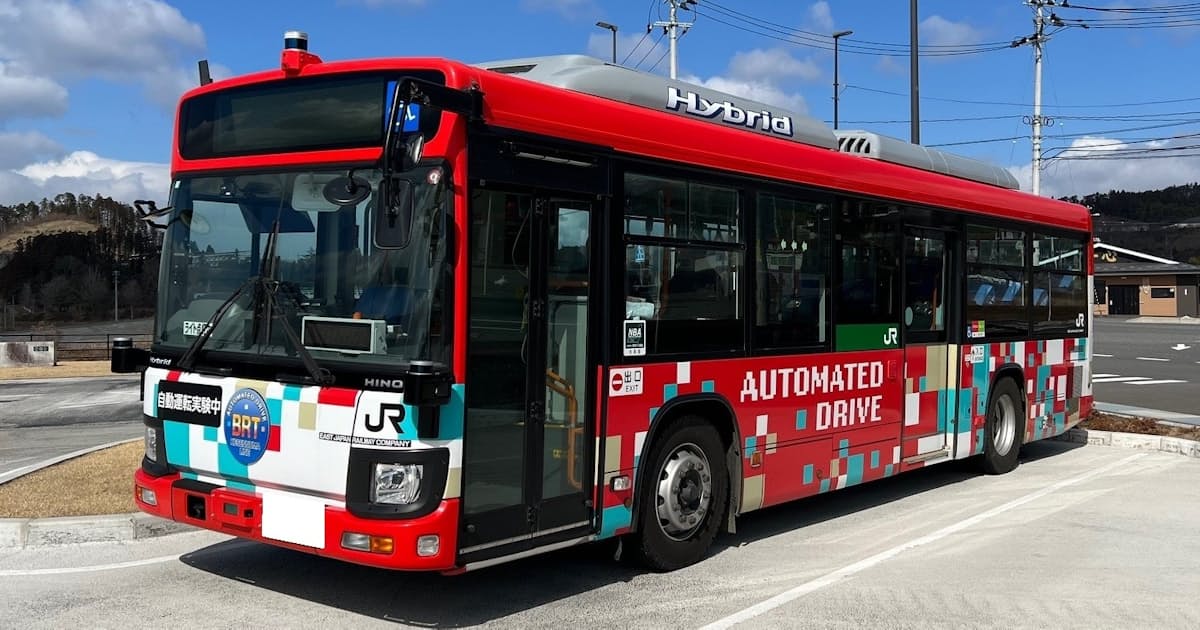
JR East to Trial Level 4 Autonomous Buses on Kesennuma Line BRT

Thumbnail Image

The information displayed in the AIM should not be reported as representing the official views of the OECD or of its member countries.

JR East will conduct Level 4 autonomous driving trials on a 15.5 km section of the Kesennuma Line BRT in Miyagi, Japan. The AI system will handle all driving and emergency stops under specific conditions, with staff onboard for safety. No harm has occurred, but future risks remain plausible.[AI generated]

Why's our monitor labelling this an incident or hazard?

The article explicitly mentions Level 4 autonomous driving, which involves AI systems for vehicle control. The event is about testing and development, with no reported injury, disruption, or rights violation. Since no harm has occurred, but the system could plausibly lead to harm if malfunctioning in the future, this qualifies as an AI Hazard. It is not an incident because no harm has materialized, nor is it complementary information or unrelated news.[AI generated]
AI principles
SafetyRobustness & digital security

Industries
Mobility and autonomous vehicles

Affected stakeholders
ConsumersGeneral public

Harm types
Physical (injury)Physical (death)Economic/Property

Severity
AI hazard

Business function:
Other

AI system task:
Recognition/object detectionGoal-driven organisation


Articles about this incident or hazard

Thumbnail Image

JR東日本、レベル4の自動運転 気仙沼線BRTで試験走行

2026-05-08
日本経済新聞
Why's our monitor labelling this an incident or hazard?
The article explicitly mentions Level 4 autonomous driving, which involves AI systems for vehicle control. The event is about testing and development, with no reported injury, disruption, or rights violation. Since no harm has occurred, but the system could plausibly lead to harm if malfunctioning in the future, this qualifies as an AI Hazard. It is not an incident because no harm has materialized, nor is it complementary information or unrelated news.
Thumbnail Image

気仙沼線BRT、運転手不要「レベル4」自動運転へ...JR東日本が今月下旬にも実証走行

2026-05-08
読売新聞オンライン
Why's our monitor labelling this an incident or hazard?
The event involves the use of an AI system (Level 4 autonomous driving) in public transportation. The article describes planned demonstration runs, not an actual incident causing harm. However, the nature of fully autonomous driving systems means there is a credible risk of future harm (e.g., accidents, injuries) if the system malfunctions or fails. The presence of a driver during trials indicates risk mitigation but does not eliminate the plausible risk. Hence, this is an AI Hazard rather than an AI Incident or Complementary Information.
Thumbnail Image

気仙沼線、BRTで自動運転 ドライバー不要も、JR東日本

2026-05-08
西日本新聞ニュース
Why's our monitor labelling this an incident or hazard?
The event involves the use of an AI system (Level 4 autonomous driving) in public transportation. However, the article describes a planned test operation with safety measures in place and no reported harm or incident resulting from the AI system's use. There is no indication of injury, rights violations, or other harms occurring or having occurred. Therefore, this event represents a plausible future risk scenario where autonomous AI systems could lead to harm if issues arise, but currently no harm has materialized. Hence, it qualifies as an AI Hazard rather than an AI Incident or Complementary Information.
Thumbnail Image

JR東日本、気仙沼線BRTで「自動運転レベル4」走行 国内バス最速60km/h・最長15.5km

2026-05-08
CNET
Why's our monitor labelling this an incident or hazard?
The article explicitly involves an AI system, namely a Level 4 autonomous driving system for buses, which qualifies as an AI system under the definition. However, the event is a planned trial with no reported harm or malfunction, and no indication that the autonomous system's use has or will directly or indirectly lead to injury, rights violations, or other harms. The description focuses on the operational plan and technical details without any mention of incidents or risks materializing. Therefore, this event does not meet the criteria for an AI Incident or AI Hazard. It is best classified as Complementary Information because it provides context and updates on the development and deployment of AI technology in public transportation, which is relevant for understanding the AI ecosystem and its evolution.
Thumbnail Image

気仙沼線、BRTで自動運転 ドライバー不要も、JR東日本

2026-05-08
神戸新聞
Why's our monitor labelling this an incident or hazard?
The autonomous driving system qualifies as an AI system because it performs complex real-time decision-making for vehicle navigation and emergency handling. The event involves the use of this AI system in operation, but there is no indication of any harm or malfunction occurring. The article reports a planned deployment and testing phase with safety measures (a staff member onboard for emergencies). Therefore, while the AI system is actively used, no harm has occurred yet, but there is a plausible risk associated with autonomous driving systems. However, since the article focuses on the planned operation and testing without any incident or harm, it is best classified as an AI Hazard due to the plausible future risk of harm from autonomous operation without a driver.
Thumbnail Image

気仙沼線、BRTで自動運転 ドライバー不要も、JR東日本:社会:福島民友新聞社

2026-05-08
福島民友新聞社
Why's our monitor labelling this an incident or hazard?
An AI system is explicitly involved as the autonomous driving system controls vehicle operation and emergency stops. The event is about the use of AI in a real-world transportation system. There is no indication of any harm occurring or having occurred due to the AI system's operation. The article reports a planned deployment and testing phase with safety measures (staff onboard for emergencies). Therefore, while no harm has yet occurred, the autonomous driving system could plausibly lead to harm if malfunctions or failures happen in the future, such as accidents or injuries. Hence, this qualifies as an AI Hazard, reflecting the credible risk associated with deploying Level 4 autonomous driving in public transport.