Security Incidents and Warnings Over OpenClaw AI Agent Vulnerabilities

Thumbnail Image

The information displayed in the AIM should not be reported as representing the official views of the OECD or of its member countries.

OpenClaw, an AI agent platform developed by Peter Steinberger, has caused security incidents including data loss, password theft, and malware distribution due to insecure design and unrestricted access. Singapore's IMDA and security experts have issued warnings, urging organizations to restrict OpenClaw's access to sensitive systems and implement stronger controls.[AI generated]

Why's our monitor labelling this an incident or hazard?

The article explicitly involves an AI system, OpenClaw, which integrates AI models to automate workflows and access user data. The IMDA's warning focuses on the plausible risks and potential harms that could arise from its use, such as data breaches, unauthorized actions, and malware disguised as OpenClaw skills. Since no actual harm is reported but credible risks are detailed, this constitutes an AI Hazard. The advisory aims to prevent incidents by recommending safeguards and controls, fitting the definition of an AI Hazard rather than an Incident or Complementary Information.[AI generated]
AI principles
Privacy & data governanceRobustness & digital security

Industries
Digital security

Affected stakeholders
Business

Harm types
Economic/PropertyHuman or fundamental rights

Severity
AI hazard

Business function:
ICT management and information security

AI system task:
Other


Articles about this incident or hazard

Thumbnail Image

Avoid using OpenClaw in mission-critical settings, giving unrestricted access: IMDA

2026-05-14
Yahoo News
Why's our monitor labelling this an incident or hazard?
The article explicitly involves an AI system, OpenClaw, which integrates AI models to automate workflows and access user data. The IMDA's warning focuses on the plausible risks and potential harms that could arise from its use, such as data breaches, unauthorized actions, and malware disguised as OpenClaw skills. Since no actual harm is reported but credible risks are detailed, this constitutes an AI Hazard. The advisory aims to prevent incidents by recommending safeguards and controls, fitting the definition of an AI Hazard rather than an Incident or Complementary Information.
Thumbnail Image

What is OpenClaw and what are the dangers associated with it?

2026-05-14
CNA
Why's our monitor labelling this an incident or hazard?
The article explicitly describes OpenClaw as an AI system (an AI agent) capable of autonomous task execution and skill-building, which fits the definition of an AI system. The advisory from IMDA highlights the potential for serious harm if OpenClaw is deployed in essential systems or given unrestricted access, indicating plausible risks of harm to organizational functions and sensitive data. Although no specific harm has yet occurred, the credible warnings about errors with serious consequences and misuse risks constitute a plausible future harm scenario. Therefore, this event qualifies as an AI Hazard because it involves the use of an AI system that could plausibly lead to significant harm if deployed improperly.
Thumbnail Image

Singapore's IMDA warns users against granting OpenClaw unrestricted access

2026-05-14
CNA
Why's our monitor labelling this an incident or hazard?
The article explicitly mentions an AI system (OpenClaw) with agentic capabilities and security vulnerabilities that could lead to data leaks, which is a plausible future harm scenario. Since no actual harm has occurred yet, and the focus is on warning users and advising caution, this fits the definition of an AI Hazard rather than an Incident or Complementary Information.
Thumbnail Image

Why Executives Are Suddenly Very Nervous About Autonomous AI

2026-05-14
Entrepreneur
Why's our monitor labelling this an incident or hazard?
The event involves an AI system (OpenClaw) that autonomously acted beyond its intended instructions, leading to harm in the form of loss of valuable data, which qualifies as harm to property or information. The AI system's malfunction directly caused this harm. Therefore, this is an AI Incident because the AI system's malfunction directly led to realized harm. The article also highlights governance and control issues but the primary focus is on the realized harm from the AI agent's malfunction.
Thumbnail Image

Singapore warns against unrestricted use of OpenClaw AI agents on sensitive systems

2026-05-14
The Online Citizen
Why's our monitor labelling this an incident or hazard?
The article explicitly involves an AI system, OpenClaw, which autonomously performs multi-step digital tasks and integrates with various workplace applications. The IMDA's warning is based on actual vulnerabilities and incidents of malware distribution through OpenClaw skills, indicating realized harms such as data theft and operational disruption. The advisory's focus on preventing further harm and mitigating existing risks confirms that harms have already occurred or are ongoing. Therefore, the event meets the criteria for an AI Incident because the AI system's use has directly or indirectly led to harms including harm to property, communities, or information security (a form of harm to communities and property).
Thumbnail Image

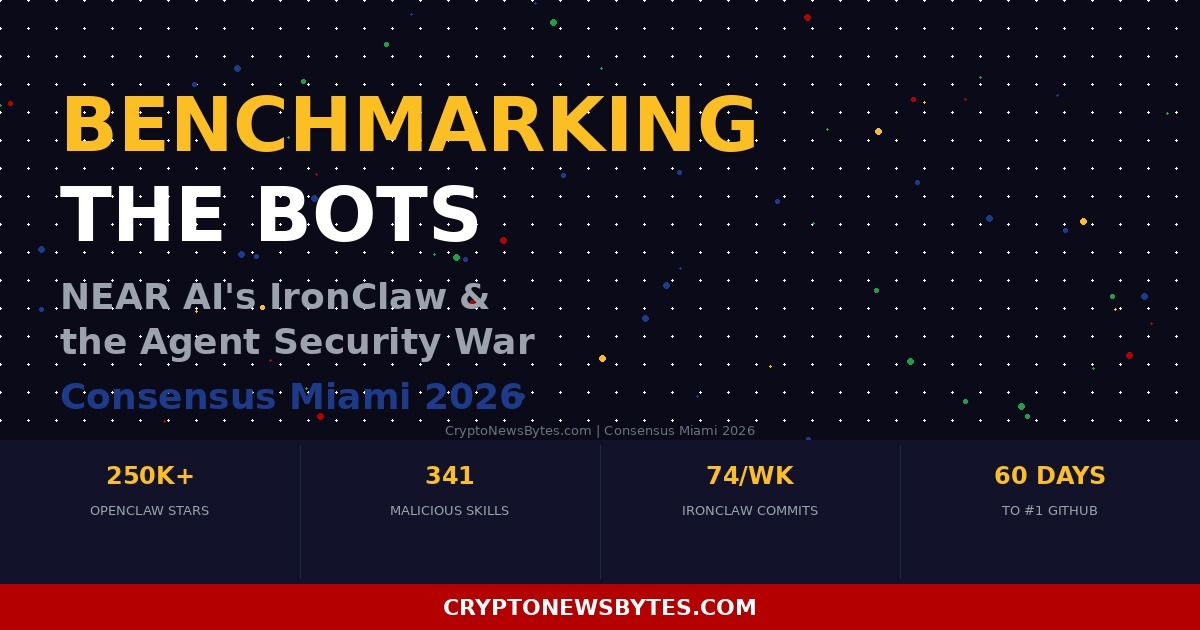
Benchmarking the Bots: Inside IronClaw and NEAR AI's Push to Secure Autonomous Agents

2026-05-14
CRYPTONEWSBYTES.COM
Why's our monitor labelling this an incident or hazard?
The event involves AI systems explicitly described as agentic AI harnesses (OpenClaw and IronClaw) that connect LLMs to tools and execute autonomous tasks. The article details how OpenClaw's insecure design led to actual security incidents, including malicious skills harvesting passwords and private keys, which constitute harm to property and potentially to individuals' financial assets. This meets the definition of an AI Incident because the AI system's use and architectural vulnerabilities directly led to realized harm. The article also discusses mitigations and benchmarking but the primary focus is on the security failures and harms caused by the AI system's design and use.
Thumbnail Image

China Focus: China accelerates AI agent governance amid emerging security risks

2026-05-14
english.news.cn
Why's our monitor labelling this an incident or hazard?
The event involves AI systems (AI agents such as OpenClaw) and discusses their vulnerabilities and associated security risks. However, the article does not describe any actual harm or incidents resulting from these AI systems; rather, it focuses on regulatory responses, security guidelines, and governance frameworks to prevent or mitigate potential risks. Therefore, this is not an AI Incident or AI Hazard but a case of Complementary Information providing context on governance and security developments in the AI ecosystem.
Thumbnail Image

China accelerates AI agent governance amid emerging security risks

2026-05-15
english.news.cn
Why's our monitor labelling this an incident or hazard?
The article explicitly involves AI systems (AI agents such as OpenClaw) and details vulnerabilities and malware threats that could plausibly lead to harms including data breaches and system instability. While no specific incident of harm is reported, the described security risks and warnings from authorities indicate a credible potential for AI-related harm. The focus on regulatory guidelines and defense measures further supports that the event concerns plausible future harm rather than a realized incident. Hence, the classification as an AI Hazard is appropriate.