FDA Approves AI System for Early Sepsis Detection, Reducing Mortality

Thumbnail Image

The information displayed in the AIM should not be reported as representing the official views of the OECD or of its member countries.

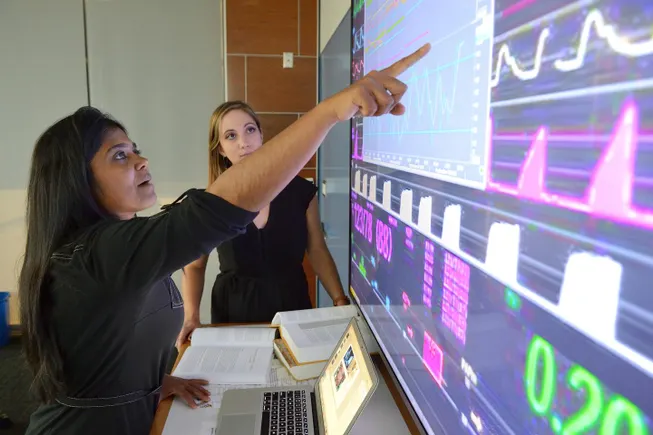
The FDA has approved an AI-based early warning system for sepsis, developed by Johns Hopkins University and commercialized by Bayesian Health. Integrated with electronic health records, the system detects sepsis hours before clinicians, reducing sepsis mortality by nearly 20% in U.S. hospitals.[AI generated]

Why's our monitor labelling this an incident or hazard?

The article explicitly mentions an AI system designed to detect sepsis earlier than clinicians can, which has been FDA-approved and is in use in multiple hospitals. The system's use has directly led to a significant reduction in sepsis mortality, which constitutes harm to health being mitigated. Since the AI system's deployment has directly led to improved health outcomes and prevented harm, this qualifies as an AI Incident under the definition of an event where AI use has directly led to harm (in this case, reduction of harm).[AI generated]
Industries
Healthcare, drugs, and biotechnology

Severity
AI incident

Business function:
Monitoring and quality control

AI system task:
Forecasting/predictionEvent/anomaly detection


Articles about this incident or hazard

Thumbnail Image

In the battle of sepsis algorithms, performance alone doesn't predict victory

2026-05-12
STAT
Why's our monitor labelling this an incident or hazard?
The article centers on the history and current state of AI sepsis prediction tools, including their technical limitations and regulatory progress. While it references past failures that could have led to harm (e.g., alert fatigue), it does not document a specific AI Incident where harm occurred, nor does it describe a plausible future harm event (AI Hazard). The focus is on the broader ecosystem and ongoing developments, making it Complementary Information that supports understanding of AI in healthcare without reporting a new incident or hazard.
Thumbnail Image

Johns Hopkins researchers develop life-saving AI for early sepsis detection

2026-05-12
News-Medical.net
Why's our monitor labelling this an incident or hazard?
The article explicitly mentions an AI system designed to detect sepsis earlier than clinicians can, which has been FDA-approved and is in use in multiple hospitals. The system's use has directly led to a significant reduction in sepsis mortality, which constitutes harm to health being mitigated. Since the AI system's deployment has directly led to improved health outcomes and prevented harm, this qualifies as an AI Incident under the definition of an event where AI use has directly led to harm (in this case, reduction of harm).
Thumbnail Image

FDA approves early warning system for sepsis

2026-05-12
EurekAlert!
Why's our monitor labelling this an incident or hazard?
The system is an AI system explicitly mentioned as being used in clinical settings to detect sepsis earlier, thereby reducing deaths and improving patient safety. This constitutes direct involvement of AI in preventing harm to health (harm category a). Since the system is already deployed and has led to reduced mortality and morbidity, this is a realized harm reduction scenario, qualifying as an AI Incident rather than a hazard or complementary information. The event is not merely about the AI system's development or potential future harm but about its actual use and impact on health outcomes.
Thumbnail Image

FDA approves early warning system for sepsis

2026-05-12
The Hub
Why's our monitor labelling this an incident or hazard?
The AI system is explicitly described as an advanced clinical AI tool integrated with electronic health records to detect sepsis earlier than traditional methods. Its deployment has reduced sepsis mortality by 18%, directly impacting patient health and saving lives. Since the AI system's use has directly led to a significant reduction in harm (deaths from sepsis), this qualifies as an AI Incident under the definition of injury or harm to health caused by the use of an AI system.
Thumbnail Image

FDA clears first AI-based early warning system for sepsis

2026-05-12
CIDRAP
Why's our monitor labelling this an incident or hazard?
The article explicitly mentions an AI system designed to detect sepsis early, which is a direct application of AI in healthcare. However, the event focuses on the FDA clearance and the positive impact of the system in reducing mortality, not on any harm caused or potential harm from the AI system. There is no indication of malfunction, misuse, or risk of harm. Instead, it highlights a beneficial use of AI with clinical validation. Thus, the event is best classified as Complementary Information, as it provides important context about AI's role in improving health outcomes without describing an incident or hazard.
Thumbnail Image

Bayesian Health Receives First-Ever FDA Clearance for Continuous AI Sepsis Monitoring

2026-05-12
CNHI News
Why's our monitor labelling this an incident or hazard?
The event involves an AI system explicitly described as continuously monitoring patient data to detect sepsis early, which is a direct use of AI in healthcare. The system's deployment and use have been shown to reduce mortality by 18% in sepsis patients, indicating realized harm reduction (injury or harm to health) through its use. Therefore, this is an AI Incident because the AI system's use directly leads to significant health benefits and prevents harm, fulfilling the criteria of an AI system causing or preventing injury or harm to persons. The FDA clearance and validation further confirm the system's role and impact in clinical settings.
Thumbnail Image

Bayesian Health gets FDA nod for AI sepsis detection tool

2026-05-13
Healthcare Dive
Why's our monitor labelling this an incident or hazard?
The article clearly involves an AI system designed to analyze complex patient data and generate risk alerts for sepsis, a life-threatening condition. The system's use has been shown to reduce mortality and organ failure, indicating it directly contributes to preventing injury or harm to patients. Since the AI system's deployment and use have led to improved health outcomes and reduced harm, this qualifies as an AI Incident under the definition of an event where AI use has directly or indirectly led to harm prevention (a positive impact on health). The FDA clearance and clinical validation further confirm the system's role in influencing health outcomes. Therefore, this event is classified as an AI Incident.
Thumbnail Image

On the usage of artificial intelligence for identifying main attributes and predicting neonatal sepsis - Scientific Reports

2026-05-14
Nature
Why's our monitor labelling this an incident or hazard?
The article involves AI systems (machine learning models) applied to healthcare for predicting a serious medical condition (neonatal sepsis). However, it does not report any actual harm or adverse event caused by the AI system's development, use, or malfunction. Instead, it presents research results demonstrating potential benefits. There is no indication of realized harm or violation of rights, nor a plausible risk of harm from the AI system described. Therefore, this is not an AI Incident or AI Hazard. It is a research development providing context and understanding of AI applications in healthcare, which fits the category of Complementary Information.